.png)
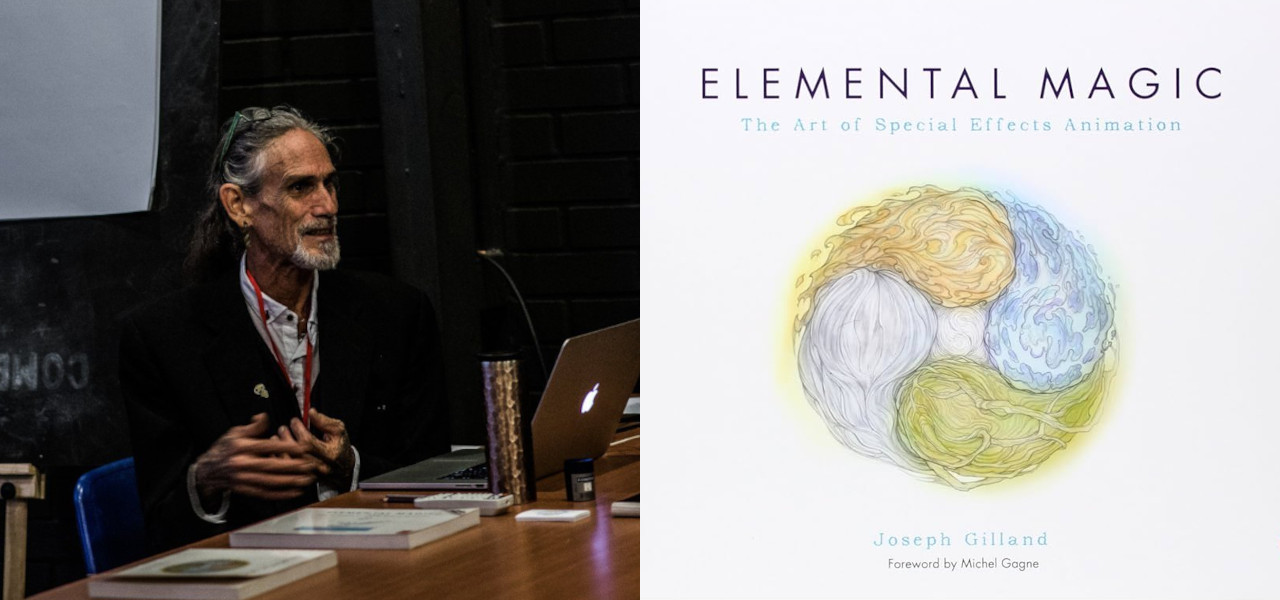
Joseph Gilland, Disney Animation VFX Artist And Author Of ‘Elemental Magic,’ Has Died
Stay informed with free updates
Sign up to get our news digest — delivered directly to your inbox twice a week.
Joseph Gilland, an influential figure in traditional and hybrid animation VFX, an inspirational educator, and an accomplished writer, passed away on Monday in hospice care surrounded by family following a battle with cancer.
Over a career spanning more than four decades, Gilland became widely known for elevating hand-drawn effects during a period of rapid technological advancements, while also contributing significantly to education, authorship, and professional discourse in the animation field.
Gilland’s career took shape across many of the industry’s largest and most influential studios, including Walt Disney Feature Animation (now Walt Disney Animation Studios), Don Bluth Animation, Productions Pascal Blais, Bardel Animation, and the National Film Board of Canada.
His work at Disney defined a major portion of his legacy. There, he served as VFX supervisor for Lilo & Stitch and Brother Bear, two films remembered for their distinctive blend of character-driven storytelling and expressive effects animation at a time when digital tools were still in their early stages.
He also served as head of the Florida Special Effects Unit for the features Kingdom of the Sun (later reworked into The Emperor’s New Groove) and Tarzan. His name appears in the credits of an impressive slate of titles, including Pocahontas, The Hunchback of Notre Dame, James and the Giant Peach, Hercules, and Mulan.
Gilland became recognized for his ability to blend traditional draftsmanship with the evolving demands of modern pipelines during his time spent on these high-profile titles. His work and leadership helped bridge a transitional era for the craft as artists wrestled with new toolkits.
Outside of his big studio feature work, Gilland designed and supervised visual effects, both 2D and CG, for Bardel Animation’s TV series Silverwing, and he directed or supervised animation for several commercial clients, including General Motors, Coca-Cola, Honda, McDonald’s, Gillette, Players Tobacco, Larousse Dictionaries, and Radio-Québec.
His early career included work on short films at the National Film Board of Canada and contributions to video game animation, reflecting an artistic and professional range spanning several media.
From 2003 to 2005, Gilland led the Vancouver Film School’s animation program, helping shape the curriculum of one of the world’s most recognized animation institutions.
Gilland’s most widely known written contribution to animation came with the publication of Elemental Magic: The Classical Art of Hand-Drawn Special Effects Animation (Focal Press, 2009). The book quickly became an essential reference for animators, educators, and students seeking guidance in the principles of hand-drawn effects.
He later worked on a follow-up volume that expanded the material and incorporated practical demonstrations and workshop footage. We’ve linked a couple of videos below. Although the original pages that hosted the companion assets are no longer online, more assets are available on the Internet Archive. Through this writing, Gilland helped spread techniques that had often been shared only informally and behind the closed doors of studios, providing a rare, comprehensive look into a previously guarded area of the art form.
Gilland was also a frequent contributor to Animation World Network (AWN), penning The Animated Scene, a bi-monthly column that ran from 2005 to 2009 and covered artistic, technical, and industry-wide topics. He later continued under the banner Elemental Alchemy – Animation Insights and Musings, where his posts often blended production experience with broader reflections on the animation field.
Much of the information in this obituary comes from Gilland’s own writing and AWN profile. In his final entry for the site, published in 2014, he observed the distinctive way animators understand time, process, and creativity, noting:
We use our collective ‘animaginations’ to create life out of the very ether around us… Where there was once nothing, we breathe life itself.
Gilland pursued other artistic interests outside of animation, too; his social media accounts and those of colleagues are loaded with his paintings, writings, music, and other independent creative projects. That said, animation remained the central thread of his professional life.
Across films, TV, teaching, writing, and community engagement, Gilland built a career defined by versatility, technical expertise, and a commitment to advancing the wider understanding of effects animation as a discipline with its own artistic and narrative value. His work and teaching leave a lasting influence on animators worldwide.
The information in this obituary comes from Gilland’s AWN writing and his LinkedIn profile.