.png)
Anime, JRPG, European Fantasy, And Soccer Obsessions Shaped Disney+’s ‘Dragon Striker’
Stay informed with free updates
Sign up to get our news digest — delivered directly to your inbox twice a week.
For the creators of Dragon Striker, the series arriving on Disney+ this year feels less like the launch of a new franchise and more like the culmination of a decade-long creative obsession, much of which was documented openly, as European projects often are.
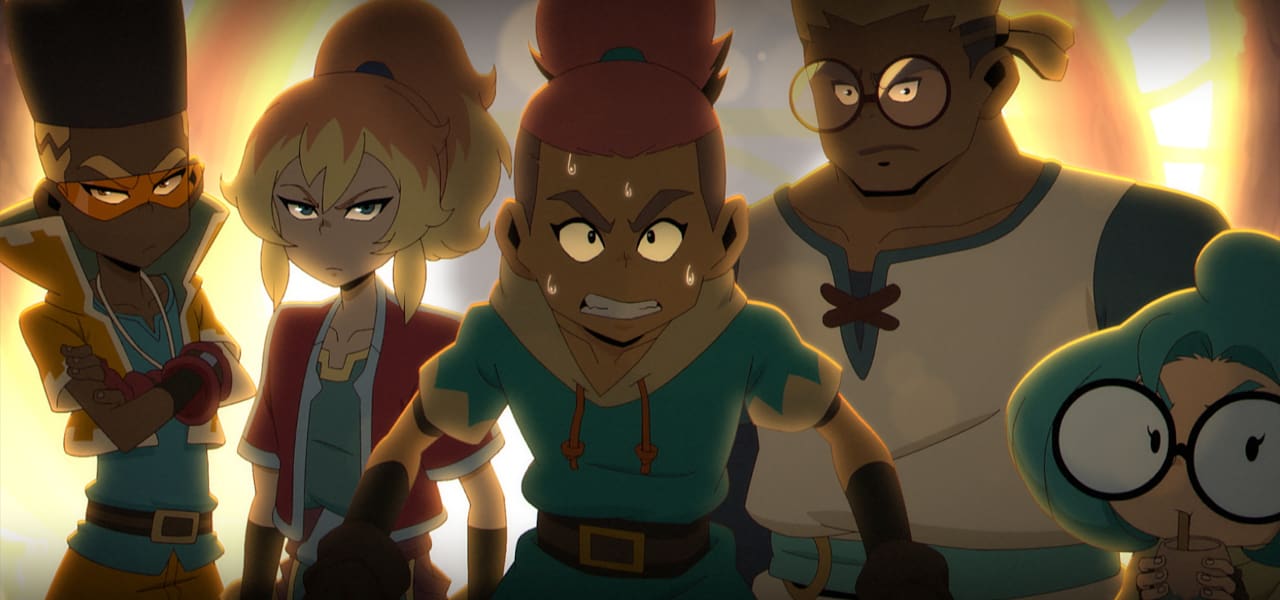
Created by leading French studio La Chouette Compagnie, the fantasy sports drama follows a farm boy named Key who turns from sports superfan to gifted young athlete after he learns about a powerful dragon spirit within him that may one day make him the legendary Dragon Striker. Unspooling in the halls of the skybound Kal Asterock academy, the series combines soccer action, fantasy adventure, sprawling worldbuilding and mythology, and coming-of-age stories into a world that feels inspired in equal parts by Japanese role-playing games, shonen anime, and European fantasy storytelling.
For co-creators Charles Lefebvre and Sylvain Dos Santos, however, Dragon Striker did not begin as a strategic attempt to capitalize on anime’s growing popularity. It began years before the current anime boom, when many broadcasters were still hesitant to embrace Japanese influences at all.
European Fantasy, Anime Aesthetic
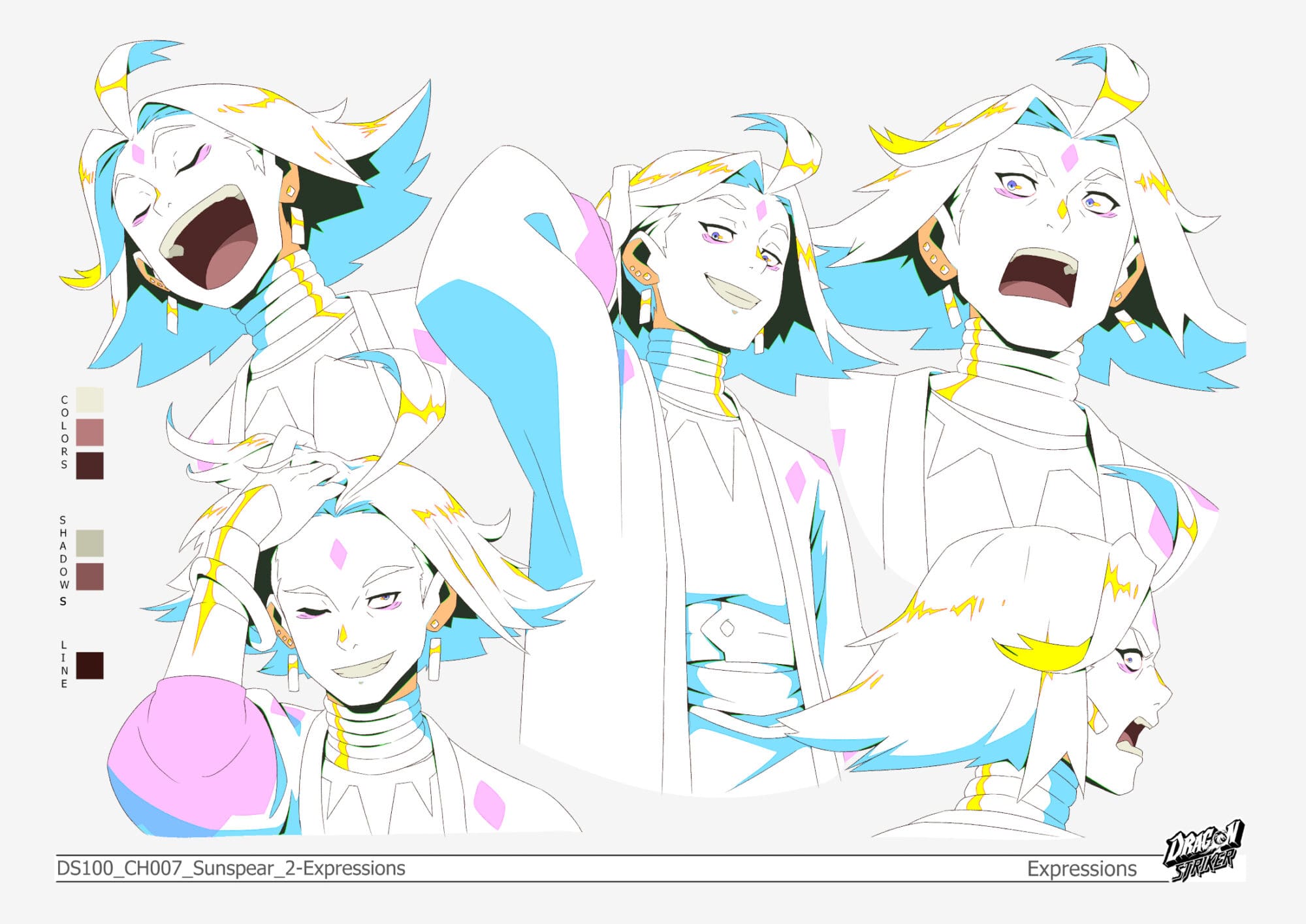
The most obvious aesthetic talking point after seeing even short clips of Dragon Striker is its heavy anime influence. The series proudly wears its visual inspiration on its sleeve, but Lefebvre rejects the idea that the goal was ever imitation.
Instead, Dragon Striker’s aesthetic was developed organically by a generation of European artists who grew up watching and loving anime and later cut their teeth while working within European production systems.

“In France and probably in some Latin countries that used to really love Japanese animation, we had to develop a style that can also appeal to local broadcasters,” Lefebvre explains. “So at the same time, we feel we are in this heritage and at the same time be able to appeal to a European broadcaster.”
The result is a hybrid style that feels immediately familiar while remaining something distinctly its own. The influences Lefebvre cites range from Final Fantasy and Chrono Trigger to Secret of Mana and Monster Hunter. Fans will recognize shades of Avatar the Last Airbender and Harry Potter. Rather than fixating on just one source of inspiration, he saw Dragon Striker as an opportunity to combine all the disciplines and programs that helped create his own sense of creativity through the years.
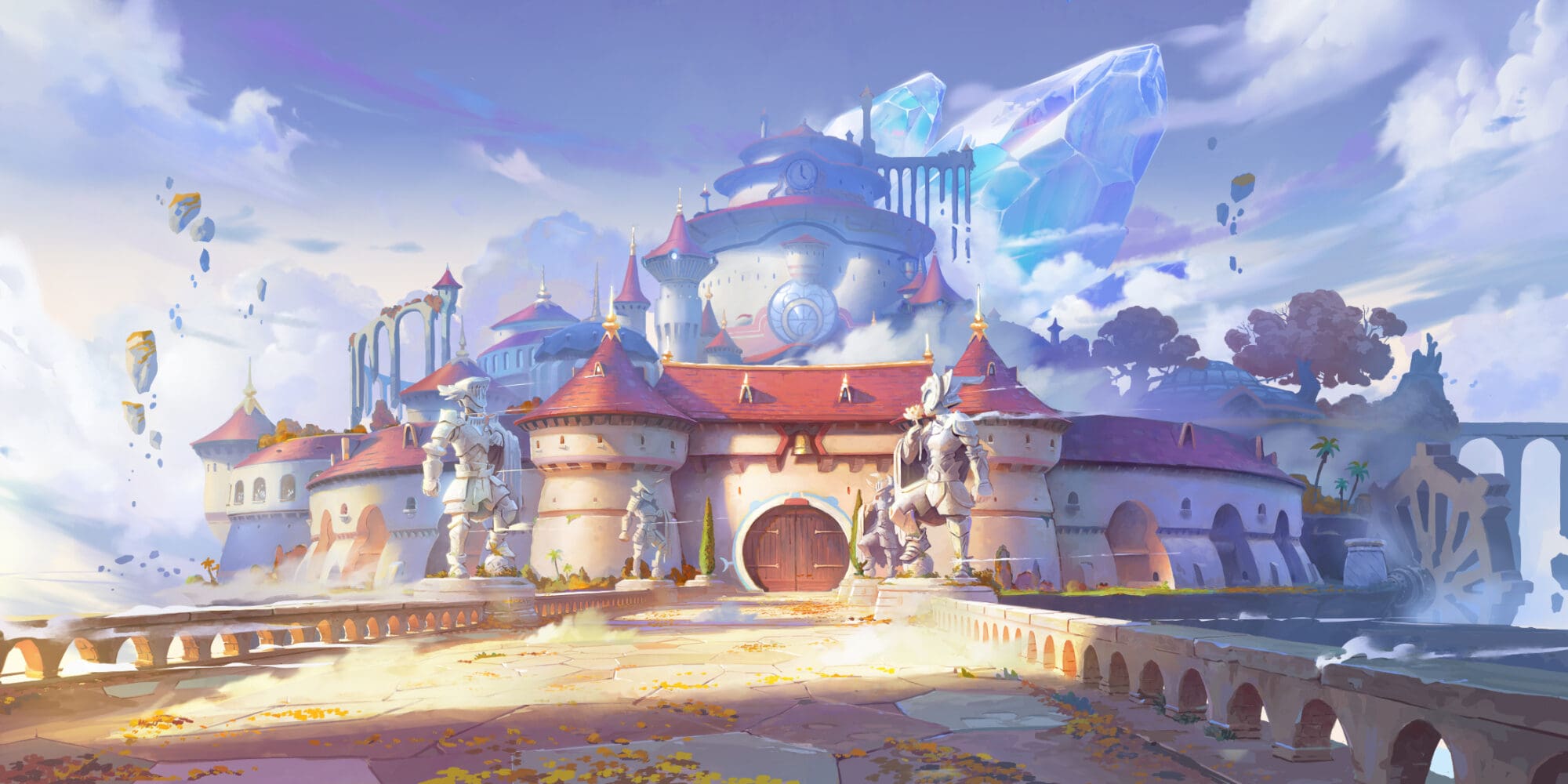
“All of those things are like the big mix of the things I really love,” he says. “When the opportunity came to make a project, it was the moment to put all of myself into it. It’s the big mix of all of that in this project.”
Dos Santos adds that the current enthusiasm for anime in global entertainment is a relatively recent development. Earlier in their careers, creators often had to disguise or soften those influences.

“Not that long ago, broadcasters didn’t even want to talk about anime,” he says. “It was like, ‘We don’t want that Japanese stuff.’ So as a creator and as a studio, we needed to adapt to these markets and still try to make the anime spirit and the shonen spirit progress inside other shows.”
That balancing act shaped the studio’s previous productions, but Dragon Striker offered a rare opportunity to stop compromising.
“Now it’s an awesome period for us because anime is trendy,” Dos Santos says. “So we can do exactly what we want, and Dragon Striker is a perfect example of that. It’s like a dream project for us.”
Soccer As Fantasy Combat
One of the series’ most thrilling creative decisions is its fusion of soccer and magic-based fantasy adventure.
Sports anime has long been a staple of Japanese animation, but translating that formula into a serialized fantasy production created unique challenges. The creators wanted the intensity and spectacle of sports storytelling while avoiding some of the structural limitations of depicting traditional matches.
Lefebvre points out that classic sports anime often devote multiple episodes to a single game. Dragon Striker operates at a much different pace, needing to leave enough time for its tremendous feats of worldbuilding.
“We had to pack everything in maybe half an episode, sometimes one episode,” he says. “The matches aren’t as long as what we recognize in sports shonen.”
That constraint pushed the team toward a more aggressive visual style for the competitions. Rather than emphasizing tactics and prolonged gameplay, they focused on momentum, spectacle, and key moments of narrative tension.
“The idea was to take what we love and push the spectacle,” Lefebvre says.
The show’s magical Tama energy system also transformed soccer into something closer to an action series.
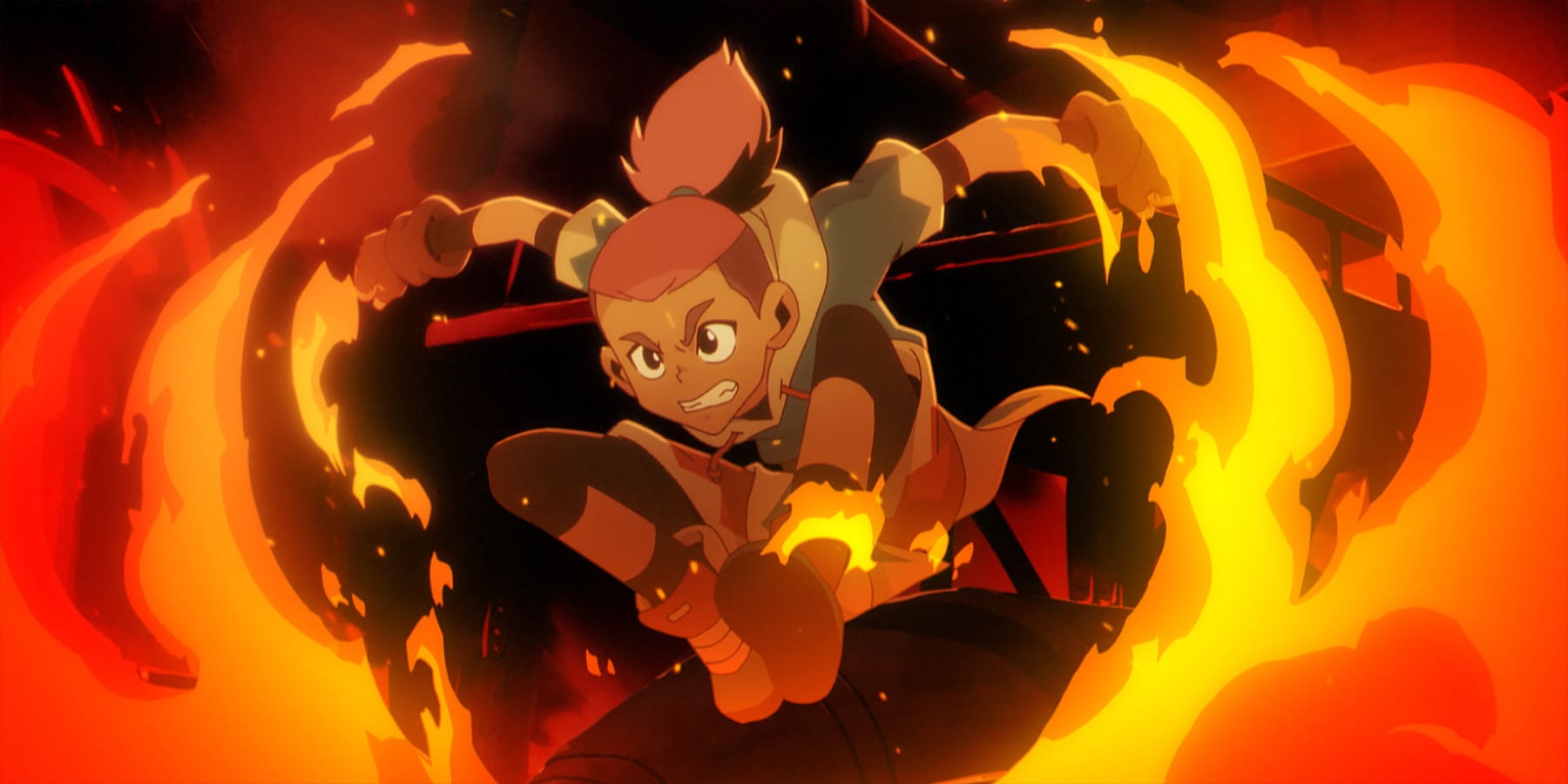
“When I was briefing storyboard artists,” Lefebvre recalls, “the idea was really, you imagine a fight of gladiators in an arena, just with a ball in the middle.”
That philosophy extends into the sport itself, where the creators intentionally eliminated downtime wherever possible.
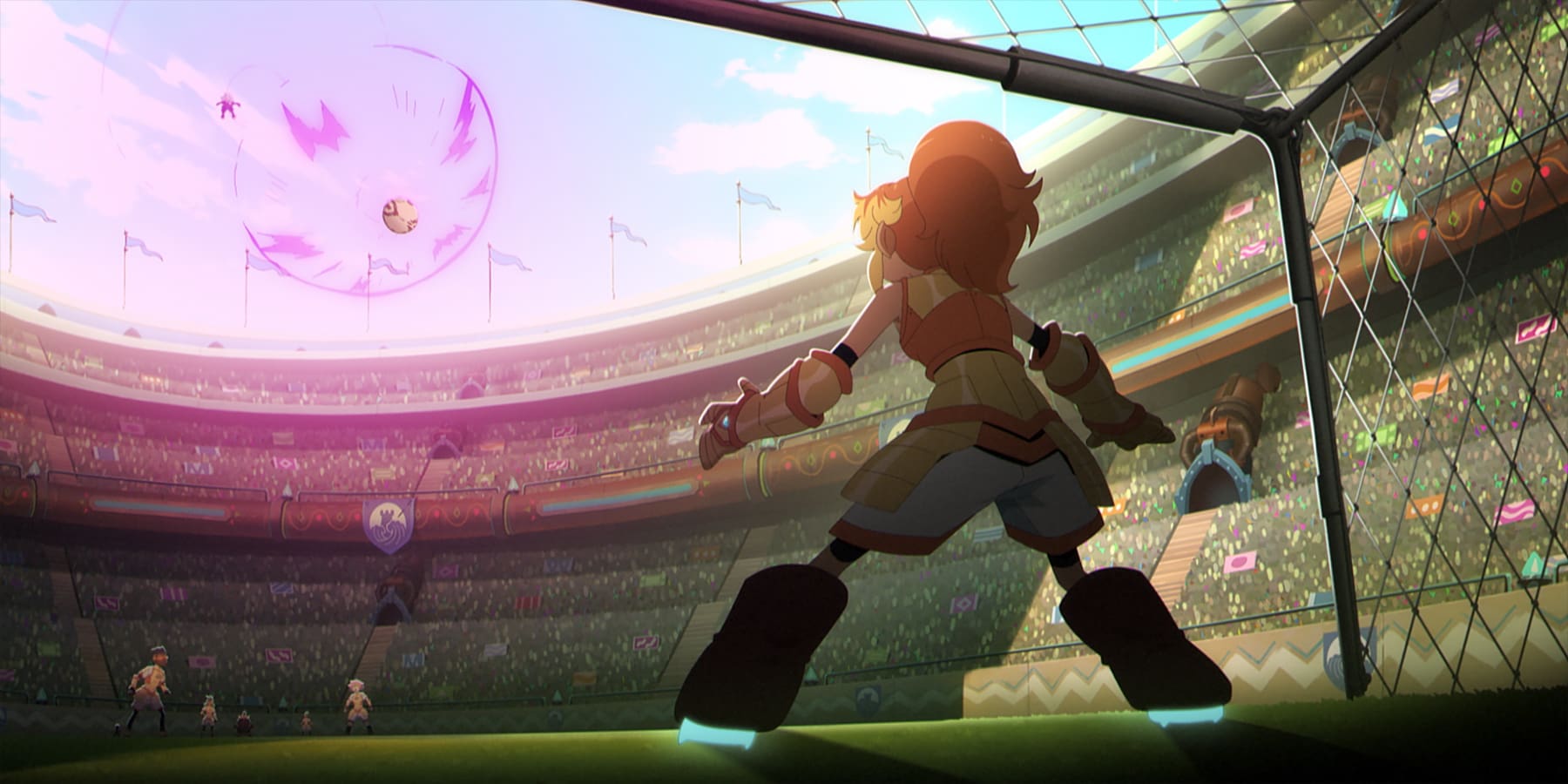
“Because it’s soccer with the twist of the Gorotama, we stripped out scenes that could make downtime,” Lefebvre explains. So, no throw-ins, corners, or players’ time-wasting to protect a lead. His team wanted “to stay really on the action.”
By using smaller teams, production was able to create a more focused and less chaotic on-field experience for viewers. Matches feature five-a-side squads rather than full eleven-player lineups, which allows for a more upbeat pace and keeps every participant actively involved throughout the games.
“It’s way more close to five-against-five soccer,” Dos Santos says. “It’s a very quick game. You don’t waste time.”
The familiarity of soccer also offered a significant storytelling advantage. Rather than spending valuable screen time explaining rules, the creators could immediately focus on character and worldbuilding.
“The greatness of soccer is that everybody knows soccer,” Dos Santos says. “Every single kid in the world knows soccer and loves soccer and plays soccer.”
A Lived-In World
While the soccer matches provide the series’ kinetic energy, the show’s fantasy world gives it its identity.
Lefebvre was the driving force behind the development of the show’s wider universe, approaching the worldbuilding process with a keen focus on environmental storytelling. Video games were an especially important reference point for how they effectively convey information to gamers through design rather than dialogue or narration.
“I really love how video games are made,” he says. “I was watching level designers and how they think, how they put traces, something that is going to tell you a story without having to tell it with words.”
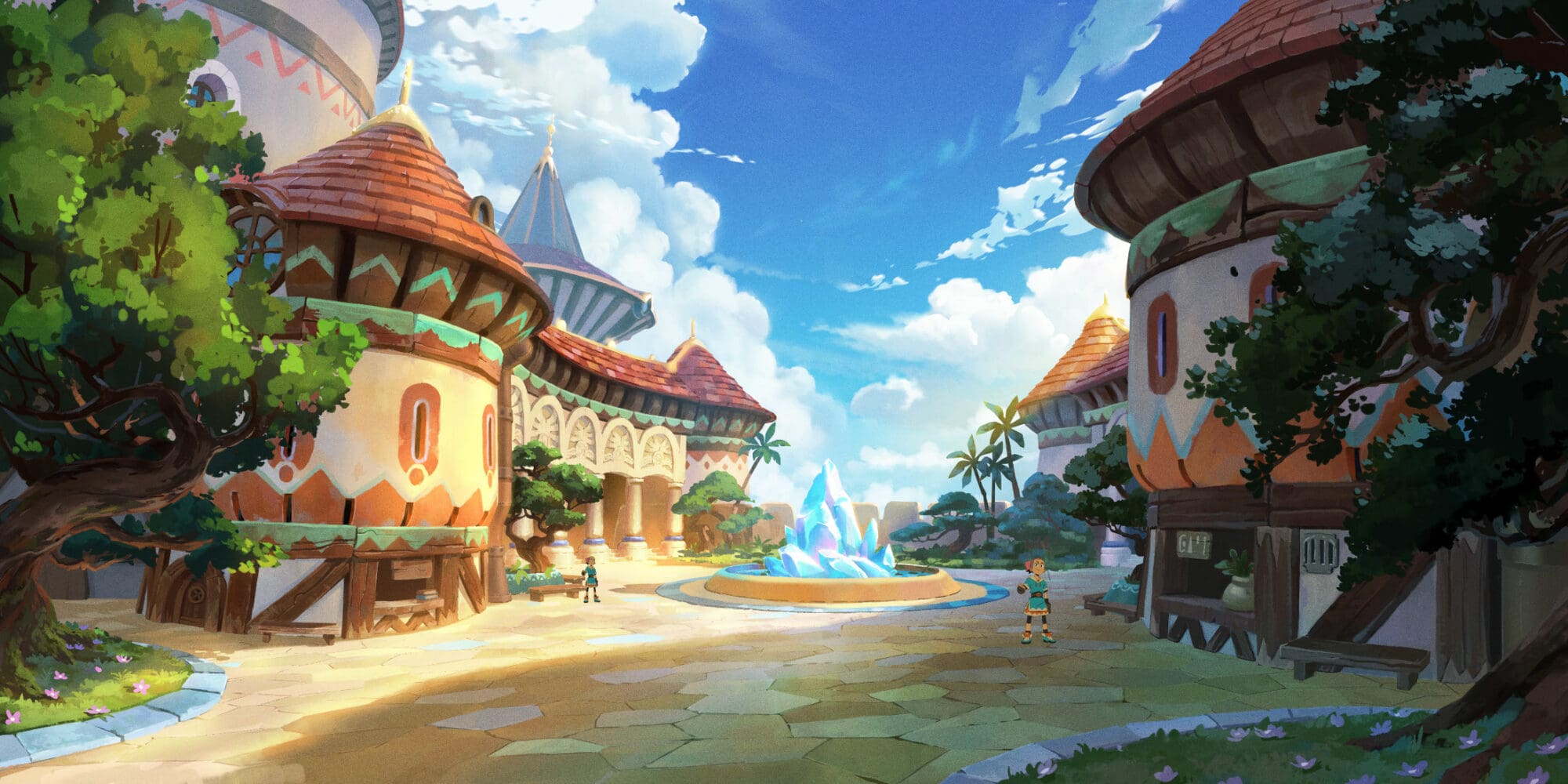
That philosophy shaped everything from the smallest flourishes to architecture to background details. The goal was to create a world that could suggest histories, cultures, and conflicts without relying entirely on exposition.
“How, without saying it, we can make the audience recognize some parts of the world that we don’t have to explain,” Lefebvre says.
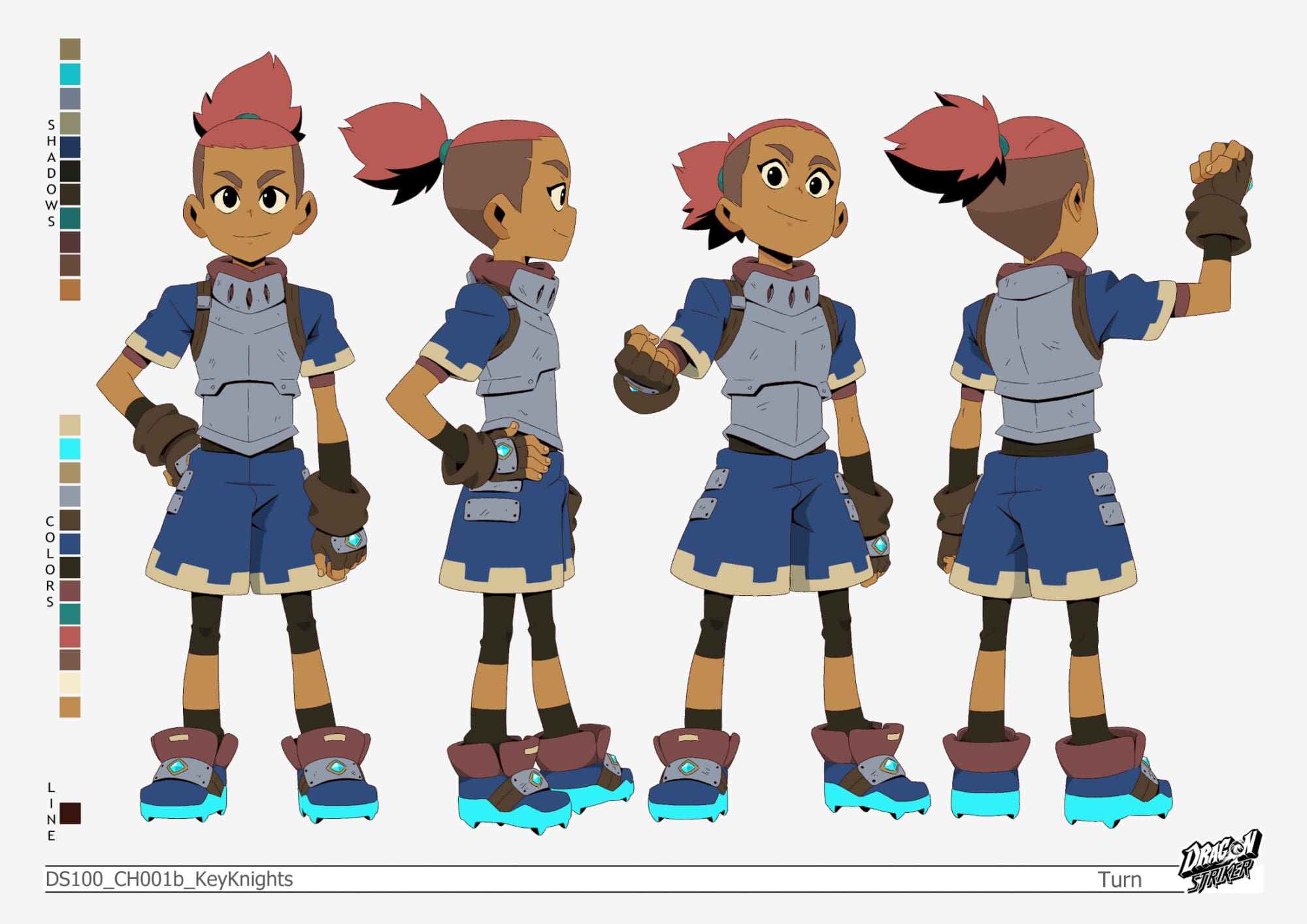
Costume design embraces a similarly eclectic approach. Medieval fantasy elements coexist with modern urban and sport fashion influences, creating a world that feels detached from any single historical period.
“They have sneakers, they have hoodies,” Lefebvre says, pointing out that modern sports culture played a significant role in how the characters’ outfits were designed.
“It was really always to try something, to mix, to always bring a twist to most of the things we do.”
Every Prop a Story
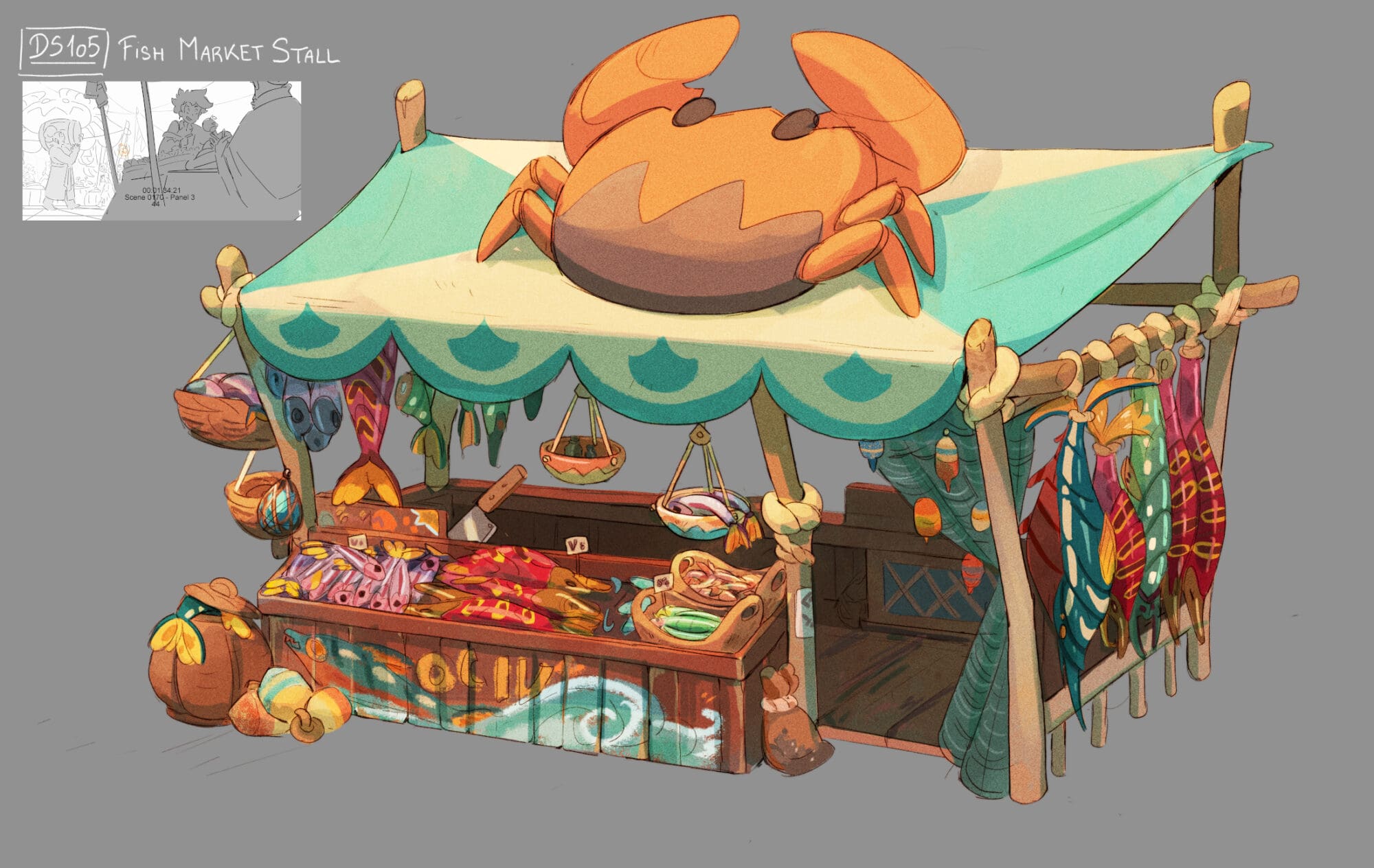
One of the most revealing aspects of the creators’ approach is the attention paid to even the smallest visual details.
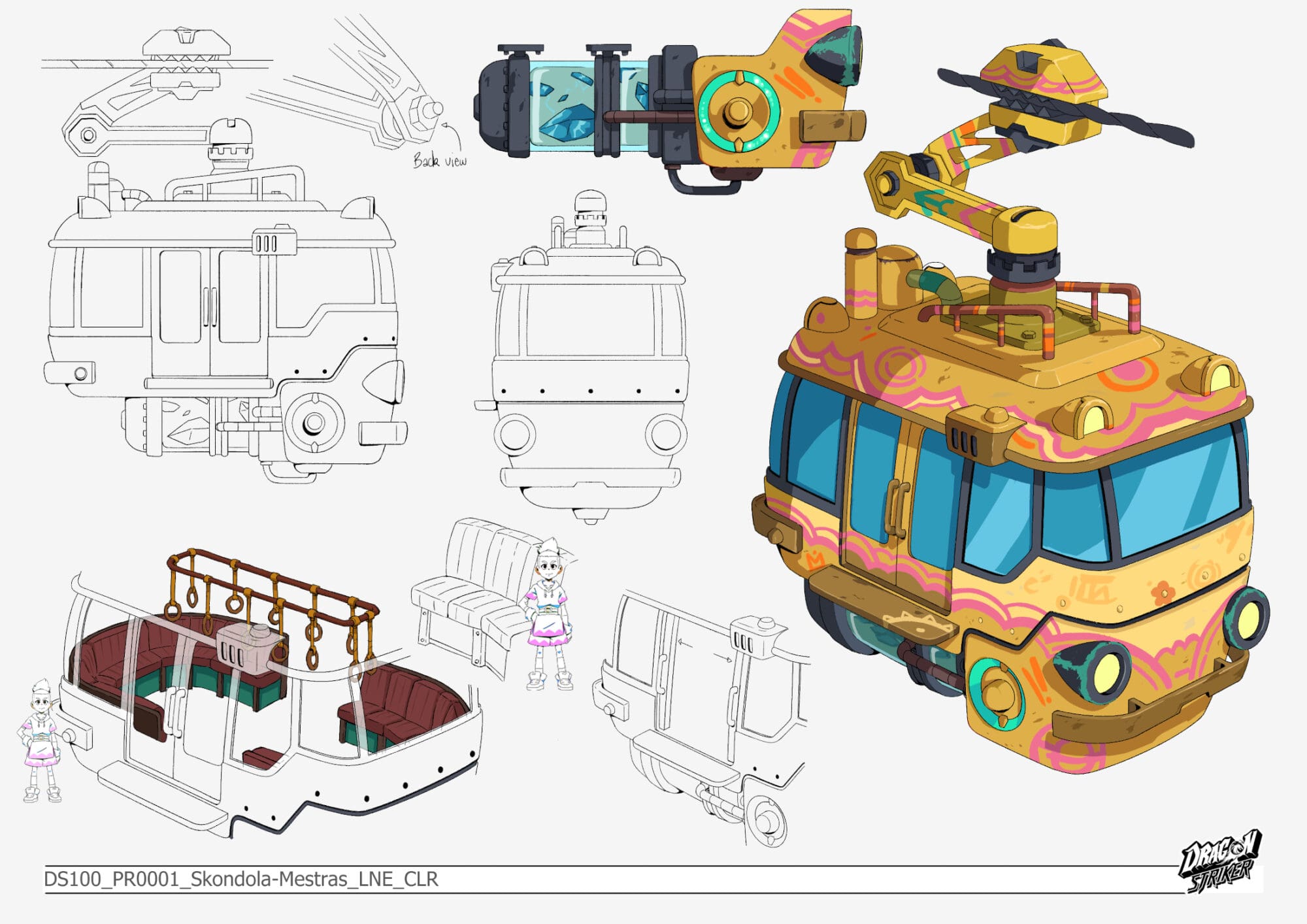
Dos Santos recalls discussions with the design team in which the emphasis was placed on storytelling rather than decoration. “When you design anything, it needs to tell a story,” he says, adding that the principle applies equally to major landmarks and minor props. “Even if it’s a chair, a fork, it has to be a Dragon Striker chair, a Dragon Striker fork. Everything needs to have a little story to tell.”
Recurring visual motifs were used to further create a visual fidelity across the show’s expansive environments. Circular forms connected to balls and celestial imagery appear throughout the series, while diamond-shaped patterns echo key elements of the world’s mythology.
“We kind of use those simple shapes to try to build a world around it,” Lefebvre explains.
An Under-Served Audience
Dragon Striker is aimed squarely at a demographic space that has become increasingly underserved by today’s broadcasters and streamers. While preschool programming continues to expand and adult animation attracts growing attention, comparatively few productions target older children and young teenagers with ambitious serialized storytelling.
Both creators view that demographic as the ideal home for the stories they want to tell.
“It’s our sweet spot,” Dos Santos says without any hesitation.
The opening scene of the show’s first episode immediately establishes that intention. A surprisingly intense sequence early in the series signals that the creators are willing to engage with darker themes and stronger emotions than many contemporary children’s shows.
We’ll avoid posting any spoilers, but Dos Santos admits he was initially unsure whether Disney would even approve the scene.
“I was like, okay, we will share that to Disney, but there is no way they will accept this scene in that shape,” he laughs. Instead, the studio found unexpected support. “The artistic freedom we got was crazy,” he said, with still a bit of disbelief.
For the creators, those more grown-up moments are not about shock value, but about treating younger viewers with respect.
“Being able to produce a show for kids and pre-teens, and also maybe teens, it’s awesome,” Dos Santos says. “That’s when you remember the most extraordinary feeling you got when you watched anime and animation in your own youth.”
“Treating kids with respect,” he adds. “That’s very important for us.”
Lefebvre sees the project as the realization of ambitions he has carried since his own adolescence. “It’s the type of project we hoped from the moment we were teenagers to be able to do,” he says.
After ten years of development, changing market conditions, production challenges, and evolving creative ambitions, Dragon Striker lands like a show made by artists who finally found the freedom to pursue exactly the kind of storytelling that inspired them to pursue animation in the first place.
For a generation of viewers searching for their own version of the shows that once shaped Lefebvre and Dos Santos, that may prove to be the series’ greatest superpower.