.png)
Inside ‘Acid City,’ A Cyberpunk Speculative Documentary Anchored In Real Voices And Real Science
Stay informed with free updates
Sign up to get our news digest — delivered directly to your inbox twice a week.
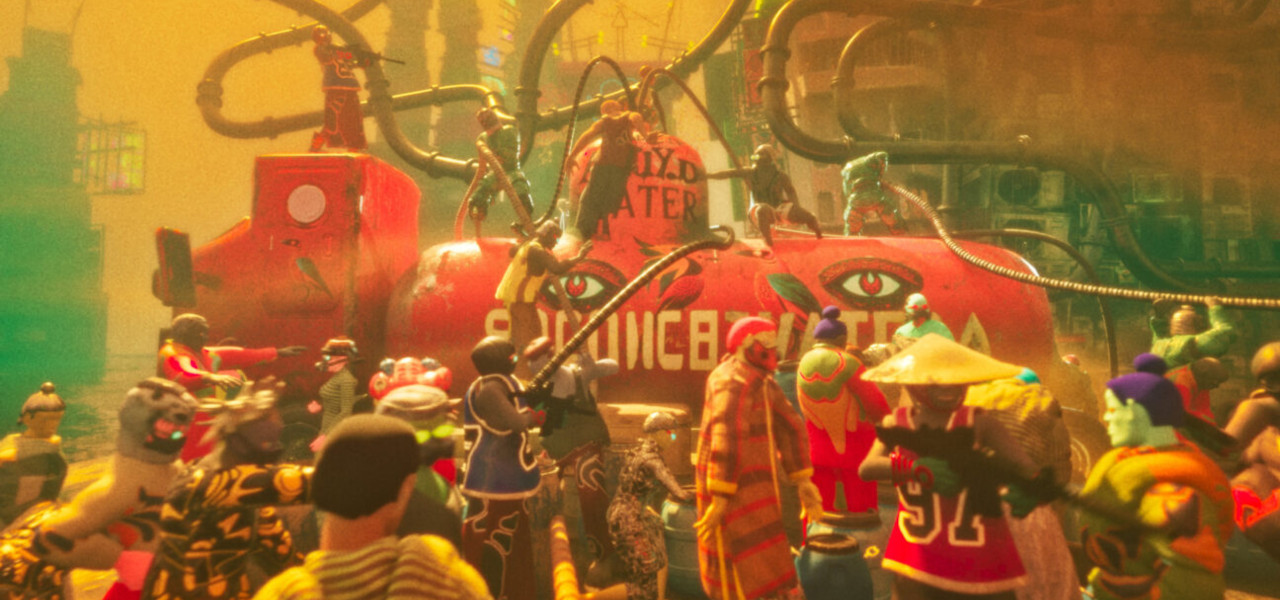
Premiering on January 30 at the International Film Festival Rotterdam, the cyberpunk CG short Acid City arrives as a compact yet unusually dense feat of worldbuilding: a 12-minute animated documentary set in a floating megacity adrift in a vast acidic ocean.
Directed by Jack Wedge and Will Freudenheim and produced under their New York–based banner Laser Days Studio, the film occupies a deliberately unstable space between speculative fiction, documentary, and environmental anthropology. It mixes real voices recorded across New York City with bespoke scripted dialogue, giving texture to a high-concept story that feels disturbingly close to our shared reality.
We caught up with Wedge and Freudenheim before their trip to the Netherlands, and the duo gave Cartoon Brew exclusive access to the film’s first trailer, seen below.
On paper, the film’s premise is simple: a documentary crew visits a dystopian, futuristic city that shouldn’t exist and records how people survive there. In practice, Acid City becomes something more authentic and more relatable—a pseudo-documentary that’s layered, referential, and emotionally protective of its subject.
“I wanted the movie to feel like a memory,” Wedge explains. “I wanted it to feel like I’ve been here before… like it reminds the audience of their own home.” That sense of familiarity is central to the film’s strategy. Despite its genre trappings, Acid City is not a distant sci-fi nightmare, but an instantly recognizable urban ecology pushed just far enough to expose the fragility of the systems the world relies on for survival today.
The filmmakers’ collaborative relationship stretches back to adolescence. “Will and I met when we were 13 in an orchestra class,” Wedge says. “Science fiction was always something that really bound us together from the get-go.” That shared obsession matured into a studio practice rooted in what Wedge calls “environmental storytelling: worldbuilding where environments aren’t just a setting, but a living character.”
For Laser Days, science fiction is less about prediction than reflection. “We pay very close attention to what’s happening all around the world,” Wedge notes, “and we take inspiration from it and put it into our animation. Science fiction is just becoming the news.”
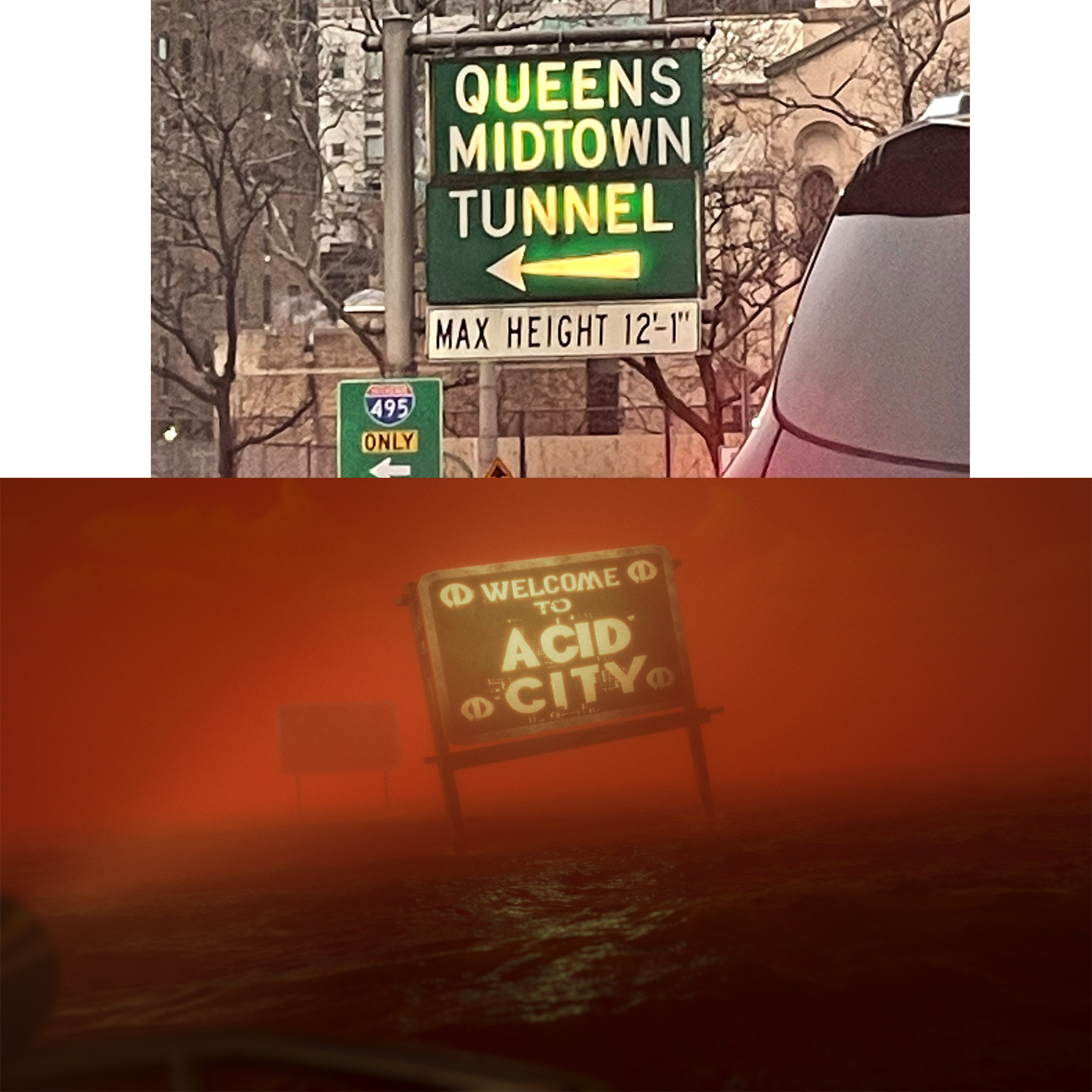
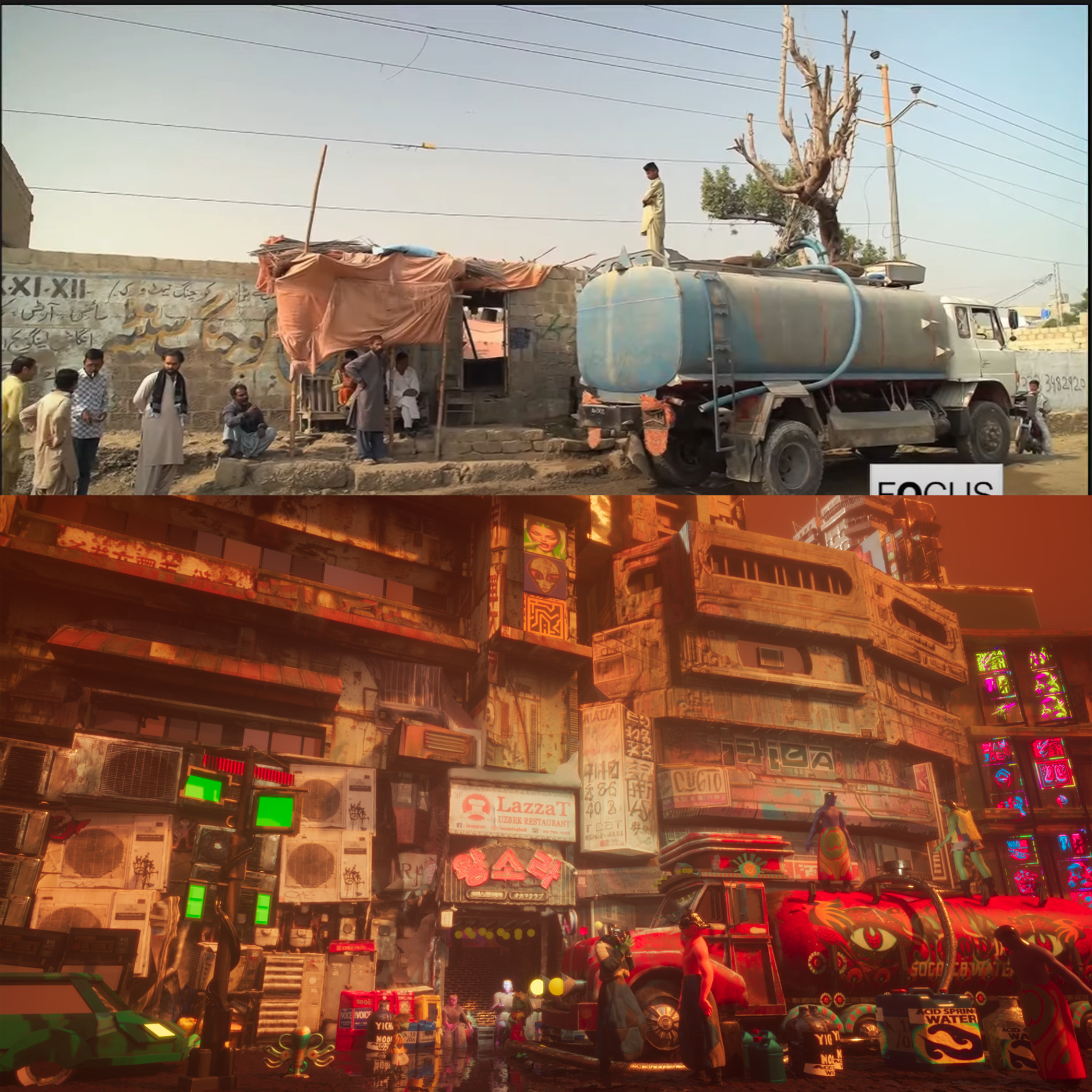
That sensibility shapes every frame of Acid City. The city itself is a collage. “It’s composed of many different real places all across the world,” Wedge explains, citing the duo’s native New York City as its emotional core, alongside places like Karachi and Tokyo, as well as cinematic touchstones like Blade Runner and Akira.
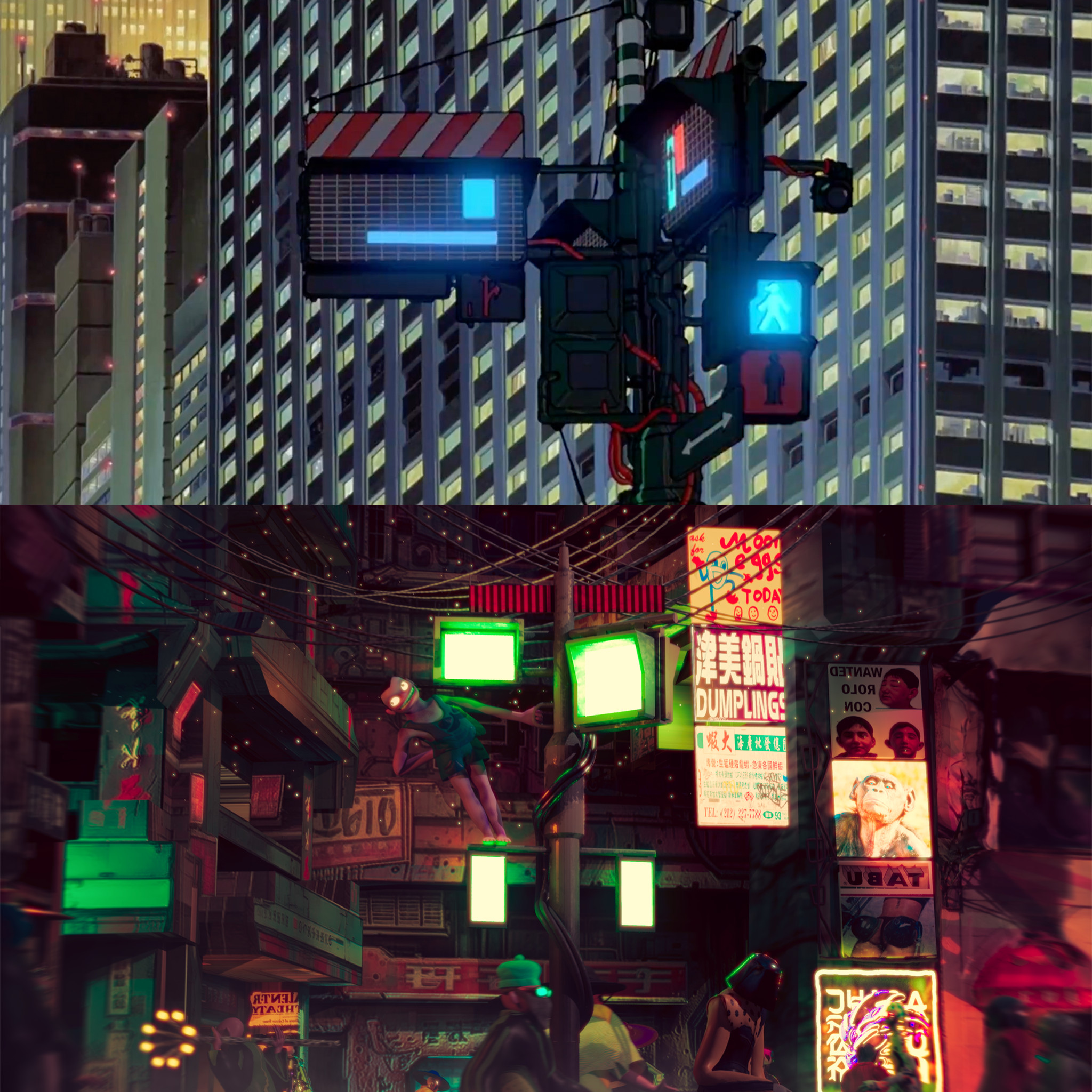
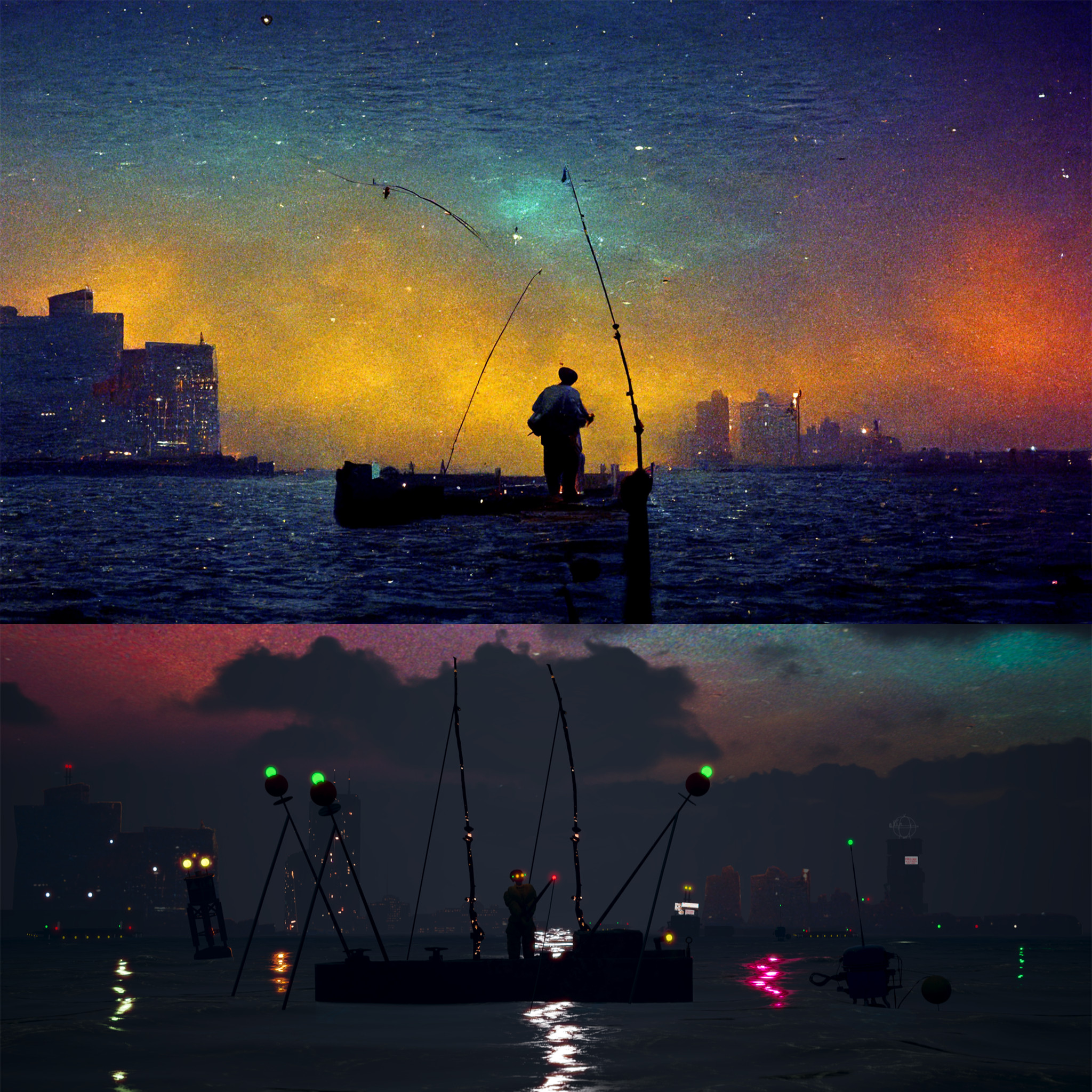
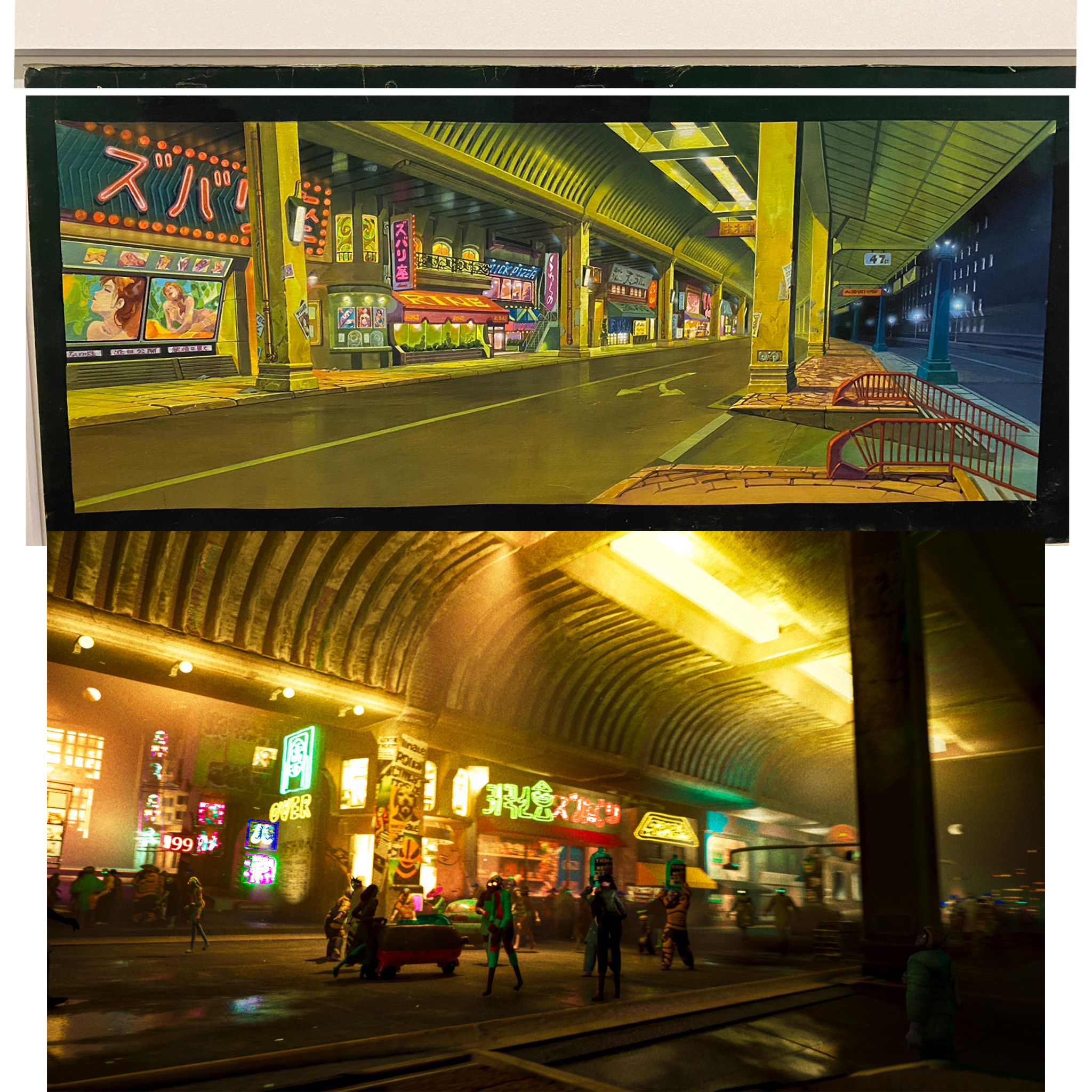
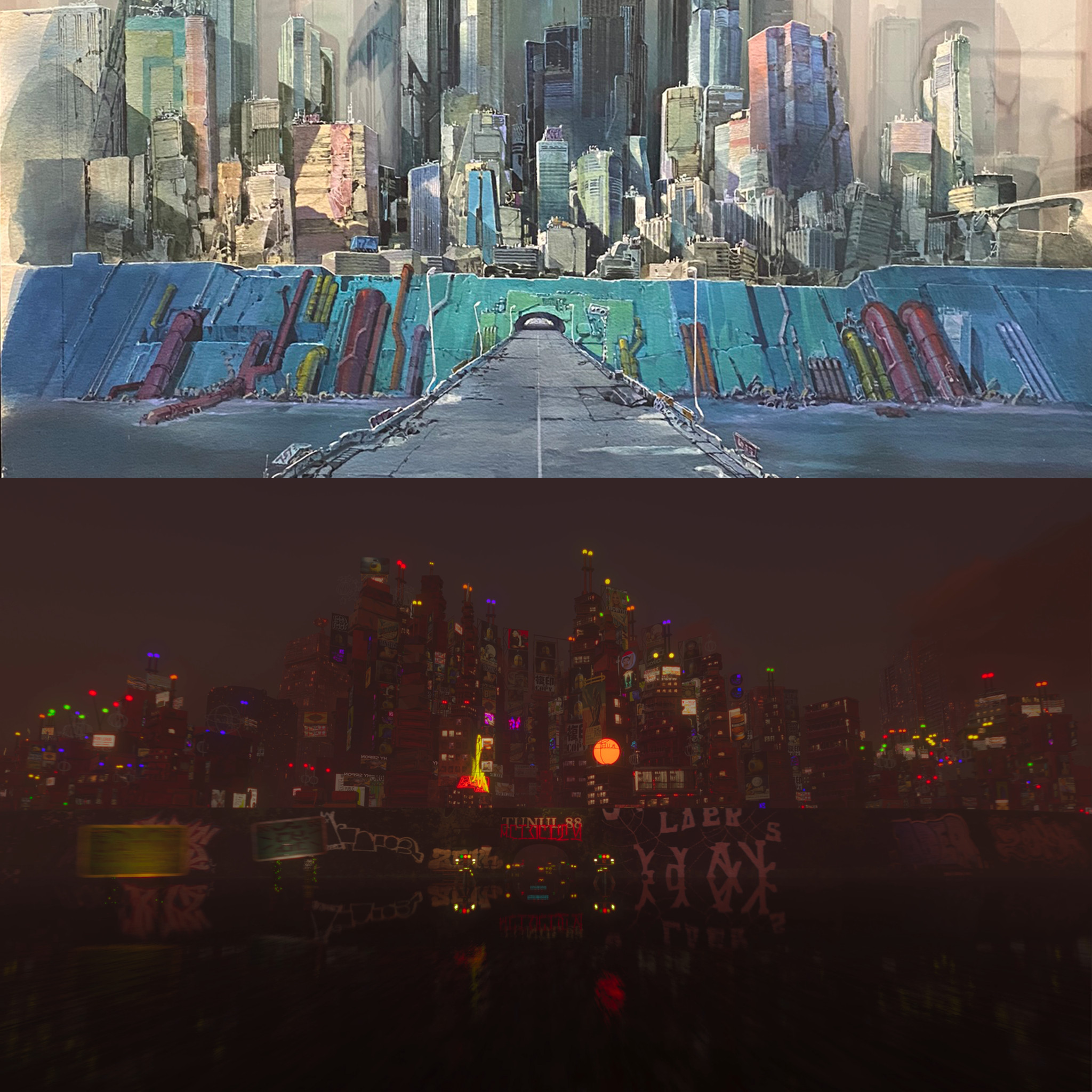
Freudenheim describes the process of mining influence as a kind of new-age archaeology. “We extracted a lot of data from Google Maps and pulled together clumps of different cities, then merged them together,” he says. “From that, we spawned all the buildings that became the megacity of Acid City.”
Reference boards, architectural sampling, and a constantly reused internal asset library allowed the city to grow organically, accumulating history even within the constraints of a short film.

Presented as a documentary, many of the voices we hear in Acid City belong to water scientists, emergency responders, children, and passersby recorded across New York City, interwoven with invented characters performed by voice actors. Wedge and Freudenheim describe following water scientists into natural cave systems in Georgia and Tennessee, recording groundwater sampling expeditions and folding that research into the film’s speculative logic. The result is a hybrid form that recontextualizes real perspectives and scientific research within a psychedelic, surreal animated world—grounding the film’s invention in lived experience.
The film’s documentary veneer gives it a feeling of protectiveness toward its fictional subjects, acknowledging the worst parts of Acid City while insisting on its worth. According to Wedge, “That was a big goal of what we were trying to do. Acid City is an island nation, so there was a lot of research that went into how this place would actually exist.” Rather than indulging in fictional poverty porn or post-apocalyptic tourism, the film focuses on the endurance of the human spirit, community, resilience, and adaptation. Segments explore how infrastructure, culture, and belief systems might mutate under extreme heat, water scarcity, and overcrowding.
The characters themselves embody that mutation in a literal way. Rendered with deliberately imperfect motion capture and stylized, sometimes sickly bodies, they blur the line between aesthetic choice and biological consequence.
“Many of them are meant to feel a little bit sick,” Freudenheim explains, “like the place they’re from is also kind of harming them and mutating them.”
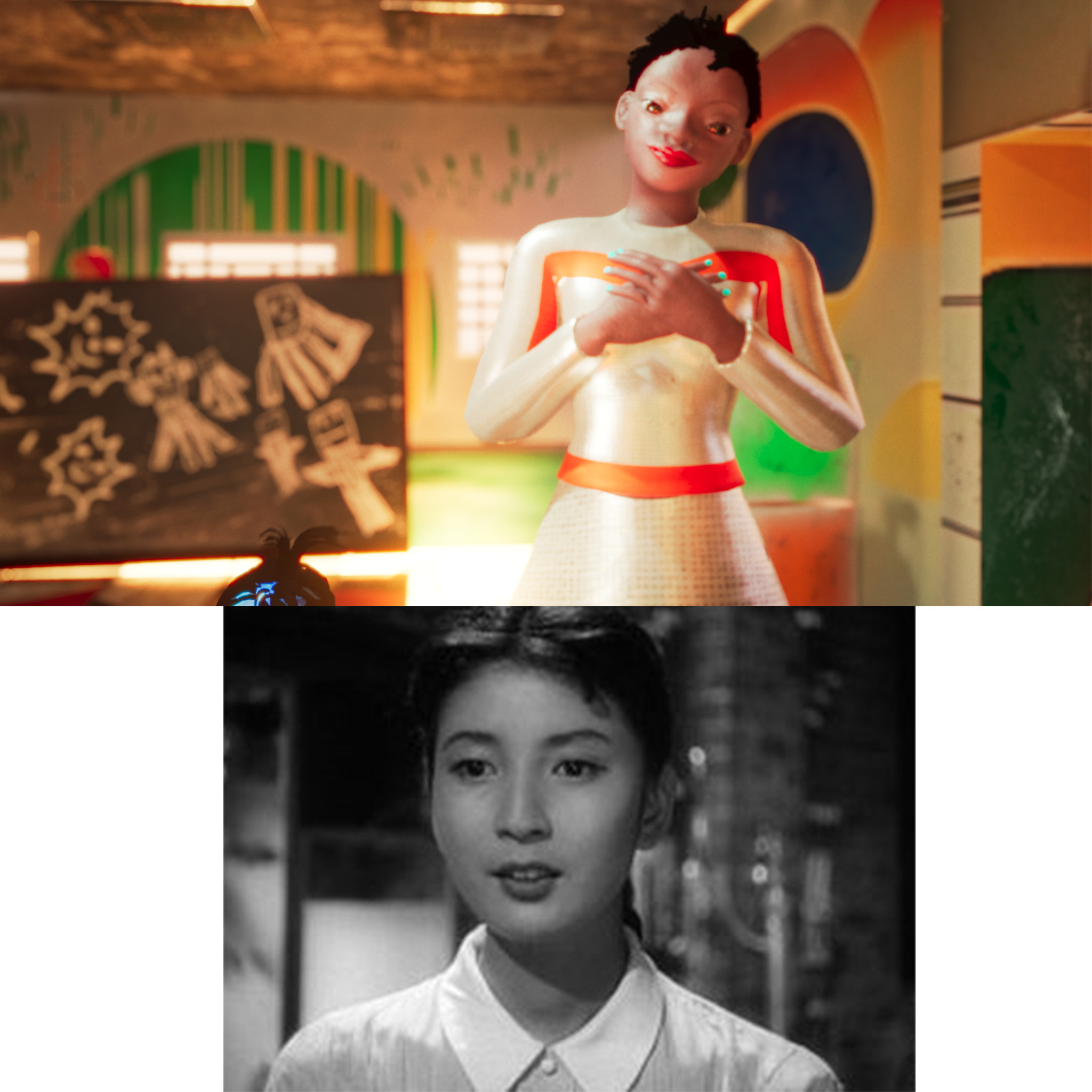
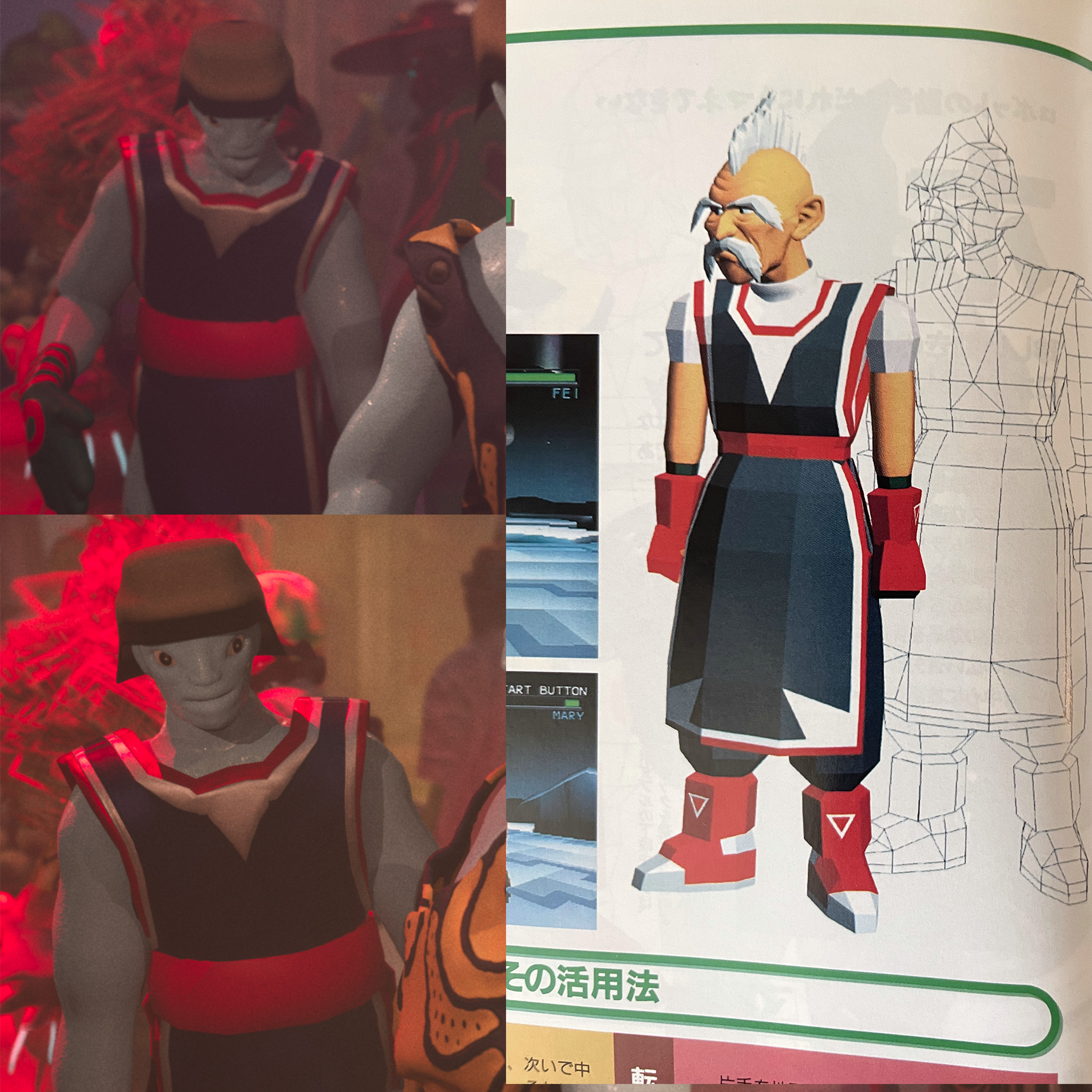
Wedge pushes the idea further: “Maybe it’s regular people who have just been eating polluted materials for too long… what happens when you’ve been living in that kind of environment over a number of generations?” The film never settles on a single answer, presenting a cast of characters more diverse than can be found in even the most metropolitan cities in 2026.
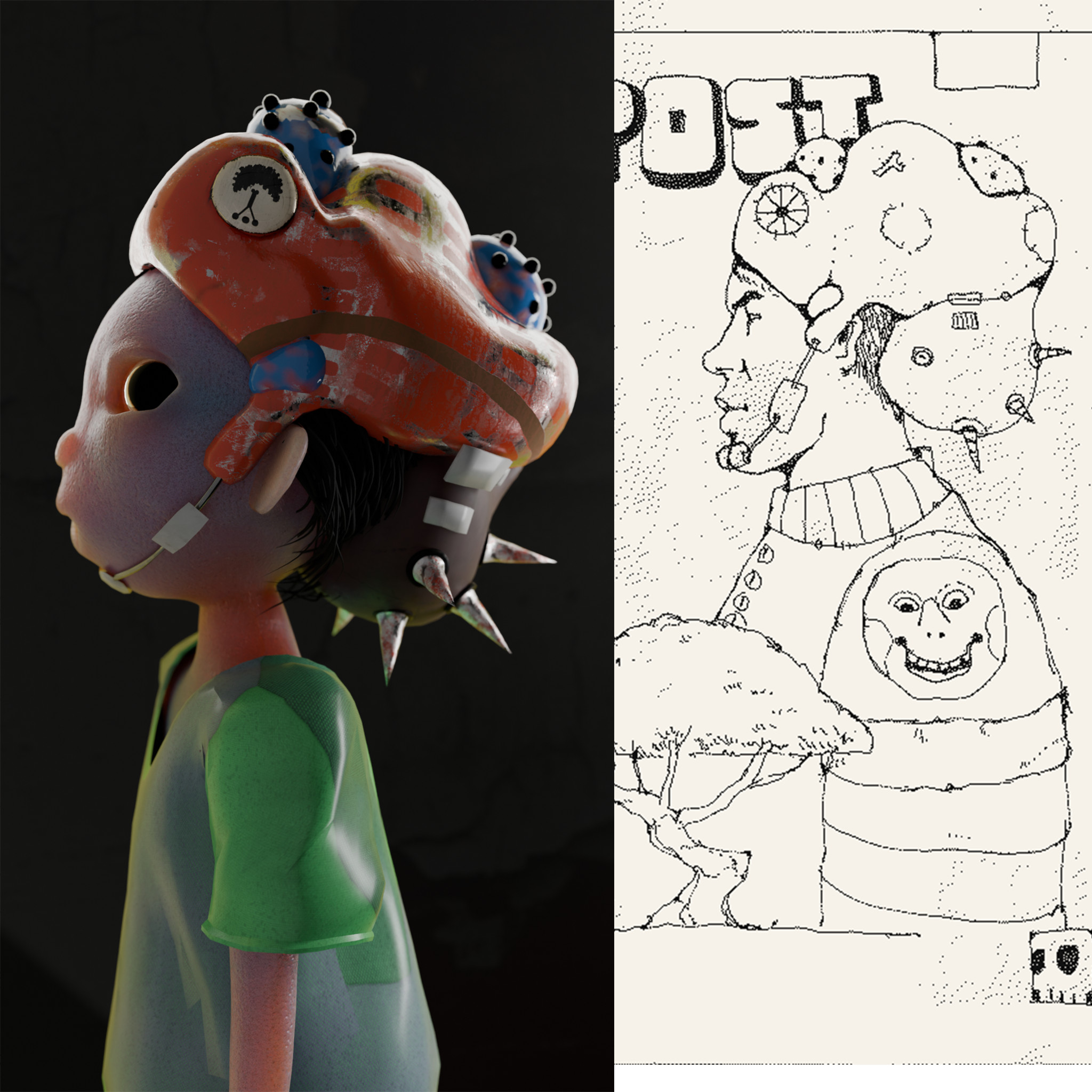
Technically, the character imperfections are inseparable from the film’s production limitations. Acid City was created almost entirely by Wedge and Freudenheim using motion-capture suits, Blender, and Unreal Engine.
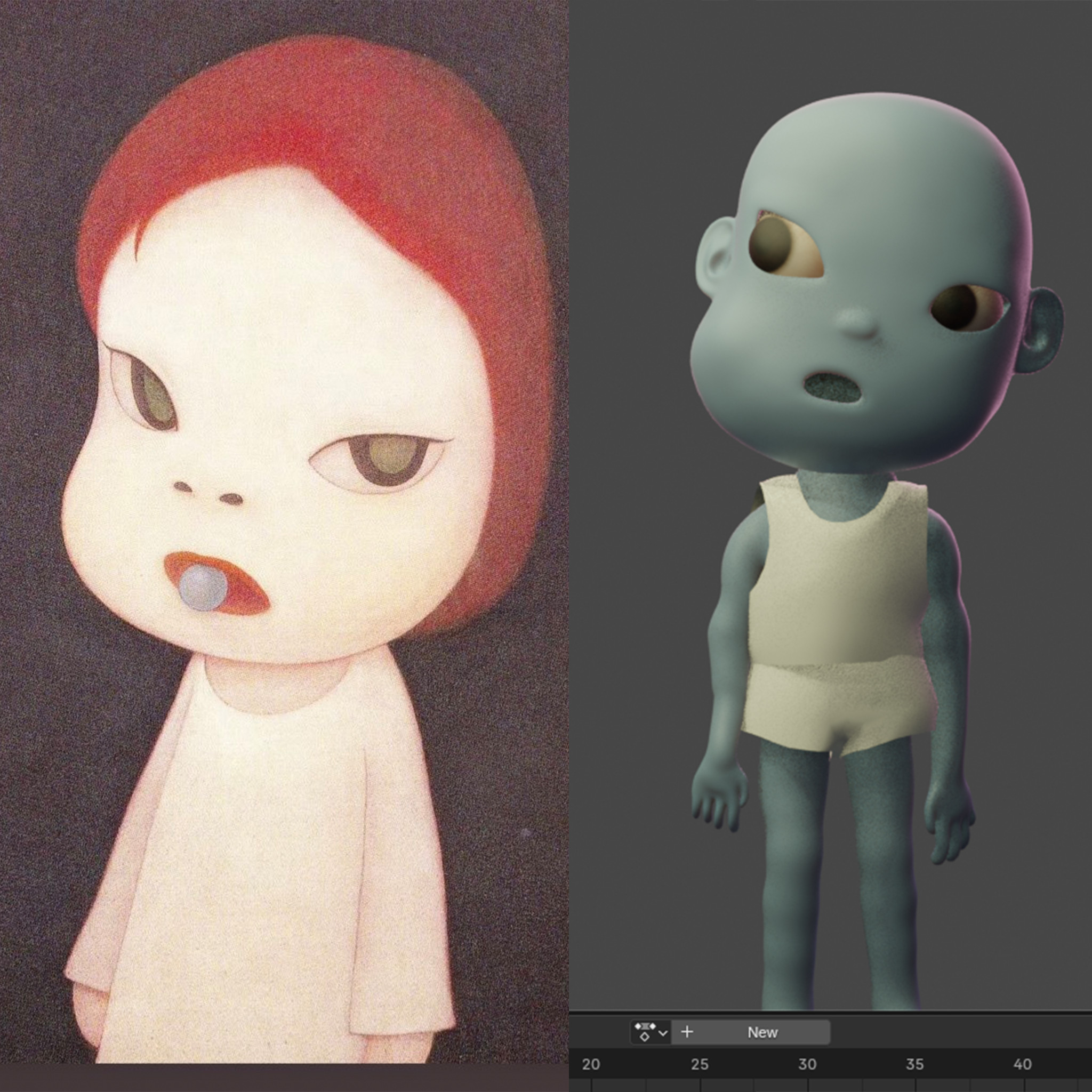

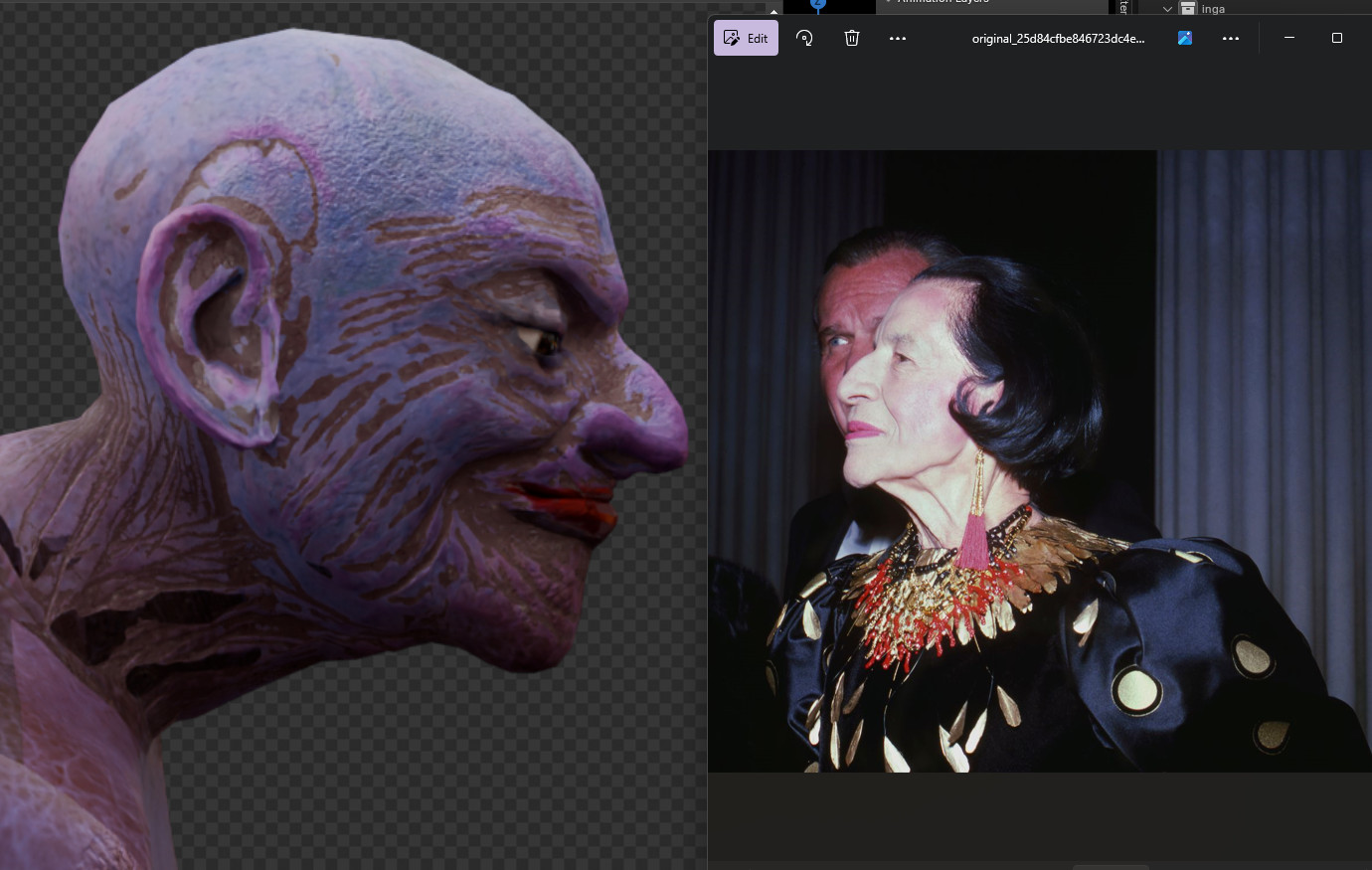
“There was no animation team,” Wedge says. “To make a movie about a megacity, you had to find a way to contain it, or else we’d still be working on it today.” Rather than hiding the limitations of a two-person crew, the film embraces them: clipping, rough edges, and graphic artifacts become part of the city’s texture.
One of the film’s most striking dimensions is its attention to spirituality. According to the directors, much of that material was ultimately cut for length. Wedge describes countless discussions about how belief systems would evolve under the film’s environmental and societal conditions.
“We were thinking a lot about how spirituality would work in Acid City,” he says. Freudenheim recalls a removed sequence centered on a sunset ritual involving immersion in water, noting that “all cultures have a spiritual connection to water, whether it’s scarce or not.” References ranged from real-world religious practices in extreme climates to speculative fiction like The Water Knife, which had a profound impact on how the filmmakers imagined future water wars and the rituals that might arise from their fallout.
That blend of pragmatism and mysticism reflects a broader storytelling ambition.
“We hope Acid City encourages people to acknowledge and respect these systems of non-human intelligence that exist all around us, which make our existence possible,” the filmmakers wrote in their press notes for the short.
Premiering at Rotterdam on January 30, Acid City marks a major milestone for Laser Days Studio: their first fully original, independent IP after years of commercial and collaborative work.
For Wedge and Freudenheim, the short is a foundation they plan to build on going forward. “We’re working on a new short and developing a feature,” Wedge says, “and all of it is about water and science fiction.”
Practically, Acid City is a proof of concept. Narratively, it’s much more: a warning, certainly, but not one without hope. All the shit and despair that come with cyberpunk dystopias are present, but so too are characters full of empathy, love, and ambition.