.png)

How The Brothers Behind ‘Superman: Awakens’ Launched An Original Sci-Fi Universe With ‘Sjor’ Using Unreal Engine 5
Stay informed with free updates
Sign up to get our news digest — delivered directly to your inbox twice a week.
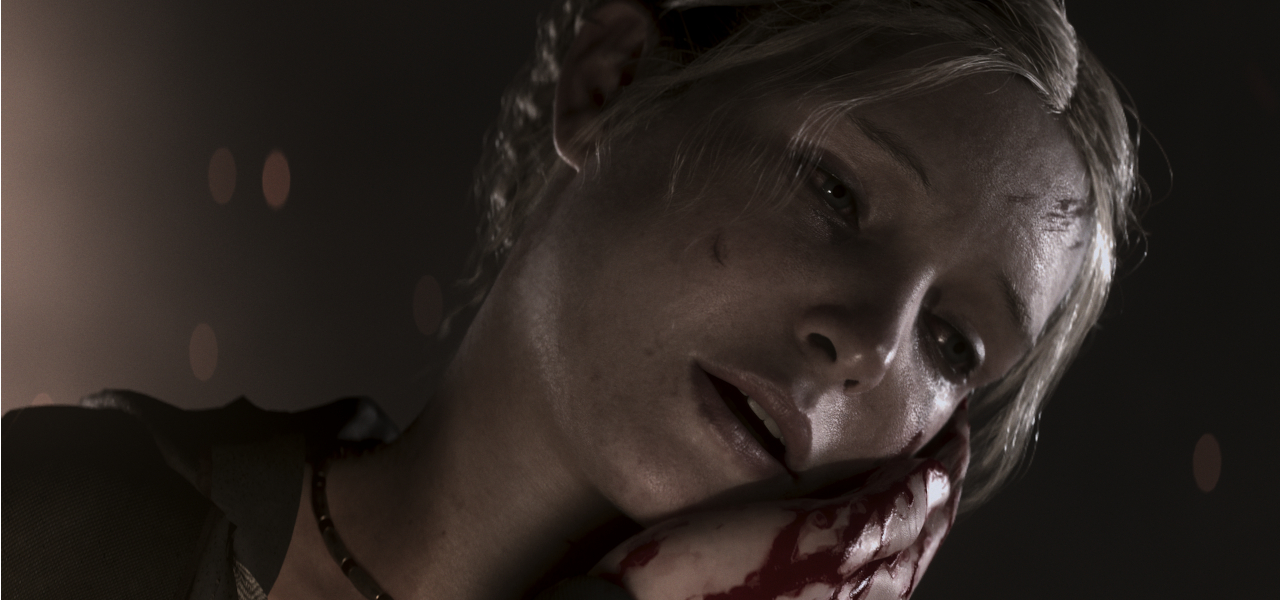
Greek brothers Antonis and Stavros Fylladitis know what people tend to think when they hear the words Unreal Engine short film. Most imagine slick tech demos, video game cinematics dressed up as movies, and proof-of-concept reels chasing studio attention. Their independently produced animated short Sjor was made to push back against those preconceptions.
Built over the past year by the brothers’ Floating House Pictures and a small team in Greece, the 17-minute film blends science fiction, Norse-inspired mythology, and sharp action sequences into a dense cinematic world that feels closer to Dune or Stargate than a cutscene. The short follows Princess Sjor after the murder of her family as she uncovers a connection to ancient gods and joins forces with a warrior named Halvar against an empire hellbent on hunting her down.
Unreal Expectations
The Fylladitis brothers come from the VFX and game cinematic world, hence their familiarity with Unreal. Antonis has spent more than 25 years in the industry, while Stavros joined him professionally nearly two decades ago. Together, they’ve worked on commercials, feature films, and TV shows, eventually going all in on Unreal Engine after their fan film Superman Awakens went viral.
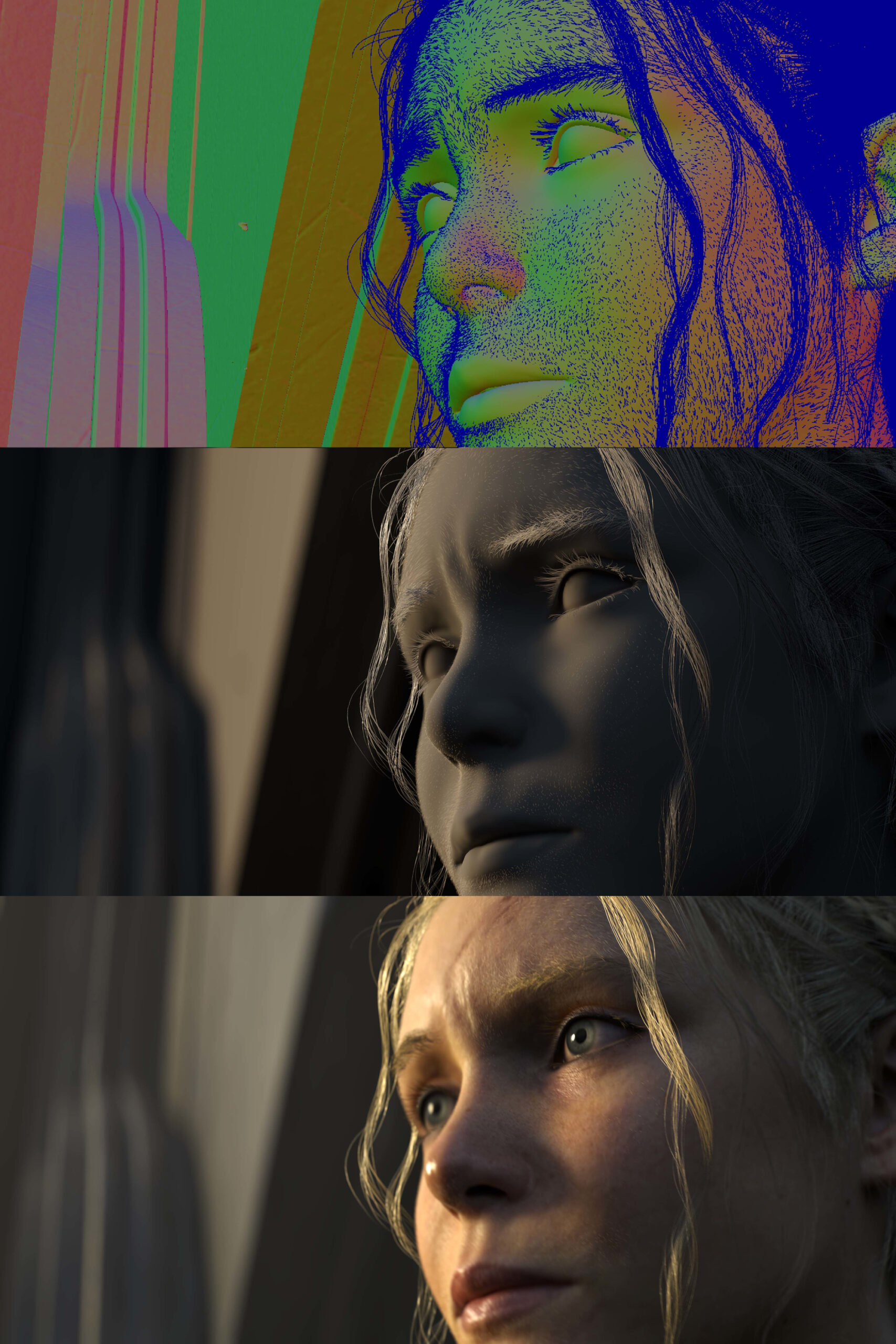
“We had a lot of offers for directing game cinematics,” Stavros explained of life after creating a 2 million hit short (and that’s only counting their original upload). “Since then, it’s like the last three or four years, we are 100% into game cinematics, which is something that allowed us to polish our pipeline, our skills, and that’s why Sjor came out so easily, I would say. We took stuff that we are already applying in our daily work, and we tried to evolve into that, into something bigger.”
Sjor was, importantly, never intended to function as a technical showcase. From the beginning, the brothers were wary of the assumptions audiences often bring to real-time animation tools.
“One thing that Antonis always said was, ‘Okay, our experience is making 3D animation, this is going to be motion captured, and it’s going to be in Unreal Engine, but I don’t want to make another Unreal Engine cinematic,’” Stavros explained of their approach during development. “It needed to stand on the story alone. You have to watch it for the story. We didn’t want you to have to be an Unreal enthusiast or to be in the industry to appreciate what we’ve made.”
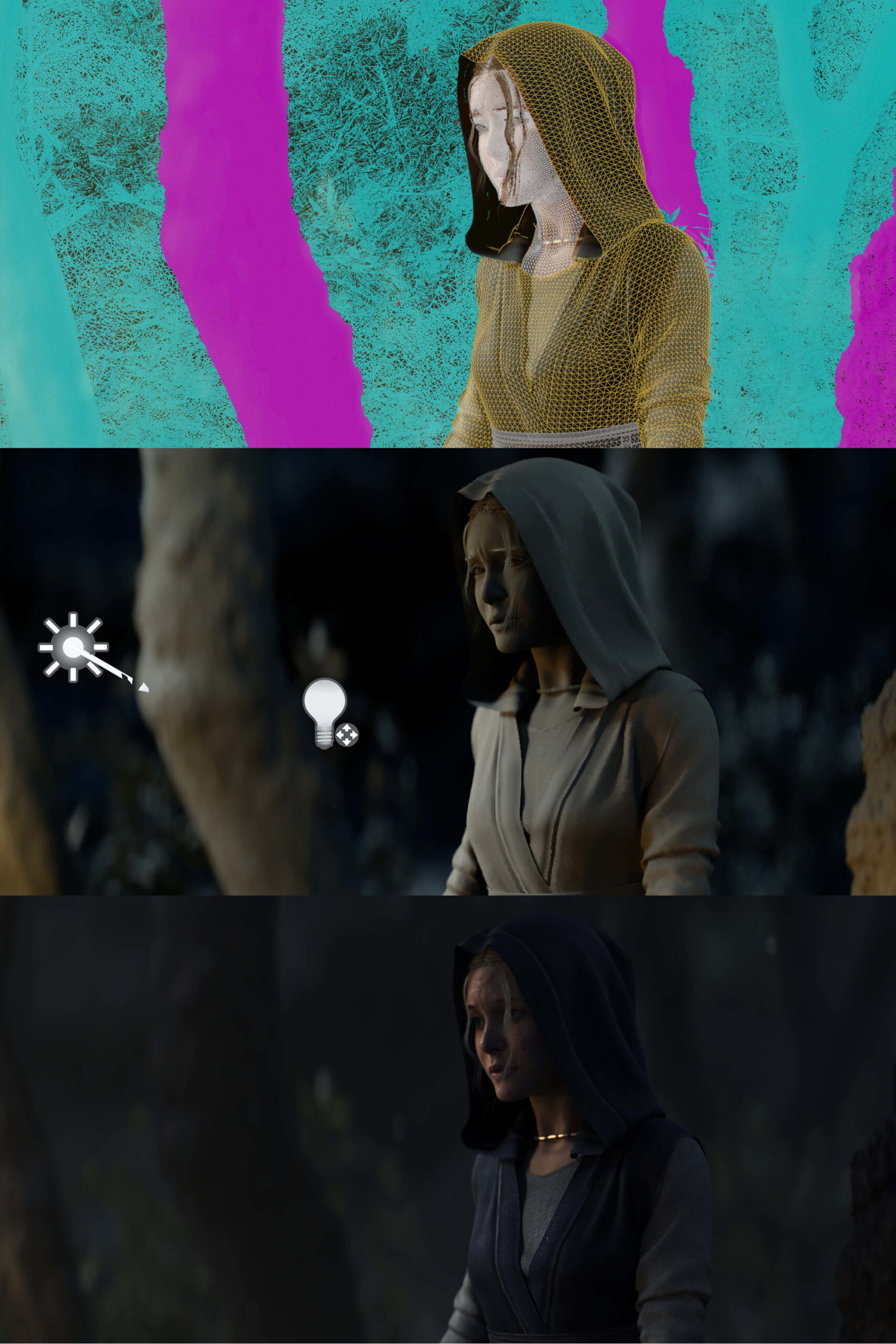
Antonis agreed, describing a surprisingly traditional storytelling pipeline despite the real-time tools. “We actually followed pretty much the traditional way of developing a story or a world. Storyboarding, scripting, and doing animatics and then previs. From there, it started to develop organically.”
Building a Mythology
What distinguishes Sjor from many independently produced CG shorts is its scale, both narratively, aesthetically, and in length. At 17 minutes, the film feels like a compressed introduction to a much larger mythology. The brothers admitted they initially tried to keep the project far shorter before realizing the narrative kept expanding.
“We were a little bit skeptical. How can we fit it into five minutes? Maybe break it up into three parts or something like this,” Stavros recalled. “But the story kept us going. While we were working on it, we were adding stuff here and there. In the end, we were like, damn, we are like 16 minutes, going out to 17 minutes. We couldn’t believe it ourselves.”
The world itself grew from a single character. Antonis said the story began with Halvar, the bald warrior who appears late in the short, before expanding outward into its broader mythology. The brothers cite Lord of the Rings, Blade Runner, and Dune among their biggest influences, though they were careful not to drift into familiar sci-fi iconography. The Norse influences went a long way towards that end.
“We always seem to do gritty and dark grounded stuff,” Antonis said. “We wanted to incorporate technology into it, sci-fi stuff you would say, but without going overboard like Star Wars or lightsabers.”
‘Ancient Future’
Instead, the pair gravitated toward what they call an “Ancient Future” aesthetic. Towering futuristic architecture exists alongside dense forests, bone armor, runes, and mythic imagery. Stavros described that phrase as their “north star” throughout production.
Their approach was also practical. Antonis admitted some of the film’s most striking shots were designed specifically to suggest scale without requiring massive asset builds. “We tried as much as possible to make some shots feel epic,” he said, explaining that they would use tricks of light and smoke to make the production cheaper and more doable, without feeling smaller.
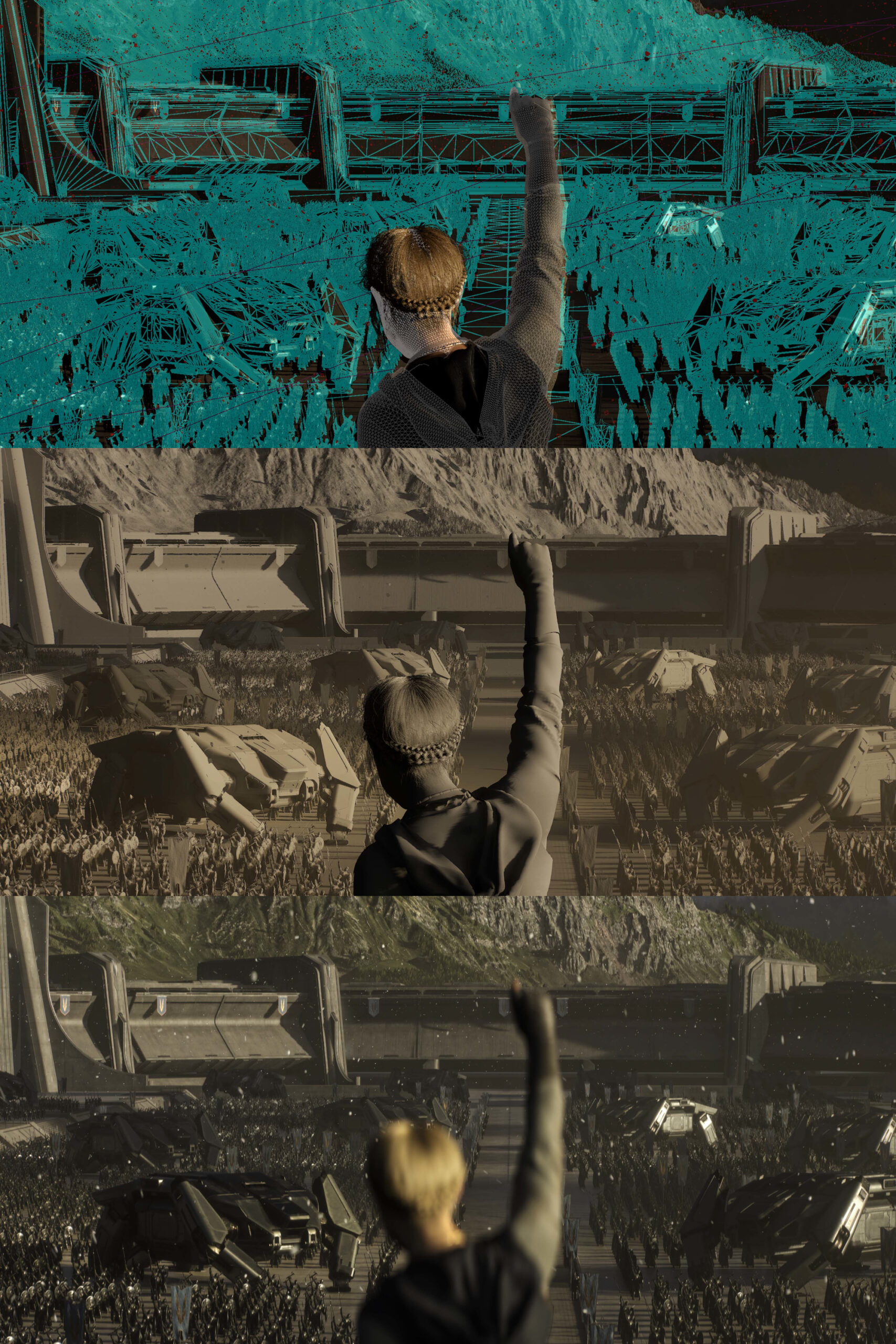
That resourcefulness ran throughout production. Unreal Engine’s real-time workflow allowed the brothers to iterate quickly, experiment freely, and stretch a tiny independent budget into something with the scope of a much larger production. Still, the brothers are quick to reiterate that the technology itself is only useful if audiences emotionally connect with the material.
“It depends so much on the humans, their expression, their eyes, and emotions,” Antonis said. “It’s not just the technical aspect.”
Human-Made
Sjor’s release comes at a particularly chaotic moment for digital-native animation. AI-generated imagery is flooding YouTube and other social platforms. The brothers have been transparent about their process, posting numerous behind-the-scenes videos, partly because they want audiences to understand there are real artists behind the film.
“We are seeing a lot of messages asking about how we approached this scale of project,” Antonis said. “Our intention is in the near future to showcase some workflows and also some behind-the-scenes stuff, as we did on Superman: Awakens.”
Stavros added that openness is simply part of the culture they came from. “Everything that we know, we learned from somewhere. It’s from the information that is out there, so we want to share what we know, too.”
There is, the brothers admitted, an added burden that comes with releasing an entirely original work after finding tremendous viral success with a fan film starring one of fiction’s greatest heroes. Rather than trying to compare Sjor and Superman: Awakens by view count, engagement, or any other digital metric, the two decided early on that the marker of success would be their own satisfaction with the finished short.
“Once we felt that the movie was coming along and we were watching it here, for us, it was like, ‘That’s it!” Stavros said. “This is ours. We did this, we like it, and we are done. Now, if people watch it and it gets traction and brings us some work, and we can continue to develop it, it’s a plus. But the main objective is we like it, we feel proud of it.”
More to Come
That future development is already on their minds. The brothers describe Sjor as only the beginning of a much larger universe, with possibilities that could eventually extend into comics, games, or additional videos or other longer-form work.
“Sjor expands way beyond the film that we presented,” Stavros said. “We tried to narrow down everything we could to present it in a short film as an introduction to what’s about to come.”
Film credits:
Created by Antonis Fylladitis – Stavros Fylladitis
Written/Directed by – Antonis Fylladitis
Design/Assets – Stavros Fylladitis
Music/Sound Design – Thanos Papadellis
Sound Design – Sofia Papairakli
Sjor Acting/Voice – Thalia Roussos
Skelthor Voice – Tom More
Father/Leif Voice – Antony Jones Nestoras
Re-Recording Stereo Mixer – Thanos Papadellis
Soprano – Nadina Tziatziou
Violin – Kostas Karitzis
Cello – Aris Zervas
D.Bass – Jason Papadellis
Pandoura – Isidoros Pateros
Song ” What The Stars Remember ” – Anna Tarba – Thanos Papadellis