.png)
From ‘Astartes’ To ‘Huxley’: Ben Mauro And Digital Bones On Creating The Animated Trailer For ‘The Oracle’
Stay informed with free updates
Sign up to get our news digest — delivered directly to your inbox twice a week.
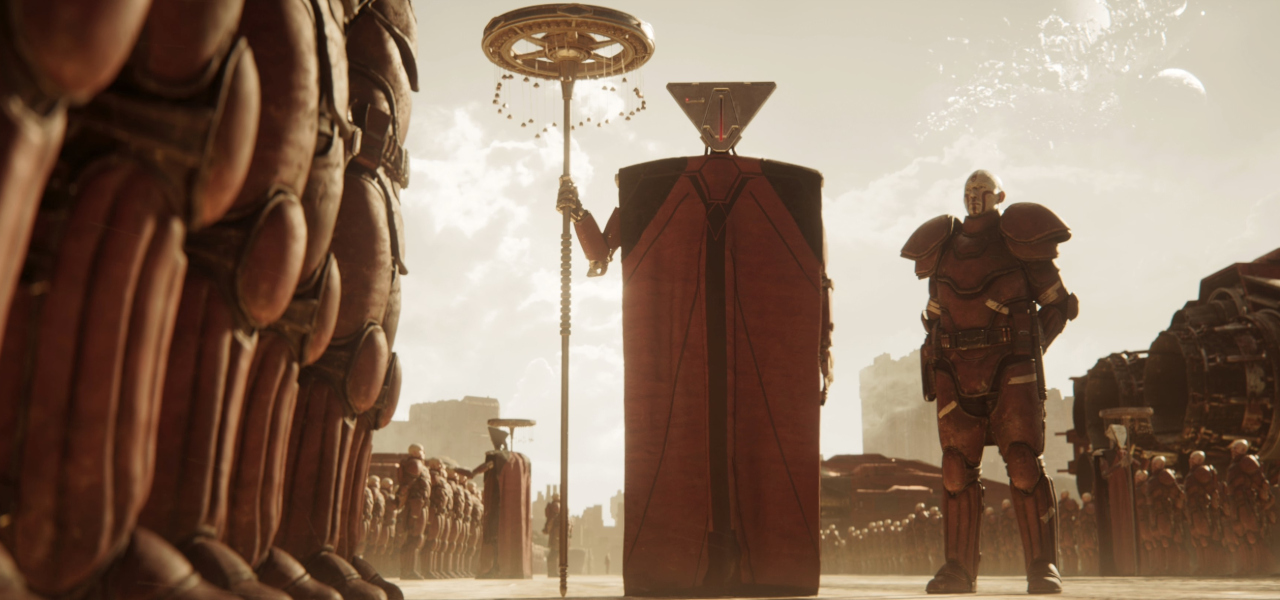
The most compelling sci-fi worlds are not explained; they are revealed. Ben Mauro’s Huxley operates on that principle, offering fragments of history, ritual, and violence that suggest much larger machines and structures just out of frame. Its latest animated short continues that tradition, functioning less as a trailer for the franchise’s second book than as a window into an evolving mythology.
The animated short, directed by Syama Pedersen – better known online as Digital Bones – and set in the world created by Mauro, serves as both a tone piece and a proof of concept for the expanding Huxley saga.
For Mauro, a screen industry vet on huge projects like Elysium and Mortal Engines, as well as numerous top video game franchises including Halo and Call of Duty, the collaboration began with a jolt of recognition. After seeing Pedersen’s breakout Warhammer short, Astartes, he recalls being effectively converted: “I saw Astartes and just thought it was amazing.” He admits he “didn’t really know much about Warhammer before his trailers,” but Pedersen’s work sent him deep into lore videos and research. “Like, what is this? This is so cool.”
For Pedersen, it was the world that Mauro had constructed that drew him to the project. “I’m always attracted to great worldbuilding, and that’s exactly what Ben is doing with Huxley,” he says. “It feels layered and lived-in, with hints of a much larger history beyond what’s on screen. Epic-scope sci-fi is always going to draw me in, especially when it’s grounded and has a clear creative vision.”

That initial shared admiration eventually became a creative partnership. Mauro had already produced the first Huxley trailer with director Sava Zivkovic, but as he developed Huxley: The Oracle, a prequel art book to the original volume, he wanted a different tonal register. “It was going to be more of a serious war story, based on soldiers,” he explains. “And I was like, ‘Oh man, I’d love to see what he would do.’”
Pure Visual Storytelling
What Mauro admired most about Pedersen’s approach was its restraint. “The storytelling is so amazing with little or no dialogue whatsoever. Just pure visual storytelling.” So he handed over what he calls “the ingredients” of the Huxley universe and asked Petersen what he’d do with the assets.
Pedersen’s first pass made the decision easy. Mauro remembers receiving rough animated boards, “very simply drawn,” yet already locked in. “The tone, the shot design, and the pacing were almost identical to the final trailer. I’m like, this is great. Let’s just approve. Like, no notes.”
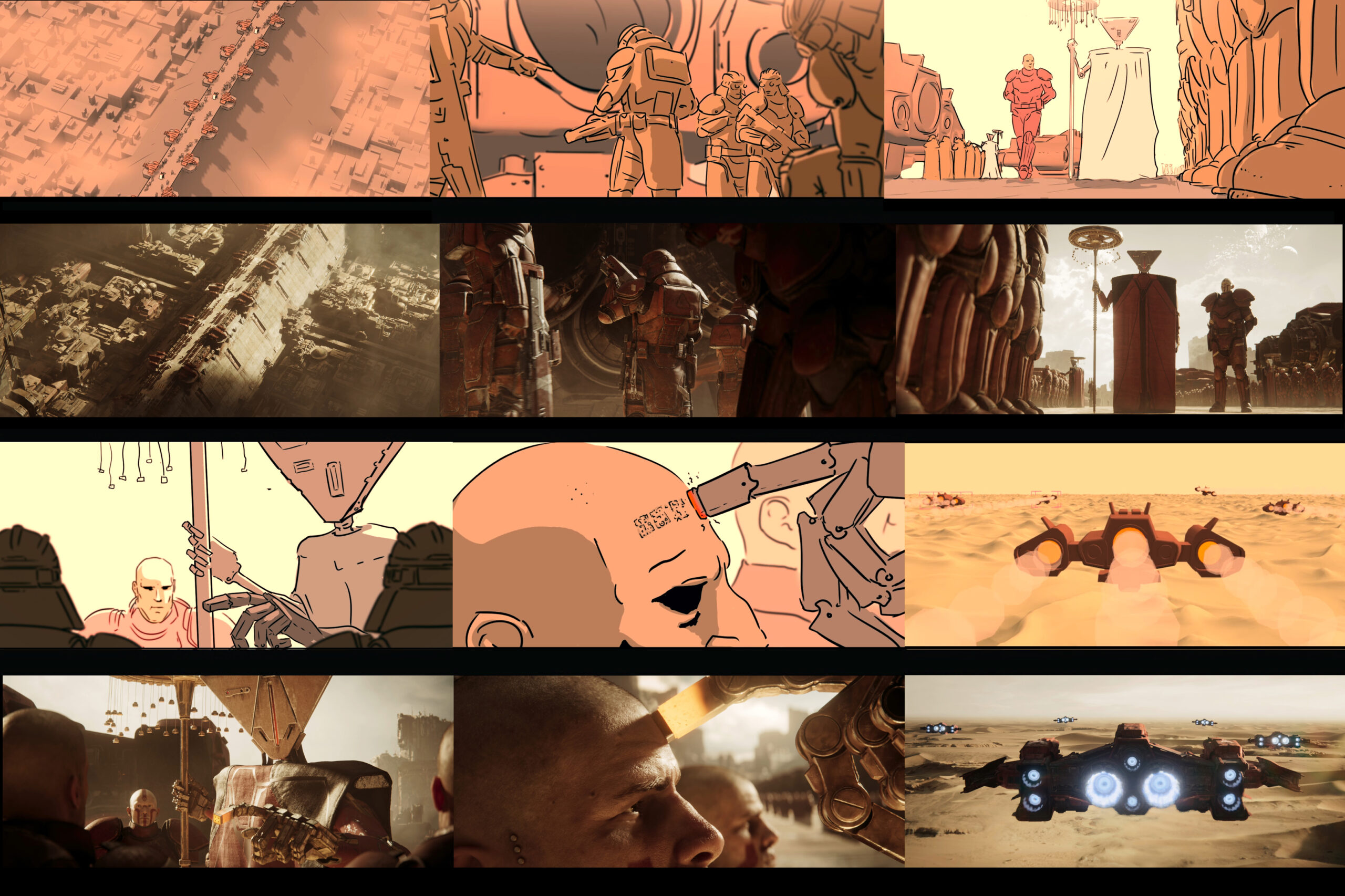
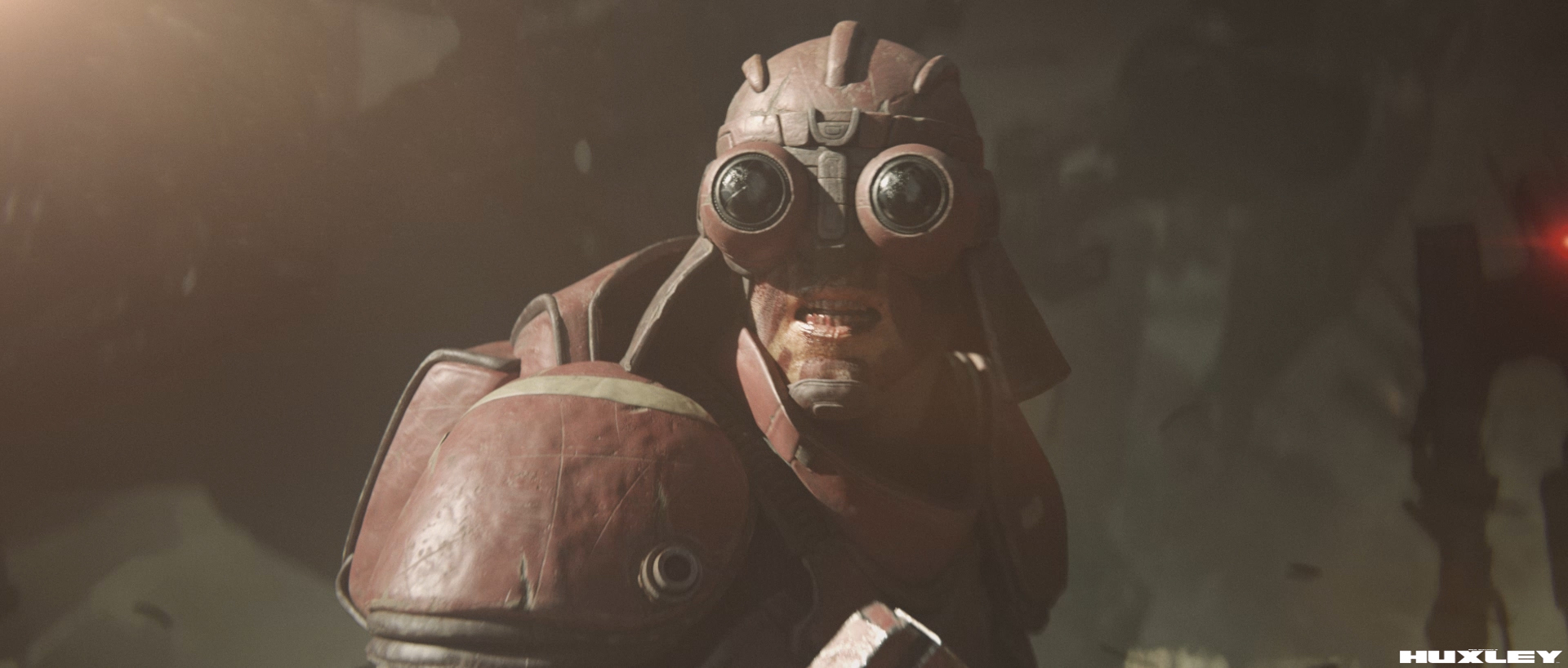
That discipline defines the finished short. The trailer follows a cohort of machine-built ronin soldiers through initiation, branding, deployment, and descent into ancient ruins. The structure is more linear than a typical hype reel, deliberately evoking the opening movements of The Oracle book. “We’re kind of going backwards in time from the first book,” Mauro says, shifting from the fully realized machine empires of Huxley into an earlier, more austere chapter of the saga.
But the restraint was not accidental. Pedersen himself acknowledges the constraints of short-form worldbuilding: “With a short runtime, it’s always a challenge to effectively communicate a sense of the world and the characters. You have to be very deliberate about what you show and what you imply.” For him, that limitation is productive. “That kind of constraint is something I enjoy, though. It forces you to make every shot º.”
Page to 3D
Huxley began as a heavily illustrated art book, dense with hand-rendered environments and industrial design. Translating that into cinematic CG required careful dimensional thinking. “The first book was very hand-illustrated, so a lot of the harder work was done there,” Mauro explains. By the time of the first trailer, he had already adapted much of that 2D work into 3D assets.
Mauro’s background in film concept design, including work on Elysium and superhero films, prepared him for the translation. “Here’s a Spider-Man panel. What does this look like in real life? Or what does this robot drawing look like in real life?” That same question now applies to his own IP. “Okay, this is the drawing, but what does this look like in 3D? How do we capture that interesting silhouette from a drawing, but make sure it still feels real?”
Once those digital “toys” existed, Pedersen could stage them cinematically. The production partnered with Unit Image, known for high-end game cinematics and anthology work, to execute the final animation. Mauro describes the workflow as front-loaded: months of concept painting, previs, and asset prep so that when the VFX studio begins, “it’s much easier for the VFX studio. And then once Unit starts, they work pretty quickly and high quality.”
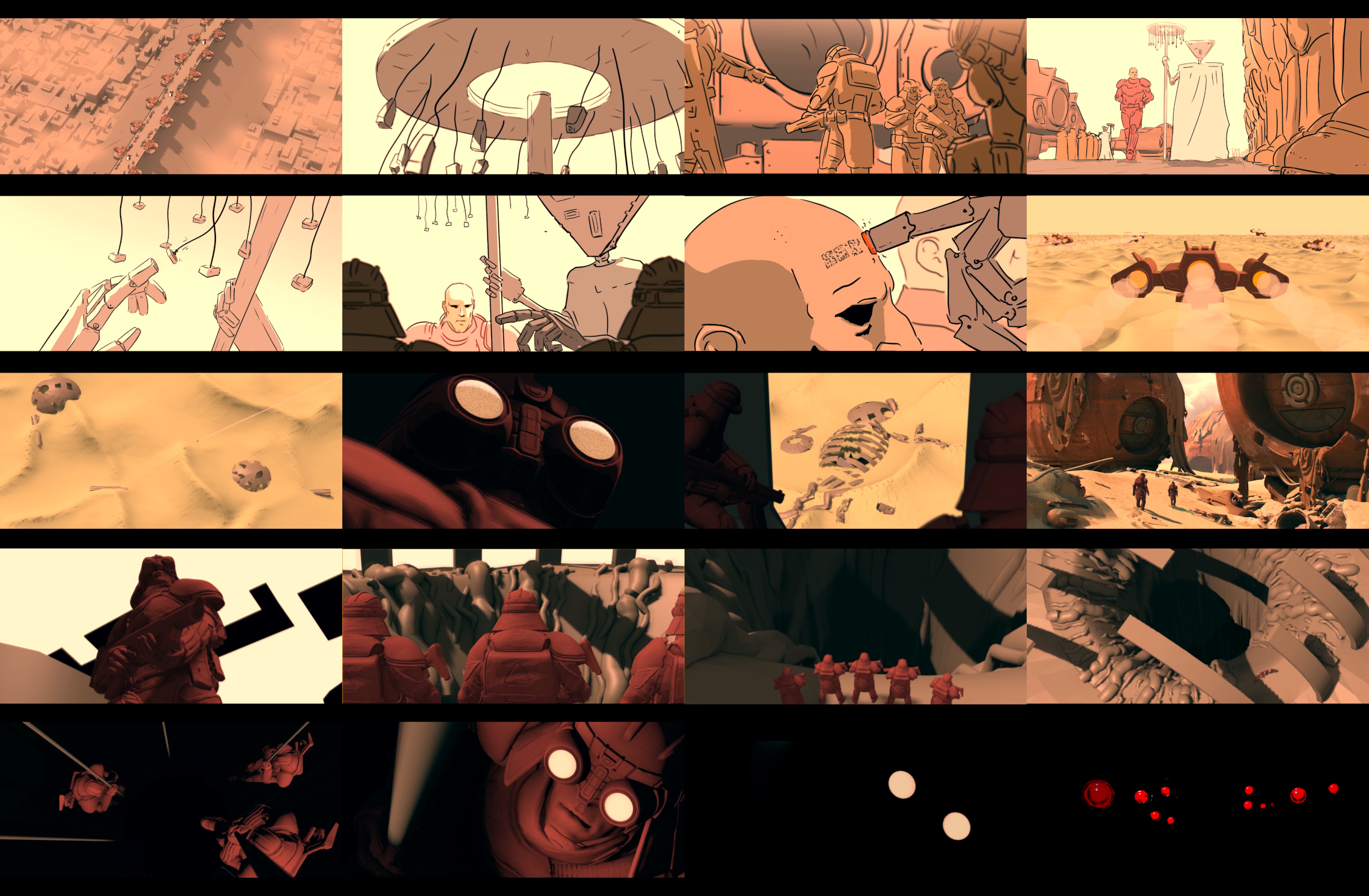
Unlike many film trailers, which are often cut by third parties, Huxley’s shorts are developed directly with the creators and are more akin to dedicated short films than a traditional teaser. Mauro sees that as a creative advantage.
On the first trailer, he appreciated having director Sava Zivkovic select “the coolest things to use to sell the idea.” Left to his own devices, he admits he might lean too linear: “Well, this happens, and then this has to happen next,” thinking like a novelist.
For The Oracle, the approach blends both instincts. “It’s more of that kind of thing, when to stop, what’s essential, how much do we want to show?” Mauro says. “What do we want to accomplish with this?”
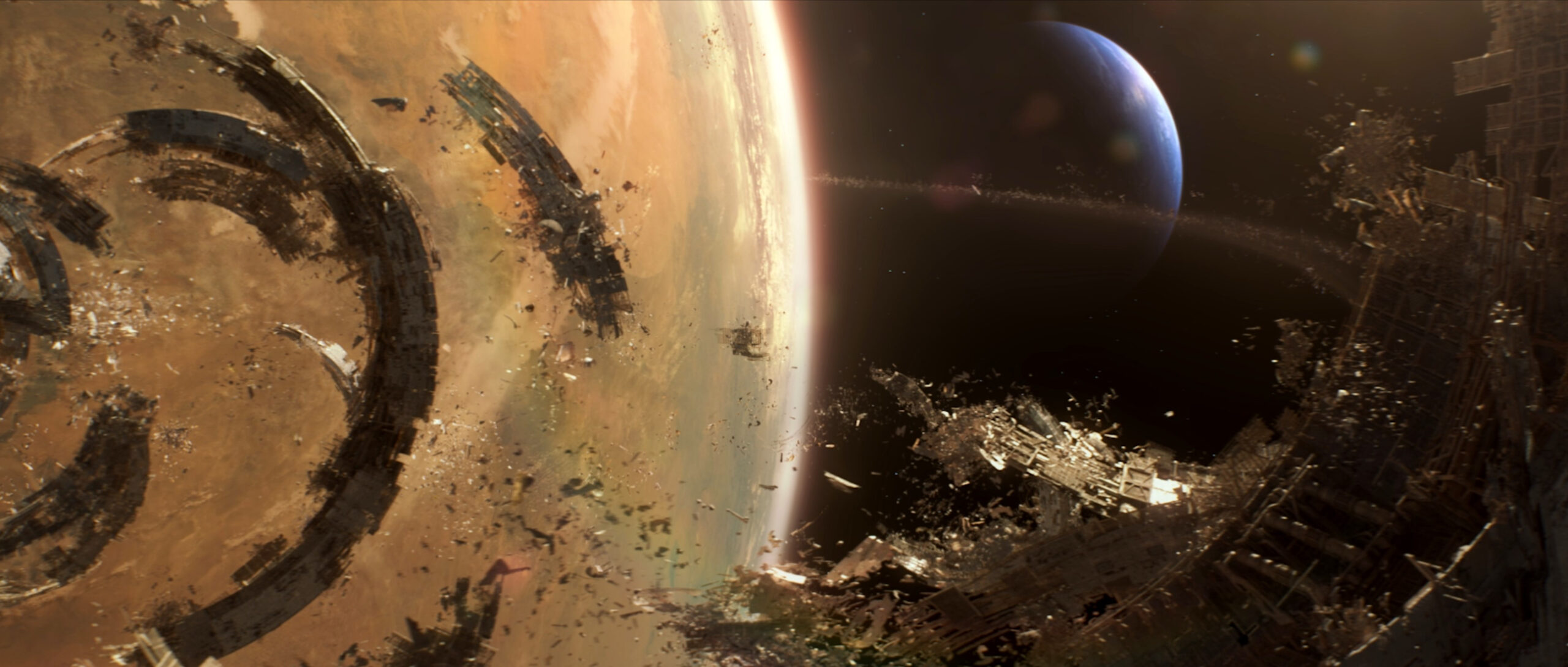
One early idea, a slow panning establishing shot from space that did not fit the first trailer, finally found its home here. “It’s just like a nice, slow establishing shot, building the mood, and then just really dive right into it.” Even that decision reflects an understanding of pacing as narrative architecture.
The biggest creative tension, Mauro notes with a chuckle, was convincing Pedersen to leave well enough alone. “He always wanted to do some more stuff. I’m like, ‘No, I think we need to stop here, this is perfect. This is the perfect amount of information to give to people.'”
Entertainment Universe
The trailer brands Huxley as an “Entertainment Universe,” and Mauro is candid about those ambitions, albeit with caution. At its core, he insists, it is “an amazing book series,” with the first trilogy in progress. The next installment, he says, will function like “Dune part one and part two of a bigger movie-sized story.”
Adaptations into games or screen projects are already in exploratory phases. “There are already game prototypes and stuff,” he reveals. But he is adamant that timing and partnership matter more than speed. Referencing long-gestating adaptations, he points to the value of waiting for the right collaborator rather than rushing. “It’s just finding the right partner. Who would be the best partner to make a game that has the best chance of being just amazing?”
A Full-Circle
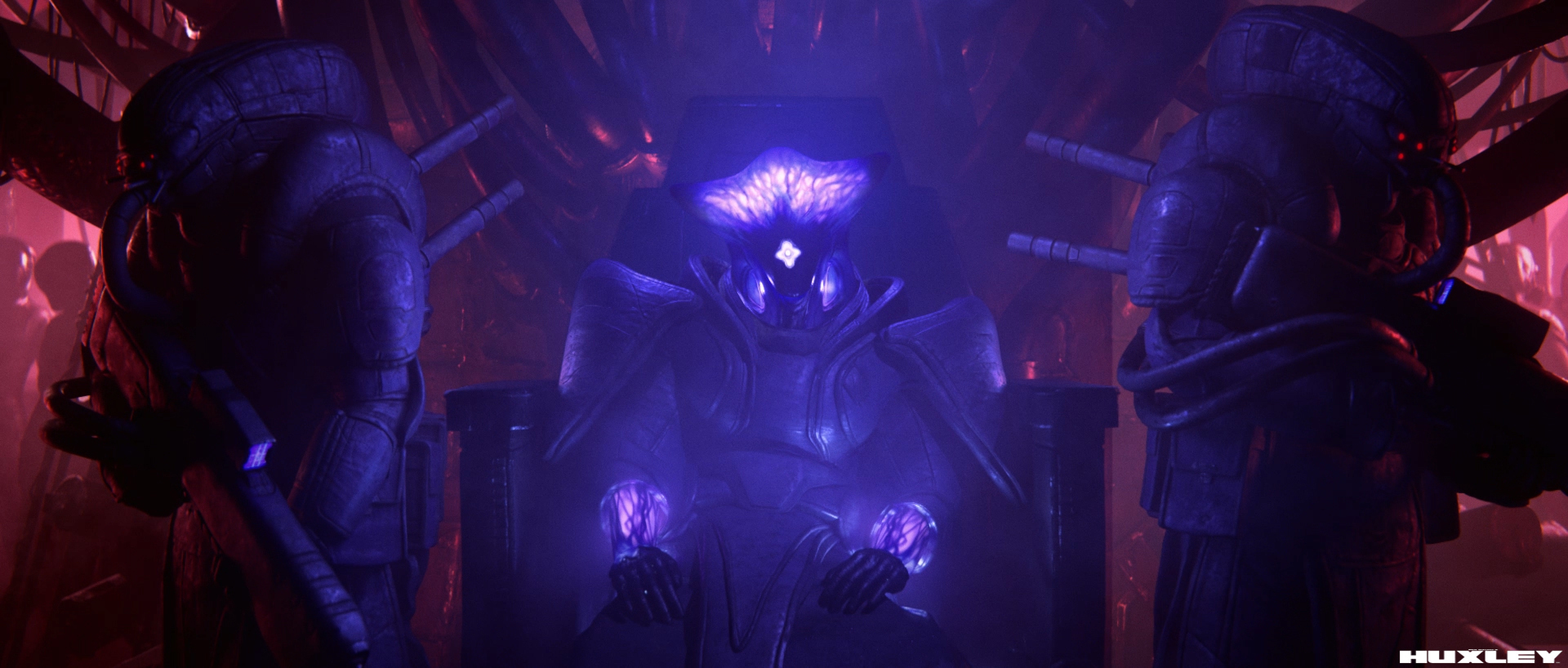
As Huxley expands, Mauro’s role increasingly resembles that of a film director guiding multiple departments. New characters, like the enigmatic Oracle with a triangular head, are designed either by Mauro directly or in collaboration with artists who then run with the concept. “Sometimes I need to step in like, okay, I want to really get hands-on with the new character. And then other times, show me what you would do with this.”
He compares the process to his experience developing film worlds from sparse premises. Now, he is facilitating that same exploratory energy for other artists. “It’s like a full circle.”
If the animated trailer for Huxley: The Oracle proves anything, it is that original sci-fi can still command blockbuster scale without studio IP safety nets. It is meticulous, serious, and unhurried, a short that trusts audiences to lean in and come back for more across more than one medium.
And if the larger industry will not build new universes, Mauro is blunt about the alternative: “If we don’t do it, no one’s going to do it.”