.png)
From Siberian Designer To Indie Animation Cult Favorite: How Alex Semenov Built Lazy Square (EXCLUSIVE)
Stay informed with free updates
Sign up to get our news digest — delivered directly to your inbox twice a week.
For most of the last decade, Alex Semenov has been quietly building one of animation’s most distinctive bodies of independent work on free streaming platforms like YouTube and TikTok.
Working under the name Lazy Square, the Russian-born animator has amassed an audience of roughly one million followers across social media and streaming platforms. He’s done commercial work for brands including Xbox, Ubisoft, and L’Oréal. And in his free time, he’s managed to produce a steady stream of short films that combine his distinct dark humor, biting social commentary, and meticulous visual detail.
Yet despite the scale of his reach, Semenov’s operation remains surprisingly simple.
“I just take my old laptop, Adobe Animate, and create frame by frame,” he tells us. “After that, I put everything in Adobe Premiere, do some editing, do some sound editing, and that’s it.”
That approach has remained largely unchanged throughout his career. Every Lazy Square film is still made by Semenov himself, from concept and design to animation and editing. The process is labor-intensive and old-fashioned, especially in an era increasingly dominated by automation. It is also central to why his work feels unlike anything else online.
Designer-Turned-Animator
Semenov did not arrive in animation through a traditional path. Although in 2026, what even is a traditional path anymore?
Born in Siberia, he spent years working in graphic design and 3D graphics before eventually becoming an art director. Animation began as a side project rather than a career goal. Even as a student, he created short Flash cartoons to entertain friends, inspired by the irreverent tone of ‘00s Adult Swim programming.
“I wanted to create something similar,” he says. “Bold, dark, and funny at the same time.”
The turning point came in 2011, when Semenov and his future wife launched Serious About, a company that produces original accessories. To promote the products on Instagram, he began making short, animated advertisements. The videos were quick to produce and designed for Instagram’s square format, inspiring the name Lazy Square.
What started as marketing soon became something larger. Alongside promotional work, Semenov began posting increasingly ambitious personal films. As audiences grew, so did the quality and scope of the work. Major bloggers shared the shorts, commercial clients began calling, and, before long, what started as a hobby had become a full-time career.
One of the earliest signs that something was happening arrived with 30 Wasted Years, a rapid-fire reflection on the cultural landmarks that shaped his first three decades of life. The short became his first viral hit.
“About 50,000 people watched it on Instagram,” he recalls. “When I had only maybe 1,000 followers, it was like space for me.”
More importantly, it introduced him to an audience that would follow his work for years to come.
“That was when I started to have some fans, the core fans that started to write me and say, ‘What is that cool stuff? Make more of it.'”
The Simpsons Spoof That Changed It All
If 30 Wasted Years introduced audiences to Semenov, The Darkest Simpsons Couch Gag turned him into an indie phenomenon.
Released in 2019, the short reimagined The Simpsons’s famous couch gag as a bleak Eastern European arthouse film. Semenov even invented a fictional Slavic language for the project and credited it to a Balkanized version of his own pseudonym.
The film spread far beyond his core fan base and transcended digital-native animation barriers. Coverage appeared in Rolling Stone, Fast Company, The A.V. Club, Open Culture, and dozens of other publications around the world. Fox even licensed the short for broadcast.
“Seven years later, I still enjoy joking that I’m waiting for that legendary Fox payment,” he laughs.
The film remains one of the most recognizable examples of internet-era fan animation crossing into the mainstream. It demonstrated Semenov’s gift for combining instantly recognizable pop culture with a deeply personal visual perspective.
Exile And Reinvention
Perhaps the most transformative chapter in Semenov’s life came under far different circumstances, entirely beyond his control. Following Russia’s invasion of Ukraine in 2022, he left his homeland, first relocating to Turkey before eventually settling in the United States after receiving an extraordinary ability visa in 2025.
The move altered both his life and artistic interests. During his years in Turkey, he created several anti-war pieces, including The Hole, a short examining the relationship between authority and society. Later, after arriving in America, he completed The Moonwalker, perhaps his most personal film to date.
The short looks back on childhood in post-Soviet Siberia, using memory and imagination as a lens through which to process both personal history and displacement.
“It was my last farewell short about Russia and about childhood,” Semenov says. “I started it long ago, and I just finished it when I got here. And I closed that thing.”
Today, he sees his work moving in a different direction. The Soviet imagery that once defined much of his output has gradually given way to broader themes and more universal settings.
“I’m starting to make more overall philosophical things,” he says. “I started to work on more neutral themes and topics.”
That shift can already be seen in recent projects, which trade specific national references for stories about technology, attention, and modern life.
Turning Brainrot Into Art
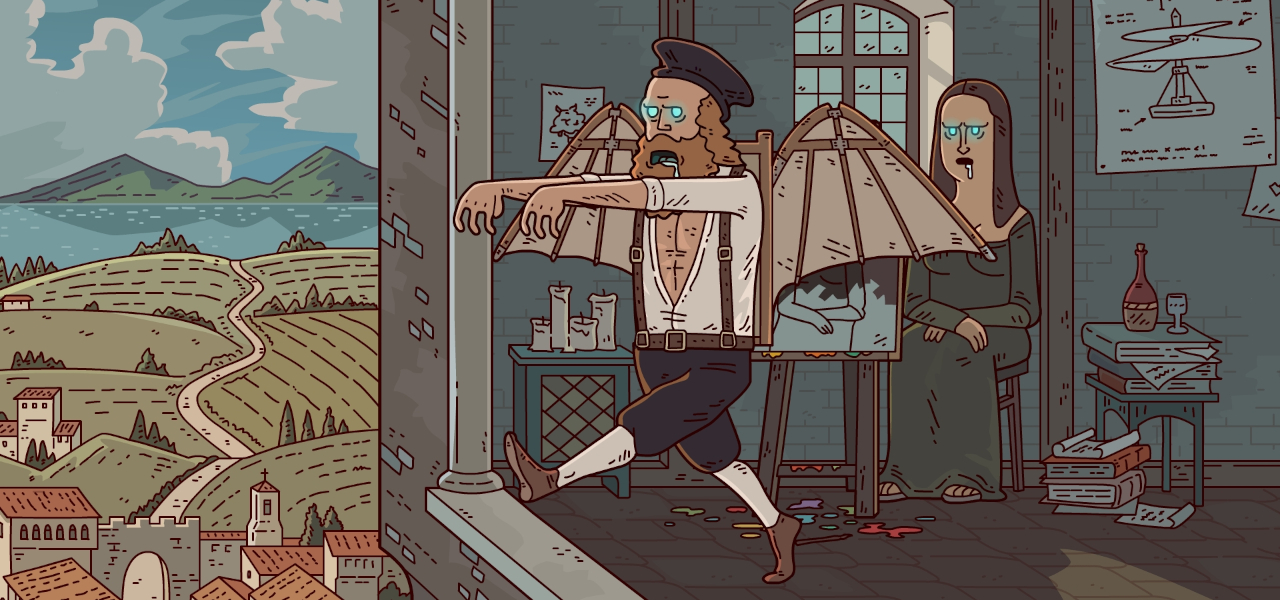
Semenov’s latest viral short, Brainrot, grew out of a simple observation made during breakfast with his wife. Everyone is scrolling all the time, including him.
“I noticed my friends scrolling even when we were on vacation,” he recalls. “It was beautiful nature around us, and they were scrolling.”
As ideas began to take shape in his head, Semenov started watching Common Side Effects and thinking about mushrooms, consciousness, and evolution. Those influences merged into a satirical sci-fi premise in which an alien fungus arrives on Earth and quietly guides humanity toward distraction, conflict, and ultimately endless content consumption.
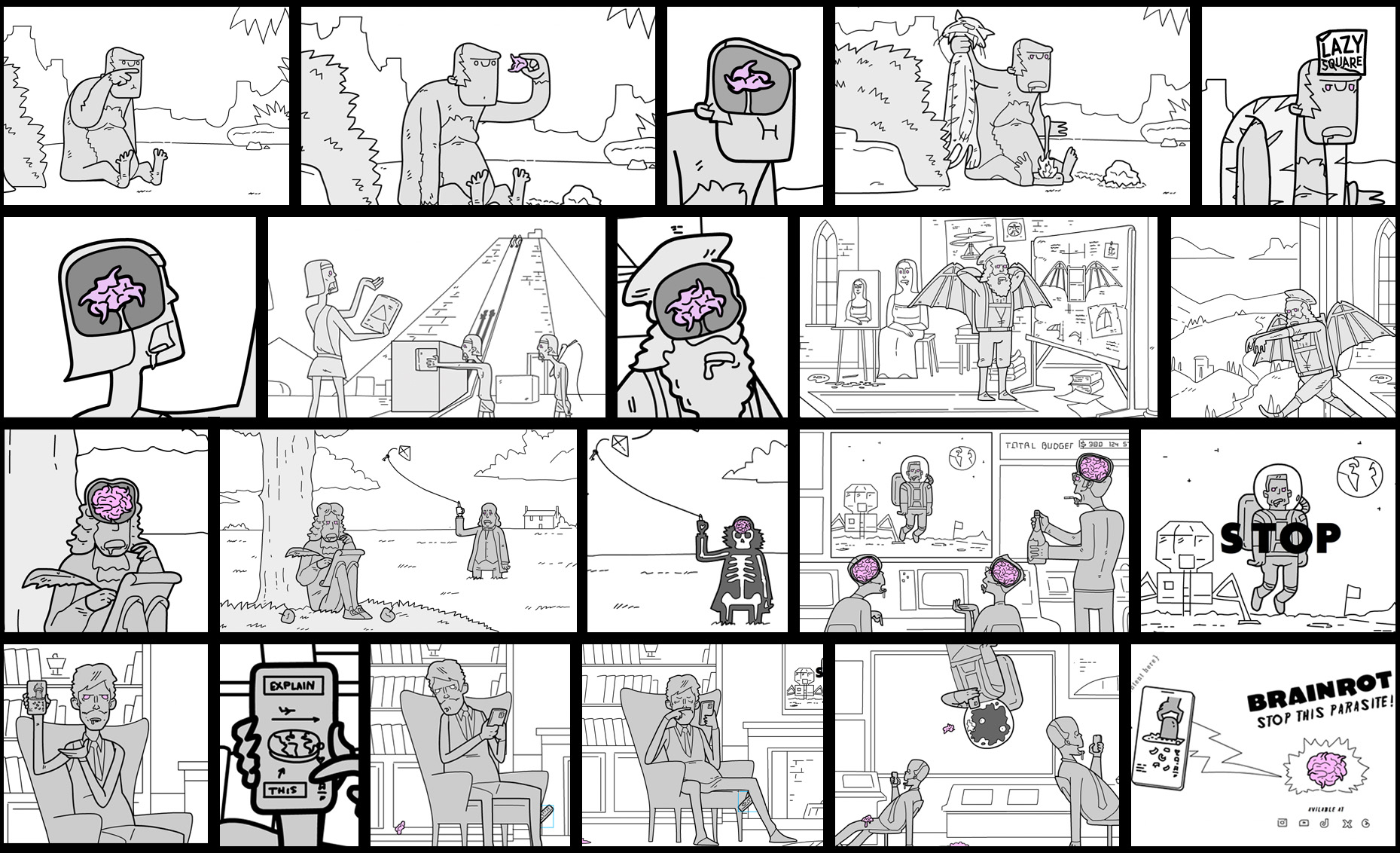
The finished film also marked a notable collaboration for Semenov, who found a fan in actor Thomas Middleditch. The Solar Opposites and Silicon Valley star provided narration after reaching out to Semenov directly through Instagram. The director initially worried that Middleditch’s well-established comedic persona might clash with the film’s mock-documentary tone, but the actor quickly put those concerns to rest and delivered something more nuanced and stoic.
“I asked him to be a little more serious, narrator,” Semenov says. “And he did it perfectly.”
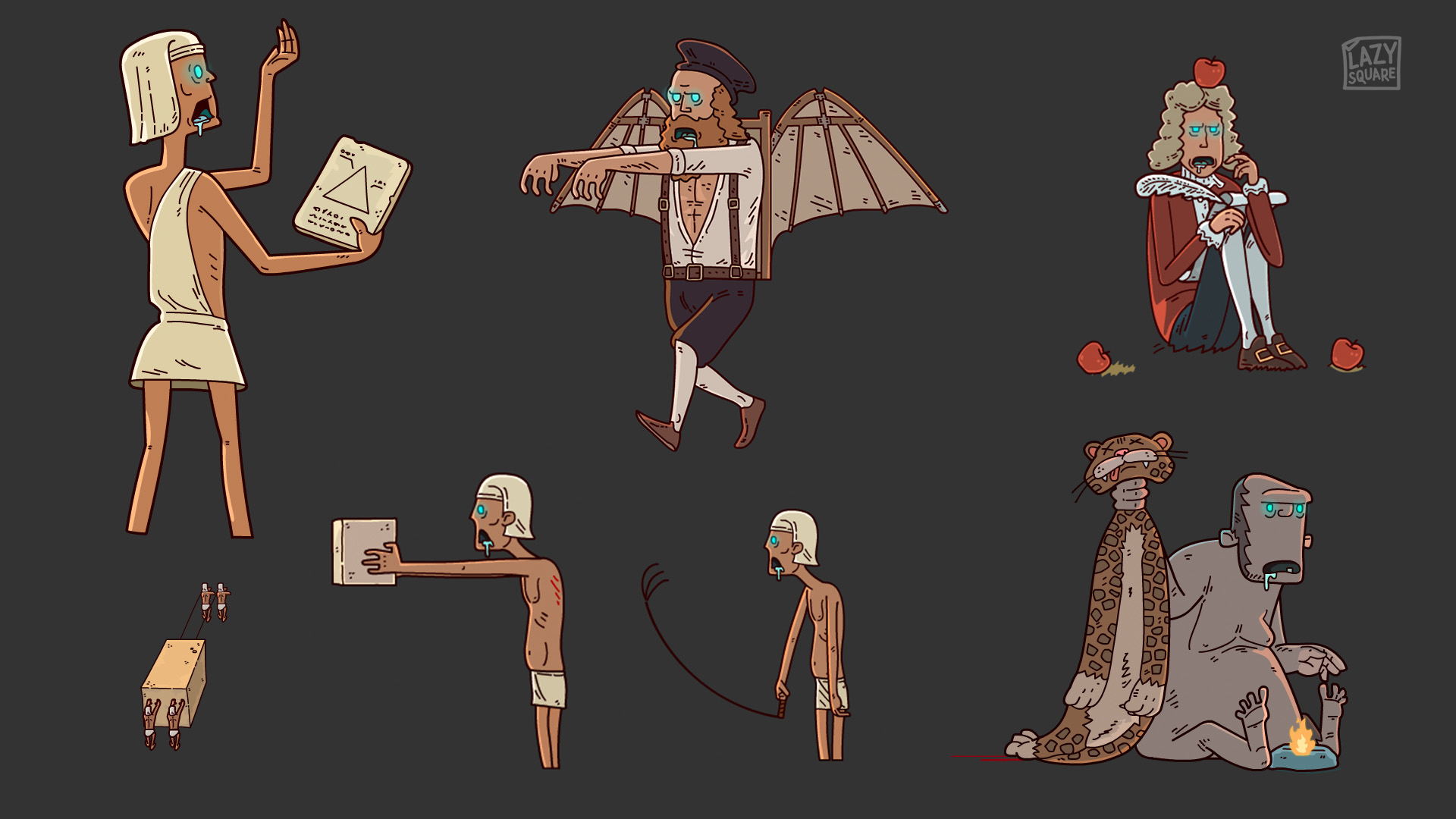
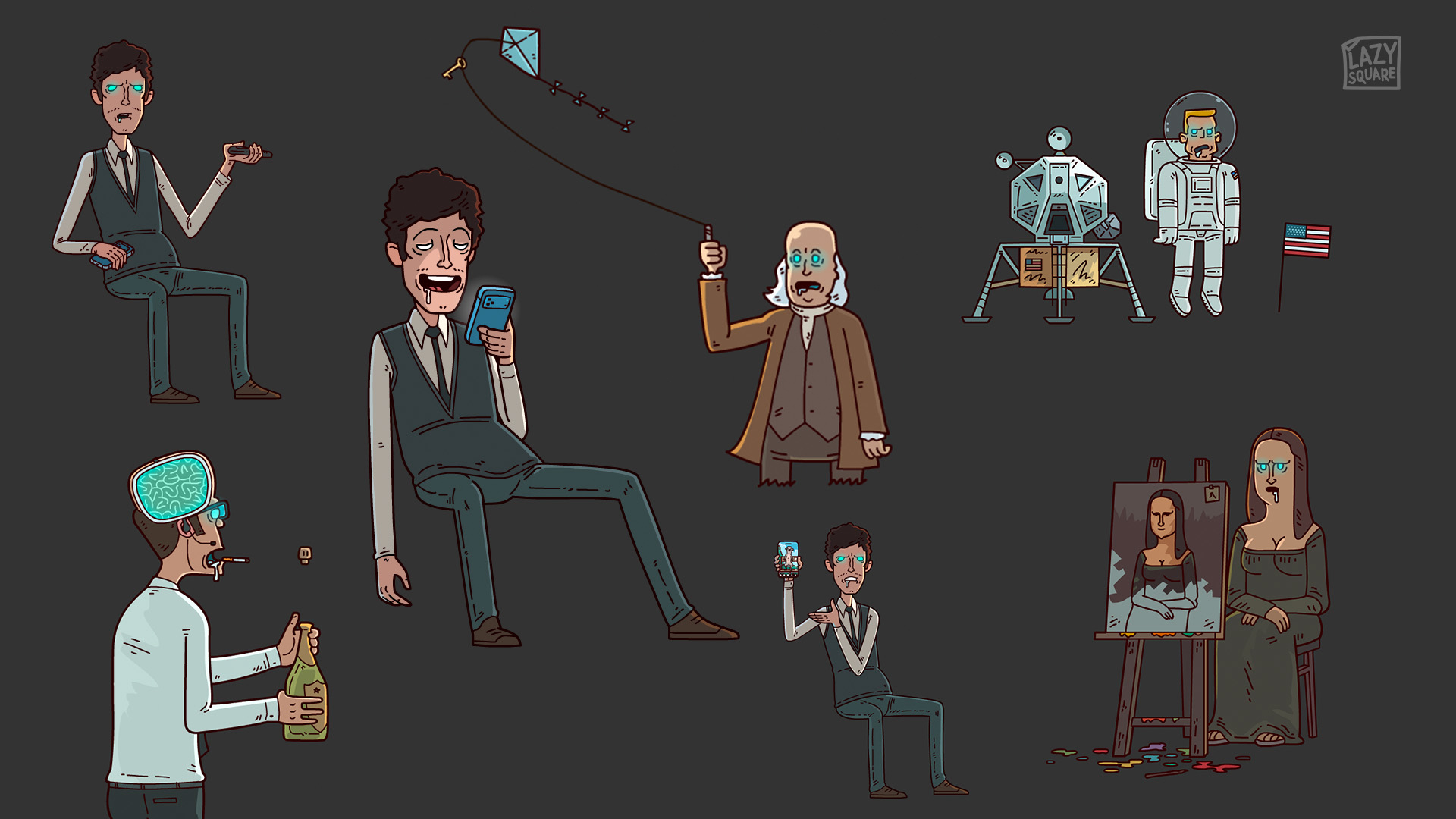
Like much of Semenov’s work, Brainrot balances absurd humor with genuine anxiety about modern life, transforming a universal habit into a bleakly funny piece of speculative animation.
The Cost Of Independence
Semenov’s success has not insulated him from the realities facing independent artists.
Despite generating millions of views, he says traditional platform monetization contributes little to his income.
“I have no income from YouTube,” he says. “The monetization is very, very small.”
Patreon provides support from a small but dedicated community, but commercial commissions remain the foundation of his business, and that model has become increasingly fragile as uninspired ad agencies increasingly settle for low-quality AI results rather than paying human artists.
“Before the AI era, if I attracted attention, I got some commercials,” he explains. “Now the viral thing means nothing.”
He worries that organizations that want something that looks and feels like a Lazy Square original will just tell a model to make it, leaving him empty-handed while the aesthetic and mood he created end up making money for someone else.
Looking Ahead
For all the uncertainty that comes with a career in independent animation, Semenov remains ambitious and isn’t giving up hope.
He still dreams of creating a series. He has multiple ideas in development, has pitched major studios and smaller indies alike, and continues to think about longer-form storytelling. The challenge is finding the time and financial security to pursue it, at a time when most broadcasters and streamers want creators to bite the bullet and pay for a pilot.
Another issue is giving up control. “I’m a perfectionist,” he says. “I will think of every word that my characters will say. Every little move they will make.”
For now, he continues to produce the short films that brought him recognition in the first place, with refinements that have let him survive platform shifts, viral cycles, international relocations, and dramatic changes in the animation industry.
He’s following the same process, using the same tools, and remains stubbornly manual.
At a time when online animation is increasingly generated and homogeneous, Semenov’s films feel unmistakably handmade, and there is certainly an audience for that. The quality that has defined his years of work has carried him from Siberia to a worldwide audience, and it may prove to be his greatest advantage in whatever comes next.