.png)
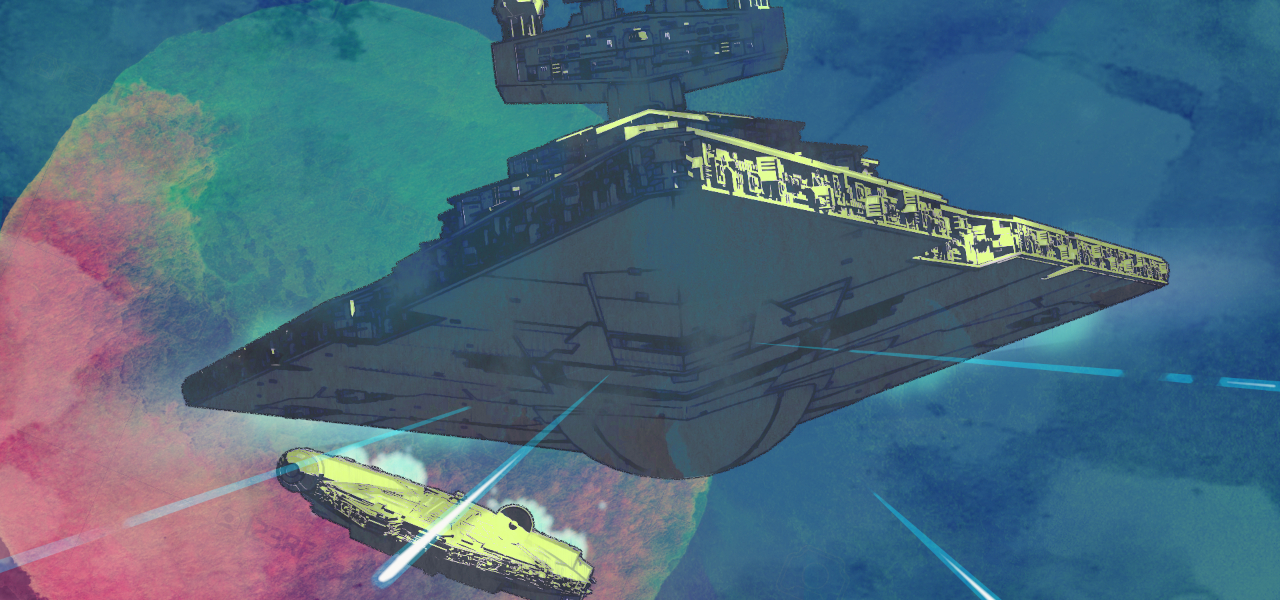
‘Star Heist’: How A Group Of Spanish Pros Pulled Off A Star Wars Day Short In Less Than 12 Parsecs (EXCLUSIVE)
Stay informed with free updates
Sign up to get our news digest — delivered directly to your inbox twice a week.
A scrappy, far from scruffy, fan-driven short called Star Heist dropped today for May the 4th, made entirely outside the Lucasfilm machine by a small crew of Spanish animation professionals working between (and sometimes around) their day jobs.
View this post on Instagram
It has the polish of one of the franchise’s Visions shorts, but there’s no Disney money behind it. Just a group of friends who wanted to make something together, finally calling each other’s bluff.
“We’re all Star Wars fans, scattered around different parts of the world, but we stay in touch,” director José Ucha told Cartoon Brew. “Almost a month ago, like a bug, this idea came up. ‘May the 4th is coming, should we do something?’ We were all swamped, but we had a tiny bit of time, so we said, ‘Fine, we accept the challenge. We’re doing Star Heist. Let’s start now.'”
Ucha, who co-directed Netflix’s My Little Pony: A New Generation in 2021 and is currently doing punch-up on a feature he can’t yet name, kicked things off with character designer SalBa Combé, animator Renato Roldán, and manga author Kenny Ruiz. The circle widened from there to include animator Raúl Madplane, composer Gustavo Branger, musician Tim Boomsma, Global Branding Music, and sound technician named Mario Morellón. The full group adopted the same moniker as the short they were working on, and started referring to themselves as Star Heist.
“What I loved is that this was going to be tiny,” Combé said. “We had no big pretensions. Then we started telling people about it, and Raúl said, ‘Sure, throw me in the pool.’ The musicians were thrilled. Mario, the sound guy, dove in headfirst. The synergy was great.”
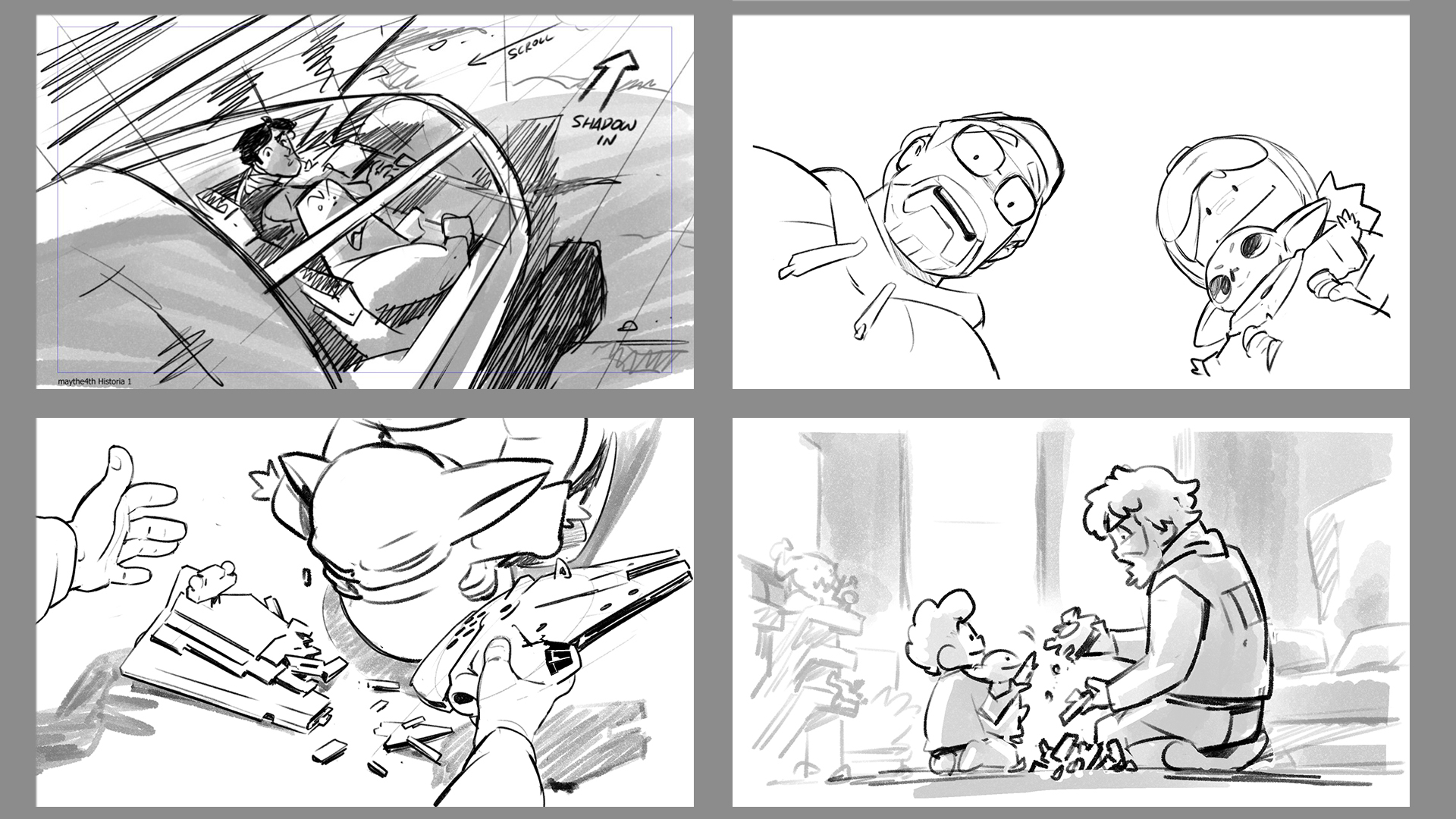
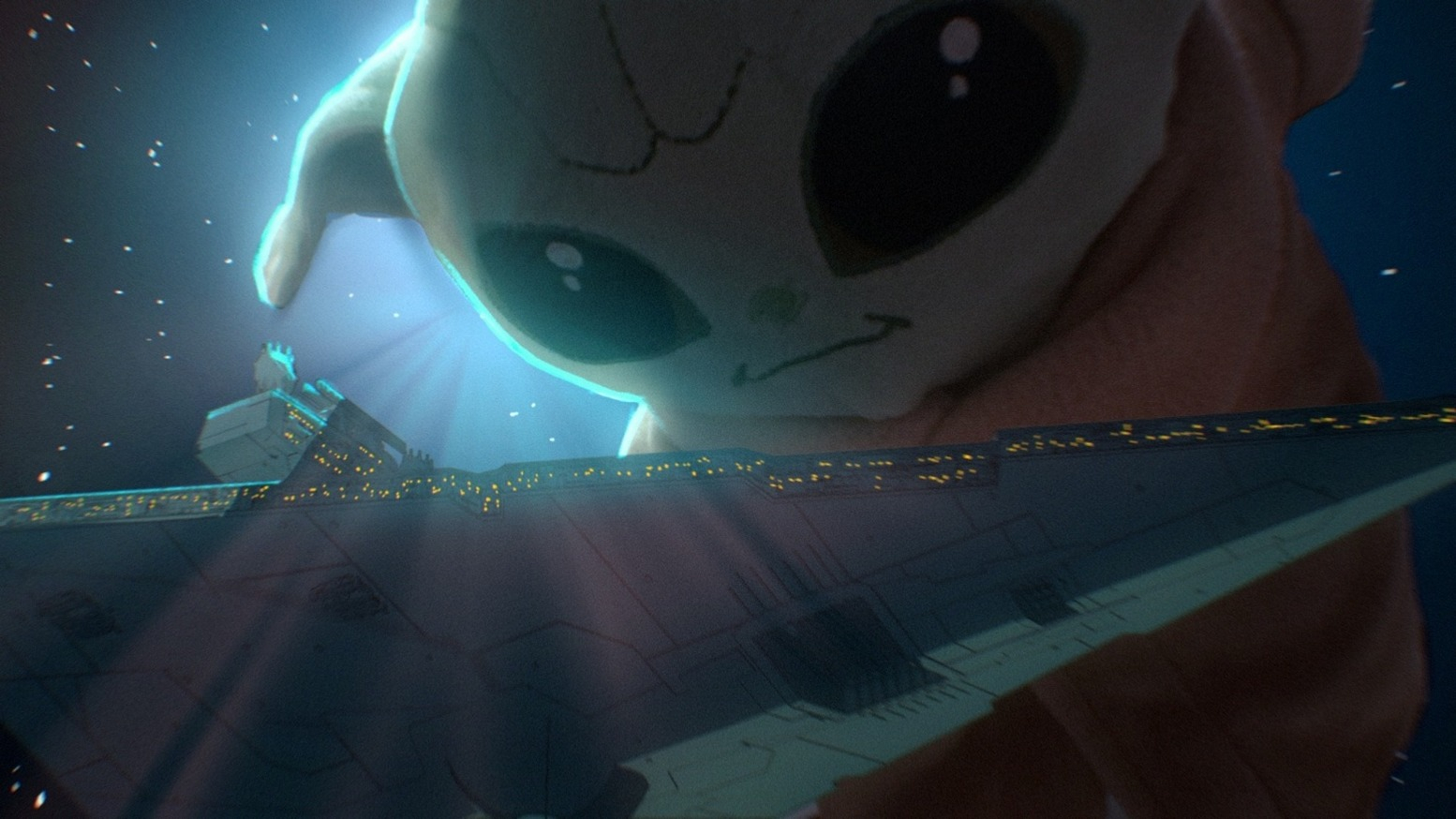
The features two distinct aesthetics, interrupted by one giant Baby Yoda. The first half is a swaggering, painterly action sequence in the mode of Cam Kennedy’s early-1990s Dark Horse Star Wars comics. The second flips into something brighter, softer, and more kid-coded. The whole thing turns out to be a bedtime game between a dad and his daughter.
“From the beginning, we played with a division of styles,” said Combé, a character designer at Lingokids who also runs his own studio, Mr. Klaus. “The first part is how the dad imagines it while he’s playing. We picked Cam Kennedy as a reference because that felt very identifying of the era when guys our age first remember Star Wars. The other part is much more naïve because that’s the real world, seen through the little girl’s eyes, with much more luminous colors. We thought the contrast would make a good mix.”
The trickiest negotiation, he said, was a Grogu-and-Galactus mash-up the team calls “Gorulactus.” Was the character a vision in the dad’s head or the daughter’s? “We had a lot of conflict over the moment Grogu shows up. We didn’t know if it had to be the girl’s vision, the dad’s, or a mix. In the end, we figured it out, and we’re thrilled with it.”
Ruiz, the Spanish manga artist behind Viz Media’s Star Wars: Path of the Lightsaber (volume one shipped last November, and he’s writing volume two now), said the dual-style approach was the thematic core of the piece.
“What unites Star Wars is the enthusiasm for this franchise across generations,” Ruiz said. “There’s a generation that loves the Star Wars they grew up with, and a new generation that loves the new vision. The beautiful thing is that we get to play together. One doesn’t have to crush the other.” Splitting the work along that thematic line, he added, also split the labor cleanly: Roldán steered the first half, Combé the second.
A month is a brutal timeline for a short of this length and quality. The team made it in time by stripping things down hard. “At the start, we were going big, 14 shots, 15 shots, mixed media,” Ucha said. “By the first week, we were already aborting. We can do it in 10. And we kept cutting. The final version is seven.” Anarchy, he described it, but with an intentional structure. “Very open, very anarchic, but organized, because the team wasn’t huge.”
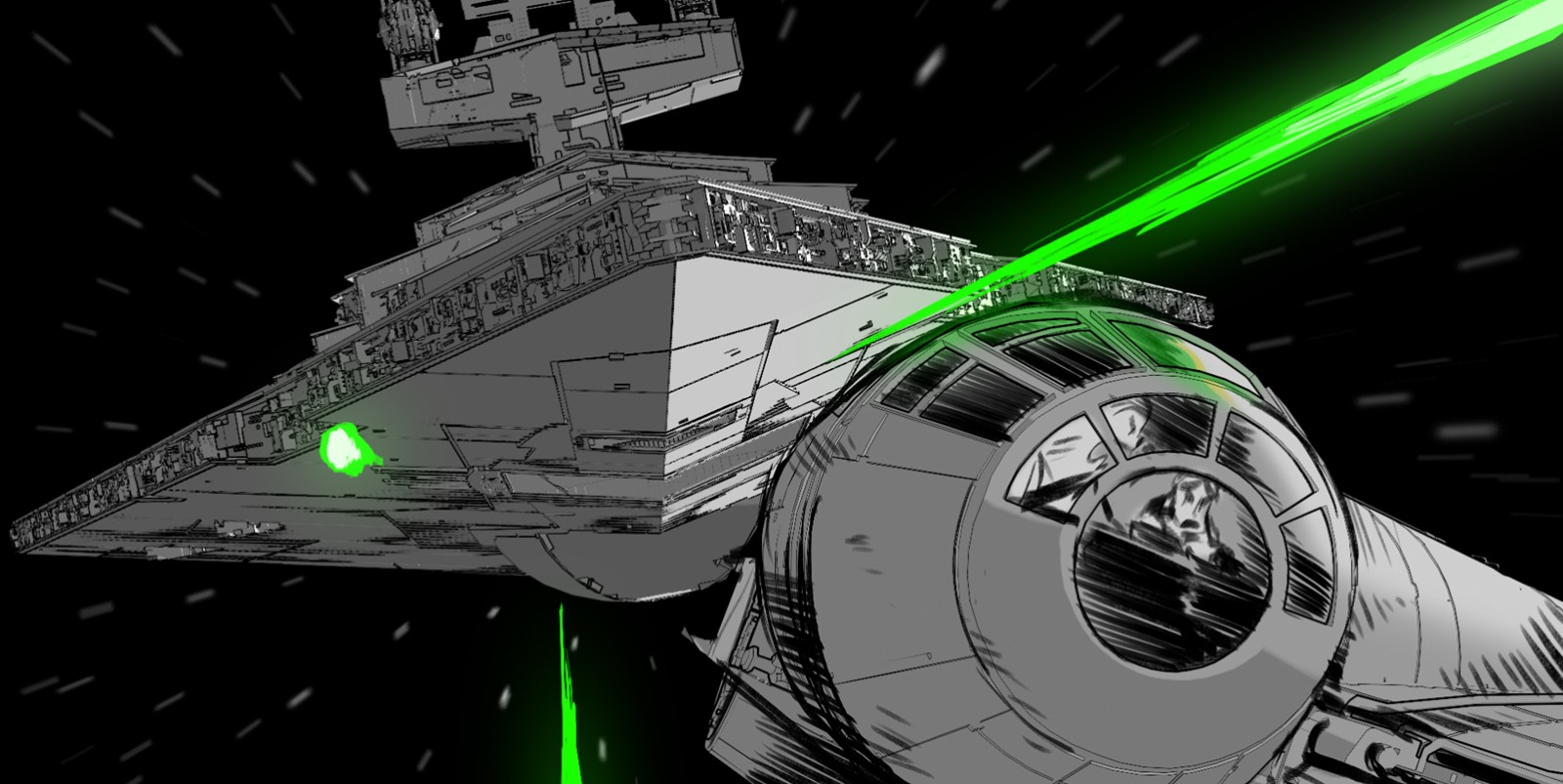
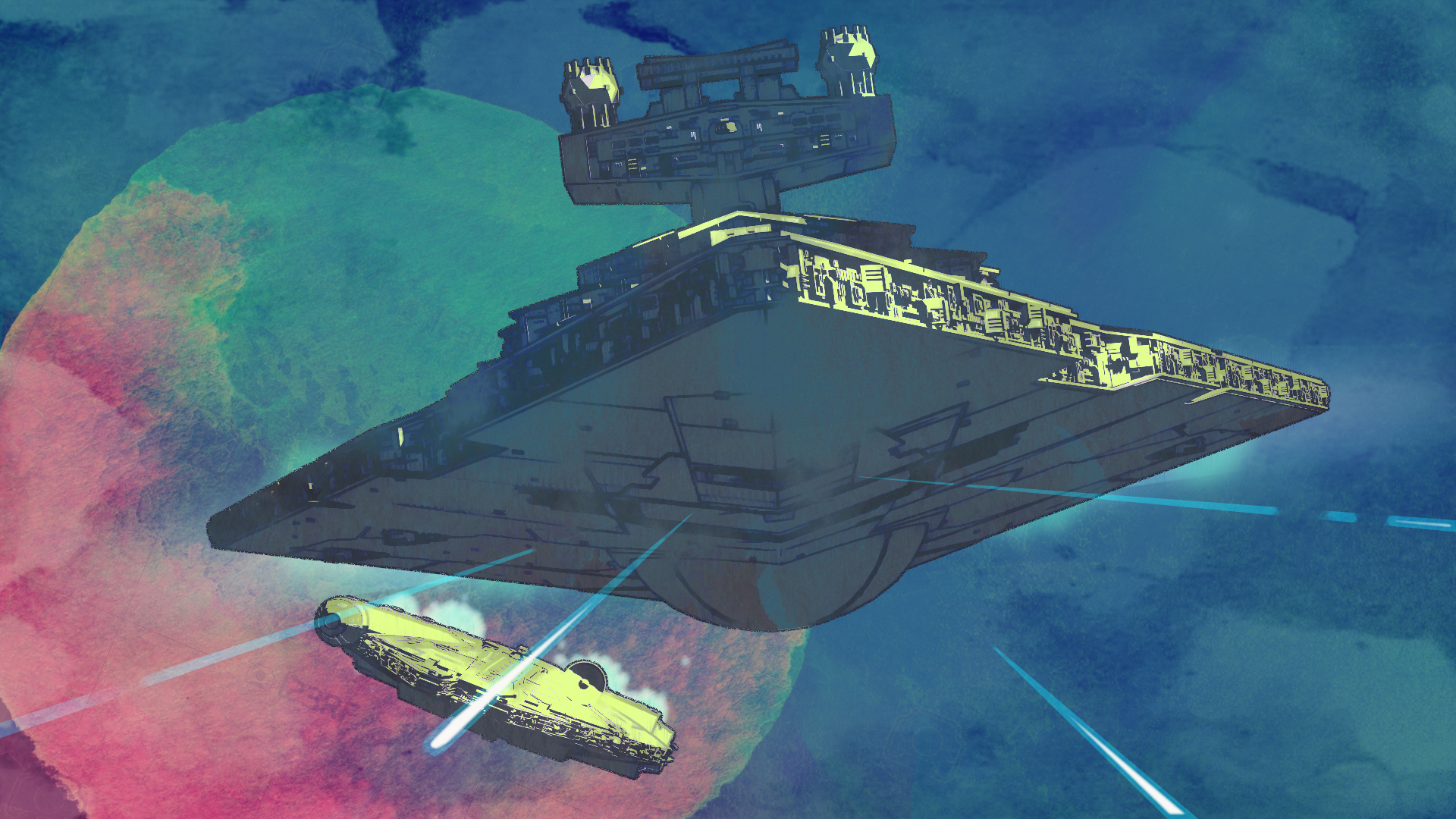
Roldán, who most recently animated on the Love, Death + Robots season-four episode “How Zeke Got Religion” and is now on a Netflix Animation project doing Blender-based storyboarding, said spirits weren’t flying after the first week, when things looked pretty rough.
“We were seeing it a little bleaker,” he said. “But it served us. We got much more efficient. We cut things that were going to shine less. I wanted to apply ‘Do or do not, there is no try,’” he laughed. “Either we were going all in, or we weren’t going to do it at all.”
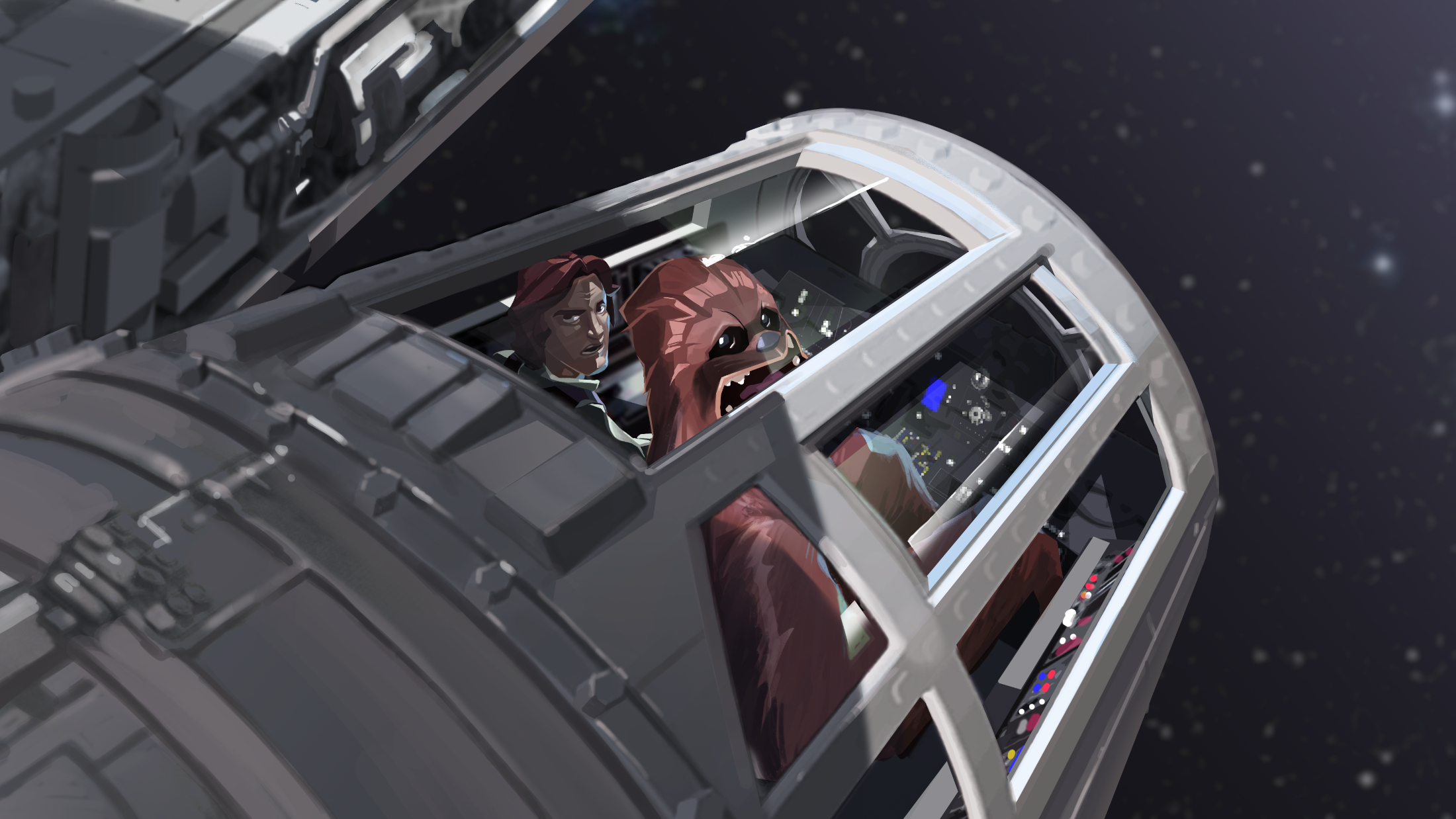
Madplane, who works with Combé and animates Lingokids kids’ games featuring Marvel, Pixar, and Disney characters, came in last and animated the closing sequence as well as an earlier moment shared between Han Solo and Chewbacca. “I arrived at a set table,” he joked. “Everything was clear about what I had to do, and because I hadn’t seen any of the piece, I think I brought a fresh eye to a few key spots. The Chewbacca scene was super fast. The closing one took longer because it was the final note. It was a pleasure to have worked with this gang.”
For Ruiz, who’s spent the past year drawing Star Wars rather than animating it, the short scratched a different itch. “Comics have no sound and no movement,” he said. “Having everything working at once has been incredible, with this gang of pirates.”
All quotes were translated from Spanish to English and edited for length and clarity by the author.