.png)
Personal Memory And Visual Metaphor Shape Momo Cao’s Experimental Short ‘Not Alone,’ Online Today (EXCLUSIVE)
Stay informed with free updates
Sign up to get our news digest — delivered directly to your inbox twice a week.
When Momo Cao started working on her animated short Not Alone, all she knew was that she wanted to explore loneliness, mental health, and the complex process of self-understanding. She had no idea that the project would later connect to a deeply personal family revelation and morph into something semi-autobiographical.
Back in May, we picked Not Alone for the first-ever Cartoon Brew Award for Excellence in Filmmaking at the ASIFA-East Animation Festival, where we were blown away by its emotional honesty, striking imagery, touching score, and deft handling of such a nuanced topic. Now we’re thrilled to debut the film and share a conversation we had with Cao, who joined us to reflect on the long journey that brought it to life.
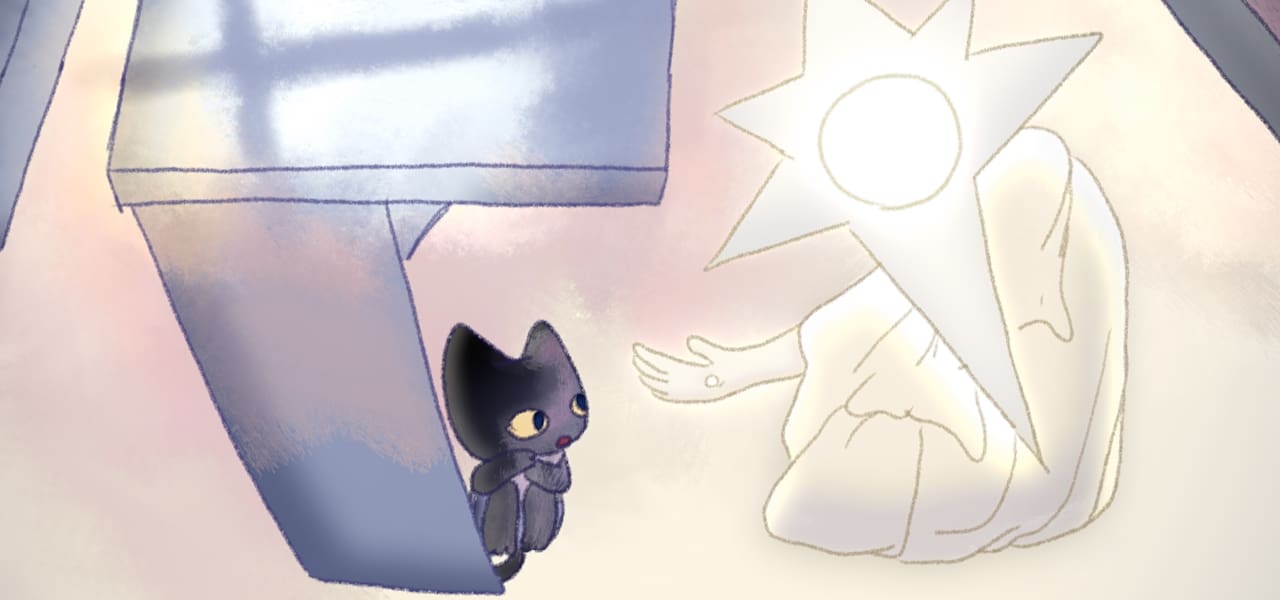
Not Alone turns on a cat who absorbed their twin sister during fetal development, a real medical phenomenon known as chimerism. The non-linear story is told through dreamlike imagery and emotional symbolism as the protagonist struggles through pain and isolation before ultimately reuniting with their lost sibling among the stars.
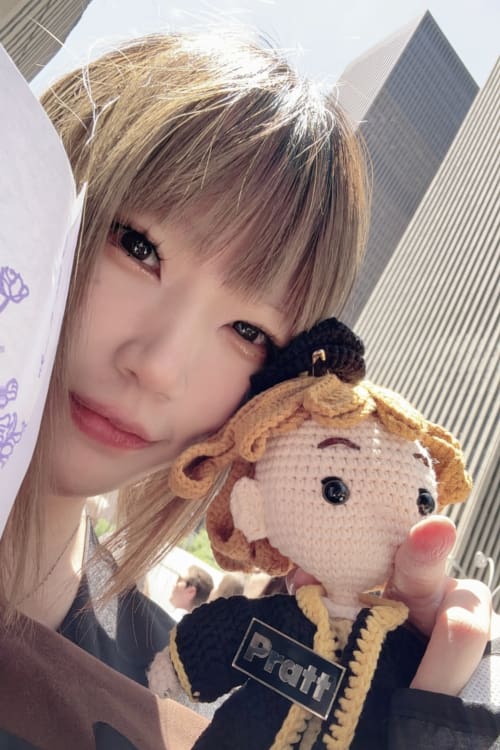
“Not Alone is a poetic film,” Cao told us. “That is my first time trying to make something experimental because I have a previously linear film finished at SVA. So I’m trying something different.”
Born in China and now based in New York, Cao first arrived in the city in 2014. She completed her undergraduate studies at the School of Visual Arts before working a variety of jobs, including illustrating jewelry designs for a company. Eventually, she enrolled in the MFA Computer Arts program at Pratt Institute, where Not Alone became her thesis project and consumed years of her life.
“The first week of the class is our introduction,” Cao recalled. “After the first week, I started doing it to plan the story. And after three years, the story is complete.”
She laughed when describing the production process. “It’s called Not Alone, but actually I’m doing it alone. It’s ironic.”
Aside from music composed by a friend, Cao handled nearly every aspect of the project herself, including writing, storyboarding, editing, character design, animation, sound design, and directing. She even launched her own label for her work, Nekoaoya Animation Studio.
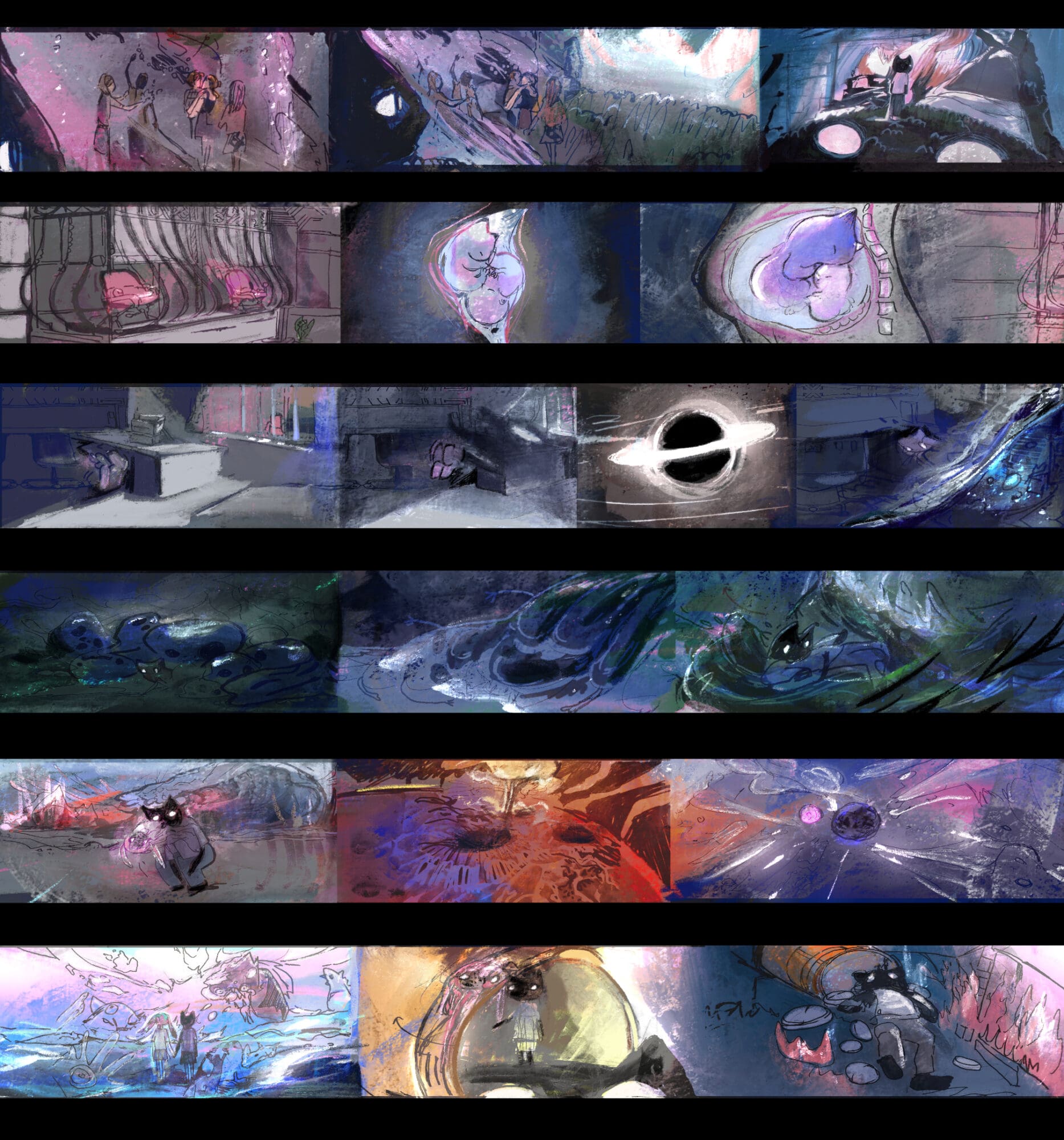
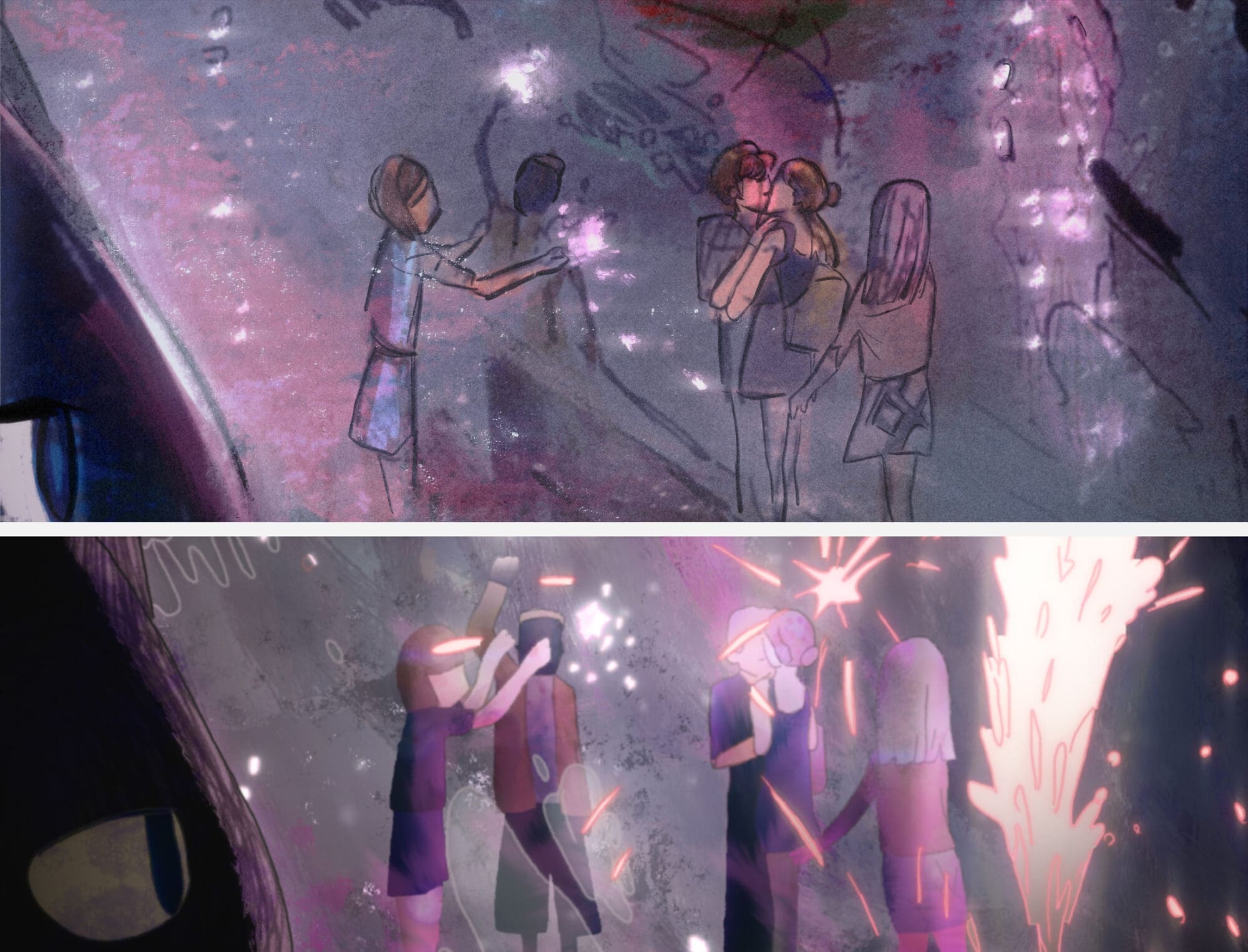
The result is a film that feels intensely personal while remaining open enough for viewers to bring their own experiences into it. Some parts are entirely literal, while others are obscured behind visual metaphors that refuse to hand-hold.
“That was my intent,” Cao said. “To make room for people to interpret their own way.”
The emotional core of Not Alone came from a conversation that took place while Cao was already developing her initial plans for the short. At a dinner gathering, friends asked whether she had any siblings. Curious, she later brought the question to her mother, and the answer stunned her.
“I didn’t know that because she kept that a secret. She said I used to have a sister,” Cao recalled.
Her mother explained that Cao had absorbed her twin during fetal development. For her mother, it was simply part of the pregnancy story. For Cao, it sparked years of reflection.
“She didn’t think it was a big deal because she was so happy to have me,” Cao said. “I think it’s very important for myself, though, because I always think, what if she’s still living inside somewhere?”
That question became the foundation of Not Alone. Rather than presenting the lost twin literally, Cao transformed her into a symbolic figure. In the film, the sister appears as a rabbit, a character who can be interpreted in multiple ways.
“I wanted the sister, the rabbit, to be treated as a symbol,” Cao explained. “She can also represent our original self or pure intention, as we had in the beginning.”

The film’s themes extend well beyond its unusual premise. Cao draws connections between the lost sibling, mental health struggles, self-acceptance, and the challenge of reconciling different parts of one’s identity.
“It’s about struggles, about abstract feelings,” she said. “I have inspirations drawing from mental health, trying to understand every part of yourself.”
Not Alone is careful not to over-explain anything. The film contains a clear emotional arc, yet much of its meaning is conveyed through atmosphere, symbolism, and visual metaphor rather than direct narrative exposition.
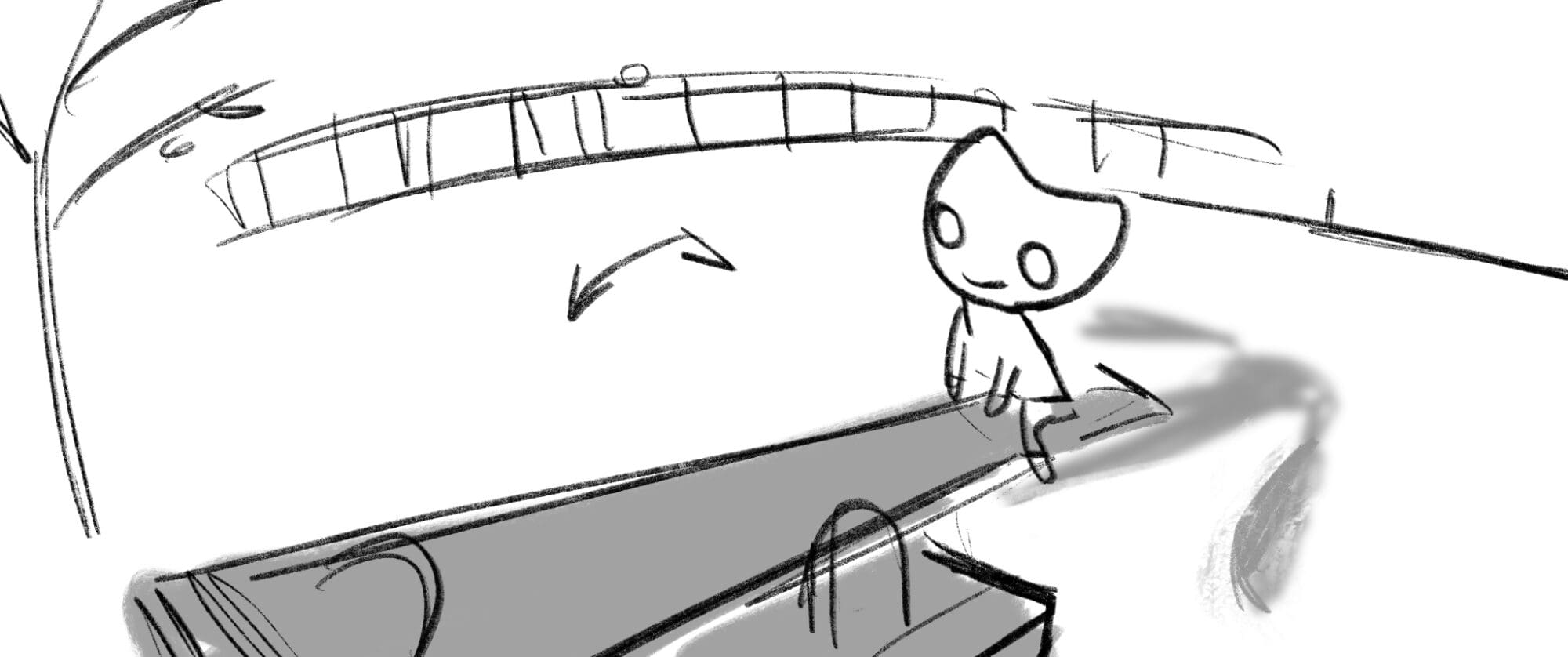
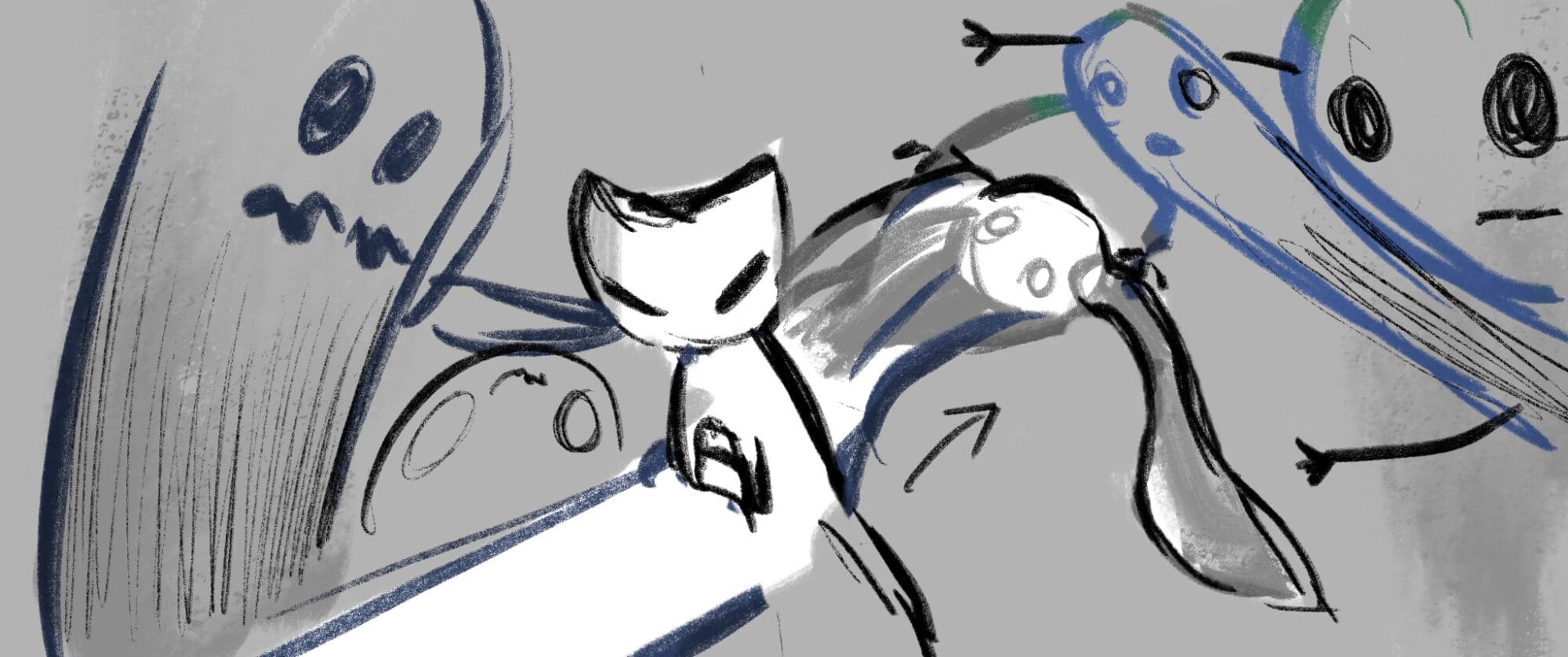
Cao admits she worried that the approach might make the work too personal or difficult for audiences to connect with, but that has not been the case thus far.
“I was worried about it being very personal,” she said. “Like abstract to people trying to understand.”
Instead, the ambiguity became one of the short’s greatest virtues. It’s very open to interpretation. The imagery remains flexible enough to support multiple readings without diminishing its emotional impact.
That’s one major reason that Cao chose anthropomorphized animals for her protagonists. “Because I chose the animal character as the main character, I want to leave a little bit of a connection to everyone,” Cao said. She also avoided including too much detail. “If the character is simple enough, just like a stick figure, people can relate,” she explained.
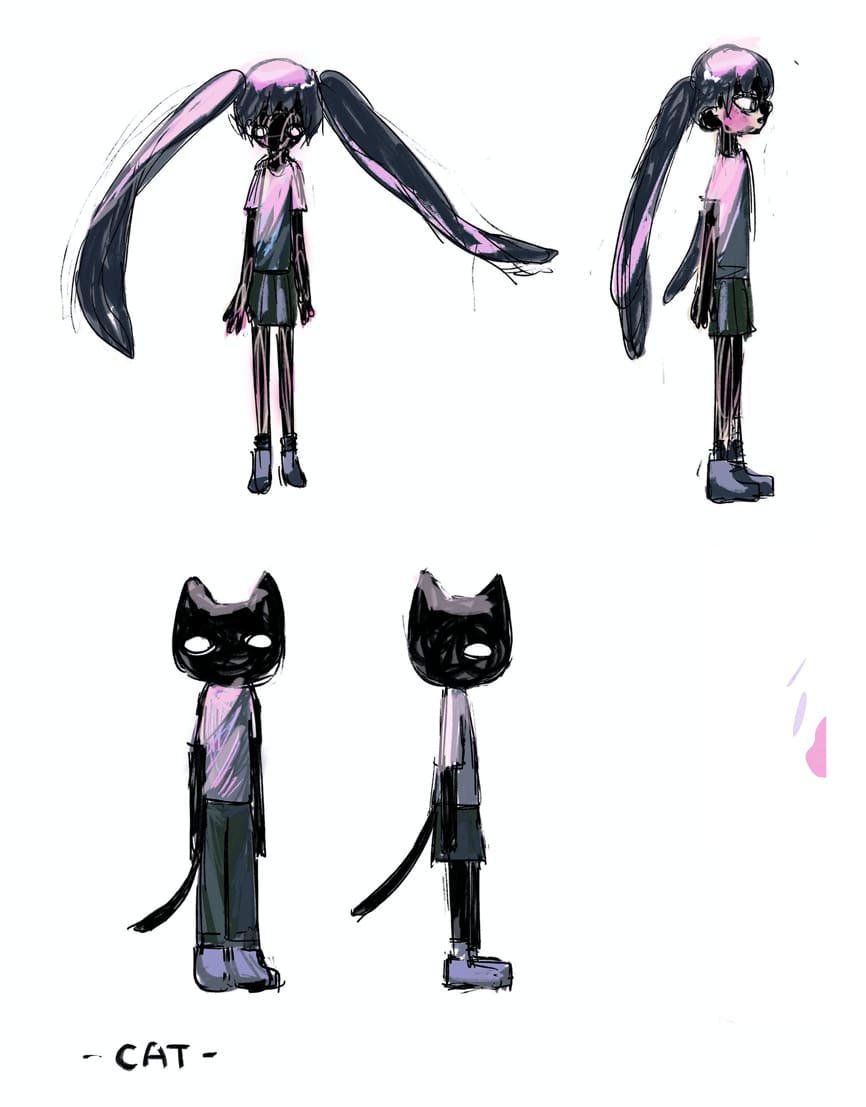
The childlike quality of the designs also serves another purpose. “The theme is dealing with very heavy emotions,” Cao said. “I want to make the character very childish-like to keep the story not too heavy to take in.”
Although Not Alone confronts loneliness and emotional pain, it ultimately moves toward hope. That ending was not always guaranteed. Cao revealed that earlier versions of the film leaned much darker. “I actually made it very dark,” she laughed, almost nervously. “The last shot, the cat lying down there, they could be dead.”
Over time, however, she realized the title itself pointed toward a different conclusion. “I wanted the title to be Not Alone,” she said. “That way, I leave a positive message for everyone.”
For Cao, the film is ultimately intended for people navigating difficult periods in their lives. “It’s mostly for people who are struggling, feeling lonely,” she said.
As Not Alone reaches audiences beyond the festival circuit, that message feels central to the film’s resonance. Its imagery may be surreal, and its storytelling deliberately impressionistic, but the emotional impulse behind it is remarkably direct.
What began as an attempt to process a deeply personal piece of family history grew into something much broader. Not Alone never insists on a single interpretation, but after all the confusion, grief, and self-questioning, it arrives at a simple idea: none of us moves through life entirely on our own.
