.png)
Amid Industry Contraction, French ‘Coyote Vs. Acme’ Service Studio Stim Is Expanding
Stay informed with free updates
Sign up to get our news digest — delivered directly to your inbox twice a week.
Rome wasn’t built in a day, and neither was Jordan Soler’s Stim Studio. But amid work shortages and budget cuts, it’s encouraging to share news of the company’s continued growth as it steadily becomes a major player in the French service studio industry.
Founded in 2019 by ESMA alums Jordan Soler and Félix Ferrand, Stim began by providing support and creating CG animation and VFX content for the film, television, and advertising industries. It quickly evolved into a studio with a wide range of talent, reaching full production capacity for TV series and animated features this year.
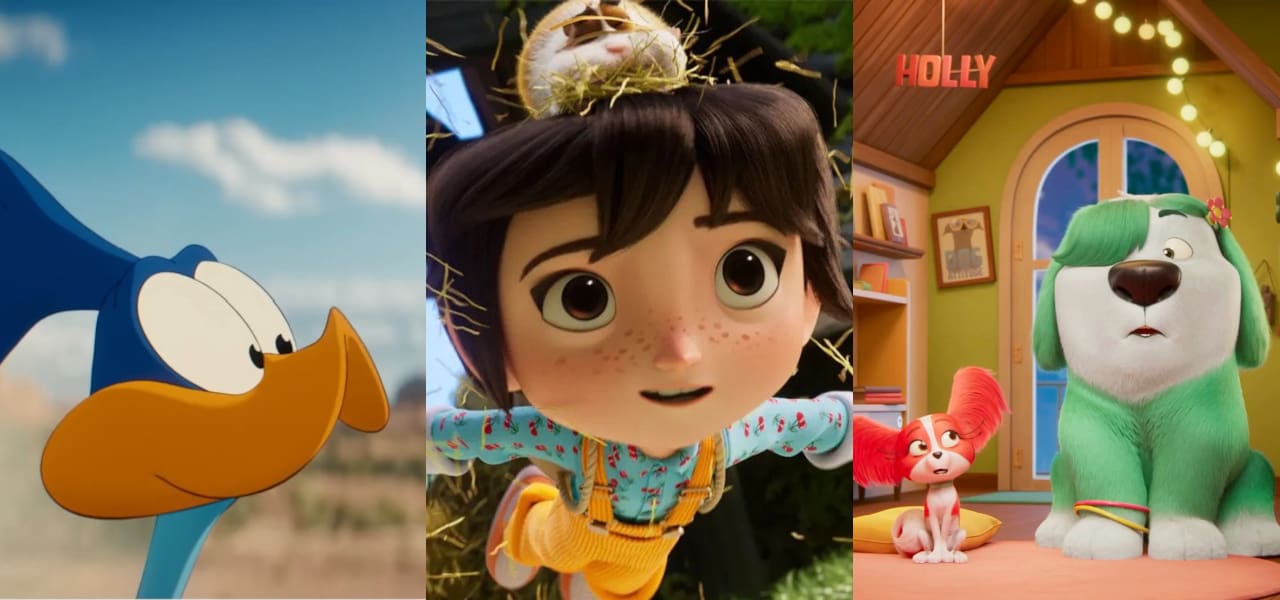
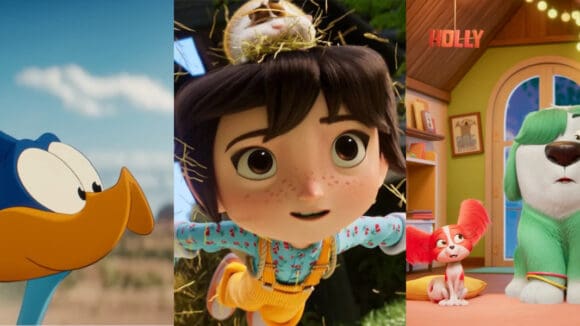
Summer 2026 marked the French release of Stim’s first feature, The Girl in the Clouds, produced for Brio Films. On the other side of the Atlantic, Stim also contributed to a film that executives didn’t believe in (but we did) and that you might have heard of: Coyote vs. Acme.
As Stim prepares a major recruitment drive for its new—and fourth—location in Tenerife, Canary Islands, which opened in June, Brew spoke with Soler about his career, what drove him to build his own studio, and what he envisions for its future.
You graduated from ESMA as a CG artist in 2015, and four years later, you launched your own studio. What was the reality and motivation behind this bold endeavor?
Jordan Soler: Stim was founded with my fellow ESMA graduate Félix Ferrand. We met during our studies in Montpellier, became roommates, and formed a strong bond. From very early on, we had the idea of working together and building something together as well.
After graduation, we both worked for Illumination and other companies and did a lot of personal projects together, but we still had to formalize our working relationship.
During this time, we both became highly specialized artists—Félix as a rigging, facial, and modeling artist, and me as a lookdev and grooming artist—and we began receiving more and more freelance requests.
Stim was born out of this rising demand, which we had to meet alongside our day jobs. Instead of turning the work down, we thought: What if we could train people and recruit artists to do this with us? I was working in Canada and Félix was in France when he approached me with the idea. We started out on both sides of the Atlantic, and when I came back, we began building the studio.
How did Stim develop in the early days?
As I mentioned, the studio was born out of multiple requests for asset creation—characters, modeling, and so on. We built the studio horizontally, broadening the scope of what we could do by recruiting people with different profiles. From the start, our goal was to be able to accept full-scale projects and, in time, move beyond advertising and small service jobs to establish our studio on a global level.
Yet, as you mentioned before the interview, you have no desire to produce your own projects.
Exactly. In fact, it makes perfect sense for us not to be a production studio because our clients are producers, and we simply don’t want to compete with them.
Many service studios today have decided to be both producers and providers, and sometimes even distributors. They wear many hats, which in some ways makes sense when you look at our industry’s pipeline. But for me, the issue is that, as providers, they’re not only building projects for themselves; they’re also building projects for their clients.
To me, it sends the wrong message: ‘Thank you for your projects. They’ll help us build our own projects, which are, of course, more important because they are our own.’ At Stim, that is something we’ve always wanted to avoid because it creates double standards, and that’s not good for business.
So, was this different approach to service work at Stim’s core from the start?
As you know, we’re not the first CG artists to create our own studio. Artists have done it, investors have done it, but mostly directors have done it in order to finance their own projects. That has never been our goal because we’ve never had the desire to build our own worlds—and, frankly, because we don’t think we’d be good at it.
What we are good at is building and crafting for others, helping them raise funds and create the best national or international production scheme with both a cost-effective approach and high-end standards, without sacrificing quality or resorting to social dumping.
And that’s key: Our goal isn’t to weaken the industry. It’s to think of smart ways to build new projects, reshape our production models, and adapt to a changing environment.
How does this mindset inform your collaborations within the industry?
As a provider that chose to center its activities in Europe, we developed a deep understanding of how producers and distributors work within the region. That has differentiated us from our competitors.
We firmly believe that producers, distributors, and providers can work hand in hand instead of looking sideways at one another, each thinking the others want to exploit them to maximize profits while minimizing costs. It all starts with a clear understanding of one another.
As a studio, we always discuss projects closely with our producers and provide insights into financing, tax rebates, public funds, and gap-financing opportunities. If pipelines need to adapt, we are agile enough to offer different solutions as a true partner in the process, not just a provider.
And the Tenerife expansion?
Beyond the sun and the weather, it was part of the same strategy. With studios in Lyon, Angoulême, and the Belgian city of Liège, we were looking for a third European country in which to open a new location. It so happens that a triangle connecting France, Belgium, and Spain is also very interesting and competitive in terms of production opportunities.
Spain has a vast talent pool, and the Canary Islands offer a hefty 54% tax rebate on the first €1 million spent, with a 45% rebate on all further expenses—not only workforce costs. This amounts to an overall 49% tax rebate, a huge support that can double your budget or cut it in half, depending on how you view it. It’s a major selling point when approaching producers.
Our integrated production model, with this triangular structure—each location has its own fully operational team—and broad talent pool, allows for flexibility and supports both local productions and interconnected, multi-studio projects.
How are you weathering the overall reduction in commissioned projects?
In recent years, we’ve chosen to reduce our number of clients and focus on bigger projects for larger companies. Today, we’ve become a one-stop shop for Mediawan, Ellipse Animation, and many others in Europe, and they ask us to quote on all their new projects. I’m very proud that our first fully produced feature, The Girl in the Clouds, was released this summer, and I look forward to our future collaborations.
In the near future, we’ll be recruiting heavily for the Tenerife studio, aiming for a workforce of more than 100 by mid-2027. We’ll be looking for people with broad skill sets who can move between departments as projects evolve—team players who can join an ambitious, agile European team that meets international standards. And yes, people who know AI, understand it, and are not afraid of it. It’s not about prompting around the clock in a stupid way; it’s about staying at the forefront of technological developments and remaining relevant. Otherwise, French animation will once again fall ten years behind as it tries to catch up with U.S. companies in that field as well.
What does the future look like?
Look, beyond our European expansion, we’re still looking to work with North American companies, and I think we have a card to play there. French CG artists are known throughout the world for their skills, and we bring that expertise to our studios. What we need to do now is prove to North American producers that a six-figure production can be as good as a seven- or eight-figure animated feature.
At Stim, we’ve developed agile ways of producing high-end animation, with an R&D-driven, tech-savvy approach that allows us to offer tailored solutions for every request. It’s not about fitting a square peg into the round hole of a rigid pipeline. It’s about packaging our production to match our clients’ needs.