.png)

Animation Jobs In The Age Of AI: Revelations From Luminate Intelligence’s 2025 Special Report
Stay informed with free updates
Sign up to get our news digest — delivered directly to your inbox twice a week.
The animation industry has always been labor-intensive, blending artistry, innovation, and technology to bring stories to life. Now, a new technological shift, generative AI (genAI), is sparking debate about whether the next decade will expand or shrink opportunities for people working in the field.
Audrey Schomer’s Animation + AI: 2025 Special Report from Luminate Intelligence offers an in-depth look at the job outlook, artist concerns, and the possible “middle path” for animation work in the AI era.
Below, we provide a brief overview of a few key takeaways from the study, but the full report is available here. The charts and graphs in the report are enlightening and highly detailed, and there is far more than we could include in our limited wrap.
A Decade of Upheaval in Animation Employment
Over the past five years, animators have weathered turbulence. The pandemic brought a temporary boom as studios leaned on animation when live-action stalled. But when the streaming bubble burst, layoffs hit hard. Pixar, DreamWorks, Netflix, and Paramount all trimmed animation teams, while VFX and animation houses like Rooster Teeth, Technicolor, and ON Animation closed altogether.
Amid the downturn, new opportunities emerged in anime production, adult animation, and global markets like China and India. Yet the workforce remains strained by shifting business models and shrinking budgets. The arrival of AI has provoked both excitement and fear, depending on who you ask.
Generative AI and the Future of Animation Work
Generative AI has quickly become one of the most controversial topics in the history of animation employment. To executives, the technology promises to speed up production, slash costs, and free studios from heavy reliance on big-budget franchises. To many artists, however, it feels like an existential threat, outsourcing skilled labor to software trained on their own work without consent.
Survey data from HarrisX in 2024 emphasizes this anxiety:
- 55% of entertainment workers believe animators will face a “major impact” from AI within two years.
- 50% expect VFX artists to be heavily affected.
- 43% of game developers and 41% of voice actors also anticipate major changes.
- By contrast, just 16% of makeup artists foresee significant disruption.
In other words, roles central to animation pipelines — animators, storyboard artists, concept designers — are viewed as most at risk.

The Creative Labor Debate
One of the most pressing concerns among artists is the replication of styles. Nearly half of generative AI users surveyed admitted they had used tools to mimic the work of specific creators or studios, from Shakespearean writing prompts to Studio Ghibli-inspired imagery. For concept artists, who often design worlds, characters, and tones before production begins, this represents lost work and potential erasure of their craft.

There are also legal battles underway, some of which we’ve covered closely. Stability AI is facing class-action lawsuits in the U.S., and Disney and Universal sued Midjourney after AI-generated works imitating Studio Ghibli circulated online. These disputes highlight how copyright, labor rights, and creative ownership intersect in the AI era.
Skills and Roles That May Change
Despite the fears, the report stresses that AI’s future in animation is not all-or-nothing. It argues that a “middle path” is beginning to take shape:
- Assistive AI tools may automate repetitive or technical steps, such as coloring, in-betweening, or previs.
- Hybrid workflows could combine human-directed CGI with AI-generated imagery, preserving creative intent while reducing drudge work.
- New job categories are emerging, including AI workflow designers, data ethicists, and “prompt animators” who specialize in directing models to achieve desired results.
Startups like Animaj and Toonstar are already utilizing these workflows. Pocoyo studio Animaj claims its proprietary AI models can cut production time by 85%, with human animators refining the final look. Such shifts may not eliminate jobs outright but will almost certainly change the skills required to succeed. Netflix recently published its own guidelines regarding the use of genAI by its partners working on original content for the streamer.

Risks for Career Development
According to the study, one overlooked consequence is the potential erosion of entry-level positions. Traditionally, junior artists learned fundamentals by working on early stages of animation production, the kinds of tasks most at risk of automation. If those jobs disappear, the pipeline for training future generations of animators could be weakened. Industry veterans like Hayao Miyazaki have warned of “deskilling” and an overreliance on automated imagery.
At the same time, supporters argue that AI could empower independent creators. Tools that reduce cost and time may allow small teams or solo artists to produce professional-quality work, opening doors for new voices and original IP. Platforms like YouTube and Roblox are already incubating such talent.
A Precarious but Promising Future
The report concludes that jobs in animation will not vanish, but they will certainly change. Studios, unions, and artists are still debating where to draw the line between automation and human-made artistry. The study says that it will depend on:
- Legal frameworks around consent and compensation for training data.
- Adoption of ethical AI models that avoid scraping copyrighted works.
- Investment in reskilling animators to adapt to new hybrid workflows.
The future of many jobs in animation may hinge on whether AI becomes a tool that empowers animators or a wedge that diminishes others.
As Schomer notes, the industry’s choice is not whether to adopt AI, but how. The coming years will define whether animation remains a craft-driven medium supported by skilled workers or shifts toward a “good-enough” industry driven by algorithms and efficiency.
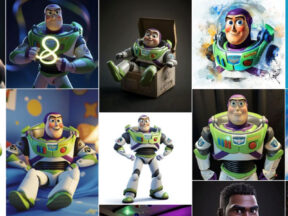
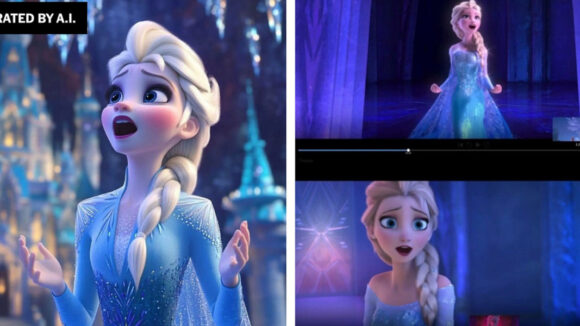
Pictured at top: Evidence provided by Disney in its case against Midjourney