I love animated GIFs and the seemingly infinite variations on the form. Comic book artist Kerry Callen has come up with a new twist: animating vintage comic book covers and he pulls it off quite well.
(via Mark Evanier)

I love animated GIFs and the seemingly infinite variations on the form. Comic book artist Kerry Callen has come up with a new twist: animating vintage comic book covers and he pulls it off quite well.
(via Mark Evanier)
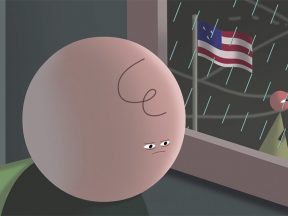
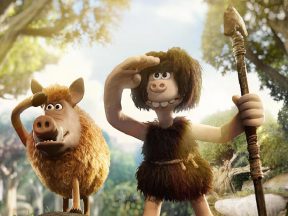
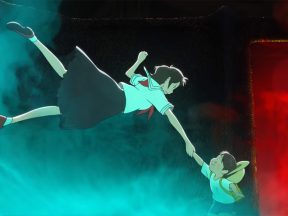
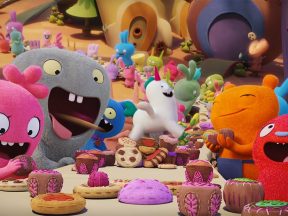
The New York Film Critics Circle, which I can only presume is a circle of film critics from New York, has announced their picks for the best films of the year. This year, they chose not to hand out an award for best animated feature. It’s the first time they’ve withheld the honor since initiating the category in 2000, which is a bold (and arguably unwarranted) rebuke of this year’s crop of animated features. Then again, the group isn’t afraid to take risks and consistently acknowledges worthy animated films. The winners of their best animated feature category over the last four years have been Persepolis, WALL-E, Fantastic Mr. Fox and The Illusionist. Compare that to the Academy, whose membership has handed the Oscar to Pixar for the past four years in a row.
Meanwhile, the mysterious National Board of Review of Motion Pictures, which is comprised of “a select group of knowledgeable film enthusiasts, filmmakers, academics, and student,” also announced the winners of their film awards, and they chose ILM’s Rango as their best animated feature. It’s notable in that they’d given the animated feature award to Pixar for the last five years in a row. When the National Board of Review can’t bring themselves to pat Pixar on the back, you know the Oscar race is wide open.

This appealing, exquisitely colored 1952 magazine illustration of Snow White and the Seven Dwarfs by children’s book illustrator Gyo Fujikawa will be auctioned next week at the Illustration House. Fujikawa worked briefly at the Disney animation studio before she moved to New York to pursue a career in advertising and illustration. The auction estimate for the painting is $5,000 to $7,000.

I’m selling the original “Old Pro” model sheet artwork on eBay right now. It’s a prime example of Cartoon Modern styling by one of the most prolific studios of the decade Playhouse Pictures. The character, which was created for Falstaff Beer, was among the most ubiquitous characters of the 1950s and 1960s, and appeared in literally dozens of commercials (many of them directed by Bill Melendez). This is the final model of the character–it’s a large piece that contains 13 delightfully rendered drawings of the character pasted onto posterboard. (There’s a detailed description of the piece and its physical flaws on the auction listing.) I’ve always enjoyed the piece but haven’t had the space to give it the proper framed treatment. It’s time to set it free from my storage and get it into the hands of somebody who can really enjoy it. The auction on eBay ends on December 5th.

Serbian animation outfit GlossyRey came up with Be a Vegetarian, which if not particularly effective at making its case for vegetarianism is at least cute. Pre-production artwork from this brief After Effects piece is posted on their website.
CREDITS
Production Company: GlossyRey Animation and Design
Story: Nemanja Zivkovic
Art Direction: Stanko Stupar
Art Direction: Nemanja Zivkovic
Animation: Stanko Stupar
Rigging: Nemanja Zivkovic
Music and Sound Design: Rajko Stupar
Special Thanks to: Marko Bugarski and Nemanja Saric

California animation studios have had satellite studios in Asia since the 1980s, when Disney operated out of Japan and Hanna-Barbera had Fil-Cartoons in the Philippines. It’s the same today, only the names of the companies have changed, like Lucasfilm with its studio in Singapore and Digital Domain in India. Now, according to this Reuters story, DreamWorks is aggressively pushing forward with its plans to launch a studio in Shanghai, a development that we first reported last September. The new studio, DreamWorks East, could be up and running by January, and its first feature is slated for 2015. DreamWorks and a consortium of Chinese companies will invest up to $2 billion over five years in the joint venture, and the studio will also develop theme park rides and distribute films.

Above right is a photo of me in Paris some years ago standing besides the grave of French filmmaker and visual fx pioneer Georges Méliès. I’d heard that Martin Scorsese’s new film Hugo incorporated the character of Méliès (portrayed by Ben Kingsley in the left-hand photo above), but I didn’t anticipate that the entire film would be essentially about him. More broadly, Hugo, which I saw in 3-D last night, is a celebration of filmmaking magic, the medium’s dreamlike possibilities, and true to Scorsese’s personal passions, the importance of film preservation. That Scorsese was able to package these themes into an entertaining family film is nothing short of miraculous.
The film’s strength is its visuals. I got a real kick out of the imagery, from the main setting of the train station and its cogs-and-gears innards to the intricate mechanics of the automaton who figured prominently in the film. The 1930s train station, which provides a warm and intriguing setting for the film, is almost a character in itself, but like most of the film’s characters, it suffers from broad caricature. In this case, it’s the cliched and tiresome American view of Paris, which was also seen in Woody Allen’s recent Midnight in Paris. The film’s freshest visual spectacles were the scenes that recreated Méliès’ films, appropriately so since the film was a celebration of his genius.
The 3-D must be mentioned. It was not offensive–an accomplishment in itself–but as usual, I’m left wondering how much it truly added. The opening shot of the film (was it all CG?), was contributed by ILM I think, and it was a fun use of 3-D in the roller coaster ride sense of the technology. In some of the early scenes, Scorsese showed motes of dust floating around the screen. The fact that I remember that, but not what was happening on the screen doesn’t speak well of the effect. To Scorsese’s credit, it appeared that he cut back on the 3-D trickery midway through the film, mostly recycling 3-D shots used earlier in the film or simply putting it aside in favor of more straightforward storytelling.
Final verdict: Hugo isn’t necessarily a classic, but it is a memorable children’s film with a refreshing lack of cynicism and lofty ideals.
A couple of animation-related notes:
* The film is an adaptation of Brian Selznick’s quasi-graphic novel The Invention of Hugo Cabret. A film based on the book was announced in May, 2008, and was slated to be the live-action directorial debut of Blue Sky co-founder and Ice Age director Chris Wedge. That version, for reasons unknown, was canned.
* A hand-tinted color version of Georges Méliès’s classic “A Trip to the Moon” (1902) was discovered in the 1990s and its restoration was recently completed by French film historian Serge Bromberg of Lobster Films. Bromberg is better known in the animation world as the artistic director of the Annecy International Animated Film Festival.


If you are planning to buy the two sets of UPA cartoons that Jerry posted about, you would do well to also pick up the forthcoming history of the UPA studio, When Magoo Flew: The Rise and Fall of Animation Studio UPA by Adam Abraham. As far as I know, the book and the DVDs weren’t planned together, but the stars are aligned, and one of the most important yet neglected animation studios of all time is ripe for rediscovery in 2012.
I’ve already read Adam’s book and I’m happy to report that he gets it absolutely right. The research is impeccable, the writing solid, the story fascinating. Though the book includes over 70 illustrations, it’s more narrative history than coffeetable art book, but that’s hardly an issue anymore thanks to the two companion DVD sets that contain UPA’s entire theatrical short output. The 324-page When Magoo Flew will be released by Wesleyan University Press next March. Place your pre-order on Amazon for a mere $20.
To celebrate the release of the new Saul Bass biography, Art of the Title created this nifty visual guide to some of Bass’s most celebrated title sequences.
There’s a Saul Bass tribute at MoMA in a few hours with the book’s author Pat Kirkham along with Kyle Cooper and Chip Kidd. Tickets for non-MoMA members are at the door so get there early.

Also, now would be a good time to point out that Universe will be re-issuing Saul Bass’s only (and nearly impossible to find) illustrated children’s book next February. Henri’s Walk to Paris, written by Lenore Klein, was released in 1962. I had a copy of the book for a few years, and found it so unenjoyable that I got rid of it. It struck me as being a failure as an illustrated storybook, and my ex-library copy confirmed that–it had rarely been checked out in decades.
It surprised me that I disliked the book as much as I did because Bass had a sense of humor (and his very able and funny collaborator Art Goodman worked on the book, too). But, the book’s illustrations are excessively formalized and austere (the curse of design for design’s sake), with none of the warmth, humor or vitality that the story required. Using minimalist graphics in a children’s book is a tricky task to begin with, but it’s possible to do it well. Graphic designer Paul Rand pulled it off more successfully in titles like Sparkle and Spin and Little 1. Or simply look to the master of super-stylized children’s book illustration, Abner Graboff. In spite of its shortcomings, if you’re a Bass fan, you’ll probably want a copy of the book, and now it’s easier to find than ever before.
(Thanks, Short of the Week for the video link)
The year isn’t over yet, but barring a record-shattering gross by Tintin or Happy Feet 2, we already know what will become the highest-grossing animated project of 2011.
Drumroll, please. . . and the film is . . .
. . . actually, it’s not a film at all. It’s a videogame:
Activision’s release of the videogame “Call of Duty: Modern Warfare 3″ last Tuesday ranked as the biggest launch of any videogame in history. Within its first 24 hours of release, the game sold 6.5 million units in North America and the UK, earning $400 million dollars and well on its way to over $1 billion. “We believe the launch of ‘Call of Duty: Modern Warfare 3′ is the biggest entertainment launch of all time in any medium, and we achieved this record with sales from only two territories,” claimed Bobby Kotick, CEO of Activision. By contrast, the all-time single-day movie gross record belongs to the latest installment of Harry Potter, which took in $91 million earlier this year.
Some may cry foul about comparing higher-priced games to movie ticket prices, but videogames have always cost more, and it has been only in the last few years that they have consistently challenged the dominance of feature animation grosses. Activision’s accomplishment provides an ideal moment to reflect on the growing influence of game companies like Activision and Electronic Arts on the animation community as a whole.
Some ideas to consider:
* Animation has become an integral component of contemporary games in a way that it wasn’t twenty years ago, and the quality of a lot of game animation surpasses anything you’d see in an animated TV series (not to mention some features).
* Using similar toolsets and production pipelines, game creators have achieved success by pursuing a vastly different aesthetic sensibility than traditional CG features.
* More animators in the US are likely employed in the gaming industry than are in feature animation.
All of this points to a paradigm shift taking place throughout the animation industry in which gaming is emerging as the preeminent form of cartoon entertainment. The effect that this will have on feature animation–the medium’s most prestigious format–remains to be seen over the next few decades. Perhaps animated features will begin to look more like games (an idea that filmmaker Robert Zemeckis has promoted) or perhaps they’ll push further in the opposite direction. It’s about to get interesting.

Hong Kong fashion label Bossini has released a playful Toy Story collection. The Slinky Dog muffler looks especially fun. See the entire line on Bossini’s Facebook page.
(via BoingBoing)

Mike Judge sits down for an interview in the latest issue of Vice. Judge talks openly about the whys and hows of the Beavis and Butt-Head revival. The interviewer Rocco Castoro also asks some unconventional questions, like this memorable exchange:
I noticed that the show’s logo now says “Mike Judge’s Beavis and Butt-Head” rather than “MTV’s.” I feel like I’ve seen it this way on the DVD boxes of the old episodes, but it was surprising to see that it was going to carry over to TV. Got any good dirt on this subtle but important change?
When [my relationship with MTV] began, I had these two two-minute shorts with Beavis and Butt-Head that I licensed to Liquid Television. Then MTV wanted to buy the characters from me–they didn’t say what exactly they wanted to do with them–and so I negotiated for a while and thought, “It takes six to eight weeks to do two minutes when I do everything by myself,” and I was kind of done. I’d produced two shorts and made a few thousand off of them selling them to festivals and Liquid Television, but that was it and I was a nobody at the time. So I sold it to them outright, and then they wanted me to do the show so I ended up getting paid that way. But at some point they decided, “We’re gonna call it MTV’s Beavis and Butt-Head.” I was like, “Really? I created this in my house with pencil and paper and cels and film and… MTV’s Beavis and Butt-Head? But whatever, you own it, that’s fine.” Years later the movie came out and they wanted a sequel. I was unhappy with some stuff, and I just did a fuck-you negotiation with them [laughs]. At one point my lawyer said, “You want to ask them to call it Mike Judge’s Beavis and Butt-Head?” and I said, “Yeah, go for it.” I kind of forgot that we agreed to that, and then when we were redesigning the logo I was like “Wow, OK.” Normally I wouldn’t splash my name all over something, but if it’s between MTV’s Beavis and Butt-Head or Mike Judge’s Beavis and Butt-Head, I’ll take it.
Have you ever wanted to see a CG model of babyfaced baby-making singer Justin Bieber clunkily composited into a cruddy holiday special produced by Rankin/Bass? Me neither, but that’s what you’ll find in Bieber’s cover of “Santa Claus is Coming to Town,” which inserts him into the 1970 Rankin/Bass holiday special of the same name. I’m sure some viewers will be outraged by this, but frankly, I’m having trouble getting worked up over it. That’s probably because just about anything added into a Rankin/Bass cartoon promises to be an improvement over the original. What’s more concerning is that a second video of this song, featuring a live-action Bieber, will premiere in front of Arthur Christmas. If I’m a few minutes late walking into the theater for the film, you’ll understand why.
(Thanks, Whitney Grace)
Hand-drawn goodness by Rob Stevenhagen created for by Steffen Schaeffler’s The Emperor’s New Clothes. Where can we see the rest of the animation? Montreal-based Pascal Blais Studio produced the film. (The video was posted on their Vimeo account, but they didn’t produce it. See below for details.)
UPDATE: The animator of the piece, Rob Stevenhagen, writes: “The film is called Screen Test (and is a pilot for a feature film called The Emperor’s New Clothes). Screen Test is directed by Steffen Schaeffler, animated by me, and produced by Berlin based Ideal Standard Film (not Pascal Blais). See IMDB for credits.
(Thanks, Boris Hiestand)

UPDATE: MARCH 15, 2012: Bla Bla won the SXSW Interactive Award.
Is it a film or a game? Interactivity and non-linear storytelling have been more the realm of gaming than short filmmaking, but the two fields are slowly merging. In the coming years, interactivity promises to become a valuable tool in the short filmmaker’s arsenal. Bla Bla created for the NFB by Montreal director Vincent Morisset is one of the more ambitious and successful interactive film experiments I’ve seen. The press release below contains lots of details about what it’s all about. But first, be sure to spend some time exploring the film itself by going HERE.
Vincent Morisset’s BLA BLA is an interactive tale that explores the fundamental principles of human communication. The viewer makes the story possible: without him or her, the characters remain inert, waiting for the next interaction. The spectator clicks, plays and searches through the simple, uncluttered scenes, truly driving the experience.
Each of the six chapters in the story depicts a different aspect of communication: learning a language, making small talk, expressing emotions, etc. Rich in opportunities for discovery, BLA BLA illustrates these concepts through endearing yet perplexing characters. The figures were designed by Caroline Robert using a variety of techniques, both traditional and hi-tech.
“BLA BLA uses xerography, drawing on paper, ActionScript-generated animations, puppet stop-motion combined with real-time 3D mapping, etc.,” Morisset explains. “I am inspired by projects that feel free aesthetically. I wanted BLA BLA to feel hand-made, imperfect, fragile, so we forget about the technology.”
The music as well as the characters’ speech were fragmented into tiny clips and then scored through programming. Composer Philippe Lambert designed a progressive soundscape that uses “controlled randomness.” Morisset relied on the skills of software developer Édouard Lanctôt-Benoît for the programming of BLA BLA.
The work stands apart in its emphasis on achieving an emotional response in the viewer/actor. “I wanted to create moods and generate emotions through an interactive piece,” Morriset says. “It’s quite hard to do dramatic crescendos on a website… I thought it would be an interesting challenge.”
As part of the creative process for BLA BLA, Morisset extensively researched interactive narrative. Seeking a filmmaking language specific to the online realm, he defined a new grammar of non-linear editing. Through the very format of the work, he therefore questions the challenges of communication and of telling a story in which the spectator is a participant: “The project in itself explores the grammar of a new medium,” he says.
BLA BLA thus offers a new vision of communication in the wider sense, of how our natural behaviours and interactions with others play out in the world. “The relation between the user and the film is part of the message,” Morriset explains. “We wrote and created it based on universal stuff: the social nature of humans, our fear of the unknown, the desire for appropriation and freedom, and paradoxically the love of being taken by the hand.”
Morisset has been exploring the narrative potential of interactive art for twelve years now. His pioneering work in the field has included several collaborations with the group Arcade Fire, including “be oNline B”, widely considered the first interactive music video, and MIROIR NOIR, a documentary portrait of the band. With the support of the NFB, he now offers us BLA BLA, a one-of-a-kind experience that further refines his hallmark: re-imagining “once upon a time” for the digital age.
CREDITS
Direction, Animation and Compositing
Vincent Morisset
Sound, Music and Voice
Philippe Lambert
Programming and Technology
Édouard Lanctôt-Benoit
Visual Design and Animation
Caroline Robert
Puppet Armature Design
Jean-François Lévesque
Rotoscopy
Vincent Lambert
Photography
Minelly Kamemura
Additional Prototype Programming
Mathieu Campagna
Prototype 3D Modelling and Animation
Joshua Sherrett
Jonathan Fleming-Bock
(Thanks, J. J. Sedelmaier)