|
|
|||||||
|
|||||||
|
TAG FOR “Classic”September 2, 2009 7:32 am
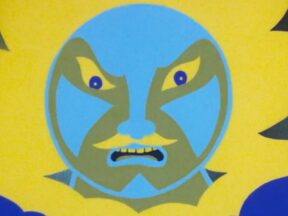
WOW! A real rarity today. It’s A Nose, an animated short from 1966 directed and designed by Mordi Gerstein (who prior to this had worked at UPA). The film is based on a surreal piece of satire by Russian writer Nikolai Gogol, and was produced at Jack Zander’s NY studio Pelican Films. There’s some impressive bits of animation in the film, which shouldn’t be a surprise considering that Emery Hawkins and Jack Schnerk are credited as animators. Nowadays, Gerstein is illustrating children’s books, including the well-received The Man Who Walked Between the Towers. (Thanks to Mordi’s son, Aram Gerstein, for posting the film onto YouTube.) August 29, 2009 12:10 am
Ehhh, What if… (Thanks, Tim Lawrence via Facebook) August 27, 2009 12:05 am
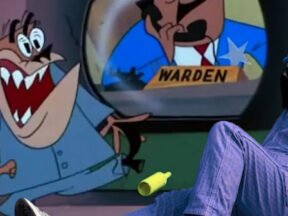
For the sake of film history, I’ll occasionally seek out odd bits of animation contained in obscure Hollywood movies and post them here - so you don’t have to. Previous postings in this series included Dave Fleischer in Trocadero (1944), and the Leon Schlesinger animation sequences in When’s Your Birthday? (1937) and She Married A Cop (1939). Today’s clip (below) is three sequences bunched together from United Artists 1943 screwball comedy, Hi Diddle Diddle. Leon Schlesinger provided a bit of animation at the beginning of the film (looks like McKimson animation to me, but I’ll defer to the more knowledgeable experts in our readership) and a cartoon bit in the last scene. The clip in the middle, coming in the middle of the film, sets up the end gag: An egotistical opera singer (silent screen actress Pola Negri, in a comeback role) has wall paper depicting a cartoon Richard Wagner and his family. In the final sequence, Adolphe Menjou, who’s been drinking, imagines the cartoon images (looks like from Freleng’s unit) on the wall paper coming to life and running away from the awful singing of his family (including “good witch” Billie Burke, seated at the piano bench). You don’t want to know what leads up to this; you don’t want to see this movie. It’s pretty bad. Even the animation stuff is rather lackluster. But here it is, for those of you who were ever wondering about this relatively rare sequence: The entire flick can be seen on 50 Movie Pack: Classic Musicals, a DVD boxed set from Mill Creek Entertainment, which I recently snagged for $9. at Big Lots. The aforementioned Trocadero is on the set, as well as King Kelly of the USA (1934) which has a really odd animation sequence - which I will posting very soon. August 22, 2009 12:05 am
Walter Lantz animated a short sequence for the Universal feature King Of Jazz (released 3/30/30). The sequence is notable as the first two-color Technicolor cartoon released in the sound era (though color cartoons predate the talkie era; and Iwerks’ Technicolor Fiddlesticks with Flip the Frog, was released later in 1930). I wanted to get this clip included on the Walter Lantz Woody Woodpecker and Friends Classic Cartoon Collection’s (Vols. 1 & 2, both highly recommended, nonetheless), but legal considerations prevented it. Musician Alex Rannie (Disney, Ren & Stimpy, etc.) spotted the clip on You Tube and sent us the link, along with several historical annotations (below). Notes from Alex Rannie: Whilst roaming around the Interwebs I discovered that someone has posted the two-strip Technicolor animated sequence from the 1930 film King of Jazz. Since I couldn’t leave well enough alone, I jotted down a few lines about the music and related references. There’s a heck of a lot of music in this three-minute piece, and a slew of contemporary musical references that would have elicited laughter from a 1930 audience. Wish they still made animated films as jam-packed with fun and wit as this one! Music used in the King of Jazz (1930) animated sequence: August 19, 2009 12:05 am
Bob Clampett was a genius. And if you need further proof, the long-awaited Beany and Cecil: The Special Edition Vol. 2 dispenses it in spades. I just received my copy of this DVD and I cannot praise it highly enough. If you are a Clampett junkie like me, you’ve been Jonesing for this (no pun intended) for at least ten years (when the equally incredible Vol. 1 was first released). First off, let me state that the Beany and Cecil cartoons are personal favorites of mine. They are among the funniest, and best, TV cartoons ever made - and still hold up great today. There are eleven beautifully restored B&C cartoons here, all from 35mm master elements, looking better than I ever recall them. A 12th cartoon included is a rarely seen alternate version of Beanyland (which was featured on Vol. 1). I’d normally pick a few to highlight, but they are all terrific cartoons—Cecil Meets Cecilia, Davey Cricket, Strange Objects, Ben Hare, etc. These alone would be worth the retail price. But they only represent about 1/5 of the disc’s programming. The rest of the content is Bonus Material - so much so, I can’t even list it all. The biggest thrills for me: Storyboards (and a cut scene) from Bob’s 1947 Republic cartoon It’s a Grand Old Nag, two more Time For Beany kinescopes, more audio recordings of Bob discussing his influences and even reading a Milt Gross story! There’s also a reel of home movie footage, of Bob walking around New York City in 1945, filming Times Square billboards - including an Otto Messmer/Douglas Leigh animated billboard! A complete list of the disc’s contents is posted here. Beany and Cecil the Special Edition Volume 2 officially goes on sale September 8th. However, you can buy Volume 2 right now, along with the long out-of-print Volume 1, from the Beany and Cecil web site. A limited supply of Volume 1 was found unopened in the family’s warehouse and they are being offered, one per customer, to anyone who buys a copy of Volume 2. Volumes 1 & 2 (purchased together) sell for $54.95 + Shipping. Do this today - you won’t be sorry. August 14, 2009 10:48 am
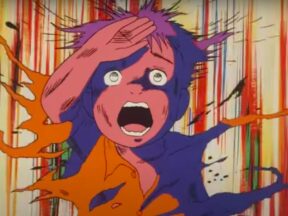
Joshua Smith, who has introduced me to lots of great anime over the years, wrote to let me know about some recent discoveries he made on YouTube: Kitty’s Studio (1959) and Kitty’s Graffiti (1957), two shorts animated by Yasuji Mori. I’ve embedded them below. Joshua writes:
Kitty’s Studio He continues:
Josh is spot-on when he writes about the distinct approach.The filmmaking choices in these cartoons are very odd and un-Western. In the cartoon below, the face of the main character is not shown from a three-quarter or front view until well over two minutes in the cartoon, even though he’s onscreen for much of that time. I can’t think of a single example of when that’s happened in a Hollywood theatrical short. Kitty’s Graffiti August 11, 2009 4:30 pm
My friend Martha Sigall is one of the last living survivors of Termite Terrace (aka the Leon Schlesinger “Looney Tunes” Studio). She’s just posted a You Tube video in response to the number one question she gets asked all the time: Who Created Bugs Bunny? Here’s her response: And she ought to know, she was there — as a member of the ink and paint crew. For more of Martha and her recollections, I suggest you pick up her wonderful book, Living Life Inside The Lines. August 9, 2009 1:00 pm
Just a quick heads-up that I’ll be introducing a double feature Max Fleischer’s two great animated features, Gulliver’s Travels (1939) and Mr. Bug Goes To Town (1941) at the Egyptian Theatre in Hollywood, California on Friday September 25th. Both will be presented in 35mm, with uncut IB Technicolor prints projected on the large screen, just as they were meant to be seen. Mark your calendar now! More details about this event will be posted when we get closer to the actual date.
|