If Pixar Made “Star Trek”…

After Pixarifying (is that a word?) the universes of Marvel/DC comics, Doctor Who and Star Wars, cartoonist Phil Postma has directed his attention toward the characters of Star Trek. In a post on his blog, Postma explains that he didn’t render any of the images:

“Yes, these are characters from Pixar films and it is just a photo mash-up of images I find on the Internet using Photoshop. No, they are not meant to be a caricature of the actors who played them. Rather a character from the Pixar universe that resembles in some small way the character I am doing. It is just a fun simple project I picked to help me learn more about Photoshop since I am far from an expert at it.”

Reimagining “X in the style of Y” isn’t necessarily a groundbreaking venture, but it’s a common creative exercise done by artists to help better perceive the design tropes of certain styles and studios. In that light, Postma’s exercises are fun to look at. Incidentally, the best reimagining by Postma has nothing to do with Pixar—it’s a Fleischer-ization of Spider-Man.

The Legend of the “Legend of Tembo”

Digital Domain’s first animated feature The Legend of Tembo fulfilled its prophetic title. Thanks to the misdeeds of the company’s management, the film can never exist and has, in fact, turned into a legend.

The film’s co-director Aaron Blaise is keeping Tembo‘s memory alive on his newish blog by posting materials from the film’s production. So far, he has uploaded concept and development paintings, pencil tests, and most impressively, a massively detailed how-to guide for drawing elephants. If there’s one thing that can be safely concluded from all this material, it’s that the man knows how to draw a mother-humpin’ elephant.

Will Anybody See “Escape from Planet Earth” This Weekend?

Today marks the American release of the Weinstein Company’s Escape from Planet Earth, a film that is best known for the nasty legal fight surrounding its production. The film is produced by Canada’s Rainmaker Entertainment and directed by Cal Brunker, heretofore a board artist on features like Horton Hears A Who!, 9, Despicable Me, and Ice Age: Continental Drift.

Most box office projections are estimating around $10 million for the four-day President’s Day holiday weekend. That sounds about right. It’s been poorly promoted for a film that will open wide in nearly 3,300 theaters. Personally, I can’t recall seeing a single ad for the film in New York City, whereas any animated feature opening on so many screens is typically accompanied by subway ad campaigns plastered around the city. Perhaps the Weinstein Company chose to invest the film’s marketing budget on children’s cable stations and elsewhere.

TONIGHT IN LA: DMTV2 Animation Screening

An exciting array of contemporary animation will screen tonight at the Synchronicity Space in Los Angeles as part of Floating World Animation Fest’s DMTV2. Watch the trailer above. Animators represented include Jacob Ciocci, James Connolly, Amy Lockhart, Duncan Malashock, James Mercer, Mirai Mizue, David O’Reilly, Yoshi Sodeoka, King Terry and Shinya Tsukamoto. It’s described as:

A collection of experimental and psychedelic animation from around the world. The emphasis is on non-commercial, personal work. We seek pure vision. Some of the films push visual noise and glitch to the limit while others reach a peak of ambient degaussed bliss.

Synchronicity Space is located at 713 N. Heliotrope, Los Angeles, CA. Screening starts at 9pm and admission is FREE!

The Studio Promo To End All Studio Promos

How does a traditional animation studio promote itself in a CG-obsessed world? Austin, Texas-based Powerhouse Animation Studios, which produced the 2D cut-scenes in the Epic Mickey games, does it with a heaping side of humor. They made this tongue-in-cheek studio promo, cheekily titled “Against the Z-Axis,” that advertises their “pure, organic, traditional, AMERICAN animation.”

Visual Effects Pioneer Petro Vlahos, RIP

Petro Vlahos, a visual effects pioneer and inventor of camera hardware, died last Sunday at age 96. His invention of the sodium vapor travelling matte system was used extensively in Disney films like Mary Poppins and Bedknobs and Broomsticks as a way of combining live-actors with background footage. That accomplishment alone is impressive, but it barely begins to describe the number of innovations that Vlahos introduced to the film industry. A comprehensive obituary detailing his life’s work can be found in The Hollywood Reporter.

LOST FILMS: “Calaveras” by Jacques Colombat

What constitutes a “lost” film? The traditional definition is a film whose existence is confirmed but of which no prints can be found. But in this day and age of infinite abundance on the Internet, there is also another type of lost film. This is the film of which prints readily exist, but the film is rarely screened publicly, unavailable online, and is not part of the general animation community’s discussion.

An even more personal definition of a “lost” film is simply a film that I wish to see and am unable to find. I plan to regularly highlight these films in this new feature called “Lost Films.” It represents a desire to draw attention to the rich history of animated filmmaking and the various ways that artists have explored the medium throughout the years.

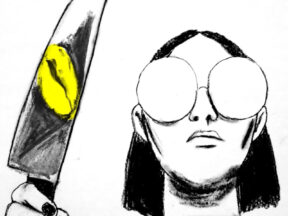
The first “lost film” is Calaveras (Skulls, 1969), a French short directed by Jacques Colombat (b. 1940) and produced by Les films Armorial. Colombat, who was a protégé of the important French animation director Paul Grimault, was inspired by the artwork of Mexican illustrator José Guadalupe Posada to create his Day of the Dead-themed short. Using a combination of cel animation and cut-out, Colombat animated the film with Jean Vimenet and Jean-François Laguionie, the latter of whom recently released the feature Le Tableau.

Colombat appears to still be alive and well. In fact, a photo of him riding a bicycle around Paris randomly ended up on the Associated Press last October.

The film’s running times that I’ve seen vary between 11 and 15 minutes. Here is the most complete synopsis of Calaveras that can be found online:

An unusual and aesthetically interesting cartoon, set in Mexico at the time of the defeat of Maximilian I by the Republican forces under Juárez. It tells the story of an imprisoned Algerian soldier who, having been left behind when Maximilian’s French troops were forced to withdraw, faces a firing squad. While he is in jail he dreams of life outside, but eventually his time comes. According to popular Mexican belief however, men continue their previous lives in the state of skeletons and there is every indication that the soldier will soon find his place in this new world.

The adventurous design and color of Calaveras excites the senses. I can’t imagine how these drawings are animated as cut-outs—or if they’re even animated—but I’d love to find out.

Ralph Eggleston and Peter de Sève Featured in “State of the Art: Illustration 100 Years After Howard Pyle”

Last week the Delaware Art Museum debuted an exhibition called “State of the Art: Illustration 100 Years After Howard Pyle.” It will be on view through June 1, 2013. The show is curated by David Apatoff, who takes a cross-disciplinary view of the evolution of American illustration through the lens of eight contemporary artists: Ralph Eggleston, Peter de Sève, Bernie Fuchs, Milton Glaser, Mort Drucker, Phil Hale, Sterling Hundley, and John Cuneo.

I love seeing animation artists included in the company of illustrators and designers like Fuchs and Glaser. The artwork for animated films, at its basic core, serves the same purpose as work created by these other artists in its need to communicate ideas to the audience through visual means.

For people who are unable to travel to Delaware to see the show, the museum has made the exhibition catalog viewable online.

JibJab’s StoryBots Learns Its ABCs

JibJab has completed the series of ABC videos that is part of their new children’s learning project StoryBots. The last video in the series—Z, of course—was directed by Max Winston, whose mastery of classic cartoon timing and movement is second to none among stop motion animators. [UPDATE: Max has posted behind-the-scenes photos from the short on his blog.]

When I was in LA last month, JibJab co-founder Evan Spiridellis gave me a sneak peek of the StoryBots material they’re producing. The StoryBots website doesn’t give much away, but some bits and pieces of concept art can be seen on their Tumblr. The company is busy producing a significant amount of interactive storybooks, games and animated shorts to support the StoryBots iPad app. Beginning this Spring, the app will be available for a flat monthly subscription fee of $4.99.

The thing that strikes me most about the whole StoryBots endeavor is the consistency of quality. JibJab uses a large crew—both in-house and freelancers around the globe—to create its StoryBots content. Working with such a large group of people has the potential to yield a mixed bag of results—for example, see the TED-Ed animated videos.

In JibJab’s case, however, there is a remarkable through-line that stretches across the entire StoryBots universe. This doesn’t mean that every StoryBots piece will wind up as a classic piece of children’s entertainment, but like the early Sesame Street, there is a sensibility of fun and creativity that binds the various parts of StoryBots together.

It’s the type of result that can’t be achieved overnight. Evan, who is the de facto creative director of StoryBots (I’m not sure what title he actually uses), does an incredible job of mixing and matching creative talents, casting the right crew for each segment, and then letting each person do what they’re best at doing. He credits the large amount of content they create for their e-cards division, which remains JibJab’s bread and butter, as preparing him for the demands of putting together StoryBots. At this early stage, the hard work is paying off, and StoryBots could become one of those rare children’s educational products that appeals to children and parents alike.

DreamWorks Animation Teams Up With Netflix For New Animated Series

The world of television animation is changing drastically, mainly by the fact that new animated shows won’t appear on TV. Netflix announced a deal yesterday with DreamWorks Animation in which they will fund an original animated series based on the upcoming feature Turbo. The show will be stream on-demand on Netflix.

The Netflix/DreamWorks deal doesn’t appear to be a one-off experiment The NY Times reports that Amazon’s competing Prime Instant Video is developing five children’s shows of its own.

DreamWorks head Jeffrey Katzenberg, whose company still produces TV shows like Kung Fu Panda: Legends of Awesomeness and How to Train Your Dragon for traditional cable outlets, was careful to couch the announcement in a way that didn’t outright state the demise of TV. Katzenberg said that the deal is “part of the television revolution.”

But the Netflix/DreamWorks deal also represents a paradigm shift that upends the entire children’s television model. When Netflix debuted its live-action series House of Cards earlier this month, they offered the first season’s thirteen-episodes all at once. There is a chance that something similar will happen with the Turbo series.

A good analysis of what Netflix is doing can be found in this New Yorker piece, “Why Netflix’s The House of Cards Could Signal The Decline of Cable Television.

And more about the new Turbo series from the official release:

LOS ANGELES — Netflix and DreamWorks Animation will create the first ever Netflix Original Series for kids. Based on the highly-anticipated DreamWorks Animation movie Turbo, premiering in theaters this summer, the Netflix series Turbo: F.A.S.T. (Fast Action Stunt Team) debuts exclusively this December in the United States and across the globe in the 40 countries where Netflix offers its service.

“Families love Netflix, so creating an original series for kids was a natural for us. And we’re doing it in a big way by adapting Turbo, this year’s DreamWorks Animation summer tentpole movie,” said Ted Sarandos, Chief Content Officer of Netflix. “DreamWorks Animation has a long track record of creating incredibly successful characters and stories that delight people of all ages. We’re thrilled to add Turbo the series as well as all new DreamWorks Animation films, starting with their 2013 slate, to Netflix.”

“Netflix boasts one of the largest and fastest-growing audiences in kids television. They pioneered a new model for TV dramas with House of Cards, and now together, we’re doing the same thing with kids’ programming,” said DreamWorks Animation’s Chief Executive Officer, Jeffrey Katzenberg. “DreamWorks is thrilled to be part of the television revolution.”

Turbo’s pursuit of racing greatness continues in Turbo: F.A.S.T.: an episodic animated television series that picks up where the feature film leaves off. It showcases the world-traveling exploits of our snail hero and his tricked-out racing crew as they master outrageous new stunts and challenge any villain unlucky enough to cross their path.

In addition to the original TV series Turbo: F.A.S.T., new DreamWorks Animation feature titles will be made available for Netflix members in the U.S. to watch beginning with the studio’s 2013 film line-up

Pixar Artists Are Raising Money For A Short—And They’re Not Using Kickstarter

Pixar artists Dice Tsutsumi (art director, Toy Story 3) and Robert Kondo (sets art director, Ratatouille) have announced that they are producing an independent short film. To help raise funds for the production, they are auctioning some of their exploratory sketches on eBay.

The auction serves as a valuable reminder that crowdfunding is not the only way to raise money for a film project. By auctioning their drawings on eBay instead of offering them as rewards on Kickstarter, Tsutsumi and Kondo are avoiding the often stressful task of organizing a major crowdfunding campaign as well as circumventing Kickstarter’s hefty fees, thus ending up with more time and money to devote to their film.

The two artists could yet end up running a crowdfunding campaign. “We may do Kickstarter too if we get man power to set it up in the future,” Tsutsumi wrote on Facebook. “It takes a lot of work to set up [a] successful Kickstarter.” Of course, there’s nothing wrong if they choose to do that. It’s refreshing, however, to see some out-of-the-box thinking that doesn’t treat crowdfunding as the holy grail, but rather as a component of a diversified fundraising effort.

Reel FX To Rhythm & Hues Artists: We Want You!

If there’s any silver lining to yesterday’s awful news about Rhythm & Hues, it’s that other companies hunger for the services of Rhythm & Hues’ respected crew. Reel FX is among the companies that has been most vocal about its desire to hire some of the hundreds of R&H employees who are expected to be laid off.

The Santa Monica and Dallas-based Reel FX, which is brashly entering the world of CG feature films by simultaneously producing two major pictures—Jimmy Hayward’s Turkeys and Jorge Gutierrez’s Book of Life—posted a special recruitment page for unemployed Rhythm & Hues artists. It included the following note:

This recruiting tab was created for those Rhythm and Hues [artists] who have been affected by their recent situation. Please know our thoughts are with you.

Thumbs up to Reel FX for doing its part to create a positive impact out of an unfortunate situation.

[Disclosure: I'm sorry to inform you that the girl in the photo above does not work at Reel FX, but I had to stick their company logo somewhere. Photo via Shutterstock.]

(story via Deadline)

Official Press Release About the Ownership Change in Cartoon Brew

FOR IMMEDIATE RELEASE

AUTHOR AND HISTORIAN AMID AMIDI
BECOMES SOLE MANAGING OWNER
OF CARTOONBREW.COM

February 12, 2013 (NEW YORK CITY) — Award-winning author and historian Amid Amidi announced today that he is now the sole managing owner of CartoonBrew.com after buying out his business partner of nine years, Jerry Beck. As Cartoon Brew celebrates nearly a decade of being the Internet’s most widely read and discussed animation news source, Amidi plans to evolve the site while retaining its candid and authoritative voice for which the site is best known.

Launched in March 2004, CartoonBrew.com attracts an extremely loyal and engaged following, and has millions of monthly pageviews. The site covers the entire spectrum of animation, from concept designs to cutting-edge computer animation and visual effects for both television and film to classical techniques like hand-drawn and stop motion. It also covers trends in commercial animation, interactive apps, blockbuster Hollywood features, crowdfunding, and independent filmmaking. The site is recognized by industry insiders for supporting and promoting up-and-coming artists in the field, many of whom have gone on to acclaim after being featured on the site.

“The independent editorial voice of Cartoon Brew has been one of its greatest strengths, and even as the site grows, I will ensure that that will not change,” said Amidi. Cartoon Brew, which will launch a new mobile platform in March, will also continue to present its popular online Student Animation Festival, currently in its fourth year, as well as expand its video offerings on Cartoon Brew TV.

“The past nine years of working with Jerry to build Cartoon Brew into the premier animation news website have been a tremendous and rewarding experience,” said Amidi. “I am ready to take the site to the next level so that it will continue to reflect the vibrant, ever-changing animation field. Animation is one of the fastest-growing sectors of the global entertainment industry, and it is both a great responsibility and honor to serve as the nucleus of the online conversation about the art form.”

About Amid Amidi
Recognized as one of the leading writers about the animation art, Amidi is the winner of the 2007 Theatre Library Association Award for “exceptional scholarship in the field of recorded performance.” He created one of the earliest daily animation news and commentary sites, Animation and Cartoon Heaven, and served as Associate Editor of Animation World Magazine, the first monthly electronic publication devoted to animation. He edited and published his own print magazine, Animation Blast, for nine issues before turning his attention to writing books full-time. He has written the following seven books:

  • The Art of Fox/Blue Sky’s Robots, 2004
  • Cartoon Modern: Style and Design in Fifties Animation, 2006
  • Inside UPA, 2007
  • The Art of Pixar Short Films, 2009
  • A Sketchy Past: The Art of Peter de Seve, 2010
  • The Art of Pixar: The Complete Colorscripts and Select Art from 25 Years of Animation, 2011
  • Full Steam Ahead: The Life and Art of Ward Kimball, 2014

Amidi has curated retrospectives and lectured at the Ottawa International Animation Festival (Canada), Elektra: International Digital Arts Festival (Canada), Anima Mundi (Brazil), Fredrikstad Animation Festival (Norway), Projector Festival (Scotland), Platform International Animation Festival (Portland), Los Angeles Times Festival of Books, and Comic-Con International:San Diego. He has spoken at numerous animation schools including NYU, SVA and RISD, and served on award juries for the following festivals: Fredrikstad Animation Festival (2008), Ottawa International Animation Festival (2009), and Animation Block Party (2010). He lives in New York City. For more information about Amid Amidi, please visit http://www.AmidAmidi.com.

###

For media inquiries, please contact:

Amid Amidi, Editor-in-Chief/Owner
CartoonBrew.com
amid at cartoonbrew dot com

A Final Word From Jerry

Time flies when your having fun – and this was fun.

Hard to believe it was almost nine years ago when Amid and I teamed up to create a daily blog devoted to bringing the animation community together with a smart source of news, commentary, gossip and ideas.

I’m quite proud of what we’ve got here. Cartoon Brew has ultimately morphed into the premier website for artists, animators, students and enthusiasts. Our readers have shaped this site as much (or more) as we have.

This is my final post on the Brew. I leave the site to my friend and colleague Amid Amidi to begin the next chapter in its ongoing evolution.

For those wondering where I’m going – I’m planning to continue doing what I’ve been doing: animation showings in L.A. (with plans to bring my act to New York as well), teaching cartoon history, consulting with Warner Home Video and continuing my efforts to get classic cartoons out of the vaults and onto your personal screens (on whatever device you prefer). I’m also committed to several new book projects, and have a few brand new ideas I’d like to pursue. I’ll also maintain a presence on the web, through my Facebook page and with my old site, CartoonResearch.com.

It has always been my ambition to work full time in the wacky, wonderful world of animation. My involvement with all of you through the Brew has fulfilled that goal – and then some.

Let me use this moment, right now, right here, to say ‘thank you’ to all the Cartoon Brew regulars who’ve been checking in with us all these years. To all the friends and strangers who read the site and tell me in person (at screenings and festivals, at Comic Con, at Ralph’s, El Pollo Loco, etc.) how much it means to you. It makes me feel great to know I’ve contributed something positive and meaningful to the community.

So to everyone, I’ll simply say “Stay TOONed”.

The best is yet to come.

Rare Disney Car Commercials Designed by Tom Oreb

For a short period of time during the mid-1950s, the Disney company allowed corporations to use its characters to sell products. There’s some interesting history behind this, and if you’re interested in learning more, I’d recommend this two-part series by historian Jim Korkis (part one, part two).

Among the companies that took advantage of this opportunity was American Motors, maker of Nash and Hudson cars. (Interesting sidenote: the company’s president at the time was Mitt Romney’s father, George W. Romney.) Yesterday, YouTube user ZarakPhoto uploaded a fine collection of the American Motors spots featuring Jiminy Cricket and Mickey Mouse. I’ve seen other prints of these spots, but these are easily the crispest versions I’ve encountered and worth a look even if you’ve seen them before. [UPDATE: It has been pointed out that the prints of these commercials were ripped from the Mid-Century Modern Animation, Vol. 1 DVD.]

Here’s an upload from another YouTuber with a lower-quality version of one of the other spots featuring Song of the South characters:

The commercials were designed by Tom Oreb, who in my humble opinion, was the most versatile and skilled designer during the Golden Age of Hollywood animation. Oreb’s assistant art director and layout artist on these spots was Vic Haboush, who was a dear friend and mentor to me.

This is Oreb’s model sheet of the “commercial” Mickey Mouse, which Vic and I discovered in his personal collection many years ago. Click for a larger version: