.png)
Hand-Drawn Turtles Collide With Live-Action Magic In Eyebolls’ Hybrid Spot (EXCLUSIVE BTS)
Stay informed with free updates
Sign up to get our news digest — delivered directly to your inbox twice a week.
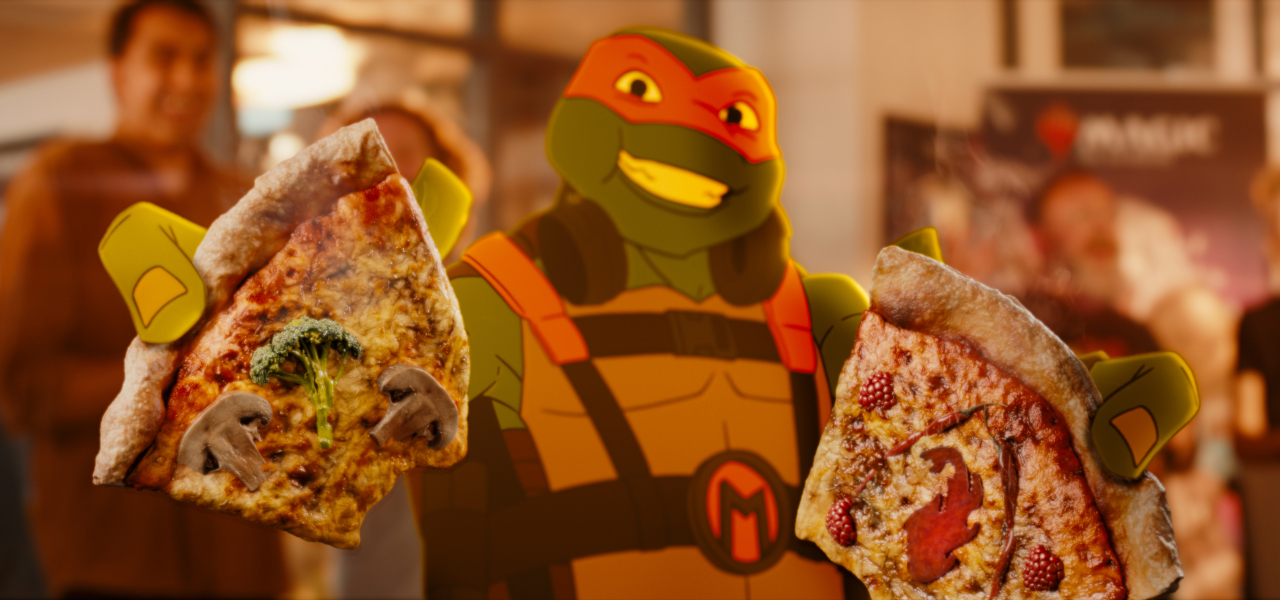
When Wizards of the Coast set out to promote its latest Magic: The Gathering collaboration with the Teenage Mutant Ninja Turtles, the result was not a conventional trailer. Instead, the company partnered with Scottish studio Eyebolls to produce a hybrid short that combines hand-drawn 2D animation with live actors, a technically demanding approach that reflects both the visual identity of the Turtles and the playful, social experience of Magic.
At a glance, the short film’s premise is straightforward: the Turtles inhabit a live-action world and assist in the R&D process of creating their signature cards. But beneath that simplicity lies a carefully considered strategy for merging two long-running intellectual properties without diluting either.
“It’s quite unusual that a studio can do both, especially hand-drawn 2D traditional animation with live action and then combining the two. So that was obviously hugely exciting for us and played right into our strengths,” said Rhona Drummond, executive producer and co-founder of Eyebolls.
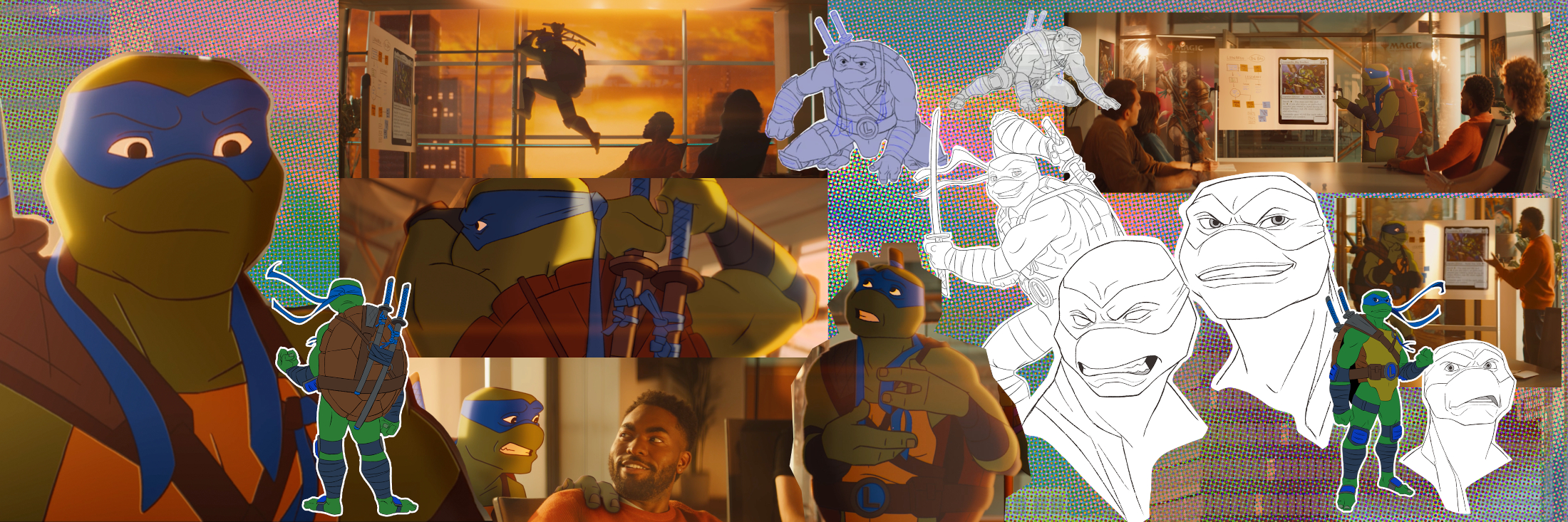
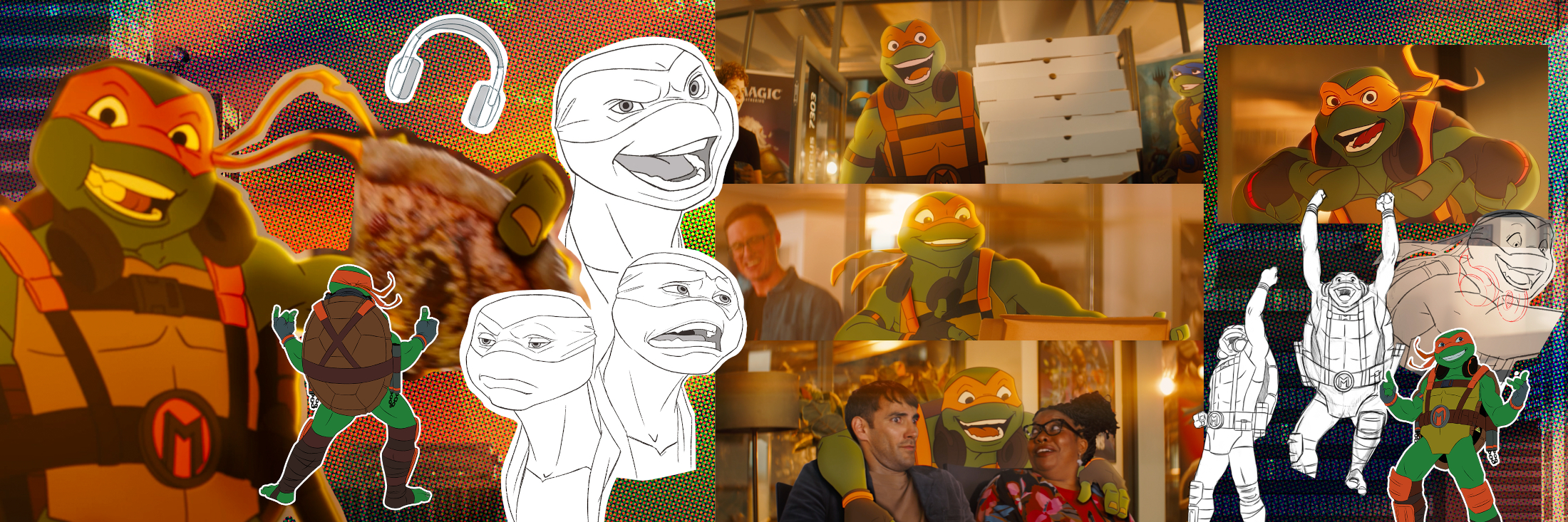
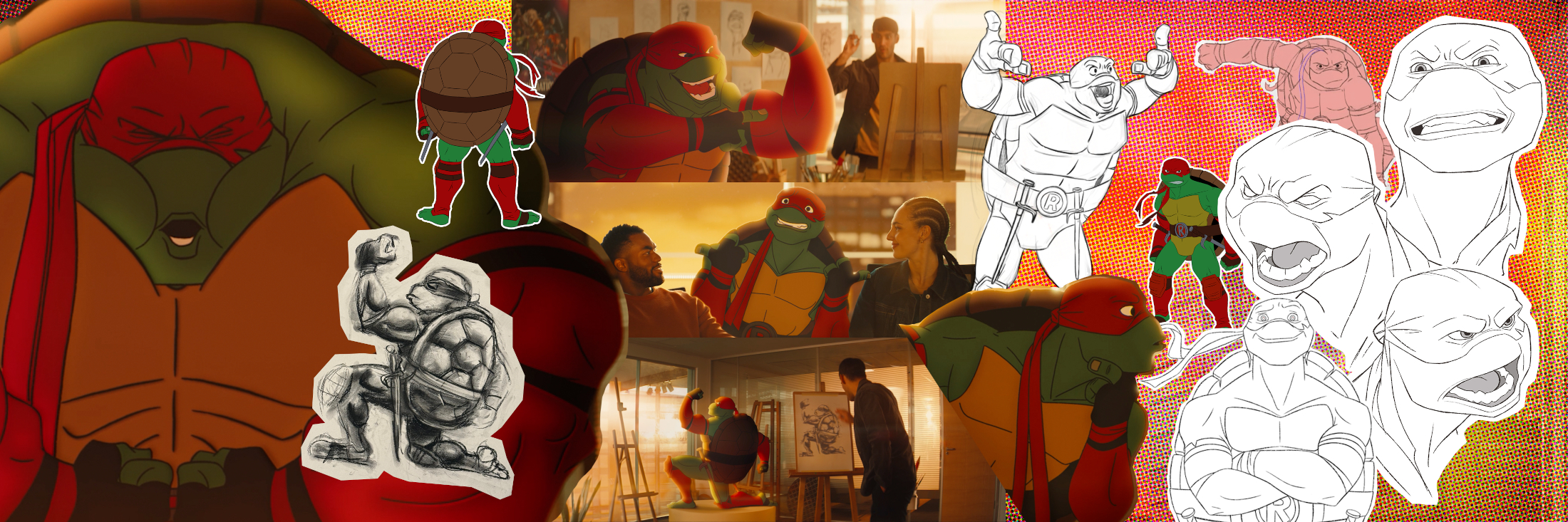
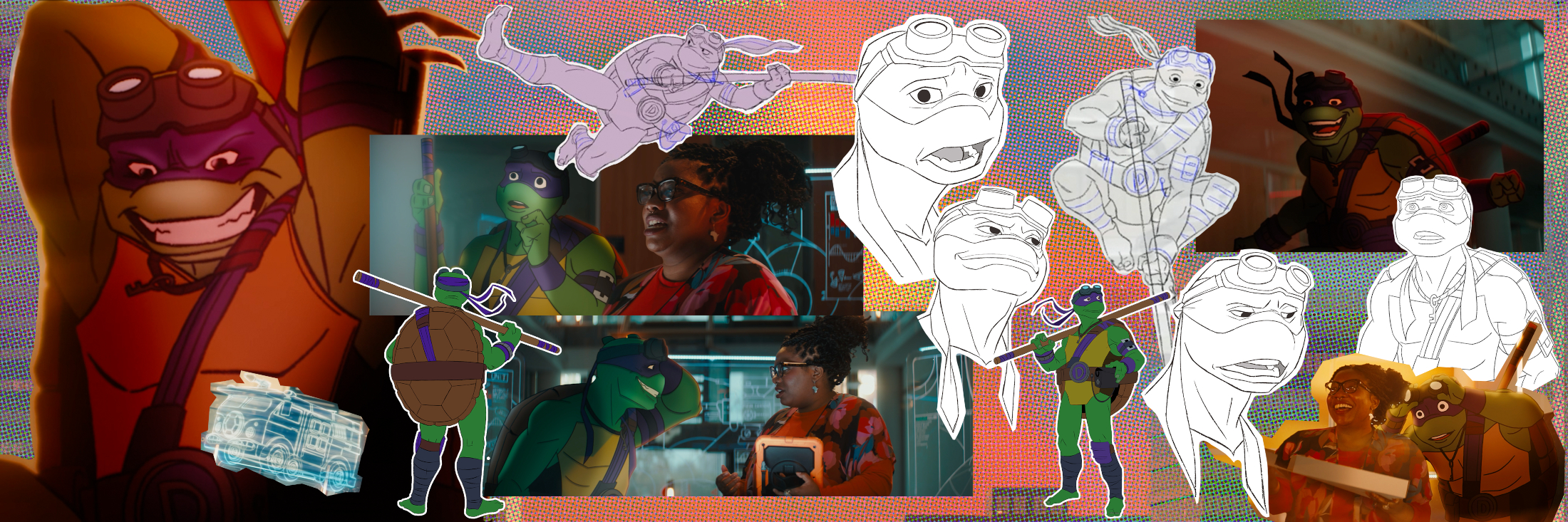
That hybrid capability shaped the production from the outset. While crossover campaigns often lean into spectacle or fan service, the Eyebolls team focused on integration and tone, seeking to make the coexistence of these worlds feel natural rather than over-the-top.
“We wanted to ground the live action and animation and make it relatable. It felt like a step too far to show the Turtles with existing Magic characters, for example,” said director Phil Hawkins (Star Wars: Origins). “The contrast between showing game designers interacting with the Turtles created opportunities for great comedic moments.”
The decision to embed the Turtles in the R&D offices frames the crossover, and the short plays out like a love letter to both franchises. Hawkins confirmed that everyone approached the project with that same mindset. “Everyone who worked on this is a huge fan of the Turtles franchise, and a lot of us are huge fans of Magic. So we approached this as fans as well as filmmakers.”
That dual perspective, fan and filmmaker, informs many decisions in the piece. On a structural level, it ensures that neither property overwhelms the other. On a scene level, it manifests in small details: the cadence of dialogue, the familiarity of game in-jokes, and the tonal balance between humor and sincerity.
Hawkins’ directing approach also played a key role in selling the hybrid illusion. Rather than treating the Turtles as visual effects elements to be integrated after the fact, he framed them as performers within the scene. “I always thought of the Turtles as fellow actors in a scene… how would I naturally want to direct them in the scene instead of worrying about how we’re going to animate that later.”
The interactions between actors and animated characters are set against a massive glass window boasting a warm sunset. Eyelines are suggestive yet connected, and physical actions are staged to imply presence without overcompensating for the technical challenge. The result is a seamless integration that avoids the uncanny dissonance sometimes associated with mixed-media projects.
Achieving that level of cohesion required a complex production pipeline that extended well beyond Scotland. While the live-action component was shot locally, the animation team was distributed across multiple regions. “With the skill of hand-drawn 2D, we do pull on talent globally really to make that happen,” Drummond said.
This global approach reflects both necessity and specialization. Hand-drawn 2D animation remains a resource-intensive process, and assembling the right team often means sourcing talent internationally. It also speaks to Eyebolls’ position within a broader network of artists who continue to work in traditional animation techniques, even as much of the industry has shifted toward 3D pipelines.
The most significant technical challenge, however, lies in the compositing stage, and art director Garry Marshall was tasked with this challenge. Preserving the integrity of hand-drawn animation while embedding it convincingly into live-action footage requires a delicate balance between enhancement and restraint. “There’s so much stuff going on just to make it feel like they’re really 2D characters, yet they’re really in the space,” said Marshall.
That “stuff” includes a range of subtle interventions: lighting adjustments that align animated characters with the scene’s environment, edge treatments that maintain visible linework without flattening the image, and compositing techniques that introduce depth cues without compromising the 2D aesthetic. The goal was not to disguise the animation, but to situate the 2D characters convincingly within the physical space.
At a broader level, the project highlights the evolving role of animation in commercial contexts. Branded content of this kind increasingly demands both technical sophistication and narrative coherence, particularly when dealing with massively established IPs and their respective fan bases.
By prioritizing performance, grounding, and visual integration, the Eyebolls team has produced a piece that functions as more than a promotional asset. It operates as a demonstration of how traditional animation techniques can be adapted to contemporary production environments without losing their distinctiveness. That, and a whole lot of pizza.