.png)

‘You Can Work For Three Years On A Studio Project And Then It Gets Yanked’: Why Matt Braly Is Launching His Own Studio And Self-Producing A Short
Stay informed with free updates
Sign up to get our news digest — delivered directly to your inbox twice a week.
For the past decade, Matt Braly has been a familiar name inside mainstream TV animation. The Thai-American creator of Disney’s Amphibia built a reputation as a character-driven storyteller during a period when shows like Adventure Time, Regular Show, and Gravity Falls reshaped what TV animation could talk about.
But the landscape that produced those shows has changed dramatically. Studios have tightened pipelines, TV animation has contracted, progressive storylines are harder to get greenlit, and even experienced creators with significant fandoms can spend years developing projects that never reach audiences.
So Braly decided to try something different.
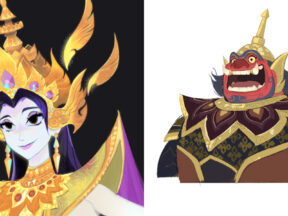
Instead of waiting for another studio greenlight, he launched Fantasy Project, his own studio, and will produce an animated short with planned backing from an upcoming crowdfunding campaign. The project, a gothic reimagining of The Nutcracker mythology, is part of a broader experiment: whether an experienced creator with industry credentials can bypass traditional development cycles and actually put finished animation into the world.

Braly won’t be the first. The Owl House creator Dana Terrace just launched her series Knights of Guinevere last year, but she did it with help from one of the most __ contemporary indie studios, Australia’s Glitch Productions.
Braly is doing this entirely on his own.
“Based on my experiences, you can work for two or three years on a project for a big studio and then, arbitrarily, it will get yanked at the end,” Braly told Cartoon Brew in a recent conversation. “My goal was to actually produce a damn thing.”
A Clean Slate
Braly’s move toward independence comes after a turbulent stretch in the industry that directly affected his own work. Like many creators working in features and television, he spent years developing projects inside major studio pipelines, including a feature project developed with Steven Universe creator Rebecca Sugar at Sony that ultimately stalled in early 2025.
The experience helped push him toward a different approach.
Rather than continuing to chase studio greenlights, he decided to reset and focus on work he could control from start to finish.
“It’s a clean slate,” Braly said of the new venture.
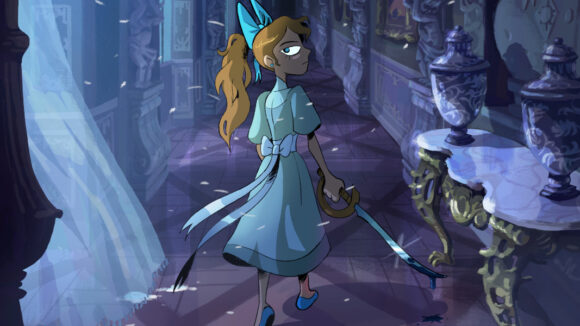
The new project, titled Clara and the Below, is structured as a series of short animated pieces set within a shared world.

Each short runs roughly six to eight minutes, with the eventual goal of producing four interconnected chapters that together form a roughly 24-minute film.
“The first one will be about Clara,” he explained. “The other three episodes will be about different characters within the same world. You’ll see the story from different vantage points, and then they intersect at the end.”
In spirit, the structure resembles anthology storytelling, but with a tighter finale. The goal is modest by design.
“I always say: under-promise, over-deliver,” he said. “Six to eight minutes. No dialogue. We can do this.”
A Gothic Nutcracker
Visually and tonally, the project is far removed from Braly’s work at Disney, where he built a stellar reputation in the kids and family space.
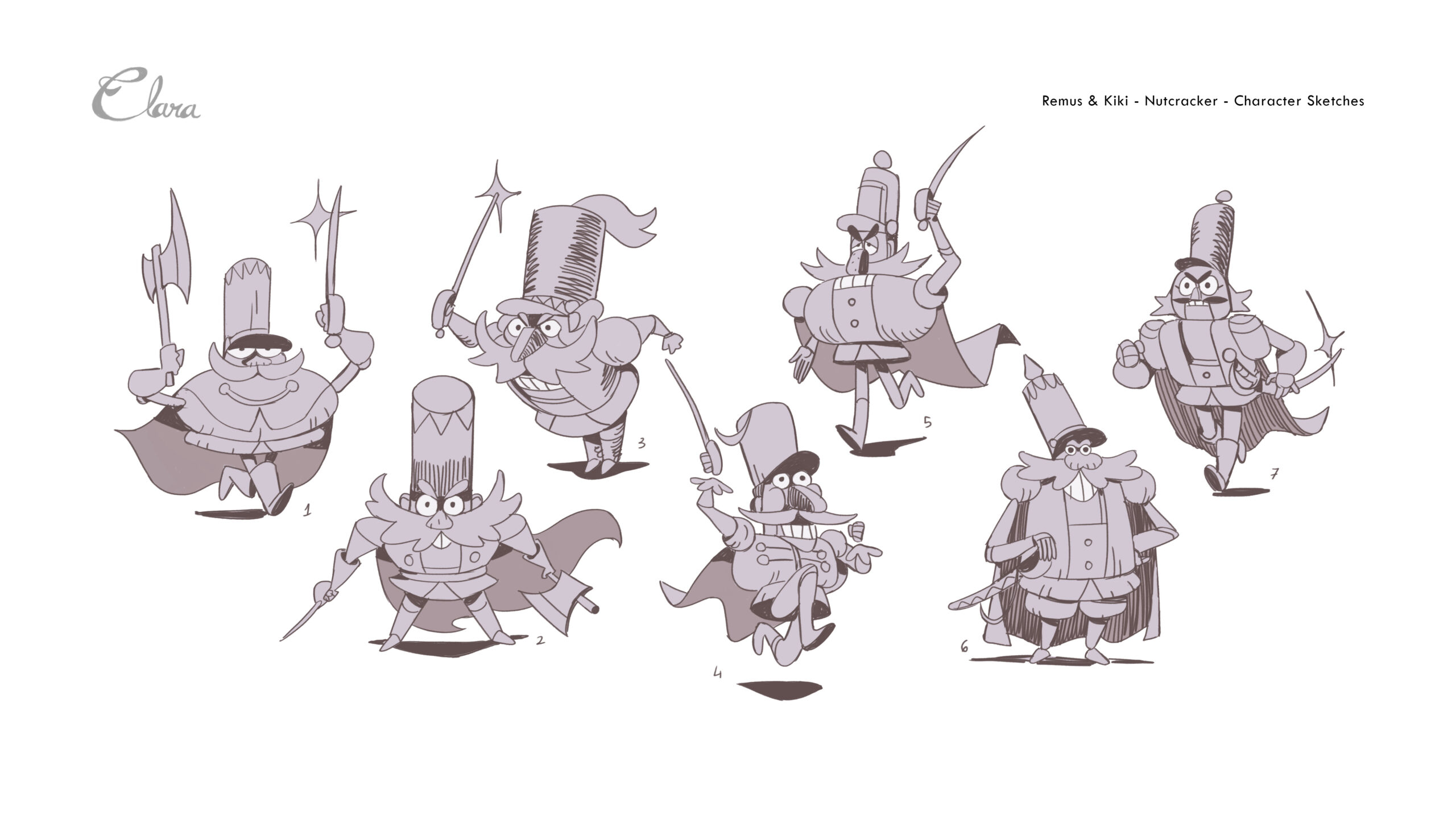
The film is a darker reinterpretation of The Nutcracker mythos, rooted in winter imagery and quiet atmosphere. The animation emphasizes mood over dialogue.
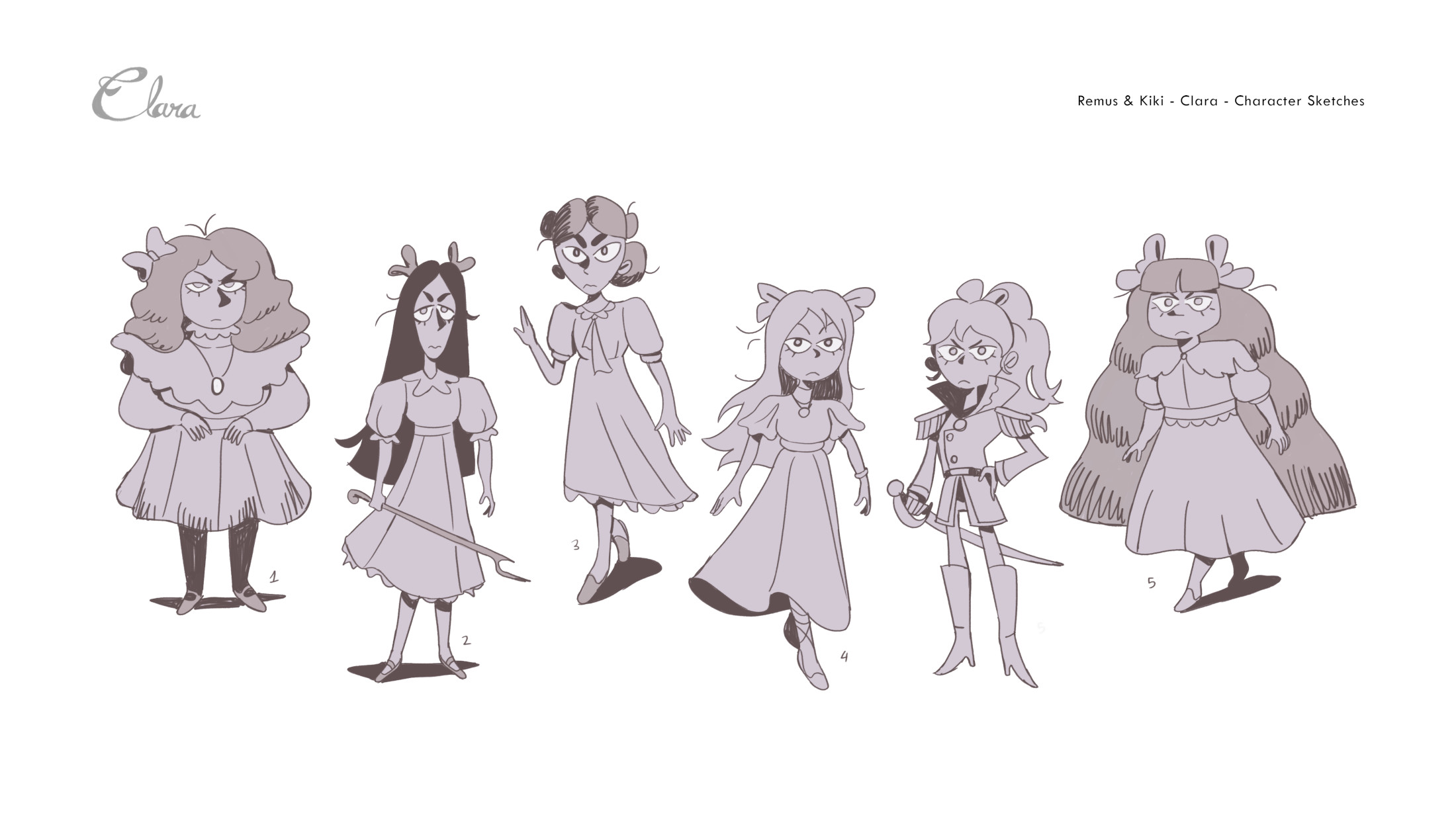


“There’s very little dialogue,” Braly said. “Almost none. Clara can speak, but she doesn’t. She’s here to get a job done.”
The silence is partly stylistic and partly practical. Dialogue-heavy productions increase costs and complexity, while wordless storytelling leans more heavily on visual language. Given Braly’s laser-like focus on producing something within his means, the decision makes a lot of sense.
But the approach also reflects some of Braly’s most profound animation influences.
“I’m a huge Genndy Tartakovsky fan,” he said, citing Samurai Jack as a major inspiration. “We want creaky floorboards and quiet moments and drifting snow.”

That visual emphasis also reflects something he feels has been lost in modern animation production.
“Animation in 2026 has never been chattier. Everything is so dialogue-driven,” Braly astutely pointed out.
He sees the quieter style of projects like Robot Dreams and especially Flow as evidence that audiences still connect with visual storytelling.
“That whimsical, dialogue-free film captured the hearts and minds of audiences,” he said. “It showed that you can have wonderful songs and celebrity voice actors and make something great, but equally, you can also have a quietly compelling story that requires none of those things.”


Paying Artists First
For Braly, crowdfunding the project isn’t about financing a dream project so much as creating a pipeline in which everyone involved is fairly compensated. Fundraising hasn’t started yet, but Braly says that everything shared so far was created by paid human artists. No AI, no spec work, and no freebies.
Everything you’ve seen so far was done by someone who was paid fairly,” Braly said, insisting that the standard will be upheld through every stage of production.

The crowdfunding campaign will be held to finance production of the full pilot episode. Stretch goals could expand that into additional installments and, if enough is raised, the full 24-minute narrative in studio-level animation.
But Braly is careful not to overpromise.
“People now say they’re crowdfunding a whole television show,” he said. “That’s impossible. The trailers alone cost so much, a pilot even more, so a full season of the kind of quality we are promising is out of the question,” he explained.
Independent animation campaigns frequently underestimate production scale. Viral pilots can generate millions of views but still fail to build sustainable pipelines.
Instead, Braly is taking the opposite approach.
“In success, this would be four pieces, and we’re done,” he said. “Then we step back and see how it went.”
Animated Feature Renaissance, TV Postmortem
Braly’s move into independent production also reflects broader shifts happening across the animation industry.
In his view, the business is currently split between two very different realities.
“I would say we’re in an animated feature renaissance and a TV animation postmortem,” he said.
Big theatrical films are recovering after the pandemic-era slump, while television animation, especially creator-driven 2D shows, has contracted sharply at nearly every broadcaster and streaming platform.
Audiences, he argues, still want animated stories. But the kinds of projects being made have changed. Large studios increasingly favor easy-to-digest feature pitches that can be summarized in a single sentence.
“My advice to anyone pitching an animated feature right now is: if the title and premise alone don’t make the head executive chuckle, you’re out,” he said.
Those projects are designed to sell themselves quickly.
“The premise needs to be like, ‘Oh my god,’” he said. “If you don’t have that, you’re done.”
The downside, he believes, is that quieter or more personal projects struggle to survive the process.
“You’re going to lose a lot of films that are thoughtful and intimate to that meat grinder.”
Television animation faces a different problem. The creator-driven wave that defined the early 2010s has largely vanished.
“I think there is an absence of the kind of creator-driven, auteur-led, hand-drawn show of the Adventure Time era, the Gravity Falls era,” he said.
Studios are increasingly leaning on revivals of those very shows.
“They’re going back to the glory days of 2010,” he said.
Making Something Real
For Braly, the indie experiment is less about escaping studios entirely than regaining creative momentum.
He continues consulting and writing within the industry, but the independent project represents something different: a production that can actually reach audiences.
He believes that direct-to-consumer, digital-native models may fill the gap left by shrinking television pipelines.
“I think the direct-to-consumer model can work,” he said. “Consumer satisfaction with what studios are producing has maybe never been lower, especially when it comes to TV shows.”
Ultimately, the project is driven by the same instinct that pushed him into animation in the first place: making the kind of work he’d want to watch.
“When you’re developing something, you get stuck trying to game it,” he said. “Trying to predict what audiences want.”
He has little interest in that approach now.
“How can you make something for someone else, trying to predict what they’ll like?” he said. “All you can do is make what you like.”
At Fantasy Project, as the name implies, that’s exactly what Braly plans to do.