.png)
Sony Shelves Original Thai-Inspired Film From ‘Amphibia’ And ‘Steven Universe’ Creators
Stay informed with free updates
Sign up to get our news digest — delivered directly to your inbox twice a week.
Sony Pictures Animation has scrapped an original feature rooted in Thai folklore from Amphibia creator Matt Braly and Steven Universe creator Rebecca Sugar, deciding after more than two years of development that the project was, according to Braly, “not commercial enough.”
The same studio that once considered $20 million fair compensation for KPop Demon Hunters has now determined that an authentic, culturally specific fantasy from two of television animation’s most acclaimed creators did not meet its threshold for profitability.
The untitled film drew from Braly’s Thai-American heritage and was conceived as a fantasy adventure steeped in Thai spirits and mythology. According to Braly, the story follows a young boy confronting a life-altering illness who escapes into a mythic spirit world, a personal and culturally grounded narrative with clear thematic ambition. It had been in development at Sony for more than two years before being shelved.
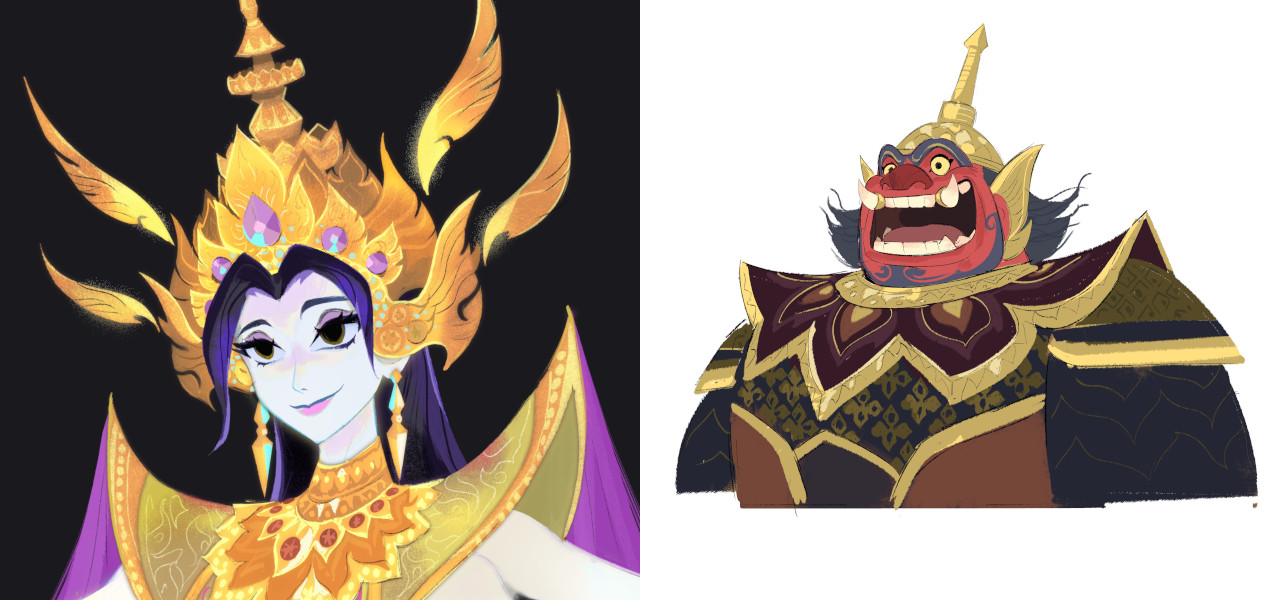
If the details of the cancellation weren’t sufficiently disappointing, Braly posted a bunch of development artwork that looks absolutely fascinating and leaves a sense of longing for what might have been (or hopefully could still be if a braver studio picks up the project).
Most of this incredible work was done by the talented @wrandonbu and the 3d model by Gabriel Soares. Hire these guys they will make anything they touch amazing. pic.twitter.com/mWtk0kXz73
— Matt Braly (@Radrappy) February 10, 2026
— Matt Braly (@Radrappy) February 10, 2026
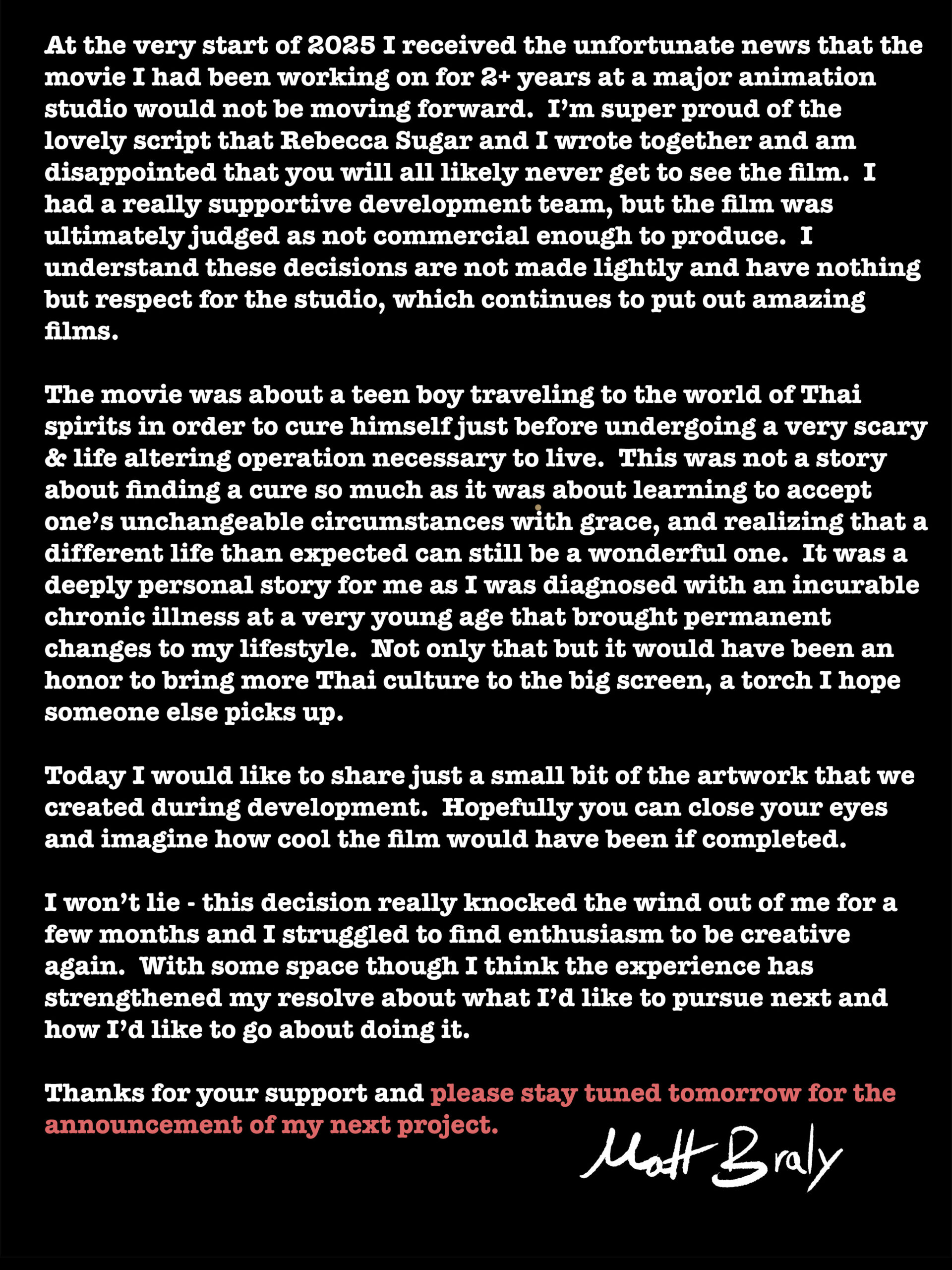
In that thread, Braly confirmed the cancellation, stating that the studio ultimately deemed the film commercially unviable. For artists who have built careers expanding the emotional and aesthetic vocabulary of American animation, that reasoning is difficult to reconcile.
Over the past decade, Hollywood animation has frequently patted itself on the back for embracing diverse storytelling and global perspectives. At the same time, studios continue to apply narrow assumptions about what audiences will and will not support. Projects rooted in non-Western folklore are often treated as risks rather than opportunities, even when guided by proven talent with devoted fanbases and despite mounting evidence that global audiences respond to culturally specific stories.
Sony Pictures Animation has, at times, positioned itself as one of the more creatively ambitious major studios. If any studio were likely to champion a project like Braly’s, the one behind a globe-spanning hit like KPop Demon Hunters would seem a natural fit. Instead, the decision signals a more cautious strategy. Originality and specificity are embraced only when they align with existing commercial trends, such as the massive K-pop music movement.
For now, Braly and Sugar’s feature joins a growing list of animated projects halted before audiences have the opportunity to weigh in. Whether the film finds a new home remains to be seen. The appetite for authentic storytelling is there. The question is whether studios are prepared to bet on it.