
Anime Is A $28 Billion Business: Here’s How Japanese Studios Are Capitalizing On Its Global Growth
Stay informed with free updates
Sign up to get our news digest — delivered directly to your inbox twice a week.
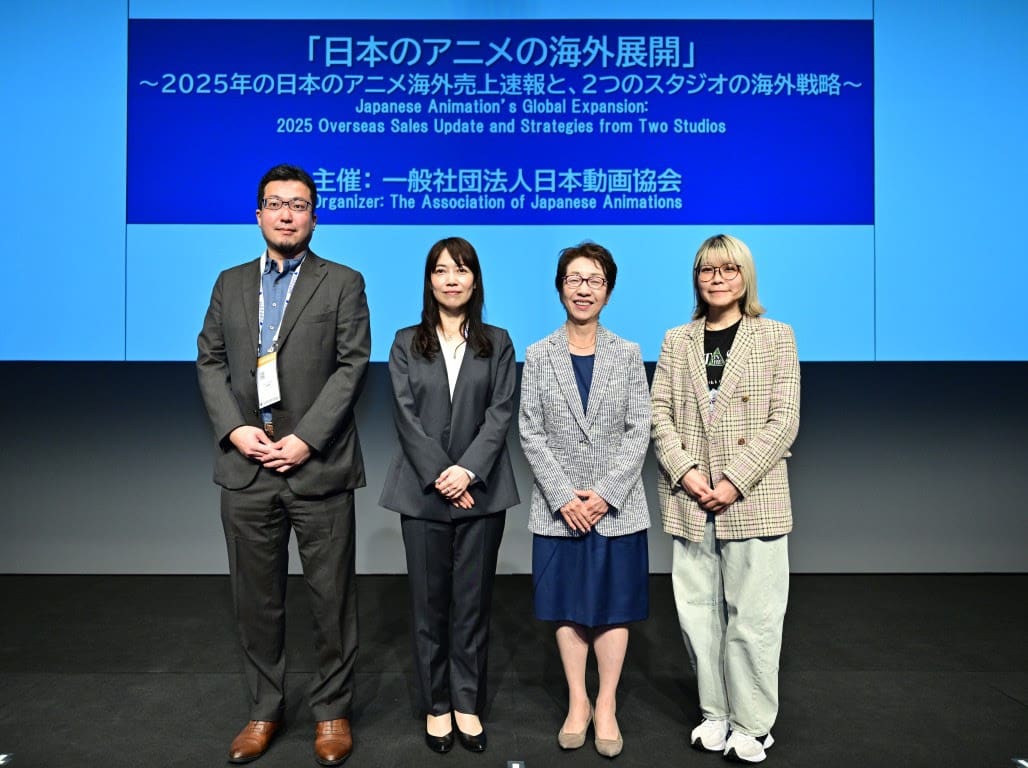
TOKYO, Japan— At TIFFCOM, the content market affiliated with the Tokyo International Film Festival, a session on Friday, October 30, examined Japanese animation’s global expansion from three perspectives.
Masahiro Hasegawa, editor-in-chief of the Anime Industry Report, opened with preliminary findings tracking the market in Japan and overseas. Hitomi Hiratsuka, director of international sales and productions at Nippon Animation, and Yoko Ueda, director of corporate administration and IP and communications at Production I.G, followed with observations on adapting to international partnerships and audiences.
Kazuko Ishikawa, president of both the Association of Japanese Animations and Nippon Animation, opened the session by saying that “recently Japanese animation is appreciated by many people worldwide […] the potential keeps on expanding.” She noted that many creators are developing works with overseas expansion in mind, emphasizing the “high expectations of the fans inside and outside of Japan.”
Session moderator Megumi Onouchi, president of HumanMedia and vice chair of the Association of Japanese Animations’ Human Resources Development Committee, later discussed the government’s New Cool Japan Strategy, which seeks to capitalize on this popularity.
Anime Isn’t Growing Equally
Preliminary figures for 2025, presented ahead of the Anime Industry Report 2026, showed international demand continuing to drive growth. The broader anime market—an estimate of consumer spending across anime and related products and services—reached ¥4.45 trillion ($28.22 billion), up 15.8% from 2024.
Overseas spending accounted for ¥2.54 trillion ($16.13 billion), up 17.2%, while the Japanese market grew 14.1% to ¥1.91 trillion ($12.09 billion). The overseas share consequently rose to 57.1%, compared with 56.5% in 2024.
The presentation distinguished this broader market from a narrower measure estimating anime production companies’ revenue. That figure reached ¥505.5 billion ($3.21 billion) in 2025, up 8.4%, with overseas revenue accounting for 27.9% of the total, compared with 25.5% a year earlier.
The distinction is important: the value of the wider anime business does not translate directly into revenue for the studios making the work. While animation is at the core of the business, merchandising, games, music, live entertainment, and other related activities also contribute to its overall value.
Japan’s content industry—which includes games, anime, manga, live-action film and television, and music—is targeting ¥20 trillion ($126.87 billion) in overseas sales by 2033, with anime expected to contribute ¥6 trillion ($38.06 billion).
Hasegawa cautioned that “international revenues do not necessarily come directly to the animation companies.” Money flows to production committees and is then distributed among their members, meaning the return to a studio can be smaller. Committee membership and investment arrangements vary from project to project.
Although production costs are rising, Hasegawa also noted that more production companies are retaining rights to their work, allowing them to benefit from domestic and overseas licensing revenue.
The presentation argued that Japanese anime’s presence among leading box office titles in various countries—with Demon Slayer offered as an example—and in global streaming rankings demonstrated an international breakthrough. The recognition of “anime” as a distinct category among international viewers is part of that development.
Hasegawa also discussed interest among survey respondents in expanding into emerging markets, including Africa. The handouts highlighted localization suited to local languages, cultures, and laws, alongside measures to combat piracy, as priorities for future growth.
How Nippon Animation and Production I.G approach overseas expansion
The second part of the session examined how Nippon Animation and Production I.G are putting international strategies into practice.
Hiratsuka opened with a presentation on Nippon Animation’s approach to reaching audiences around the world. She emphasized long-term development in new markets, alongside preserving older titles for exhibition.
She cited World Masterpiece Theater, explaining that its international outlook was unusual at the time and that its rigorous attention to detail helped give the series their lasting appeal.
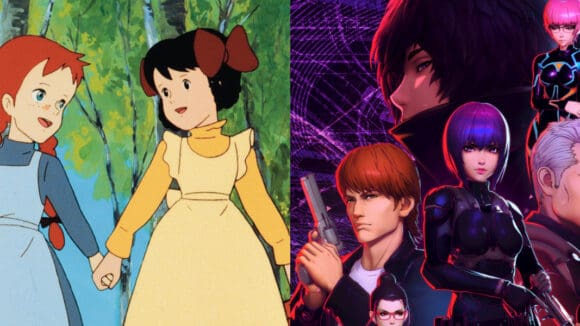
“On the creative side, we cherished realism,” she said, highlighting location research for series such as Anne of Green Gables, which she described as “one of the most popular in Japan and across the world as well.”
“Regardless of the location of the audience, we wanted to create the common thread of the story where anyone anywhere can enjoy the story of each title [in World Masterpiece Theater].”
This led to a discussion of building titles’ long-term value through what Hiratsuka called a “life cycle”: viewers discover a series or film in childhood, retain their affection for it as adults, and pass that enthusiasm on to another generation.
“Through this longer-term strategy, we try to maximize the value” of each existing title, she said. Expanding that cycle into other countries is an important part of the studio’s international strategy.
Merchandising offers another way to sustain those connections, with examples including Seiko watch tie-ins, figurines, sweets, and Anne of Green Gables-themed desserts. Onouchi later underlined the point: “The past is not just about the past, but it’s still alive; there are fans still enjoying these works, so there is business still being generated.”
“We can never use a cookie-cutter approach; there is no one-size-fits-all approach,” Hiratsuka said, noting that different markets have distinct characteristics and interests.
International expansion should also be a two-way process, she argued, highlighting the importance of partners with different cultural and linguistic backgrounds in helping Nippon “expand the scope of our business activities.”
Hiratsuka reaffirmed the studio’s commitment to family-friendly animation despite declining birth rates. “There are still a great number of children in the world, and we will never stop having children,” she said.
Returning to the life-cycle concept, she argued that family-oriented animation is essential to developing “future supporters of the anime industry.”
Beyond the Screen
Ueda’s presentation approached international interest from a slightly different angle, though with some common ground. “Everything starts from the creation [of the anime],” she said. While maintaining that “it’s best to do as much as possible by ourselves,” she emphasized collaboration as central to Japanese anime’s future.
“Our strength is of course centered in the creation of videos and images,” Ueda said, explaining that co-production partners can contribute expertise and resources beyond the studio’s own capabilities.
“We are based in Japan, so there are things that we don’t know, and creators around the world have different resources,” she said. The aim is to combine Japanese anime aesthetics with that international knowledge.
“IP is not just about the work but the creators involved,” Ueda added, citing Production I.G’s animated sequence in Kill Bill as an example of successful collaboration. Its impact, she suggested, came from the combination of media: the same effect “would not be possible if Kill Bill was entirely animation.”
More recent work, including “The Ninth Jedi” for Star Wars: Visions, illustrates another type of partnership. Ueda described an interest in how Production I.G would interpret an established property, with the studio treated as a creative partner rather than simply a contractor.
“They are now looking at us as a partner [on] their creation,” she said. “We’re getting more offers of this kind”—working with “IP that came from outside of Japan […] amplified by the creativity of Japan.”
Ueda also stressed the importance of direct fan outreach: turning initial viewership into an ongoing relationship through live events and merchandising. She described these activities as common in Japan, with opportunities to develop similar connections overseas.
Events in the United States, Saudi Arabia, and India offered examples. In India, an activity that invited participants to trace drawings encouraged interest in the animation process while introducing fans to the people behind the work.
For Ueda, those encounters offer a way to deepen audiences’ connections with anime by building familiarity with its creators—extending the relationship beyond the screen.
Pictured at top: Anne of Green Gables, Ghost in the Shell: SAC_2045