
Who Gets To Judge Anime? Japanese Industry Leaders Make The Case For A New Award
Stay informed with free updates
Sign up to get our news digest — delivered directly to your inbox twice a week.
TOKYO, Japan – Tokyo Anime Next presented a special animation symposium at TIFFCOM this week, Toward the Launch of a New Anime Award in 2027, exploring the importance of establishing a new international award recognizing Japanese animation. The award will have an online component and is intended to reach overseas audiences as much as domestic audiences.
Moderating the symposium was TIFF animation programming advisor Ryota Fujitsu. Joining him as panelists were Yuichiro Saito, a Studio Chizu producer on The Girl Who Leapt Through Time, Summer Wars, and Wolf Children; Akira Shimizu, director of the Association of Japanese Animations and president and representative director of A-1 Pictures Inc.; and Masaya Saito, chief manager of the animation division and planning group leader at Toho Co., Ltd.
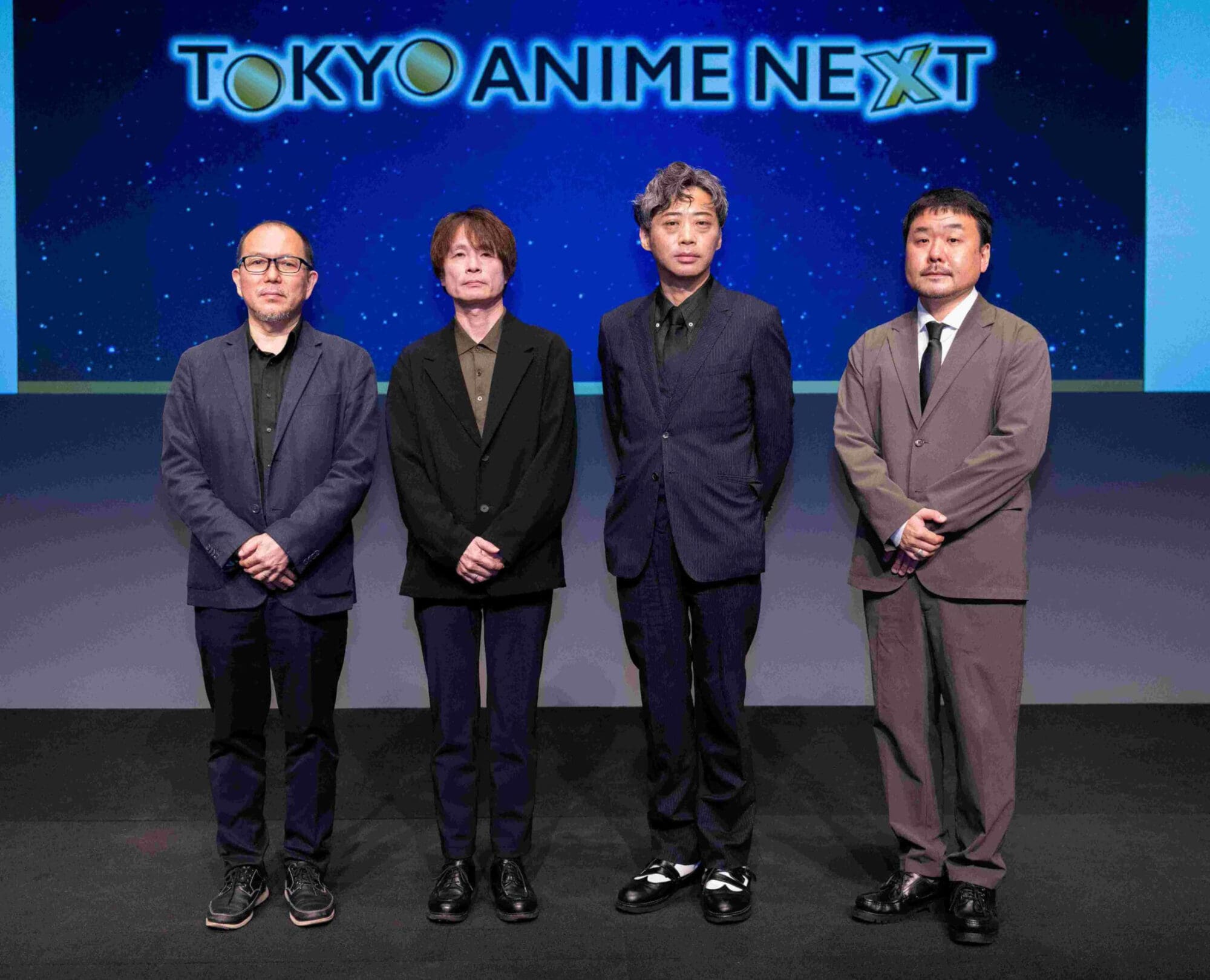
Fujitsu emphasized that the panel did not constitute an official announcement of the award, which will come next year. Instead, he and the panelists took the opportunity to discuss their hopes for the changes the award might inspire in their industry.
Masaya Saito reflected on the significance of Japanese experts selecting works for such an award. “Peer review can facilitate networking and provide mutual inspiration within the industry. There are more than 300 TV series and 80 film titles in any given year — no one can watch all of them — but we can collectively evaluate these works by employing diverse individuals; it takes the entire industry.”
The principal purpose of the new international award is to communicate the advancements and achievements of the anime industry more directly to the world at large — “how it has become optimized such that people around the world can now enjoy it,” explained Masaya Saito. “Anime is the most globally localized entertainment across different cultures and languages. By assessing it, we want to communicate that reality more directly. And I want international audiences to discover what Japanese audiences are enjoying.”
Studio Chizu’s Yuichiro Saito views the Japaneseness of anime as a disruptor within the global cultural equation. “The world is composed of two major trends,” he said. “European art history, film and fine art generated from that value system and aesthetic lineage, and an aesthetic and value system centered in the U.S. which has a global reach. If we say that [anime] is from Japan, from Asia, we interject a third element into this previously two-element world. I hope this kind of aesthetic communication can be furthered by this award.”
Yuichiro Saito reflected on how his peers in the anime industry came together to crowdfund aid in the wake of the California wildfires two years ago. It speaks not only to his industry’s sense of community, but also to whom it now reaches. “Japanese anime’s uniqueness can demonstrate how connected the world is. Borderlessness is very important in the presentation of our works.”
Moved by the other panelists’ remarks, Akira Shimizu said that he views “going global” as a big responsibility and a core mission. He said the award could help define and communicate the context of Japanese anime’s creation — the unique skills and technology involved. Drawing on his experience as a studio director, Shimizu reflected on current trends in production pipelines. “Now that anime are streamed internationally, fantasy and action works are popular,” he said. “We’re often asked: ‘A-1 Pictures, can you please make a fantasy action work?’ One of the appeals [of anime] is the diversity of genre and aesthetic, and we should carry this forward into the future. I’m interested in making romance works! But action fantasy is popular around the world, and so we should make it. But is that enough? We should interrogate that.”
Fujitsu asked the panelists what expectations and hopes they had for the award’s impact in 10 years’ time.
Masaya Saito said that critical mass is needed. “When launching any anime project, we emphasize that it has to be new in itself, and it has to be emotive, or empathetic,” Saito reflected. “And I think we should have a third perspective as well in evaluating creators — industrial empathy, to nurture creators.”
Shimizu wants the next generation to have something to reach for. “In 10 years’ time, I will be well retired, but in the future there is one thing I would like to focus on — those entering the industry should aspire to this award; that is what I would like for the next generation.”
Picutred at top: Frieren: Beyond Journey’s End (Toho), Solo Leveling (A-1 Pictures), Wolf Children (Studio Chizu)