.png)
‘It’s Not A Product, It’s An Experience’: Animation Directors On The Importance Of Film Festivals
Stay informed with free updates
Sign up to get our news digest — delivered directly to your inbox twice a week.
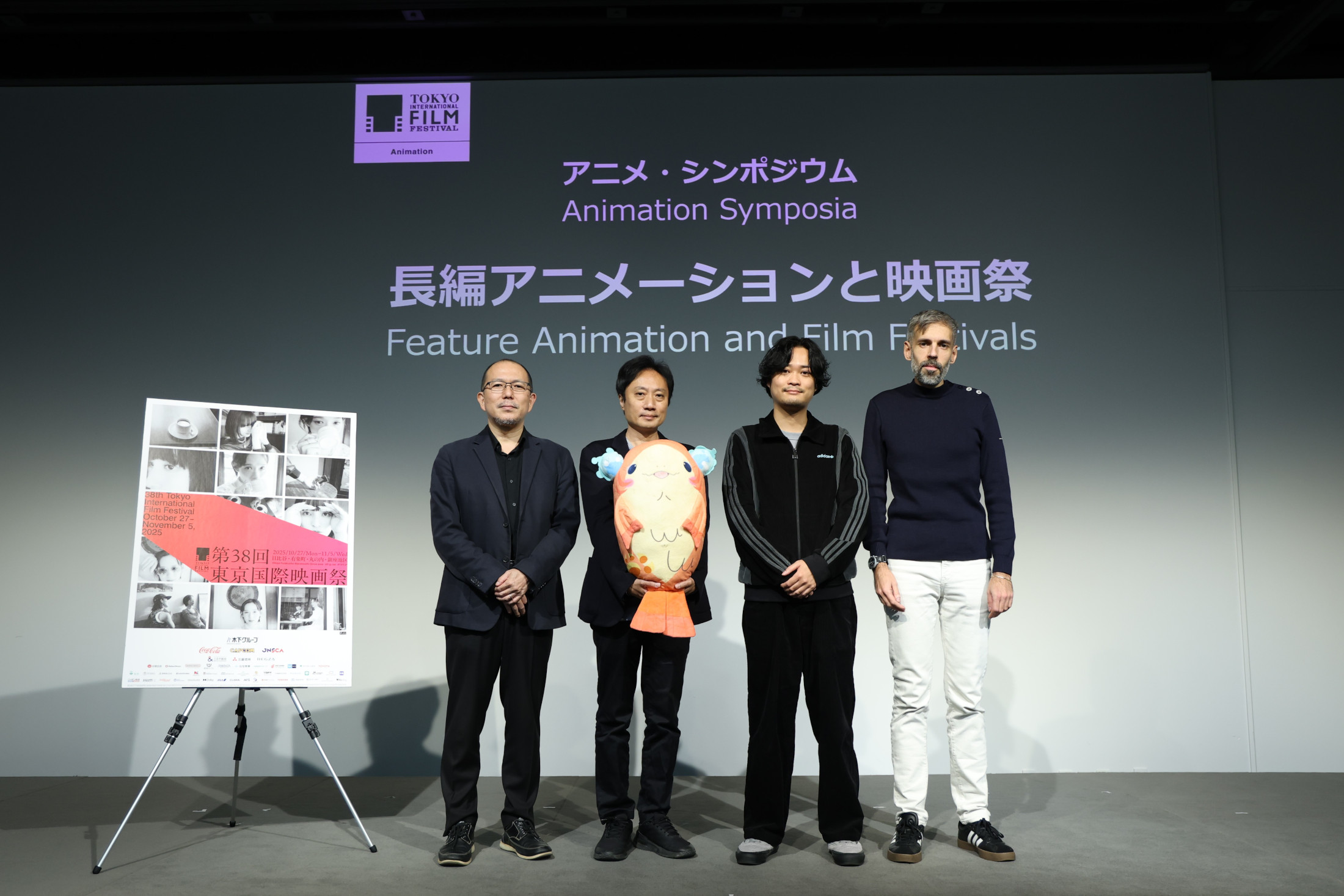
The 38th edition of the Tokyo International Film Festival hosted an animation symposium exploring the state of the medium and the industry around it. One talk in particular took on a meta topic: how film festivals can serve feature animation. The panel included directors Yasuhiro Aoki (ChaO), Ryuya Suzuki (Jinsei), and Zaven Najjar (Allah Is Not Obliged), and was moderated by programming advisor Ryota Fujitsu.
Fujitsu said he chose the theme because of anime’s growing overseas success, noting that festivals connect filmmakers with audiences they otherwise couldn’t reach. That direct contact with viewers proved to be a recurring theme throughout the discussion. Fujitsu pointed out a common link among the panelists: all had screened work at Annecy — either in Competition, Contrechamp, or, in Najjar’s case, in the Work-in-Progress section before the film’s completion.
After some reminiscing about Annecy’s signature moments — the student energy, paper plane throwing, or, in Najjar’s case, attending with most of his team — the conversation turned to the festival ecosystem at large. Fujitsu emphasized the importance of competition, saying that awards often push innovative films into the spotlight, attracting press attention and international awareness. The panelists also reflected on the visibility that comes from presenting unfinished projects, citing Allah Is Not Obliged’s work-in-progress presentation at Venice’s Final Cut program. “That was very important to us,” Najjar said, “as we had a hard time getting the budget together.”
For Najjar, festivals are first and foremost a platform for communication. He said he values audience interaction — especially with other animators — and learning from those exchanges. Aoki agreed, saying that audience reactions are where he finds meaning in his work. Suzuki added that studying how people respond has broadened the way he thinks about his films.
This idea resurfaced during a discussion about showing animated and live-action films side by side. Suzuki argued that animation thrives in diverse lineups and said he enjoyed thinking about the context in which viewers experienced his film.
Aoki expanded on the relationship between mediums, noting that “often, live-action movies can learn from animation.” He praised the cross-pollination between the two, citing the late Satoshi Kon as a prime example of that exchange. Aoki also mentioned the 2024 live-action feature Twilight of the Warriors: Walled In — directed by Soi Cheang and based on Andy Seto’s manhua City of Darkness — as a great case of live-action embracing the heightened tone of comics. His point: the two forms can stand on equal footing.
The conversation eventually turned back to international audiences. Suzuki, a first-time traveler to overseas festivals, reflected on the experience of showing his film abroad — and admitted uncertainty about when he might get to do it again. Asked whether the Japanese cultural elements in his film might be lost on European viewers, he replied, “Not really,” but added that Japanese audiences seem less inclined to see original works in theaters.
Aoki briefly addressed the role of language, cautioning against overemphasizing dialogue. “Works that only make sense in Japanese won’t do,” he said. “They’re called ‘movies’ because of the images! We need to move people’s hearts with visuals — we can’t focus too much on the words.”
Ultimately, the filmmakers agreed that the communal aspect of cinema is what they value most — a sentiment echoed during the audience Q&A. Najjar acknowledged that “it’s a challenging time for movie theaters,” but said he’s encouraged by the number of young people passionate about film. Aoki reaffirmed the sanctity of the theater experience, noting that a film’s impact doesn’t end when you leave the auditorium. “Some become part of your memory,” he said, emphasizing the importance of in-person screenings where “the screen is dominant.”
In that sense, the directors seemed to view festivals as the antithesis of today’s algorithm-driven “content” culture. “It’s not a product, it’s an experience,” Aoki said — one meant to be carried with you, not confined to a thumbnail.