.png)
‘Chimney Town: Frozen In Time’ Director Yusuke Hirota On Studio 4ºC’s Hybrid Animation Approach
Stay informed with free updates
Sign up to get our news digest — delivered directly to your inbox twice a week.
In 2020, pioneering Japanese anime production house Studio 4ºC released Poupelle of Chimney Town, its first 3D CG feature. A fantasy fable set in a steampunk world with light touches of gothic, Halloween aesthetics, the film was adapted from a bestselling children’s book by actor and comedian Akihiro Nishino, who also wrote and executive-produced the film.
Six years on, and Studio has done more than dip its toes into CG. Last year’s All You Need Is Kill similarly fused 2D and 3D aesthetics and production modes. So there’s no better time for the studio to return to Chimney Town and show what it has learned.
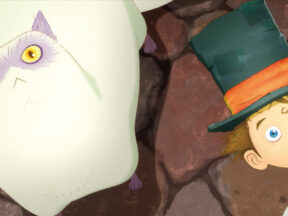
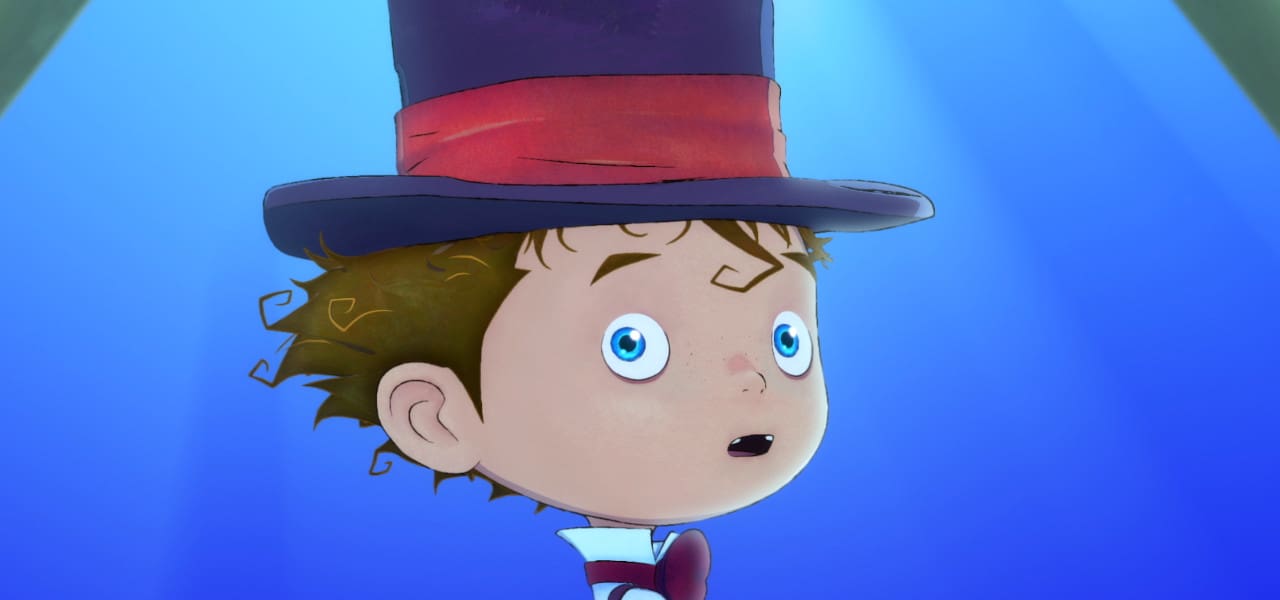
Original film director Yusuke Hirota returns to the director’s chair this year for Chimney Town: Frozen in Time, a fun and fresh sequel that sees protagonist Lubicchi head into an imaginary otherworld in search of his lost friend Poupelle, who disappeared at the close of the first film. Stylistically, the feature is dynamic, featuring subtly three-dimensional, rounded character models venturing through richly detailed, 2D-background worlds.
Chimney Town: Frozen in Time premiered earlier this year at the Berlinale in the Generation strand and will screen in the Annecy Presents section of the upcoming Annecy Festival. Cartoon Brew met with Hirota back at the film’s premiere to explore Studio 4ºC ’s eclectic output, the challenges and successes of fusing traditional hand-drawn animation and 3D CG, and the influence of films from his youth.
Cartoon Brew: The first Chimney Town film was six years ago. What compelled you to return to the source material for a sequel?
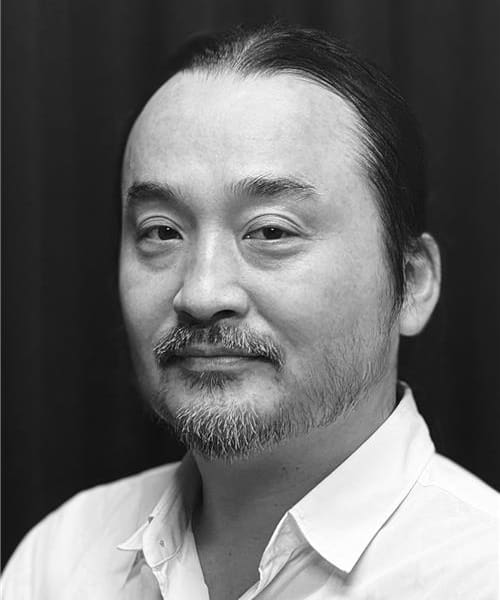
Yusuke Hirota: About a year after the release of the first Chimney Town film, Akihiro Nishino, the author of the original picture book, offered a sequel project to Studio℃, and the studio’s producer, Eiko Tanaka, offered me this opportunity. The first Chimney Town was my first feature film as a director, and it was also the studio’s first 3D CG feature. So it has a very special place in my heart.
The aesthetic sensibility of this film is quite reminiscent of video games. I thought of some games by Level-5, specifically the Professor Layton games. Do you consider video games to be an aesthetic counterpart to this film?
For the characters, we consciously prioritized lines and silhouettes over detailed textures in order to effectively convey movement. Similarly, the background art maintains a consistent level of detail while preserving a hand-drawn feel. This approach shares many commonalities with manga and games.
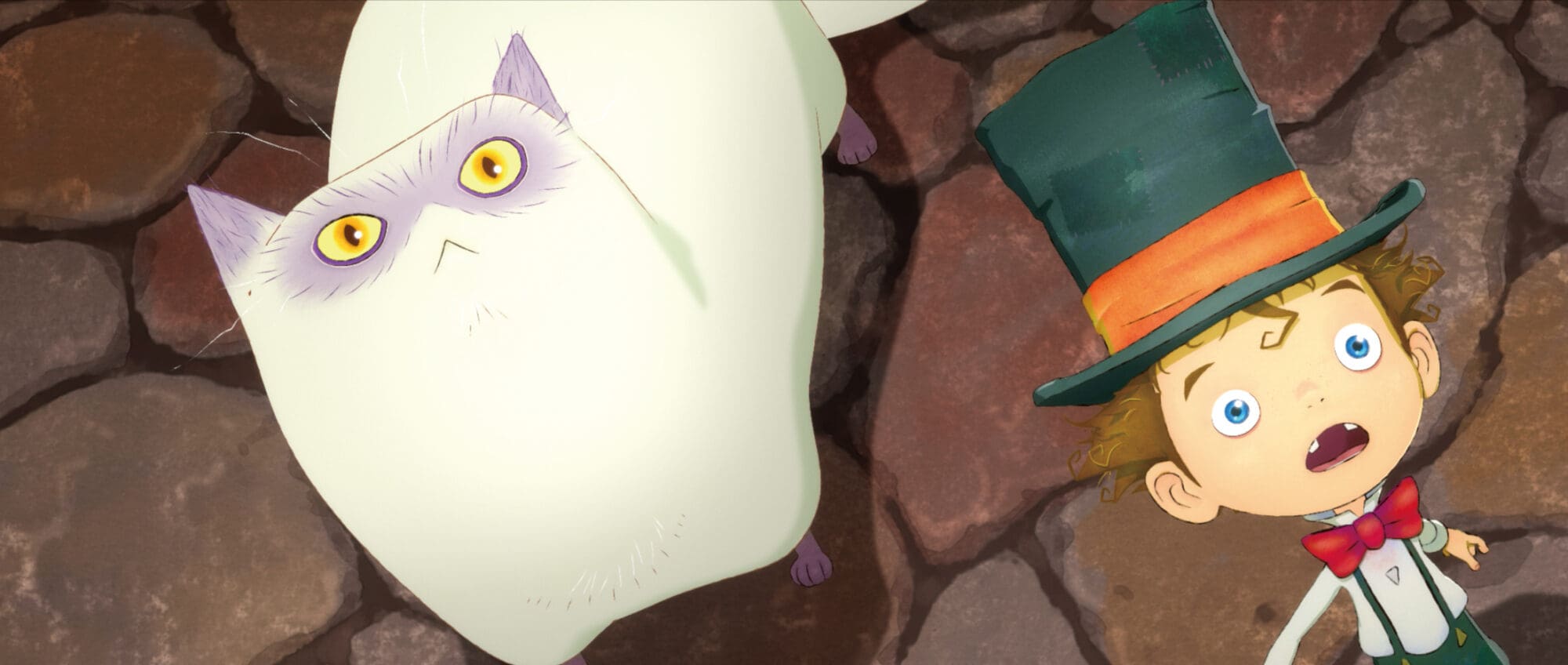
This film has incredibly varied character design. There are varied creatures that inhabit this world. It must have been challenging to make them all coherent alongside one another. Tell me about the film’s creature design.
The otherworld known as the Thousand-Year Fortress is the main setting of this work, a landscape conjured from protagonist Lubicchi’s imagination. Things that Lubicchi has never seen in real life, such as fireflies, plants, and animals, come from his imagination and exist in forms different from those in reality. Characters, too, are formed by blending information that he has heard through rumors and from books, combining elements from existing creatures and inanimate objects.
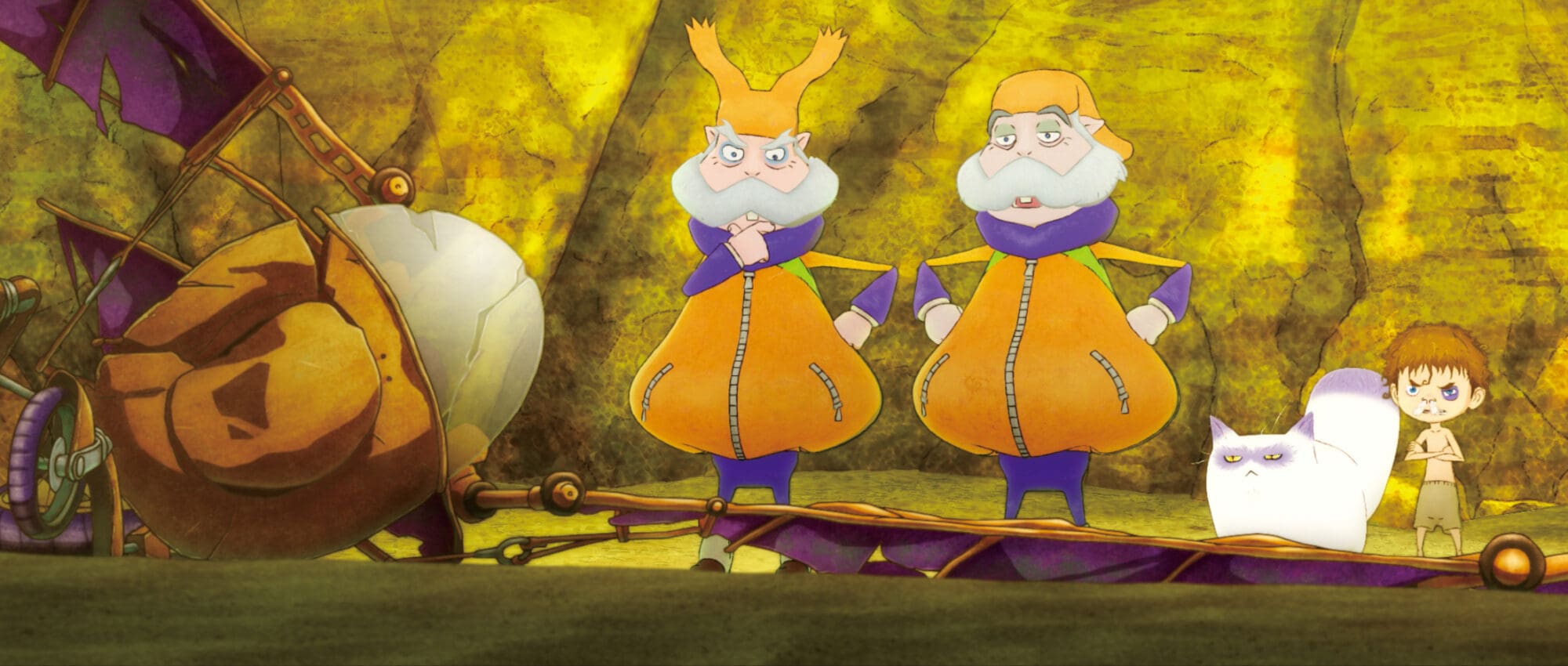
What influences did you draw upon in constructing this film, beyond the source material itself? Elements of the narrative and world-building reminded me of British and American classics such as Labyrinth and Corpse Bride, as well as the flashback storytelling of shonen manga such as One Piece.
Halloween imagery is indispensable to the world of Chimney Town. It hugely influences the color palette, design, music, and the darkly comical mood of the film. I believe that’s why you find something in common between this film and ’80s fantasy films and the world of Tim Burton, a favorite filmmaker of mine.
Our goal was to create a straightforward family film, so we used narration and music to boost the emotional response. It’s an approach seen frequently in dramas and films of the ’80s and ’90s. Nishino-san and I are of a similar generation, and these are elements remembered from what we watched in our childhoods.
Tell me about the 3D CG used in this film and how you implemented it. It’s quite unique stylistically.
While 99% of the characters are 3D CG, we added toon shading to their character models. Rather than completing everything within the 3D software, we output elements like color, shading, and line art as separate images. These are then individually processed and adjusted during the compositing stage. The backgrounds are split roughly 50/50 between 2D and 3D backgrounds. But even the backgrounds created in 3D CG are painted over with 2D textures to ensure that they retain a hand-drawn texture and feel.
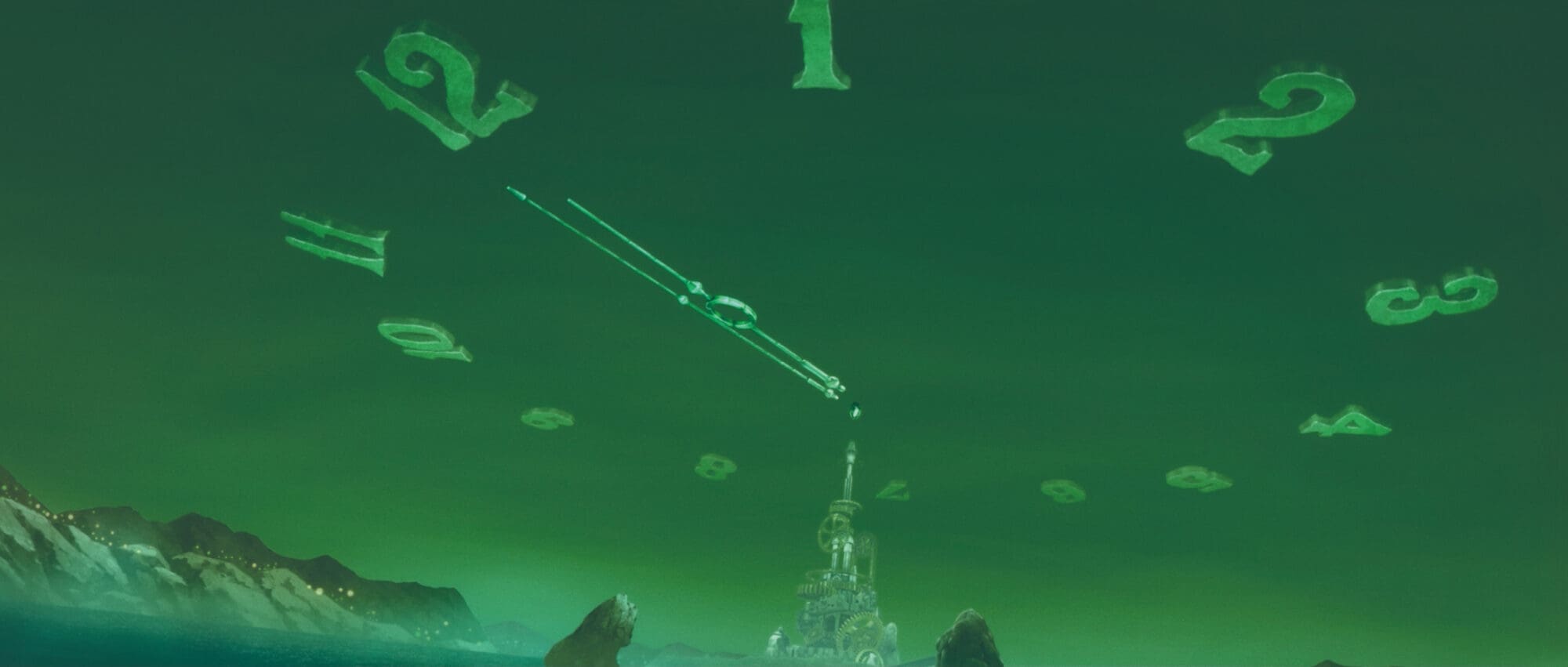
When you animated this film, were you doing so in layers? Is the CG the final layer to each scene or frame?
This project was developed based on a 2D animation workflow. This approach involves outputting each layer, such as characters, backgrounds, and effects, as images, then compositing and editing them to make final adjustments. While this may seem like an old-school approach for 3D CG production, it gives us more freedom in the final editing process.
Studio 4ºC has a dedicated role, the CGI Director, who fulfills this function. I myself worked on various projects as a CGI Director for over 15 years, and I’m utilizing that experience to the fullest here.
Tell me about mixing 3D and 2D characters and other elements within a scene. That also must be a challenge to render cohesively.
At Studio 4ºC, we were pioneers in incorporating 3D CG into 2D animation. As a CGI director, I have also been pursuing the seamless incorporation of 3D CG into 2D animation for more than 20 years. This film is based on the Japanese limited animation style, but we wanted to express these unique Japanese animation techniques in 3D CG. The decision to use 2D animation was precisely to maximize the effectiveness of those limited animation techniques.
Studio 4ºC is an eclectic studio in what it produces, especially lately. You have 2D animation in ChaO, a blend of 2D and CG in All You Need Is Kill, and a fusion that leans even further toward 3D animation styles in this project. What’s it like for a studio to vary its output on such a fundamental stylistic and technical level?
Each production begins with the creator, not with the style that’s ultimately chosen to present their ideas. I believe one of Studio 4ºC’s defining characteristics is its constant evolution, free from stylistic constraints and always challenging ourselves to find new forms of expression. Creators like myself, who don’t like being overly bound by uniform aesthetics, find themselves to be a good fit at Studio 4ºC.
Tell me how the team created the rooftop chase sequence. There are a lot of moving parts at once, some of them reactive to other elements, the roof tiles shifting under Lubicchi’s feet.
I wanted to create a sequence that was so chaotic and frantic that your eyes can’t keep up with what’s happening. I was aiming to create the kind of thrilling, edge-of-your-seat sequence found in Hayao Miyazaki’s Ghibli films. The workflow was complex. After finalizing the layout, we worked on character animation and the falling tile simulation in parallel. Any tiles that physically collided with the characters had to be manually reanimated by hand. This scene featured highly exaggerated character movements. I think we succeeded in making it very exciting.
What do you hope your audiences feel when they leave the cinema having watched this film?
I made this film to depict the beauty of believing in someone and waiting for them. We should cherish the strength and kindness in caring for others, and the sincerity of heart that comes with that act. In a time when technology continues to advance, and people pursue convenience, efficiency, and immediacy, that’s something we need to keep cherishing. It would make me happy if this film becomes an opportunity for the audience to reflect on that.
Chimney Town: Frozen in Time premiered at the 76th Berlin International Film Festival.
With thanks to Yuki Fujiwara for the translation.