.png)


Nvidia’s New AI Tool Shifts Creative Control From Artists To Algorithms
Stay informed with free updates
Sign up to get our news digest — delivered directly to your inbox twice a week.
Nvidia has unveiled DLSS 5, and depending on who you ask, it’s either the next leap in real-time graphics or a glossy Snapchat-like AI filter steamrolling artistic intent.
On paper, DLSS 5 looks like a major technical shift. Unlike earlier versions that upscaled images, this one leans into neural rendering, using AI to reinterpret lighting, materials, and even character details in real time. It’s being pitched by Nvidia as capable of generating near–Hollywood-level visuals at a fraction of the computational cost.
Studios like EA, Bethesda, and Capcom are already on board, praising the tech for boosting immersion and visual richness in games like Starfield, EA Sports FC, and Resident Evil Requiem.
But the backlash has been immediate and loud.
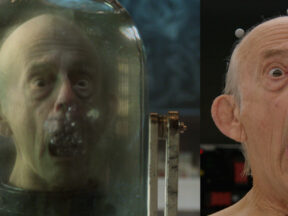
Critics argue DLSS 5 doesn’t just enhance images, it rewrites them. Faces get subtly (or not-so-subtly) altered, textures are being smoothed into a uniform sheen, and art direction is diluted into an AI house style that’s recognizable across genAI-produced images and videos.
Whether or not the images look “better” is a matter of opinion. What’s not up for debate is that the final results cannot replicate what was in the original artists’ minds when the games were developed.
So, a major question looms: If a neural model is making aesthetic decisions on the fly, who’s the artist now? Is it the developer, Nvidia’s algorithm, or the countless individuals whose work was scraped to create the software used for the touch-ups?
Nvidia insists developers remain in control, positioning DLSS 5 as a tool, not a replacement. Many remain unconvinced and argue that once these systems are more widely adopted, opting out may become impractical or hugely limiting for anyone opposed to them.
The bigger picture feels increasingly familiar. A powerful new technology promises efficiency and realism while quietly shifting creative control away from human hands. Nvidia’s latest release is just the latest chapter in the art history book being written over the last handful of years.
For animation and games alike, DLSS 5 isn’t just a rendering upgrade. It’s another line in the sand in the ongoing tension between automation and human-led artistry.
Pictured at top: Screenshot from Nvidia’s NVIDIA DLSS 5 announcement video