.png)
‘Two Black Boys In Paradise’ Creator Dean Atta Doesn’t Let BAFTA Controversy Mar Historic Win
Stay informed with free updates
Sign up to get our news digest — delivered directly to your inbox twice a week.
Perhaps buried amid a rather distressing fallout from the BAFTAs was the delight that the creators of Two Black Boys in Paradise won the award for Best British Short Animation.
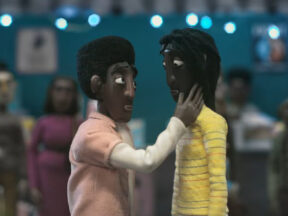
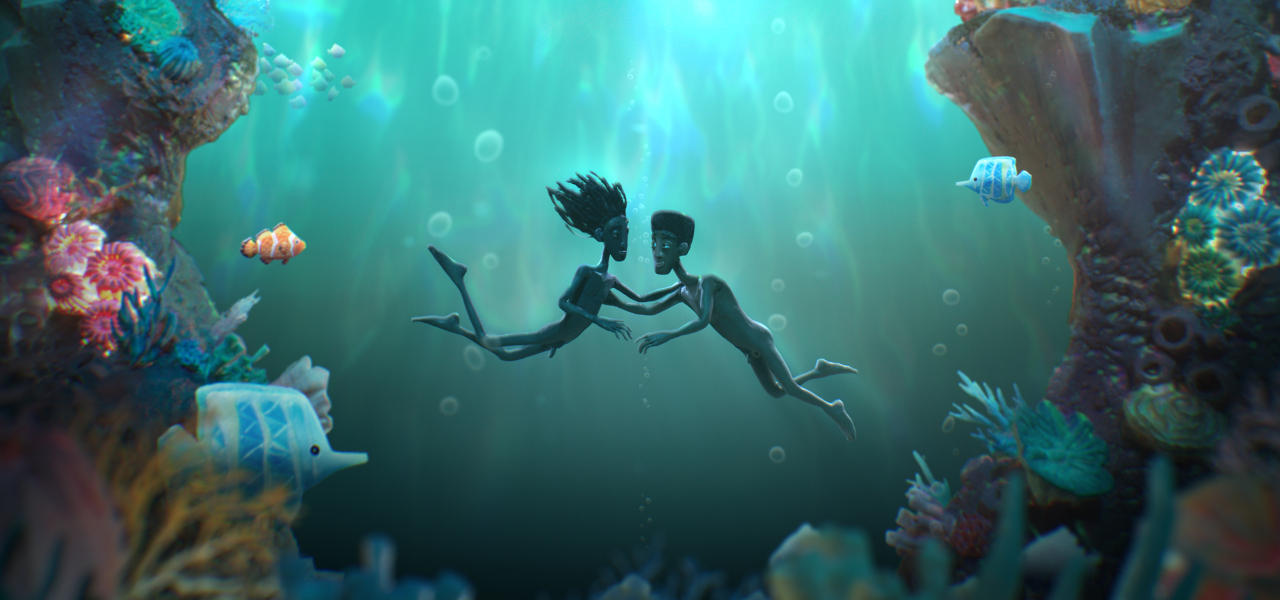
The film, directed by Baz Sells, is based on the poem of the same name by Dean Atta, both of whom spoke to Cartoon Brew about the making of their short prior to the nomination. On a call following the event, Atta hadn’t let any controversy dull his spirits. “I’m feeling on cloud nine about our win,” he said, “and I feel really proud of our team and how we got to celebrate together.”
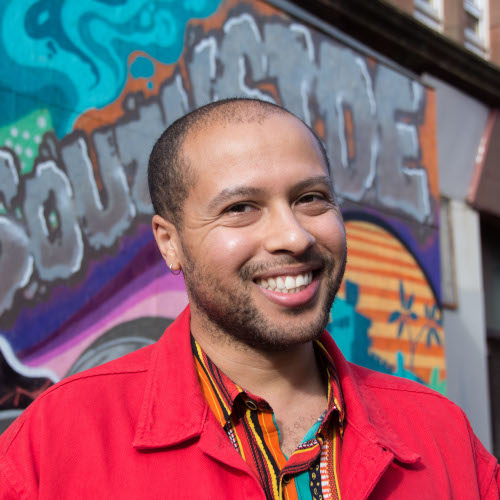
The victory means a lot to Atta personally. The writer, full of effusive praise for director Sells and the team of animators, hopes to pay forward the inspiration he received from other Black and queer stories.
“In my acceptance speech, I said I didn’t see much of black queer experience on screen, which wasn’t tragedy,” he says, “but I did remember a really special TV show to me called Noah’s Ark, a black queer rom-com TV series, so I do wanna shout them out even though that’s not animation. But it was something that did help me see the possibility of our stories going well, finding love and friendship, which is at the heart of Two Black Boys in Paradise as well. Otherwise, it was bleak when I was growing up, so I’m so glad this is there now.”
Atta also reiterated how films like Moonlight by Barry Jenkins paved the way for Two Black Boys in Paradise, a film that may itself enjoy increased attention in the wake of the awards.
Atta spoke about being active in promoting the short. “With it on Channel 4, I didn’t want it to just sit there and be available, but no one knows. So I’ve been shouting about it all the time,” he says. “Then on Sunday, when it won the BAFTA, I had people suddenly reply to these messages, which they’d ignored, and say, ‘Oh, I’m gonna watch it now, congrats on the BAFTA!’ And I’m just like, wow, you’ve gotta win a BAFTA for people to just watch your film! But at least they are watching it, and that is in part thanks to this wonderful accolade.”
However, discussion of last weekend’s BAFTA Film Awards has, overall, been fraught rather than celebratory, orbiting the involuntary utterance of a nonetheless painful racial slur. The organization and the BBC have since issued an apology, though the series of institutional failures leading up to this point has overshadowed what was, on paper, a successful night for a number of Black artists.
Regarding the moment in the room, Atta said that they and the team had been advised that something like this might happen and felt prepared, but commiserated with both the airing of the moment as well as Michael B. Jordan and Delroy Lindo being subjected to the slur. “I think it was one thing for it to be in the room, which we dealt with, Michael and Delroy were graceful,” Atta says. “It’s horrible, and there were gasps in the room when it was said, but we carried on with the night.”
A key talking point regarding the ceremony has been how the moment made it into the TV broadcast of the show following a two-hour tape delay.
“I think the main problem of it all is that it got televised, made it into the broadcast with a delay, because they managed to cut other things,” Atta reflects. “Akinola Davis Jr, director of My Father’s Shadow, said ‘Free Palestine,’ and that was cut from the broadcast, so they had their ears pricked for some things, but not for others. That’s the trouble, and that’s something they need to think about what could be improved for the future. We need to learn more about Tourette’s because this is a condition that many people have to live with.”
In that regard, outside of BAFTA and the BBC being in the hot seat, discussion online has become contentious. On one hand, there has been handwaving away the involuntary nature of the incident itself, and on the other, minimizing the harm of the slur even divorced from the context of its utterance.
“It must have brought back instances of racism,” Atta says. “But this wasn’t a reflection of someone’s beliefs or what he was thinking at the time,” he adds, “it’s the brain picking out the worst thing you could possibly say.” (John Davidson, in an interview with Variety, has said that he had reached out to Michael B. Jordan and Delroy Lindo to apologize.)
“I don’t think anyone really wants to say, ‘Tourette’s syndrome trumps Blackness,’ or vice versa,” he adds. “I think it was fair for Davidson to be in the room, to potentially see I Swear pick up awards, which it did, and its lead actor did. But also, many Black films were being honored that night, and if the N-word is someone’s tic, that does have to be taken into serious consideration.”
Atta’s thoughts on this common ground, also noting videos made by Black people with Tourette’s, are fitting for a film built around intersectional marginalized identities. The poet also notes that the win felt special because, to him, it affirms that Black queer stories have universal appeal, something he attributes to having a diverse staff.
“We had black, white, mixed, gay, straight artists on the team, loads of perspectives which helped make this so special and accessible,” he says. “I’ve had straight black guys watch it and relate to the stop-and-frisk by the police. Or black gay people connecting with the sex scene in the water. I get such lovely messages and voice notes and DMs, and I just feel so proud that this is gonna last.”