.png)

2026 Oscars Short Film Contenders: ‘Voyage Of The Red Rabbit’ Director Sam Gualtieri
Stay informed with free updates
Sign up to get our news digest — delivered directly to your inbox twice a week.
Welcome to Cartoon Brew’s series of spotlights focusing on the animated shorts that have qualified for the 2026 Oscars. The films in this series have qualified through one of multiple routes: by winning an Oscar-qualifying award at a film festival, by exhibiting theatrically, or by winning a Student Academy Award.
Today’s short is Voyage of the Red Rabbit from fourth-year SCAD student Sam Gualtieri. The short qualified for the upcoming Oscars by winning the Grand Jury Award for Best Animated Short after world premiering at the Florida Film Festival.
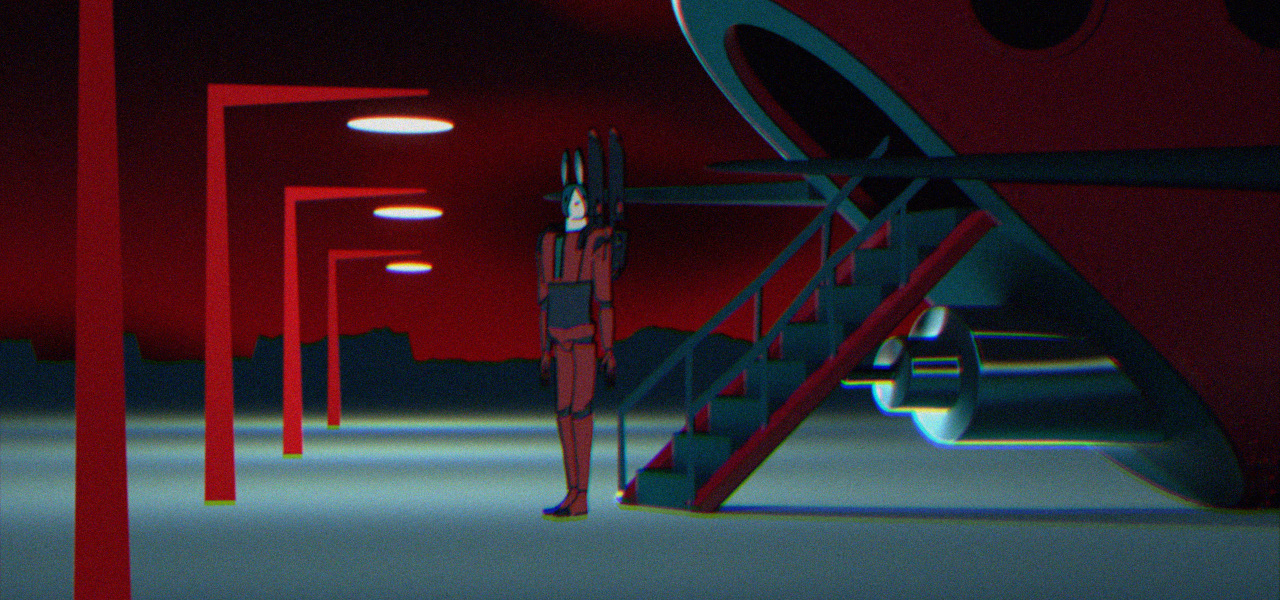
Voyage of the Red Rabbit blends intimate family memories with surreal cosmic imagery to create a dreamlike, reflective short film that’s part documentary, part retro futurist science fiction. Built from real dinner-table recordings, the film intercuts Gualtieri’s grandfather eating apple pie in his kitchen with the odyssey of a stranded rabbit-headed spaceman drifting through stylized 1940s-inspired outer space. As the rabbit explores deserted alien structures, the man recounts childhood stories, muses on the afterlife, and imagines souls traveling to distant planets. These parallel threads merge in a vivid, Maurice Noble-like montage where a beloved childhood pet rabbit is launched skyward and transformed into the intrepid Red Rabbit.
Cartoon Brew: What was it about this story or concept that connected with you and compelled you to direct the film?
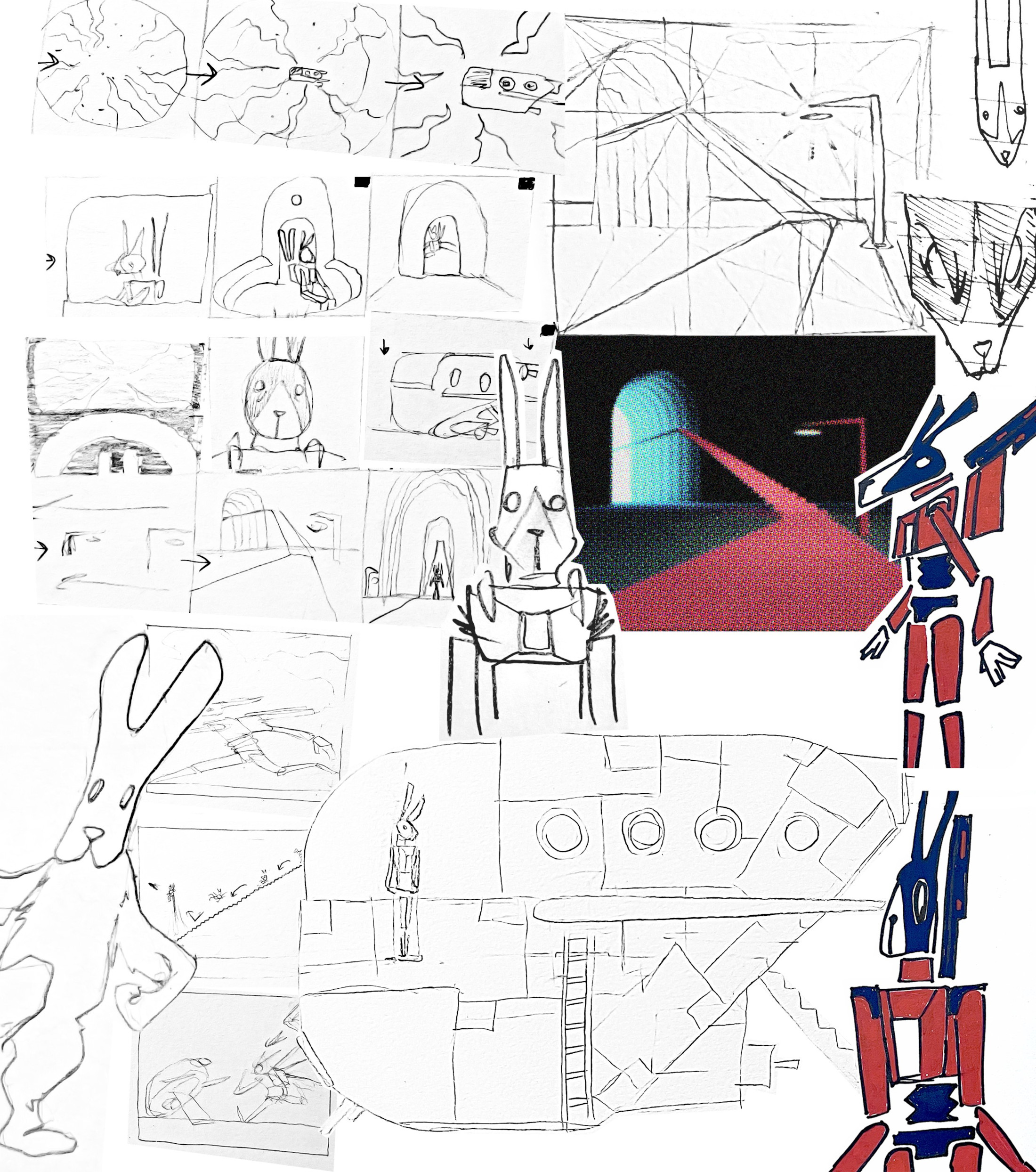
Sam Gualtieri: The main character in the film was modeled after my family’s rabbit, who had recently passed. I drew him as a spaceman, with no story in mind. Just this image of a mid-century hero floating in the sky. Then my Nonno (grandfather), who loves old cartoons and always called my pets “rats,” began to appear in my sketches. Later, I remembered my Nonno’s own emotional story about a rabbit. I was only a sophomore at SCAD, but I called my dad and said, “Hey, I think this might be my thesis project. Sorry.”
What did you learn through the experience of making this film, either production-wise, filmmaking-wise, creatively, or about the subject matter?
The hardest part is being done. It’s unnerving to take the wind out of a project and definitively rob it of the potential to change. There’s a lot I’d like to change about Red Rabbit, but I have to trust that my original intention endured the process. The early rush of creative potential can be a short-lived thing. I’ve learned to be ok with this.
Can you describe how you developed your visual approach to the film? Why did you settle on this style/technique?
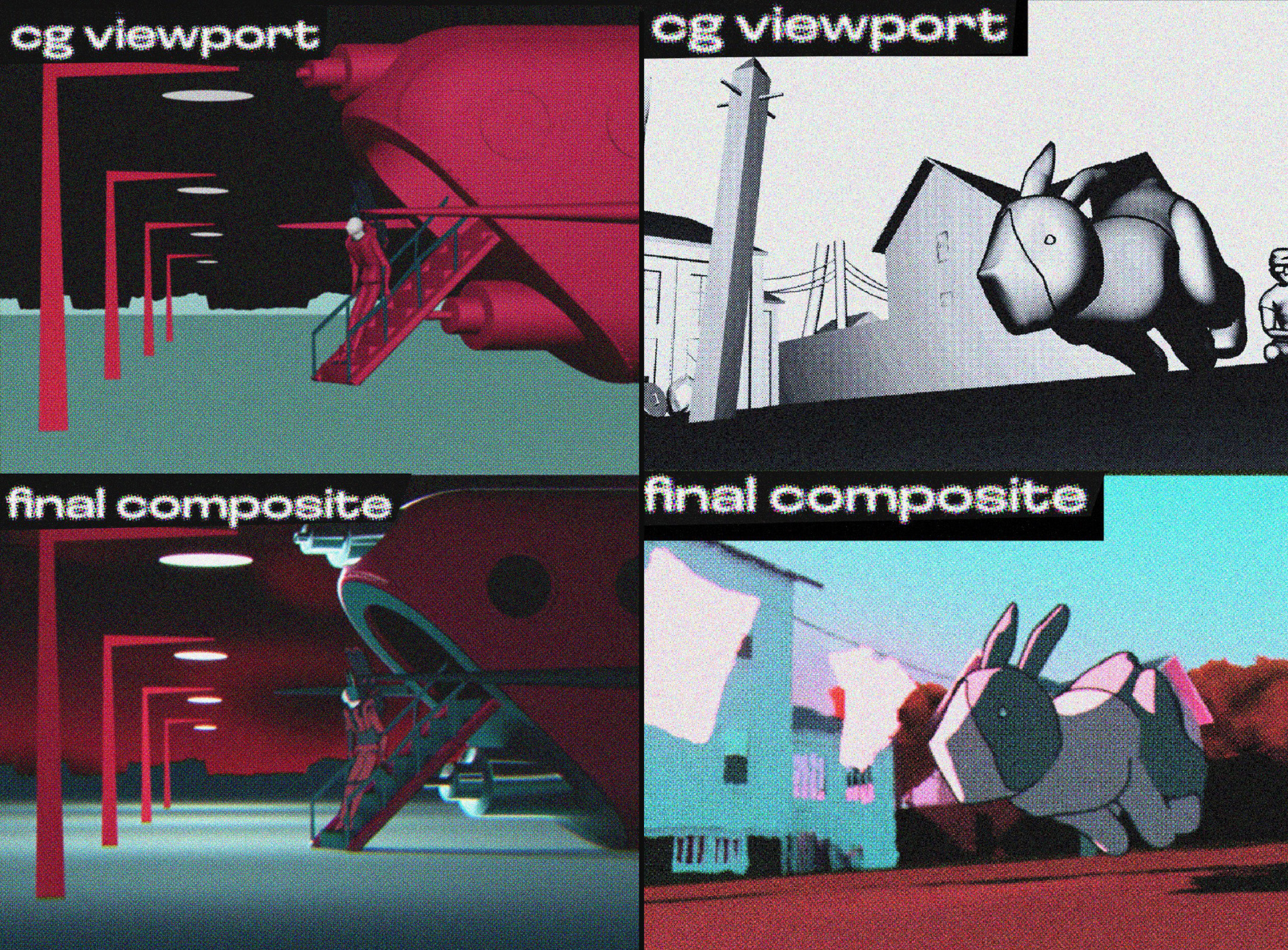
I earned my B.F.A. in Visual Effects from SCAD in 2024, where I became fascinated by mid-century animation. I was getting tired of photorealistic work and realized I had an opportunity to unify two of my passions. I’d always liked the space-centered episodes of Looney Tunes. Maurice Noble designed the most surreal backgrounds with clean color shapes and carefully rendered light. I thought Red Rabbit could pay homage to that in a 3D rendering pipeline; a 2D-styled film with a subtle sense of depth.
Can you talk about the relationship between your grandfather’s comments and the visual story of the rabbit, and why you wanted to combine them in a single film?
I’m often asked about the symbolism of the rabbit, and I think my answers tend to disappoint people. I wanted to connect a cute and stoic character with a man who appeared as the opposite. I wanted to prove that we’re all capable of confronting existential despair with equal depth, innocence, and humility in our private thoughts. We meet Ed during an argument and slowly warm up to him. Meanwhile, we see our innocence and humility in the rabbit. I hope people can find what links these two figures by the end.


