Fathom CEO Jason Brenek On Bringing ‘Wildwood’ To 3,000 Theaters, ‘The Amazing Digital Circus’ Surprise, And Finding Animation’s Next Big Audience
Stay informed with free updates
Sign up to get our news digest — delivered directly to your inbox twice a week.
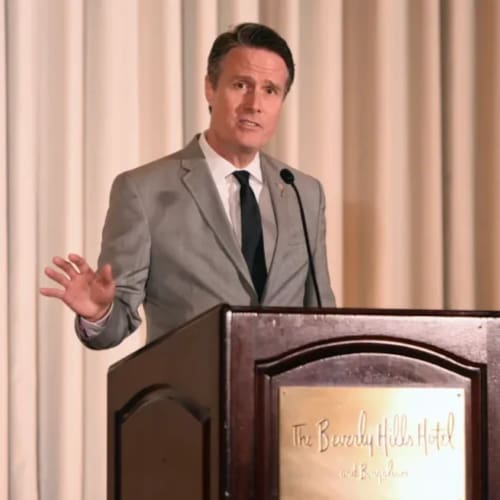
TOKYO, Japan – With Laika’s latest production, Wildwood, in its third week of release—having added 150 screens during its second week for a total of 3,103 across the U.S. and Canada. We caught up with Jason Brenek, CEO of the film’s distributor, Fathom Entertainment, in Japan at the Tokyo International Film Festival.
Asked what made Wildwood the distributor’s choice for its first traditional wide release, Brenek, appointed to his role back in July, says, “Human-driven creativity is something that we’ve always been big in, whether it’s been in anime or in stop-motion animation. And we’ve had a long-standing relationship with Laika over the years, where we have rereleased the films that they’ve done, Coraline being an example, on an annual basis to serve that audience and bring that film back to the big screen so that people can see it annually.”
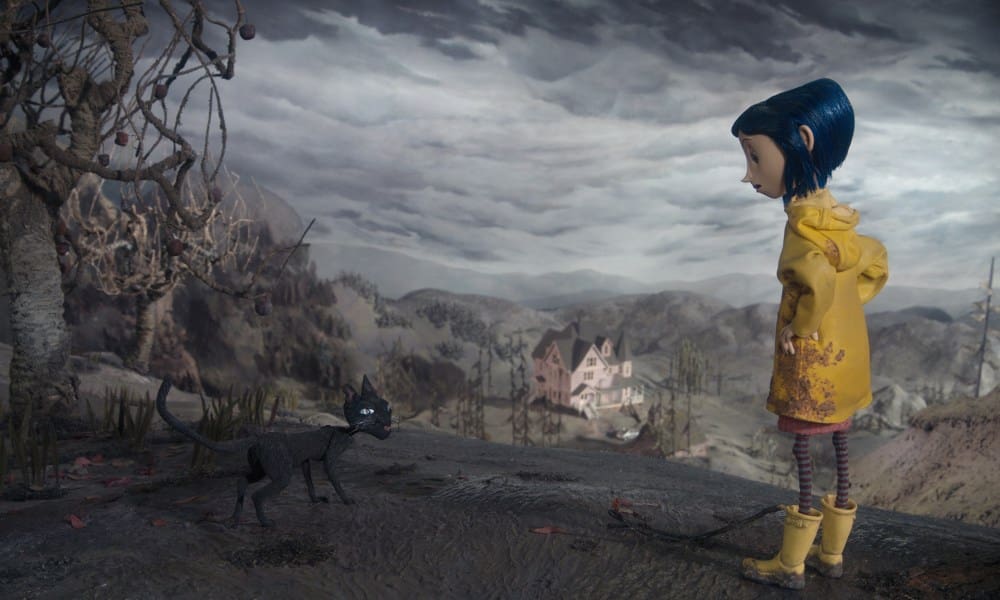
Those re-releases and anniversary screenings established a strong relationship between the companies. Of their latest collab, Brenek notes that Wildwood had been in development for 16 years.
“They had built a real understanding through these anniversary releases that we had done and these bringbacks,” he says. “They knew that they had the base of an audience that they were serving. They also felt, after working within the studio system, the traditional Hollywood system, for the entirety of their existence, that they wanted to have a creative hand in how to reach that audience, how to actually bring their content to their biggest fans. And that was something that they didn’t feel that they could get through the traditional studio system—where oftentimes films, television programs are put together by production companies, thrown over the wall to their distribution entity, the studio, and then the studio says, ‘We’ve got it from here. Don’t worry about it. We’re going to go and market. We’re going to create the art. We’re going to create the trailers.’”
Brenek says Fathom’s approach gives Laika more control over marketing and communication with its fan base, while also allowing it to take advantage of Fathom’s ownership structure.
“Fathom is owned by the three largest cinema chains in the U.S.: Regal, Cinemark, and AMC, representing half the screens in the country. And so we went to our ownership and said, ‘We have this opportunity to do something really big with this partner who we know very well, and let’s try to see how big we can go.’ And so the 3,000 theaters, the wide release, the biggest release that we’ve ever done to date in the 20-year history. We really didn’t know how the film was going to look. We had seen pieces of it along the way, but the passion and the artistry that Laika put behind the film really shows on the screen.”
Reflecting on the film’s second week of release, Brenek points to a “massive desire for human-driven creativity and artistry” amid the entertainment industry’s increasing use of AI. Wildwood grossed an estimated $9 million in its second domestic weekend, an impressive 27% drop from its debut, bringing its 10-day total to $27.4 million. Audience polling supplied by Fathom was similarly encouraging: 96% of moviegoers rated the film excellent or very good, and 87% said they would definitely recommend it.
“The timing of this film coming out in the midst of all of that, where 16 years of love and care and attention to detail of these puppets and stop-motion animation really is hitting at the right time,” he says.
Brenek says “consumers can see something that has heart.” He adds that Fathom has observed that “Gen Z and millennials are seeing theaters as a third space to kind of meet with like-minded fans and come together in a way that they hadn’t for the past 10 years.”
He says interest in “human-driven” art also extends to film formats, including 35mm and 70mm releases, pointing to The Odyssey. Discussing moviegoing more broadly, he also cites A24’s You Can See Everything.
“It’s amazing to release a film at a time where it looks like everything is predictable in terms of what your release schedule is,” he says, “and then something can come out of left field like this documentary that sucks up a lot of oxygen in the room.”
Brenek believes Wildwood has a long life ahead of it, with its critical reception and awards potential potentially extending its theatrical run. He also suggests that audiences’ appreciation for handmade films endures, citing Studio Ghibli’s hand-drawn work.
When deciding what kind of release a film will receive, Brenek says, “There is a need for scale. We’re different than a Neon or an A24. We’re not an independent film studio in that we’re booking theaters for releases of 100 screens or 300 screens. We kind of have a natural threshold around 1,000. If something can play to 1,000 screens, we know that it’s going to satisfy our three owners.”
The second factor is the competitive marketplace: what a film would face on its opening weekend.
“This year has been bonkers from a content flow standpoint,” he says. “I think everybody’s realizing that there’s a hunger for new stories, new projects. And so with the success of Obsession, with the success of Backrooms, all of which started in a user-generated space with content creators, people are thinking about theatrical releases with a lower production price point.”
He continues, “I do think the second factor is what’s happening within the marketplace, because we don’t want to take away from other big projects that are coming out. So we’ll kind of figure out the timing of the release.”
The final consideration is marketing.
“What is it going to take for us to market it effectively?” he says. “In the case of Wildwood, Laika had a very clear vision of how to market and promote this film, and you’ll notice that in a lot of the trailers and promotional materials, not a ton was given away.”
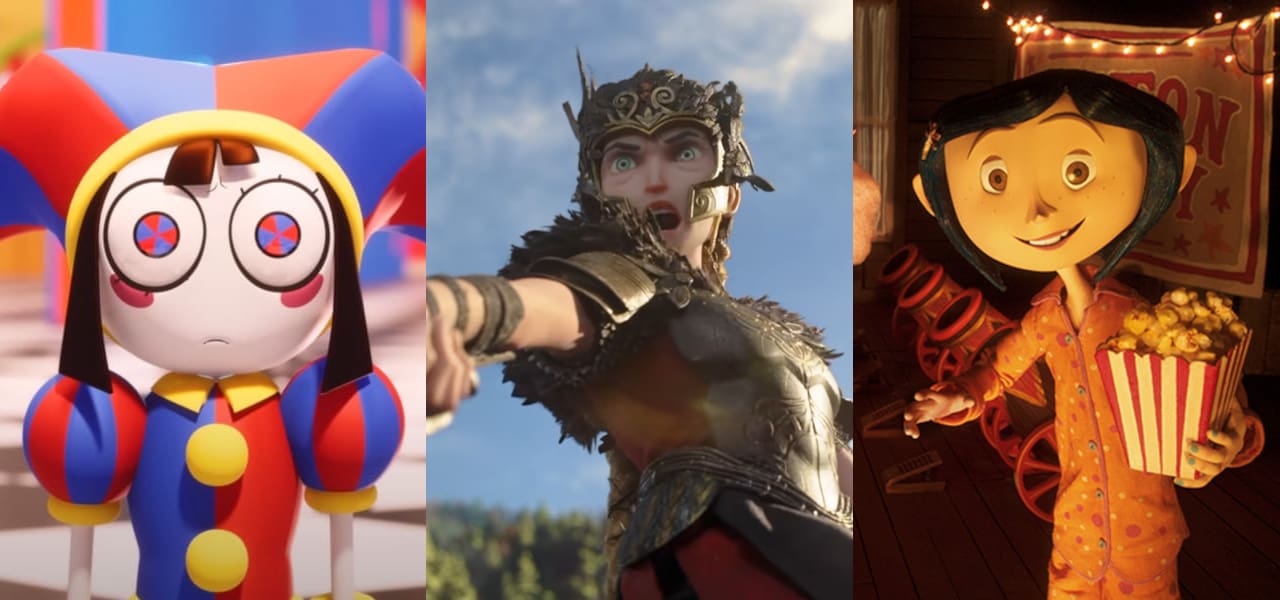
Beyond Wildwood, Fathom is finding theatrical audiences for animation that originated online, including The Amazing Digital Circus, whose box office performance caught even Brenek by surprise.
“I think [that was] a surprise to everyone in the industry. I can’t say there was anyone other than probably two people on our team, and the creators of Amazing Digital Circus, and the fans of Amazing Digital Circus who knew how that was going to play in theaters,” Brenek says. “No one thought that it would do the type of business that it did. I mean, it ended up making $25 million at the box office, and it kept going and going and going. And we just didn’t see it. We didn’t get it, which is part of why, as I’ve come in and looked at the industry and the trends that are happening, I think we have to have younger people out in the market finding content that resonates for younger viewers.”

Brenek credits two members of his team who championed the release. Following The Amazing Digital Circus and the success of Obsession, Iron Lung, and Backrooms, he says, “There’s a lot of activity in the industry trying to find similar creators who can tell stories on a big canvas in the theaters,” with Instagram and YouTube serving as a feeder system.
“We do have intentions and have conversations actively with many content creators who are out there to try to find what is the next thing that can justify someone leaving the home, plopping down $20 and seeing something in a theater with a lot of other fans,” he says.
Fathom is also considering more ways to build special events around screenings.
“I think we need to be cognizant when we’re releasing content in theaters that it delivers a certain amount of value. One of the things that we do to add to that value is special Q&A sessions with the creators, or extra footage that you haven’t seen before, or behind-the-scenes, or teasing a new release. I think we’re going to be doing more of that. So just putting the film out, I think not anyone can do that, but that’s something that a lot of people can do directly.”
Brenek says Fathom’s “eventization of content” can also be built around entire franchises.
“For example, we brought back the Lord of the Rings trilogy a couple of times over the last couple of years, the extended versions,” he says. “We know that Lord of the Rings fans are not only into the films, but they’re into cosplay, they’re into merchandise, collectibles. They’re into being a part of, or more immersed in, the world. And so one of the things that we’ve done quite a bit is lean into those collectibles and other types of merchandise to make it a little bit different, and encourage dress-ups, or for certain types of content, have the theaters make certain special drinks that go along with the film, so that it can be all part of the experience that, especially younger people, I think, are looking for.”
When people leave the house, Brenek says, they want “IRL experiences that are unique, that are Instagrammable.” Fathom is looking for ways to “make this thing an event and turn theaters into a third space that no longer really exists for younger people.”
Looking ahead to Fathom’s growth in the coming months and years, Brenek says, “We are looking at what we do well. What audiences do we serve? What audiences do we think have growth potential and are feeling underserved from the amount of content?”
“This is one of the reasons why I’m here in Tokyo with our team,” he adds. “For the 20 years that we have existed, we have been the largest distributor of Japanese animation and anime products into United States theaters. And so taking that subculture, people who are avid fans in the United States for animation and anime out of Japan, we are doubling down on that demographic and trying to bring more in a timelier manner, so that they’re not waiting a year for something.”
Brenek points to a digitally connected global anime audience as a reason for more timely releases.
“Frankly, one of the things that I think a lot of Japanese production companies and creatives aren’t aware of—because it goes through multiple layers of bureaucracy and production committees and all these things just to get projects made and released in Japan—I don’t think they realize necessarily that at the end of that chain in America, it is almost always Fathom releasing that product into theaters. So I guess this is to say that we want to connect more with these demographic groups, and as a result, we’re connecting much more closely with these production entities and creatives in places in the world that are responsible for such amazing artistic works. Another is the creative online community that we talked about. That’s another area that we’re getting heavily into.”