.png)
From ‘Fortnite’ To ‘Fallout’: Checking In From London’s Beyond Games: Transmedia Summit
Stay informed with free updates
Sign up to get our news digest — delivered directly to your inbox twice a week.
London played host to this year’s Beyond Games: Transmedia Summit, an extension of the PG Connects conference series that describes itself as “the UK’s largest B2B games industry conference.”
The Transmedia Summit is designed to engage with the growing prominence of the games industry as a creative sector, one that has increasingly crossed over into other visual arts industries. The summit pointed to adaptations such as The Super Mario Bros. Movie, Minecraft, The Last of Us, and Fallout as proof, alongside the rising fame of YouTube and Twitch streamers, and the way games technology, including Unreal Engine and Unity, has become integral to film and TV production.
CROSS-PLATFORM WORLDS
Two panels directly addressed this growing overlap. The first, Cross-Platform Worlds, featured Vicki Thompson (design director) and Skyler Laston-Gaeta (senior producer) from Epic Games; Carol Trang (self-described “content management machine”) from the LEGO Group; and Sol Rogers, global director of innovation at Magnopus.
The session opened with Laston-Gaeta asking what defines a “cross-platform world.” Thompson, who works on brand partnerships for Fortnite, including LEGO, Teenage Mutant Ninja Turtles, and an upcoming Star Wars collaboration, described games transmedia as fundamentally about audience participation in IP, allowing players to “perform our IP with us.” Trang concurred, drawing on her work in LEGO’s community engagement. She noted that partnerships such as those with Fortnite mean “creating meta narratives and meta vocabulary” around characters and franchises, as well as “new rituals,” likely referring to interactions within game spaces.
The panel highlighted examples from their own work. Rogers pointed to a collaboration between Daft Punk and Fortnite, the Daft Punk Experience, which opened with an Unreal Engine-created sequence set to the song “Contact.” Rogers added that the band later contacted them to ask if it could be used as a belated music video. Trang also emphasized the multigenerational impact of such projects, noting how parents and children can connect through shared IP within a game format.
These examples fed into a broader discussion of the value of cross-platform collaboration. Thompson highlighted the “toy box” element, the ability to engage with different characters in ways usually reserved for authors. Trang added that such collaborations can enable unlikely crossovers that traditional rights agreements would not normally allow.
“Commercially, you’re finding wherever your audiences are and where they want to be,” Rogers said. He added that transmedia is also a way to track how audiences change over time, for example, those who may have aged out of gaming, and to retain them by engaging through other mediums. He stressed, however, that none of this matters without creating something meaningful, rather than adding more “junk” to an already overstimulated public.
The discussion also touched on how cross-platform work encourages diverse uses of Unreal Engine. Trang highlighted the community impact of her work with Epic on LEGO creator tools, while others noted how shared Unreal assets, used both in games and beyond, can save time during production.
This emphasis on the human element contrasted with the prominence of AI-related discussions throughout the day. Rogers noted the role of AI in one of his major projects, the projection of The Wizard of Oz at the Sphere in Las Vegas. Elsewhere, panels addressed points of tension, including a morning session asking whether “AI is the New Culture War?” and another focused on “LLM-powered characters.” In light of developments such as Disney opening access to Sora, these discussions raised separate but related questions about audience access to IP.
BRIDGING WORLDS
Another major panel focused on the connective tissue between mediums, titled Bridging Worlds: How Film, TV, and Game Studios Collaborate for Transmedia Success. It echoed themes raised earlier by Karen Troop, production director and executive producer at Passion Pictures, who highlighted the artistic and creative appeal of transmedia storytelling.
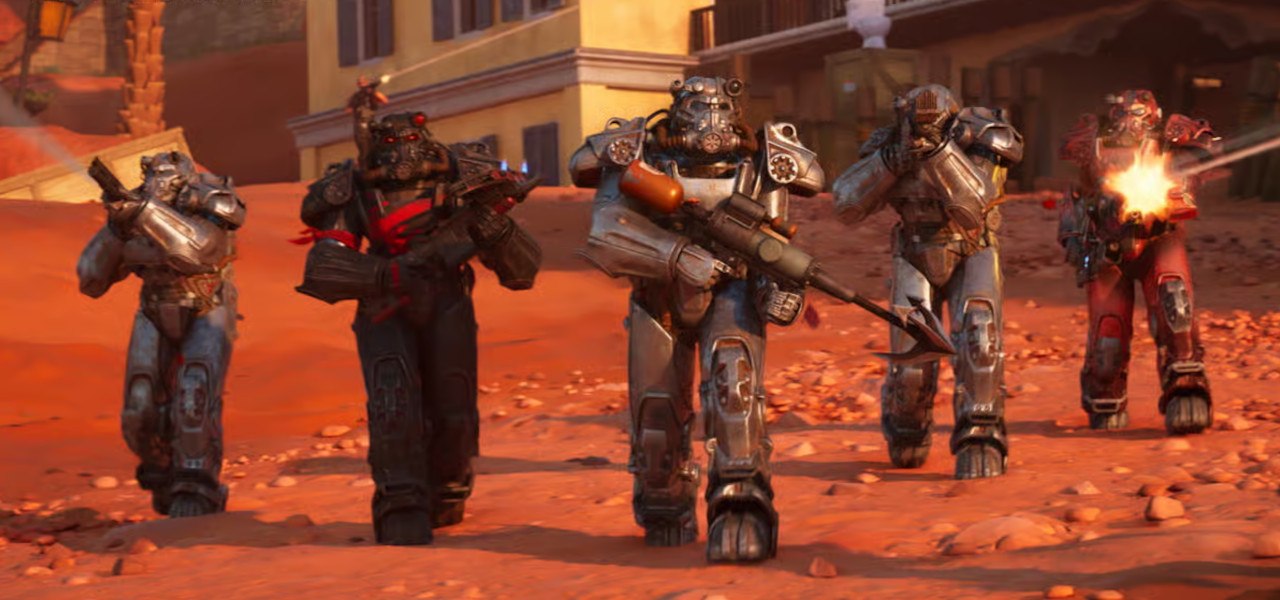
Troop’s smaller panel argued that games have reached a point where their worlds are rich enough to expand, particularly through animation. She attributed the surge in adult animation on streaming platforms to engagement with series such as Arcane, Cyberpunk: Edgerunners, Castlevania, and Devil May Cry. “Streamers are looking for worlds that go beyond one click,” she said, citing Fallout as an example of capitalizing on transmedia success by timing a price drop during the show’s run to drive game sales.
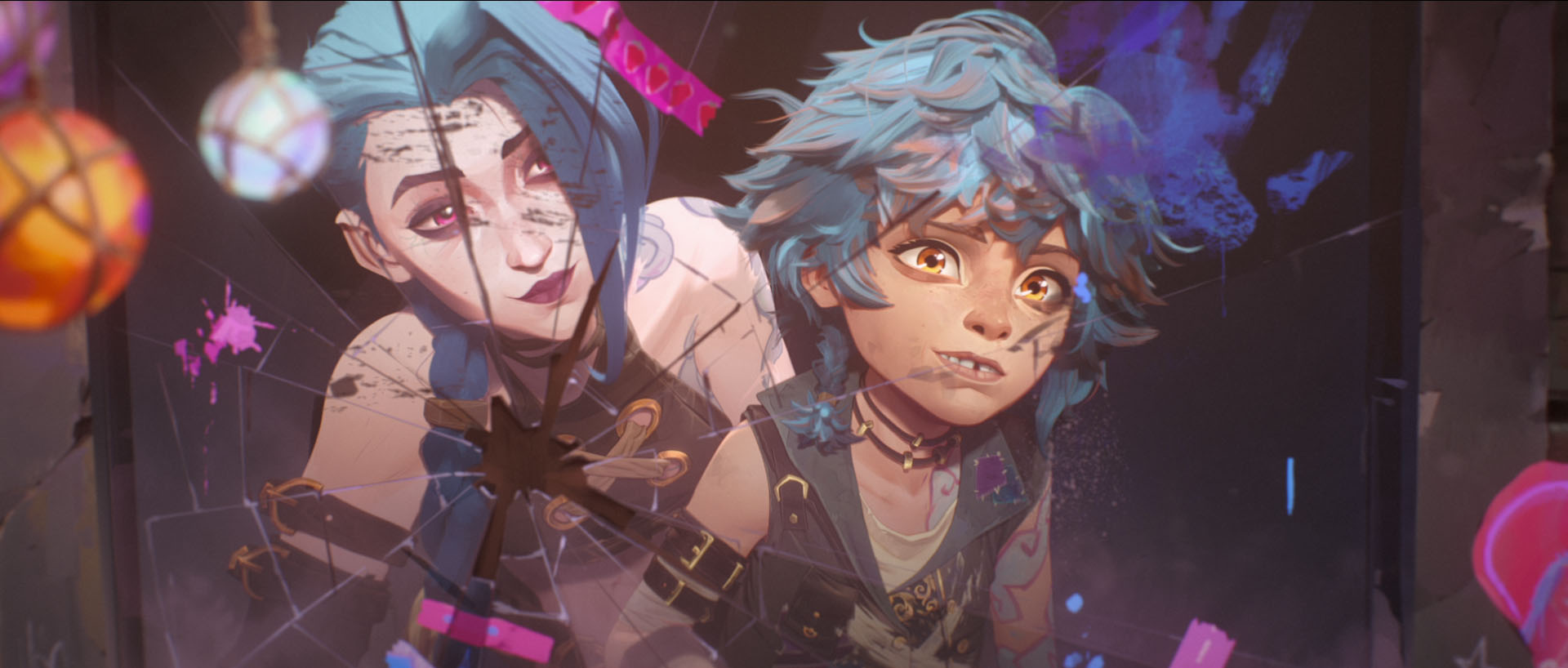
Troop also emphasized the importance of reaching non-gamers. Part of what made Fallout and Arcane successful, beyond their quality, was their appeal to audiences unfamiliar with the games, potentially sparking curiosity. “It may be controversial to some audiences and Henry Cavill, but The Witcher changed its story to meet a wider audience and drove up sales,” she quipped. Transmedia, she added, is “an invitation into your world,” one that is “not reserved for Triple-A giants.” Smaller budgets, she argued, can encourage creativity and stylization, often lending themselves particularly well to animation.
The Bridging Worlds panel focused more heavily on the logistics and practicalities of creating what Troop called an “invitation.” Moderated by Alisha Hasan, founder of Helsinki Film Lab, the panel included Adam Lumb, head of commercial and intellectual property at the Royal Armouries Museum; George Mann, creative director and co-founder of Strange Matter; Luis de la Camara, VP of marketing at Rovio; Lisa Opie, chair of ScreenSkills; and Imre Jele, owner of Atypical Types Creative Services.
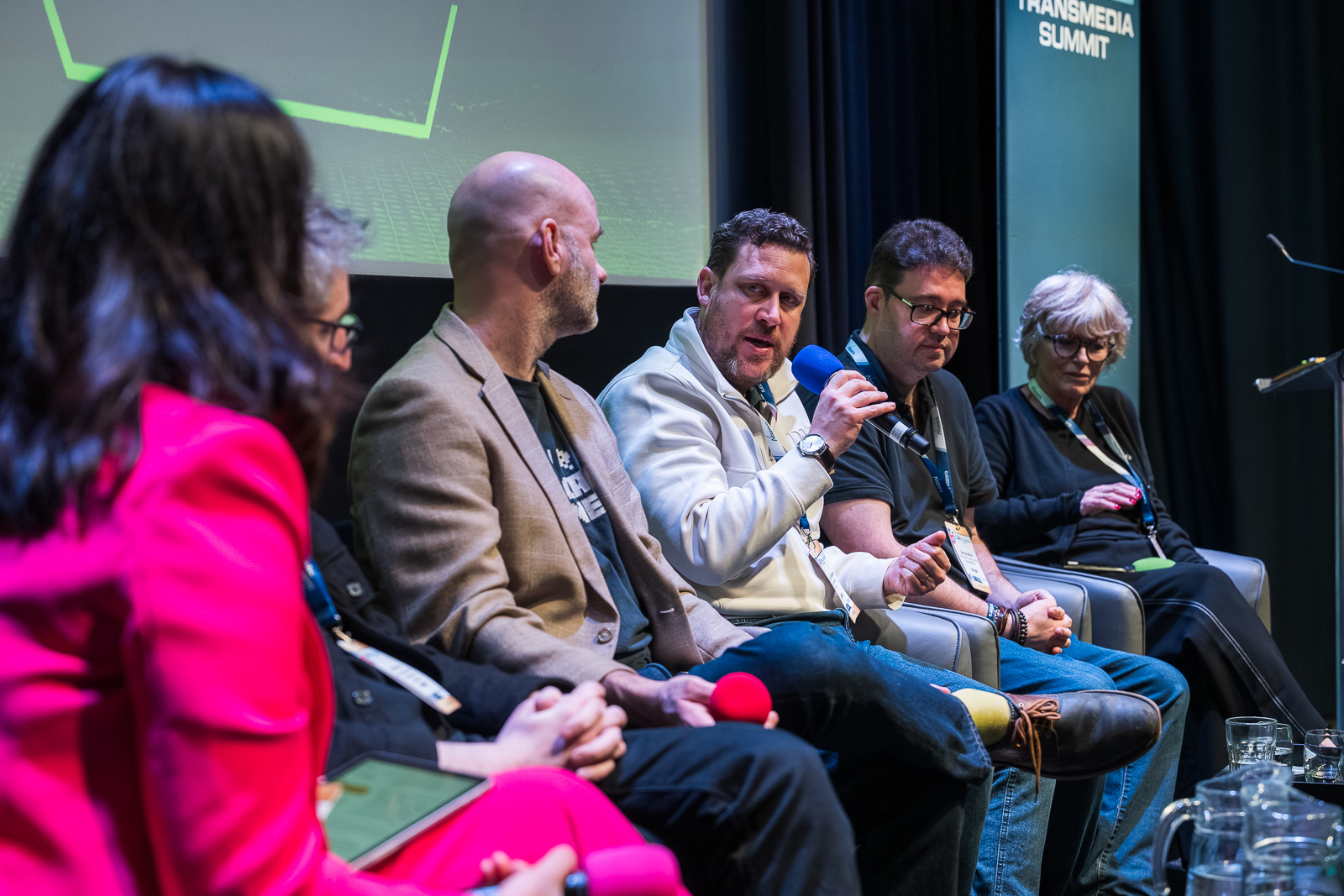
Hasan opened by asking about the attainability of a transmedia strategy, particularly when projects begin with cross-platform ambitions. “It’s attainable but not a quick fix,” Mann replied. “The answer is in the question, it’s a plan.” He noted that while there are early steps teams can take, such as developing written lore or tie-in comics, the key is thinking about how a property will evolve. “You have to write for the medium that you’re working in […] what sets it apart, what makes it unique, what’s the tone.” Camara agreed, adding that “the earlier you think about your character development and the world, the easier it is.”
This led to a discussion of smaller IPs and the importance of characters and story teams. Mann emphasized that characters are central, while Camara warned, “The fans will tear you apart if you don’t understand the core values.” Drawing on his work with SEGA, Camara described the value of having a single person who “understands the lore in every possible facet,” enabling collaboration across mediums as long as tone and thematic intent are respected. Mann cited Lucasfilm’s Star Wars story group as a model. “[They’re] not a police force, they’re enablers,” he said, praising their role in helping disparate stories cohere.
Preserving core values remained a recurring theme throughout the panel. Both Mann and Opie stressed that transmedia storytelling must account for how different mediums reshape an IP. “Don’t just do it for the sake of it, do it because there’s a reason,” Opie said.
Given this, it was notable that Jele opened the session by arguing that “transmedia doesn’t exist yet,” suggesting that what is currently labeled as such is “a kind of simpler form,” with adaptations occupying adjacent but separate spaces. He argued that deeper, more complex relationships between mediums are still unrealized. Opie agreed. “It’s an amazing opportunity, but we’re only just scratching the surface.” Ideally, that future will align with the values championed across both panels, respect for artists and for the core values of IP, rather than easy exploitation.