
‘Back To Tomioka’ Turns Fukushima’s Forbidden Zone Into A Hand-Drawn Coming-Of-Age Adventure
Stay informed with free updates
Sign up to get our news digest — delivered directly to your inbox twice a week.
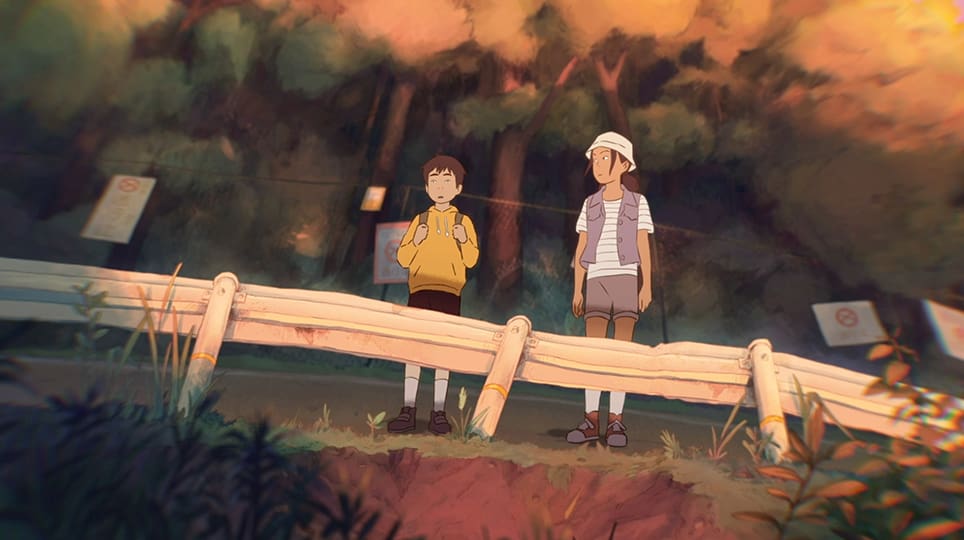
Two siblings cross a nuclear exclusion zone carrying their grandmother’s ashes. It’s a premise rooted in loss, but director François-Marc Baillet sees Back to Tomioka as an adventure: funny, tender, and concerned with how a fractured family finds its way back together amid the ruins of Fukushima.
For Baillet, the connection was personal: he lives near a nuclear power plant, has two children around the same age as his protagonists, and was unable to attend his own grandmother’s funeral during the COVID lockdown.
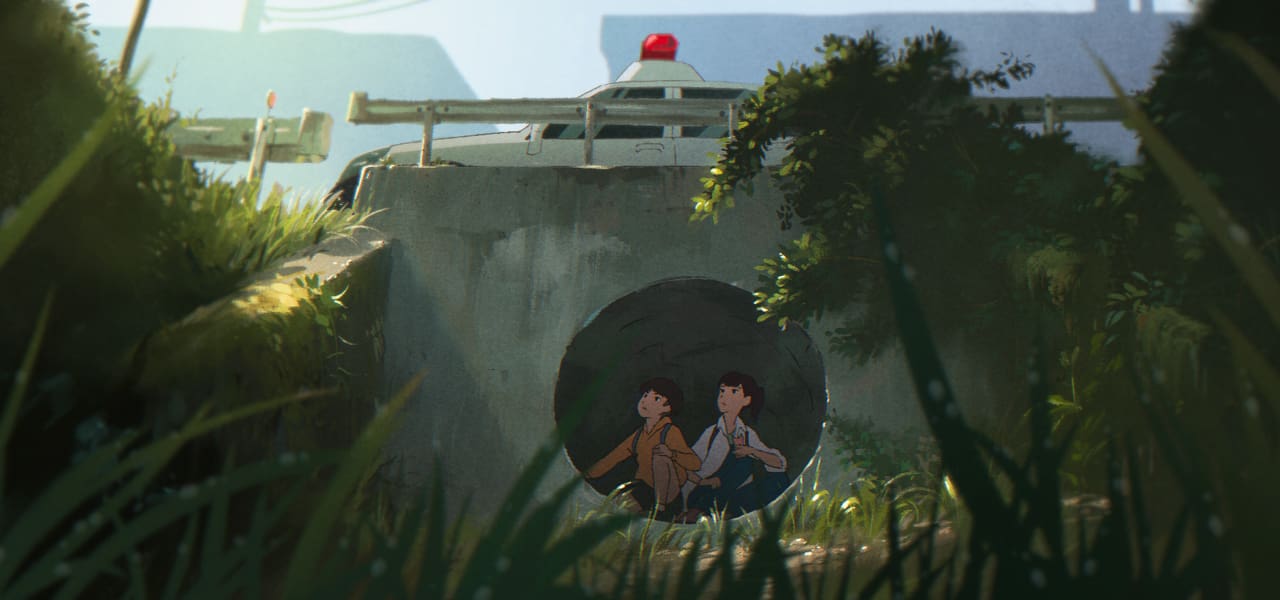
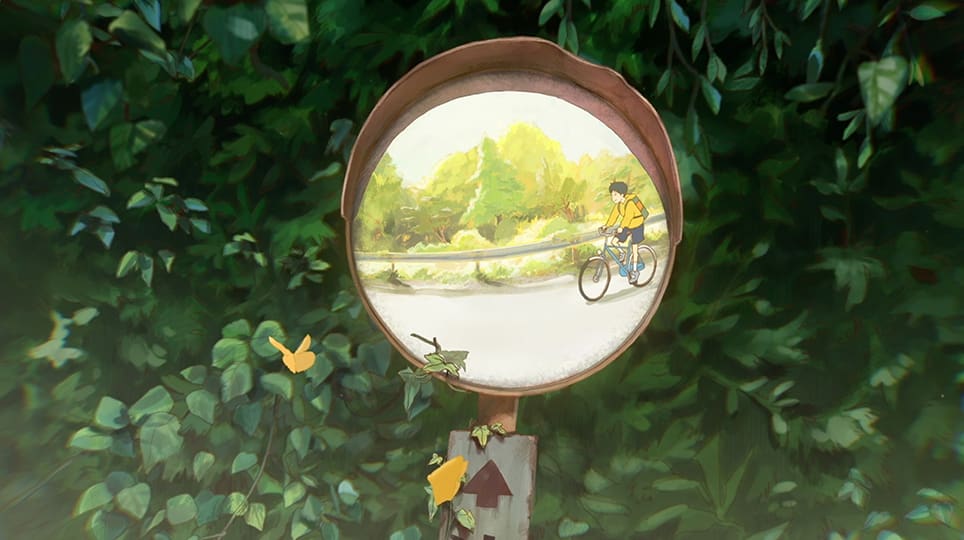
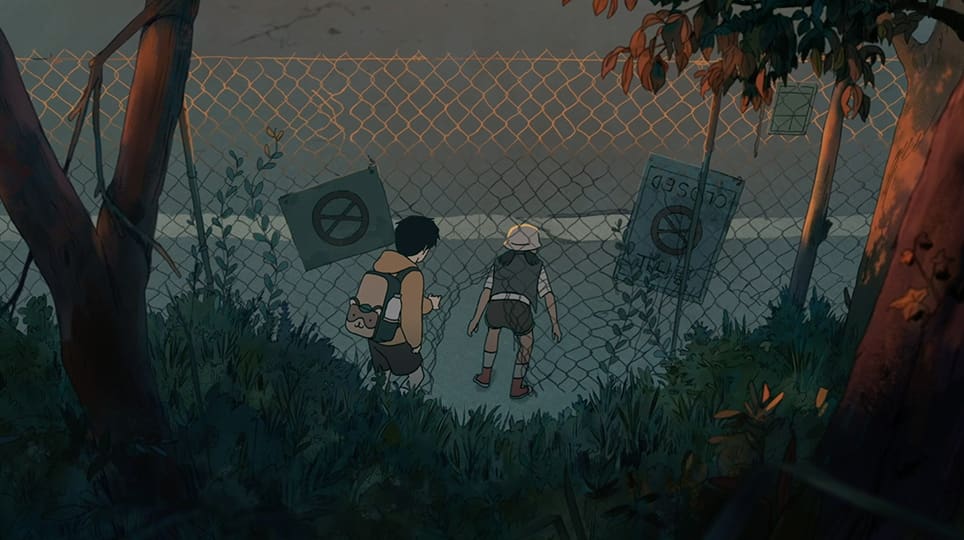
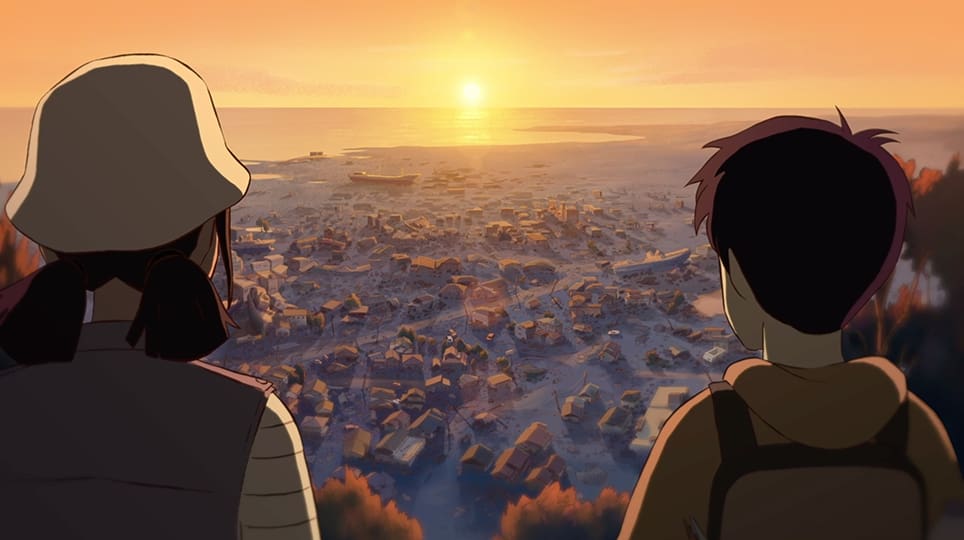
A research trip to Fukushima helped shape the film’s visual approach, which pairs bold graphic novel stylings with the dust, dense vegetation, and abandoned spaces of a region still living with the disaster’s aftermath.
Here’s a look at the film’s project trailer from Cartoon Movie 2023:
Produced by Foliascope and co-produced by Crunchyroll, the 2D feature is slated for 2028. Its long development also yielded a graphic novel by Michaël Crouzat, Laurent Galandon, and Aude Soleilhac, which the film now adapts. With the project selected for this year’s TIFFCOM, Cartoon Brew spoke with Baillet about finding the film’s own visual language, telling a Japanese story as a European filmmaker, and why making the movie means having to “kill” the comic book.
Cartoon Brew: Tell us how this project began.
François-Marc Baillet: This project began with a movie script written by Laurent Galandon. As financing animation is a long process, the decision was made to create the graphic novel with Michaël Crouzat originally attached to direct the movie. Michaël delivered the comic but left the project after making this amazing teaser in 2022. I was co-directing 2D animation on The Inventor at Foliascope, and [producer] Ilan offered me [the opportunity] to direct and become the graphic author for the feature. I’m not Japanese. I’ve never experienced an earthquake, tsunami, or nuclear accident, but I read the script, and I immediately saw a part of myself in it. I have two kids the age of the two main characters. I live 20 kilometers from a nuclear power plant, and on top of that, in 2020, during the COVID lockdown, I was not allowed to attend my grandmother’s funeral. Why didn’t I disobey like the two kids are doing? I was hooked, and yes, I had to do it!
How did your experience in the region shape the project?
As it is a relatively recent event, the triple catastrophe of Fukushima has been documented a lot. You can find documentaries, tons of pictures, testimonies, and videos from people who lived there or people who traveled into the restriction zone. It’s precious, and it’s helping a lot, but going to Fukushima was indispensable. First, we met Naoto Matsumura, the farmer who helps the kids in our story. He disobeyed for real in 2011 and stayed in the radioactive exclusion zone to take care of the abandoned animals. He is the original spark that made Laurent write the script. He shared with us the extreme loneliness he’d experienced, and he showed us his farm, his life. The week we spent in Tomioka, Namie, Futaba, and Minamisoma exposed me to this dissonance I want to put on screen in my film. Only 20% of people came back 12 years later. We visited a middle school— there used to be 600 students, and now there are just one or two classes left. You can still feel the tragedy. We also experienced radioactivity, and we kept checking the dosimeter to see if there was danger or not, exactly what the characters are experiencing in the film.
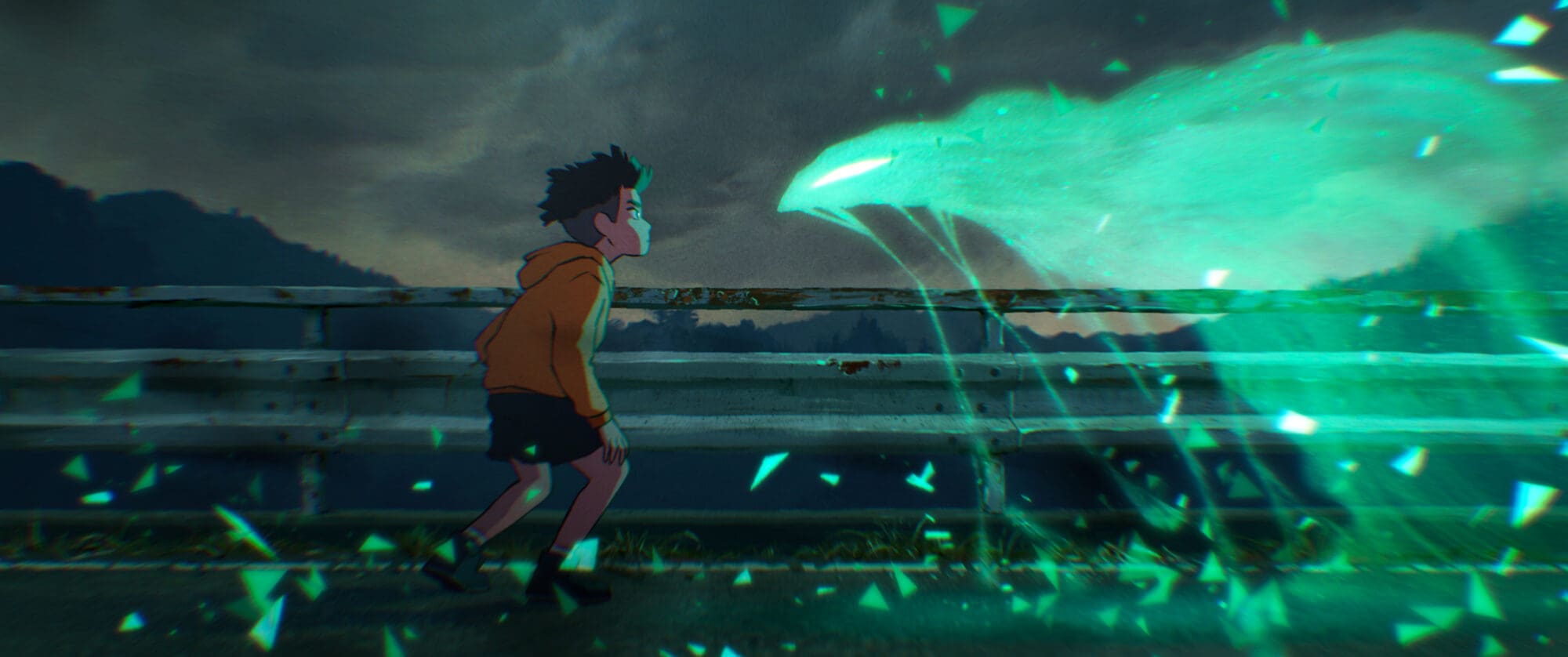
The aesthetic is shared with the graphic novel, but it’s striking how, in motion, the film has a photoreal feel.
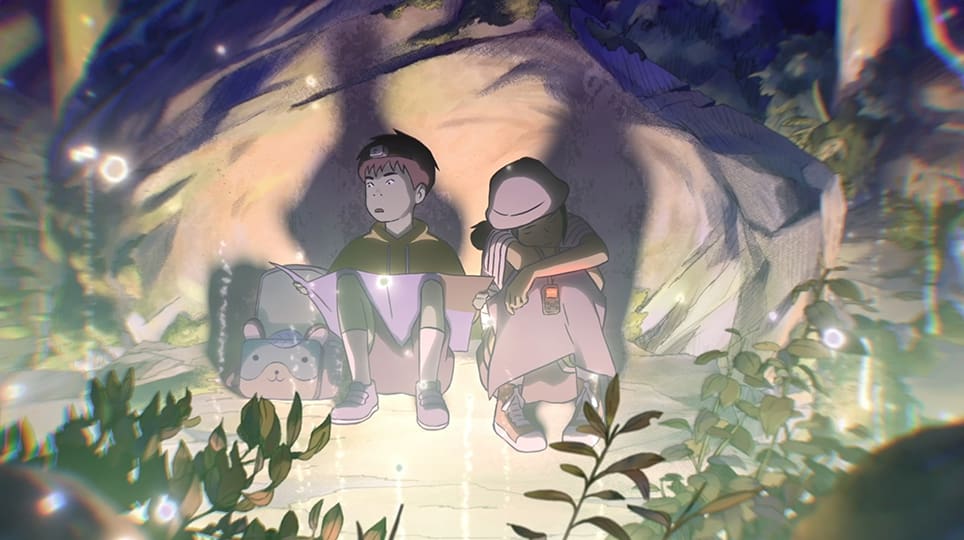
There was no rotoscoping used in the teaser, nor will there be in the movie, but I’ll keep this semirealistic kind of look that was established for the teaser. Back to Tomioka is not a documentary about a nuclear incident; it is an adventure— funny and tender. Along the way, two orphans, brother and sister torn apart by grief, slowly learn to become family again. Their fragile bond is growing back through the ruins.
I want to frame and illuminate this emotional journey using my painting and color skills to bring the audience with us. 2D animation allows you to choose what you draw and what you don’t; rotoscoping would put you in a different process. I want texture, dust, dense vegetation, and to make this world I’m [portraying] as respectful as possible to what happened there.
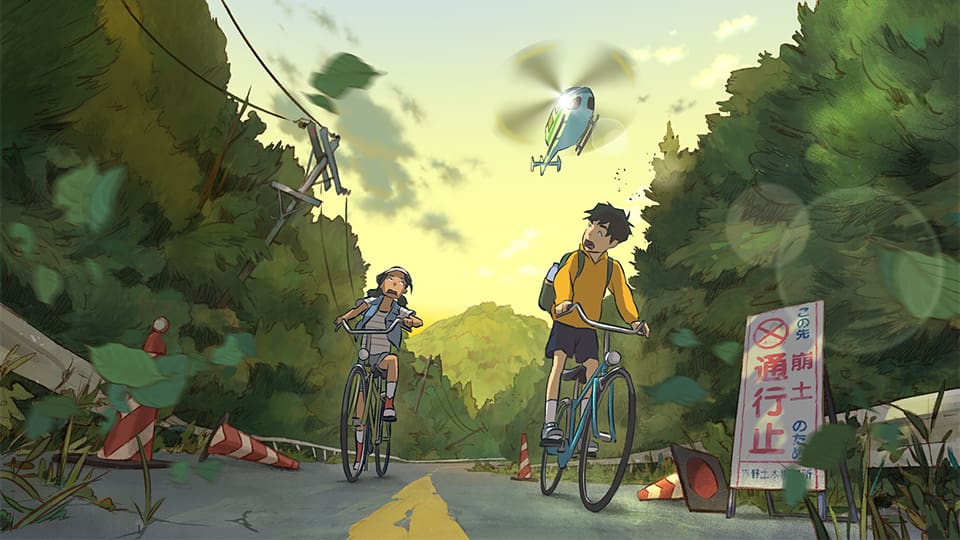
It’s striking that this is a project that takes existing illustrations with a cinematic sensibility and brings them to the screen.
One of the challenges in accepting the project was having this comic book already there. This may seem a bit violent, but you have to “kill” the comic book to make the movie happen. The comic can be read in 20 minutes— the rhythm for the audience is radically different when you sit in a movie theater. It’s a different medium, and I had to really work on that idea to create the animatic that we have now almost finished. Putting music, moving the camera, recording voices— very quickly you enter a very different experience.
Tell me about your team.
Caroline Cherrier was a great help in leading the storyboard team at the end of 2025. I continued storyboarding until recently to get the final version of the animatic. Then, yes, it’s constant collaboration, bouncing ideas around with all the artists who will be involved in this production. I studied illustration in school—I’ll take care to keep that touch for the film, but in a different way than the comic. A big part of that is happening during compositing.
What’s it been like pitching an international project with Japanese cultural roots here in Tokyo?
I wasn’t involved in the pitching myself, but I can say that we are really proud to take part in TIFFCOM in Tokyo. Ghibli and Japan took inspiration from European culture (Porco Rosso, Kiki, etc.) to create masterpieces of animation, and we were raised with this rich mix between our cultures. We are proud to enter this path and mix our cultures to tell a story that we hope will inspire the younger generation.
What are your hopes for how this film will impact and speak to international and Japanese audiences?
There is this line of dialogue at the end of the film that sums it up: “We don’t choose what happens to us, but we can choose what we want to protect.” I hope that line travels beyond Japan. Everyone has something to protect: a family, a place, a memory. And I hope parents and children can watch the film together and talk about it afterward.
For Japanese audiences, my hope is humbler. I’m not Japanese, and I know I’m telling a story about a tragedy that others lived. Empathy—trying to understand what others are experiencing—seems key in this crazy life. What I try to do is listen, read, go there, meet Naoto Matsumura and the people of the region, and stay as faithful as I can to what I saw and felt. If people from Tomioka or Fukushima watch the film and feel that their land and their story were treated with respect, that would mean more to me than anything else.