.png)

How ‘Blaise’ Evolved From An Underground French Comic Strip To A Cannes-Playing Animated Feature
Stay informed with free updates
Sign up to get our news digest — delivered directly to your inbox twice a week.
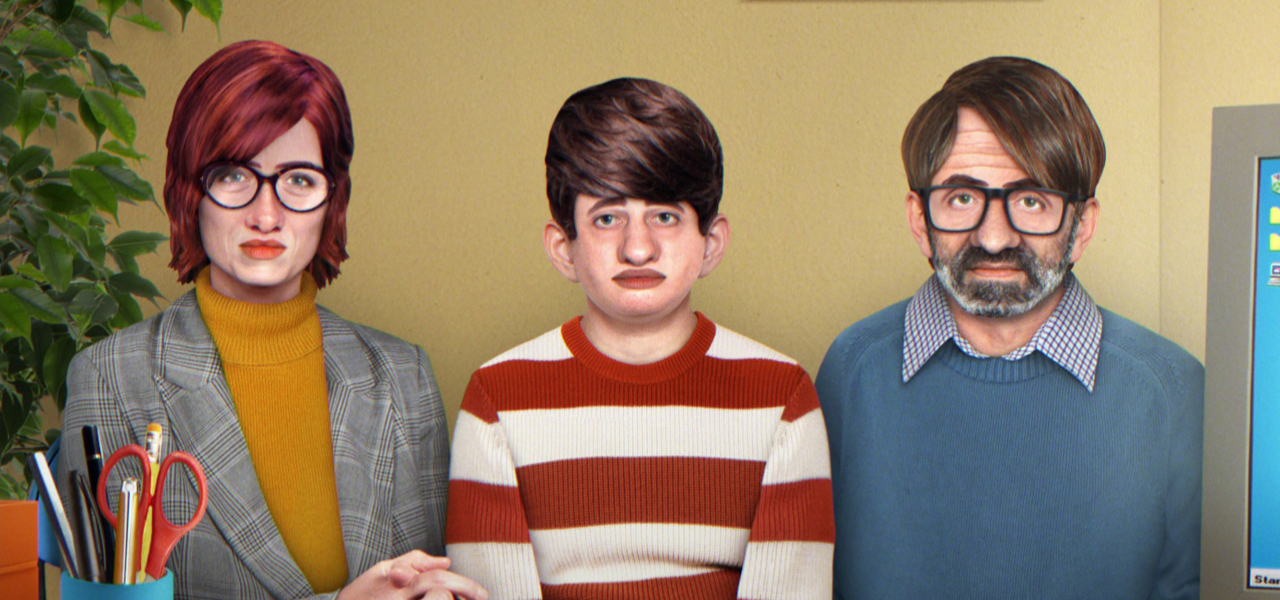
In the end, every human being just wants to be loved. At least, that appears to be at the core of the Savage family’s problems, a rather common dysfunctional Parisian family in which the only child, Blaise, struggles to find his place in the world.
Created by comic book artist Dimitri Planchon in 2009, Blaise became a 30×3-minute Arte TV series ten years ago through a successful collaboration with animator and director Jean-Paul Guigue, and today makes its big-screen debut at Cannes with the same duo as part of the ACID competition.
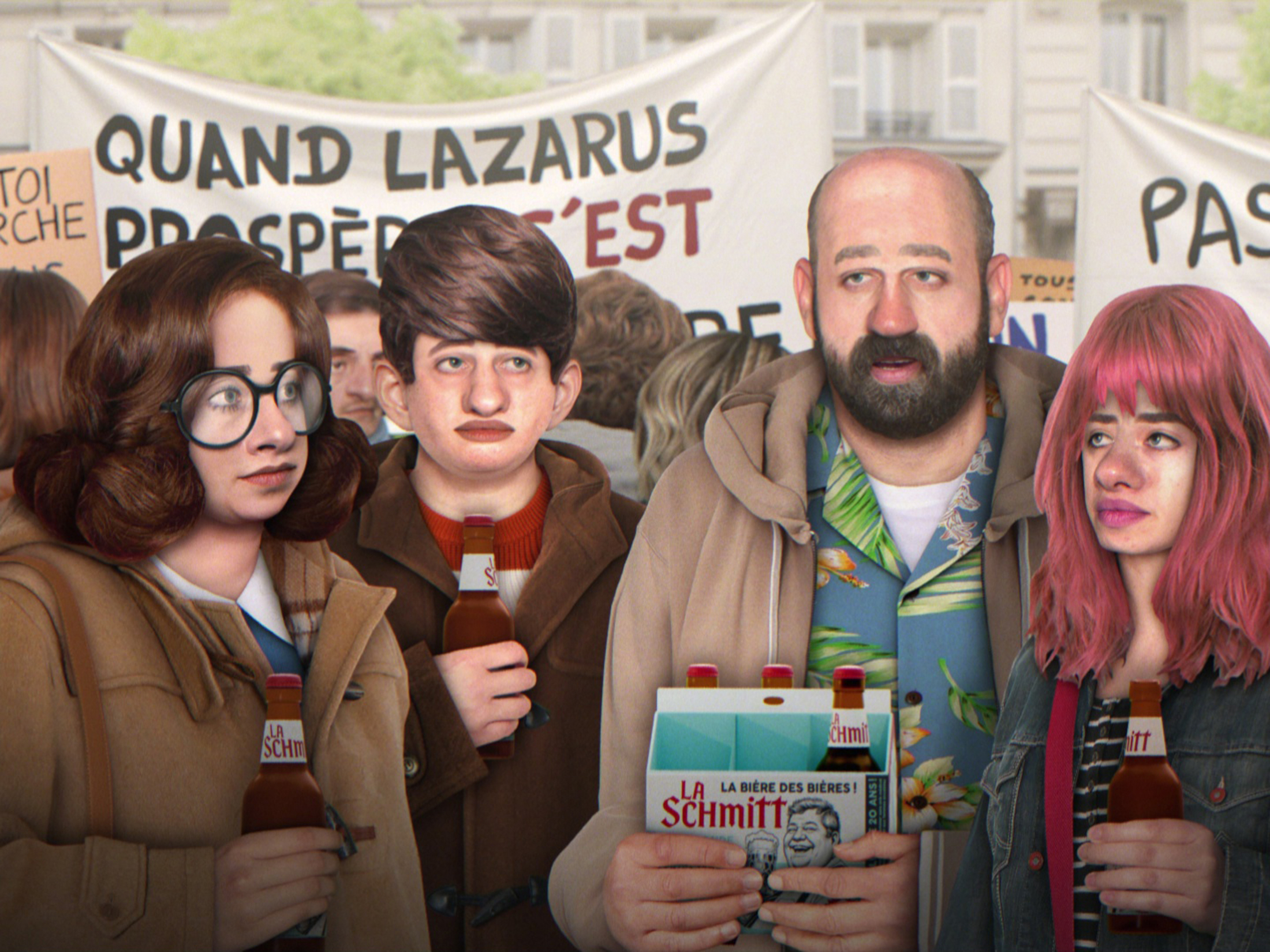
Now a 16-year-old introverted teen, Blaise is stuck between his mom, Carole, who knows her employees hate her and is determined to win them over at any cost, and his dad, Jacques, who has never worked a day in his life and doesn’t feel respected. For Blaise, who also lacks a strong personality and always goes along with everyone and agrees to everything, things start to take a strange turn when he meets Josephine. Incapable of making his own choices, he politely embarks with her on a revolutionary, violent, and completely impromptu crusade.
Ahead of Blaise’s world premiere in a packed Cannes animation program, Cartoon Brew spoke with the co-directors about reuniting for this new endeavor, taking their characters to the next step, and bridging the gap between embracing new technologies and staying true to their singular, quirky design.
Weirdness and Tinkering as DNA
For Planchon, who studied Fine Arts in Strasbourg and started his career as a comic book artist by publishing strips in the renowned French magazine Fluide Glacial, the strange and quirky approach to his characters may well have been influenced by his first encounter with animation.
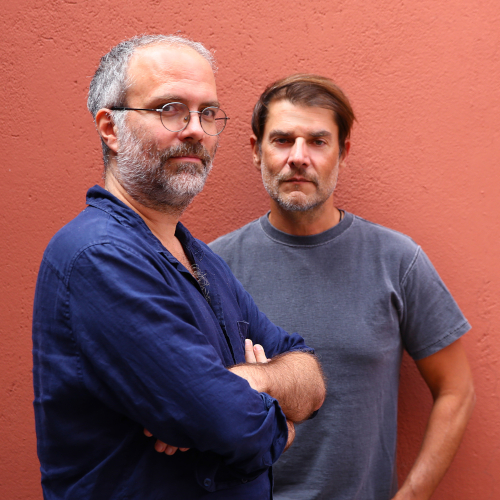
“I think the first film I saw in a cinema was Dumbo,” Planchon recalls. “At the time, my father was working with Unifrance, and he took 3-year-old me to Cannes, where we saw Dumbo on a big screen. Even though I never saw the film again, I still have vivid memories of this animated feature.”
Did this experience shape Planchon’s career? It’s difficult for him to say. But the artist can’t remember when he first started drawing.
“As a child, everyone draws. As we grow up, some of us just keep doing it. And I think it’s the same with animation.”
For Guigue, who also discovered animation as a child, the mix began with Fantasia and The Jungle Book, topped with the first few Japanese animated series exported to France. But the result was the same, and his love for the medium immediately echoed Planchon’s own interest in animation.
“I’ve been making animation for more than 30 years now,” adds Guigue, who spent most of his career working with the French studio Je Suis Bien Content. “But even so, I studied live action before developing an interest in the medium. To be honest, what attracted me was the craft and the community. The idea that one can tinker with images, blend them in magical machines called computers, and have complete control over the whole creative process to build a story was really appealing to me. But at the same time, having to work with other people and communicate in order to build something from the ground up is also an aspect of animation that I love.”
From Subconscious Impulse to Structured Narratives
Before becoming a comic book series, Blaise was born in the pages of Fluide Glacial, before turning into full-page stories in the French comics magazine L’Echo des Savanes. From there, it was picked up by Glénat, a major comic book publisher, and turned into full albums. A series followed in 2016, leading up to the animated feature premiering today.
“At the beginning of Blaise, it was more instinct than structure,” recalls Planchon. “Even when I was doing a weekly page, I went with the flow and improvised a lot. When it became albums, and again with the series, I had to dig deeper into what my dysfunctional, Freudian family was really like and build these characters’ psyches more thoroughly.”
It’s a characterization process that Planchon and Guigue took to yet another level with the feature, as Blaise grows from a 12-year-old preteen in the series to a 16-year-old adolescent in the film.
Beyond this writing process, the voice-cast recording also changed the character dynamics in the feature adaptation. Whereas the series was recorded with each comedian individually, the duo insisted on doing group sessions for the film, bringing a new theater-like tone to the dialogue. For this dialogue-driven feature, in which misunderstandings play such a strong role, it felt like an obvious choice.
Guigue explains: “It’s almost a radio performance. I had previous experiences in the U.K. where we used such a recording process, and it brings a whole new level of complexity to the mix. Having five or six comedians firing lines at one another also invites those tiny accidents that create the flavor and intensity of our film.”
Old Is Gold
After trying many different approaches to adapting Planchon’s style, the duo eventually decided to stick with the original 2D look and feel they had crafted for the 2016 TV series. (The trailer below is from the 2016 series, not the new feature, which hasn’t got a trailer of its own yet.)
“It just felt more natural. The staging we had developed was already to our taste, and our producer at KG Productions, Alexandre Gavras, felt the same way. It was an artistic choice that matched our tone, and bringing full 3D shots into the mix felt out of place.”
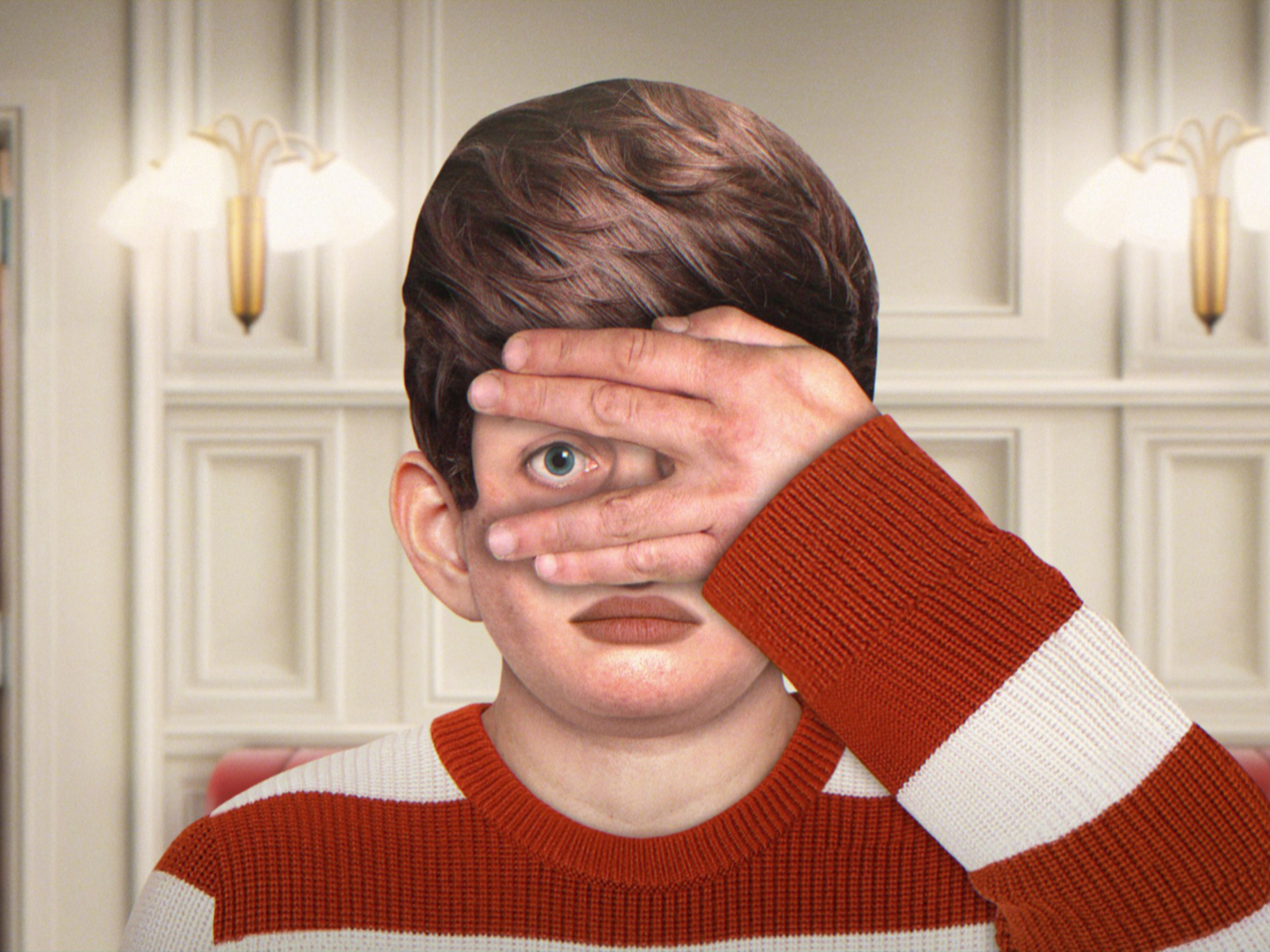
With many artists returning from the series, the team did optimize its workflow. A new photo studio was set up in order to create specific characters, backgrounds, and props. By blending costumes, body parts, and settings, the duo brought a fresh tone to their quirky universe while staying true to their roots.
“Even in terms of software, we didn’t change that much. Our film was made mostly in After Effects, with Storyboard Pro, Photoshop, and Premiere as our main editing and production tools. Our budget and team didn’t grow that much either, but it allowed us to stay very connected to the work and to each other. As directors, we had our hands on the wheel from beginning to end, and we would not have wished it any other way. Of course, it means more work, but being able to push our designs and tinker with every detail is something we love and enjoy.”
Between Political Satire and Tenderness
In a little more than 80 minutes, Blaise charms with its unconventional, deeply French protagonists. As the film prepares to meet its first audience, Planchon and Guigue have had little time to reflect on their Cannes selection.
“To be honest, we didn’t really have a break. We were putting the final additions to the credits in place only a few days ago. On one hand, it’s great that the film is being appreciated. But on the other, it’s also very frightening. After Cannes, a small holiday is in order. But after that, we have more ideas to bring to the table.”
After all, concludes Planchon, “I wouldn’t know what else to do.”