.png)

‘Spit And Duct Tape And Dreams’: How A Small Global Team Built The Queer CG Feature ‘Bouchra,’ Premiering In Toronto
Stay informed with free updates
Sign up to get our news digest — delivered directly to your inbox twice a week.
When Bouchra premieres at the Toronto International Film Festival tonight, it will do so as Morocco’s first animated feature. That milestone alone makes it a landmark in the country’s cinema history, and its debut on one of the world’s largest festival stages signals how far-reaching the project’s ambitions are.
The film is also distinctive for the kind of story it tells and the way it is told. At its center is a queer, immigrant narrative, voiced in Moroccan Arabic, French, and English, about creativity, family, and love.
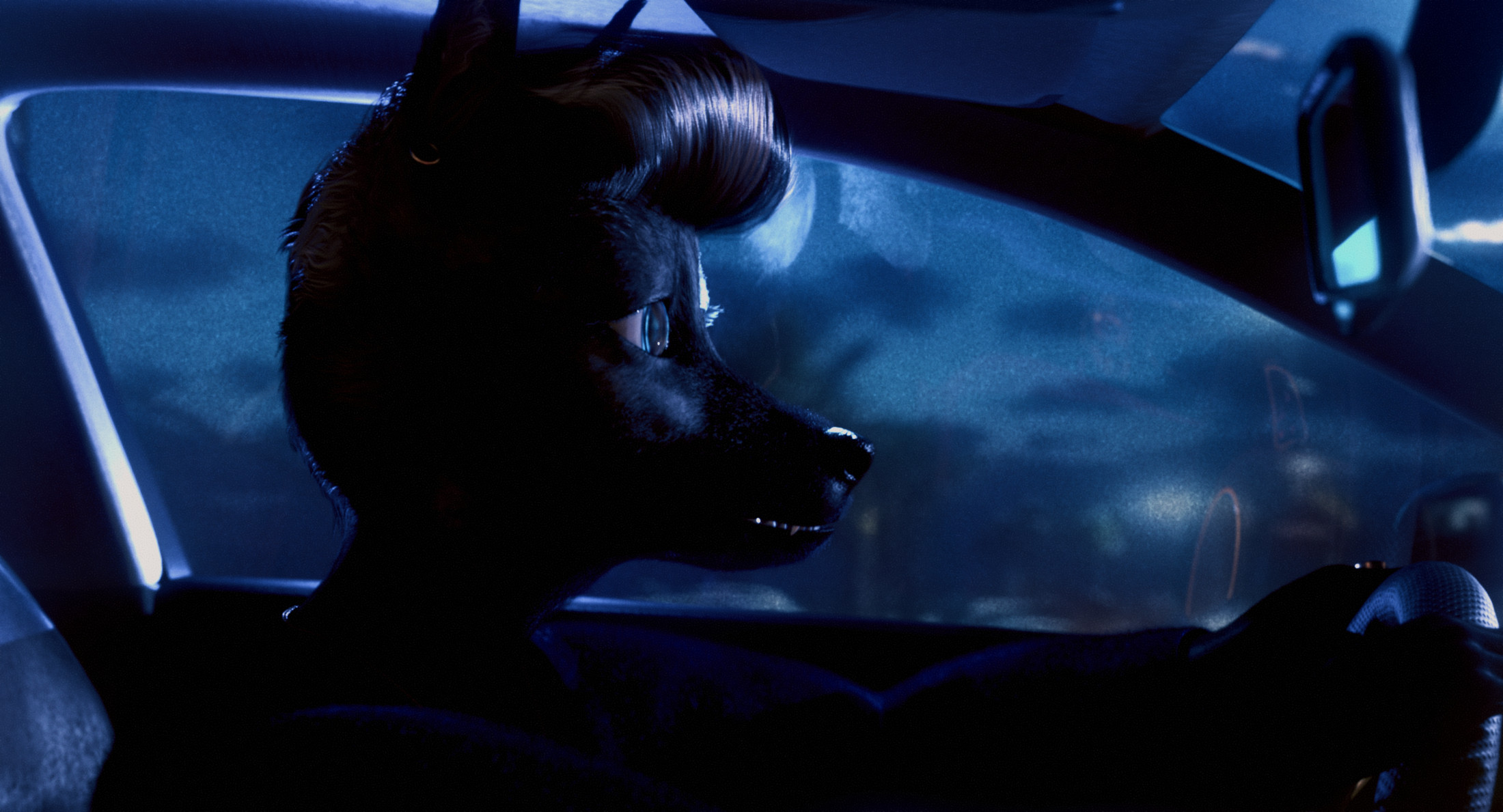
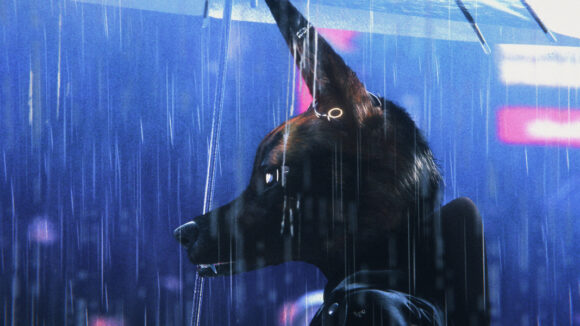
Its characters are anthropomorphized animals, not rendered in a cartoony style, nor pushed toward photorealism, but designed with a grounded, textural realism that gives the world an authentic presence that feels immediately identifiable to anyone who has lived in a metropolitan city. That visual approach, paired with the intimacy of the story, sets Bouchra apart from much of today’s CGI animated fare.
Produced by a small team spread across Morocco, Italy, and the United States, the film was hand-crafted through a mix of personal storytelling, DIY animation techniques, and plenty of Blender hacks.
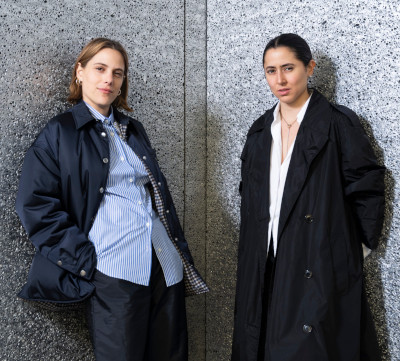
The semi-autobiographical film was written and directed by artist-filmmakers Meriem Bennani and Orian Barki, the duo behind the acclaimed pandemic shorts series 2 Lizards. Produced by 2 Lizards and financed by Fondazione Prada, it follows Bouchra, a Moroccan filmmaker in New York, facing the fear of the blank page. A phone call with her mother in Casablanca brings long-suppressed memories to the surface, reshaping her understanding of family, creativity, and love.
From Pandemic Shorts to Feature
The film’s core creative team first collaborated on 2 Lizards, the pandemic-era shorts series. “Miriam and I had known each other through mutual friends for like years… we did like a small collaboration for this company called Telfar… and then I guess a year or so later, I got an email from Miriam saying that they were wanting to make a movie and to see if we wanted to join up,” recalled creative producer John Michael Boling.
For Bennani, the move from short form to a full narrative feature was partly instinct, partly timing. “We had a deadline, and we had a set budget, and we were maybe blissfully ignorant… we didn’t realize like this would be so much work. So we just, we just went for it, I guess.”
The production maintained a modest footprint when it came to collaborators. “The four of us formed the core team, and then there were some people who would come to do some specific modeling and stuff, but it’s still under 20 total,” said Bennani.
“Everyone was just kind of like standing in for like five people. So, you know, it’s kind of like the four of us is 20 people,” Barki added.
Stretching Blender
Much of the work depended on resourcefulness. “What happened, even if what ended up on the screen has a higher production value, is that… a lot of what you do is hack Blender,” said Bennani. “You make it look super expensive, but with your own techniques.”
Boling explained: “We were all sort of intentionally blissfully ignorant. You kind of forget how hard it is, just so you’ll get far enough into it to actually do it, but so you don’t give up… Jason and I have been working in DIY animation for 10 years, so we’ve built a bunch of weird little tricks and hacks. How can you actually make it happen with just, you know, four or five gaming computers and like just spit and duct tape and dreams?”
Creative producer Jason Coombs described the production’s improvisational feel: “Every shot… it really felt like an indie film where you’re building specific props, you’re building specific sets, you’re cutting holes, you’re just doing what works for the shot instead of the proper pipelines that animation students would normally use. Once you get moving, you just keep that momentum and don’t look back.”

Almost Autobiographical
“This is extremely close to my own story,” Bennani admitted. “Also, the character is voiced by me. So there’s no, like, even pretending that it’s not me.”
She explained how a key narrative thread emerged during development: “The phone calls with the mom are real phone calls that I’ve had with my mom in the process… ’cause we felt in the script something was missing. And then when Orian heard these phone calls… we were just like, whoa. Like this is so much more powerful than anything we wrote.”
Barki recalled overhearing those calls: “The phone calls actually started as research. Meriem was like, ‘I’m gonna call my mom and we’ll have more materials…’ and then we were sitting together and she was translating to me live. And I was like, wait, ‘Miriam, these phone calls are like, they need to exist in the movie just the way they are.’”
That vulnerability reshaped the balance of the story. “The more personal it got, the easier for us it was to add fictional stuff,” Barki said. “Because it was like, oh, now we have the center of it. We have the grounding force of it, so we can be playful.”

Animating Anthropomorphized Animals
Another defining choice was to use animals instead of human figures. “Miriam designed, drew all these characters, and a lot of them were based on… family members,” said Coombs. “I was super, super stoked… I come from a wildlife background and love animals, and also as an animator, naturally love anthropomorphic animation… I feel like one of the most magical things for me about the movie was the way the characters really did emerge from just everybody’s input.”
Boling added: “The newest thing that we did for this was figuring out hair and how to do it cheaply, but that was still expressive, which took some time, but I think we did a good job with it.”

Morocco’s First Animated Feature
For Bennani, the film’s place in national cinema history is significant: “The fact that it’s probably the first animated feature film in Morocco that’s ever been made is so important because it shows animation can be accessible to, for lack of a better term, the global south.”
“There’s something about the right to use your imagination and to just be stuck to social drama when you tell stories that don’t come from Europe or North America,” she added.
That milestone gives Bouchra a special place in Moroccan film history. And for the small, nimble team behind it, the project demonstrates what can emerge when independent artists push Blender, and themselves, to their limits.