.png)
‘Cherry And Virgin’ Director Masanao Kawajiri On Rotoscoping Sex And The Emotions That Come With It
Stay informed with free updates
Sign up to get our news digest — delivered directly to your inbox twice a week.
Ryo (Takashi Okado) is a successful author and illustrator of erotic manga. His outlandish, steamy scenarios are pure fantasy, as Ryo has never actually had sex. Ami (Risa Hinami) is a commercial illustrator and boys’ love fanatic. She’s never had sex either. Resolving to make a change in their lives, they each download a dating app and soon come together. Before their climax, there’s plenty of oversharing, introspection, and cold feet, all illustrated and expressed through unconventional and eye-catching art and animation.
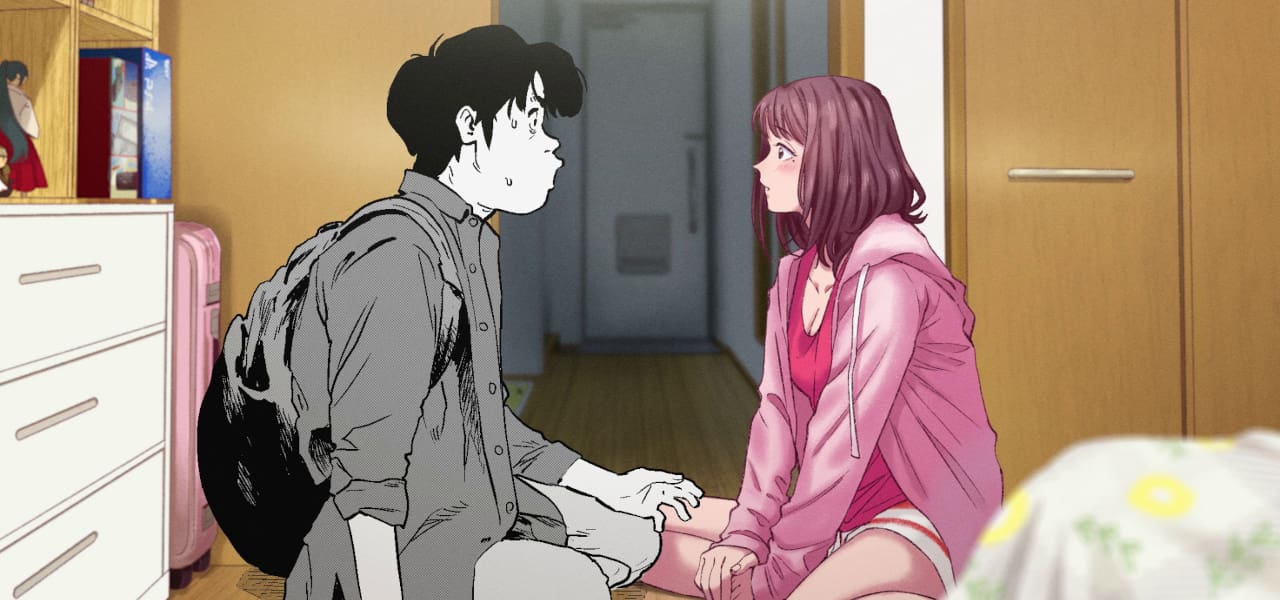
Cherry and Virgin is director Masanao Kawajiri’s first time, too, as a feature filmmaker. His film fuses manga panel-style illustrations with rotoscoped performances as its formal foundation, layering on bursts of color, stylistically varied character designs, and metatextual nods to artist and audience. Crowdfunded by Toei in 2021, Kawajiri’s film is a long-in-the-works, truly independent production that has been given a large platform.
There’s something remarkably profound in how the film’s form synergizes with its subject matter. Cherry and Virgin paints a raw and real portrait of complex human sexuality through abstracted manga art styles, which are more typically associated with unrealistic depictions of sex. As the couple gets to know each other, their character designs are drawn and undrawn on screen in each other’s idealized image; they color in and empty out into manga outlines. Kawajiri’s poignant debut understands that, in relationships, we continuously deconstruct and reconstruct ourselves and each other.
Following Cherry and Virgin’s world premiere at Fantasia Festival, Cartoon Brew sat down with Kawajiri and lead actor Takashi Okado to discuss their film’s kaleidoscopic approach to its sensitive and subjective topic.
Cartoon Brew: Kawajiri-san, you first appeared at Fantasia in 2019 with a short film, A Japanese Boy Who Draws. Tell me about that film and how it led to this feature.
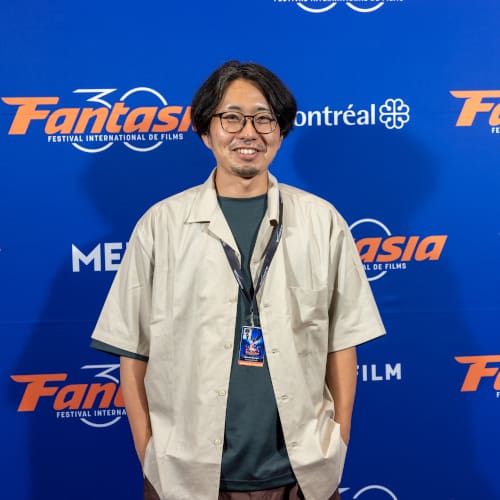
Masanao Kawajiri: I wasn’t able to attend seven years ago. I was finally able to make it this year. I was surprised by how many people here understand what otaku culture is. It was shocking for me, in a good way.
Did you draw inspiration from other stories that tell unconventional love stories from unusual perspectives? Densha Otoko (Train Man), of course, comes to mind, but also Moyoco Anno’s manga works. I’d love to hear who and what influenced you in your approach, both narratively and stylistically.
Kawajiri: In regard to this film, I was influenced by Before Sunrise, Punch-Drunk Love, Ghost in the Shell 2: Innocence, and When Harry Met Sally.
This project was in development for a long time. You benefited from a period of crowdfunding. Could you tell me about the lengthy development process and the milestones that the project hit along the way?
Kawajiri: We began with the scenario. We turned to rotoscoping to capture the character movements on screen. Then the pandemic happened, which made the process so much longer than it could have been. As a result, we recruited collaborators directly from the internet and an established mangaka as our character designer.
There were several moments during the process when I was wondering if we would ever be done with it, but thanks to everybody’s help, we were able to finish. It was a huge relief. I’m really happy that the film turned out looking like an independent feature with an independent art style in the end.
Okado-san, did the fact that your performance would be rotoscoped influence the approach you took when you were performing in live-action?
Takashi Okado: I wouldn’t say it changed my performance, but I was surprised by just how difficult live-action performance is to film for rotoscoping. Actors naturally move around a lot, but for rotoscoping I had to find exactly the right balance between moving naturalistically and not moving too much, because too much movement can confuse the rotoscoping and make for a weird and unnatural result. It was fun to learn!
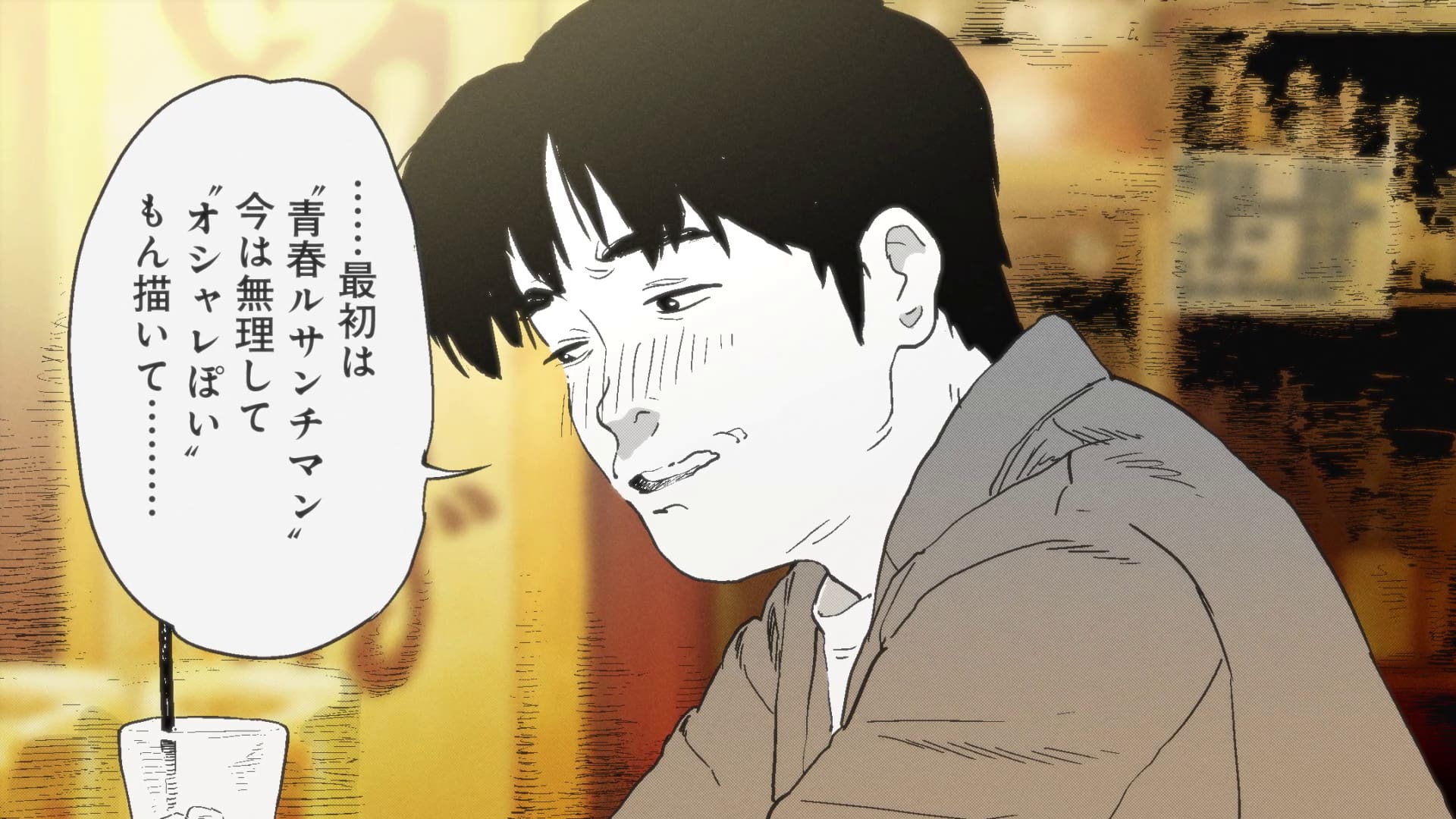
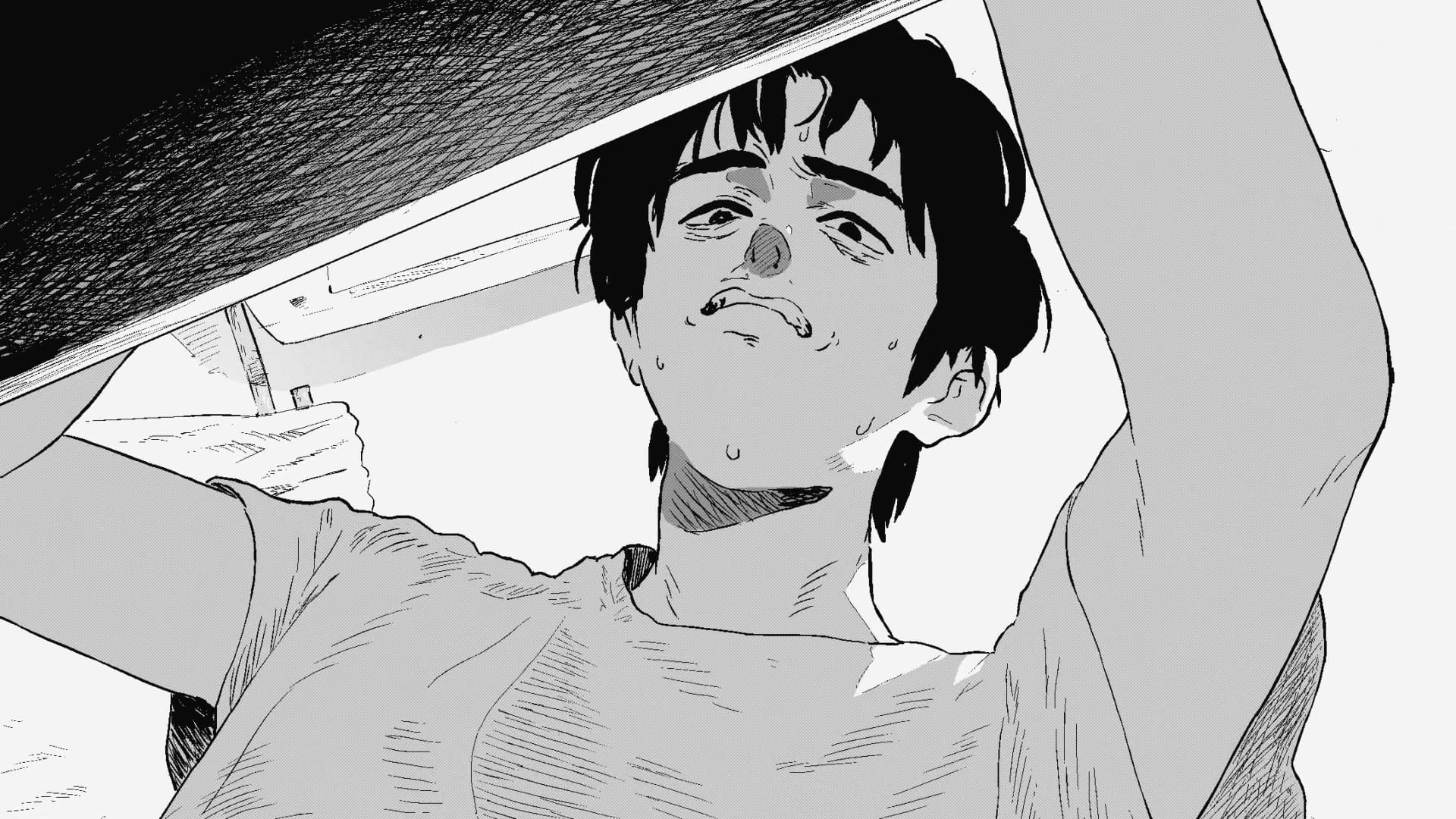
Kawajiri: I really wanted to avoid the overly smooth and fluid look that rotoscoping tends to have. I wanted it to be more anime-like. We had the animators select drawings together with the time sheets and superimpose them in a way that would make it look fluid. That took them a lot of time. It was impressive.
Kawajiri-san, tell me about combining such a variety of different art styles and how you achieved that technically. She resembles a josei manga style; he resembles a seinen manga style. She’s in color; he’s in black and white. Ryo’s fellow otaku are even rendered in three dimensions and, seemingly, at different frame rates.
Kawajiri: Yeah, the style was all over the place. If this was a normal anime, you’d have one person working on one take, right? But in our case, we had multiple people working on each take. So there was a lot of coordination to do.
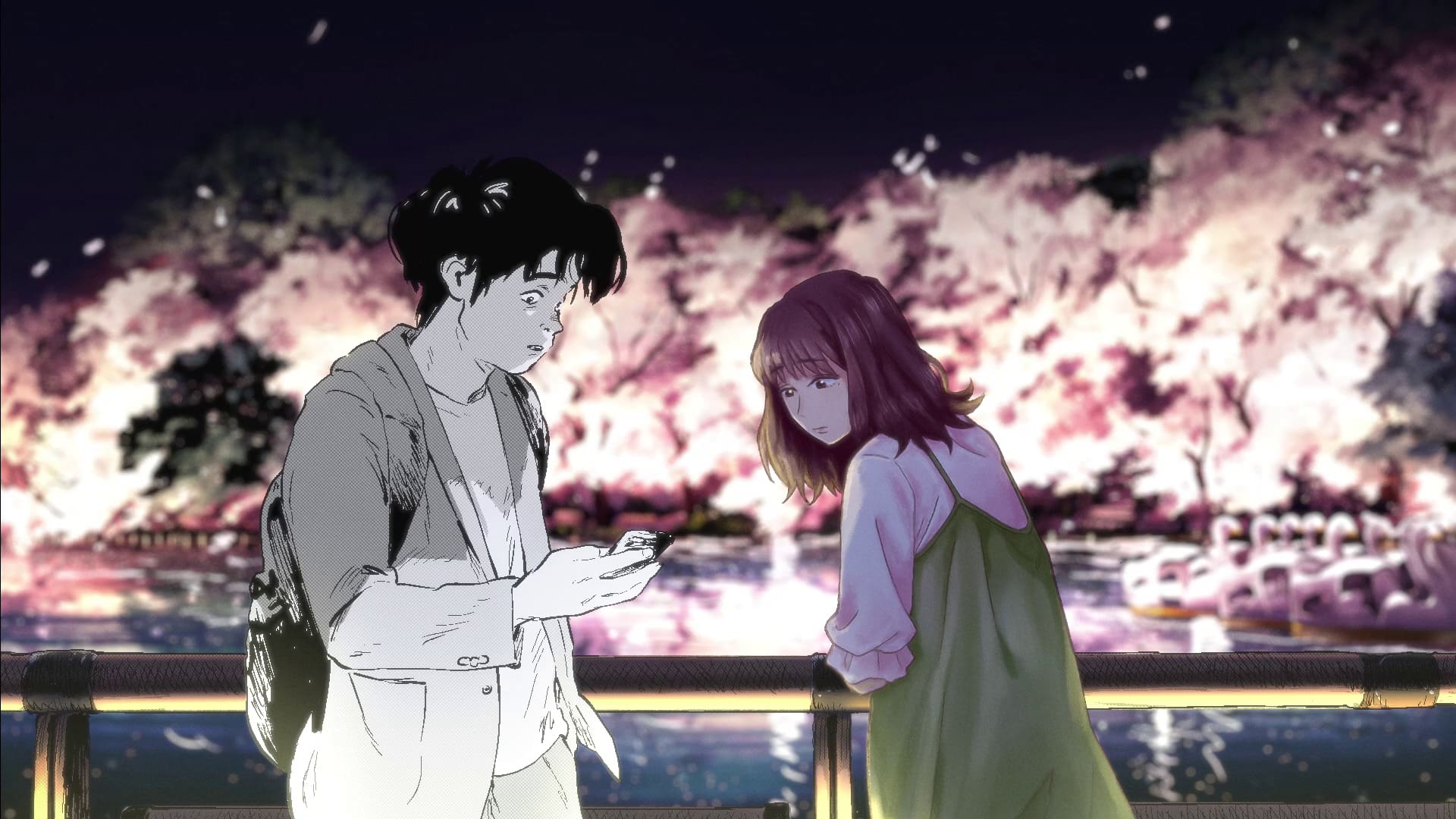
Could you elaborate on what software you used and how you incorporated all these different elements together into one frame?
Kawajiri: We worked with a tool that’s available for hobbyist use, Clip Studio. It’s a Japanese product. We used it for the initial materials and in post-production. As for the CG, we achieved that through motion capture in VTube Studio. The facial performance of that character is actually me!
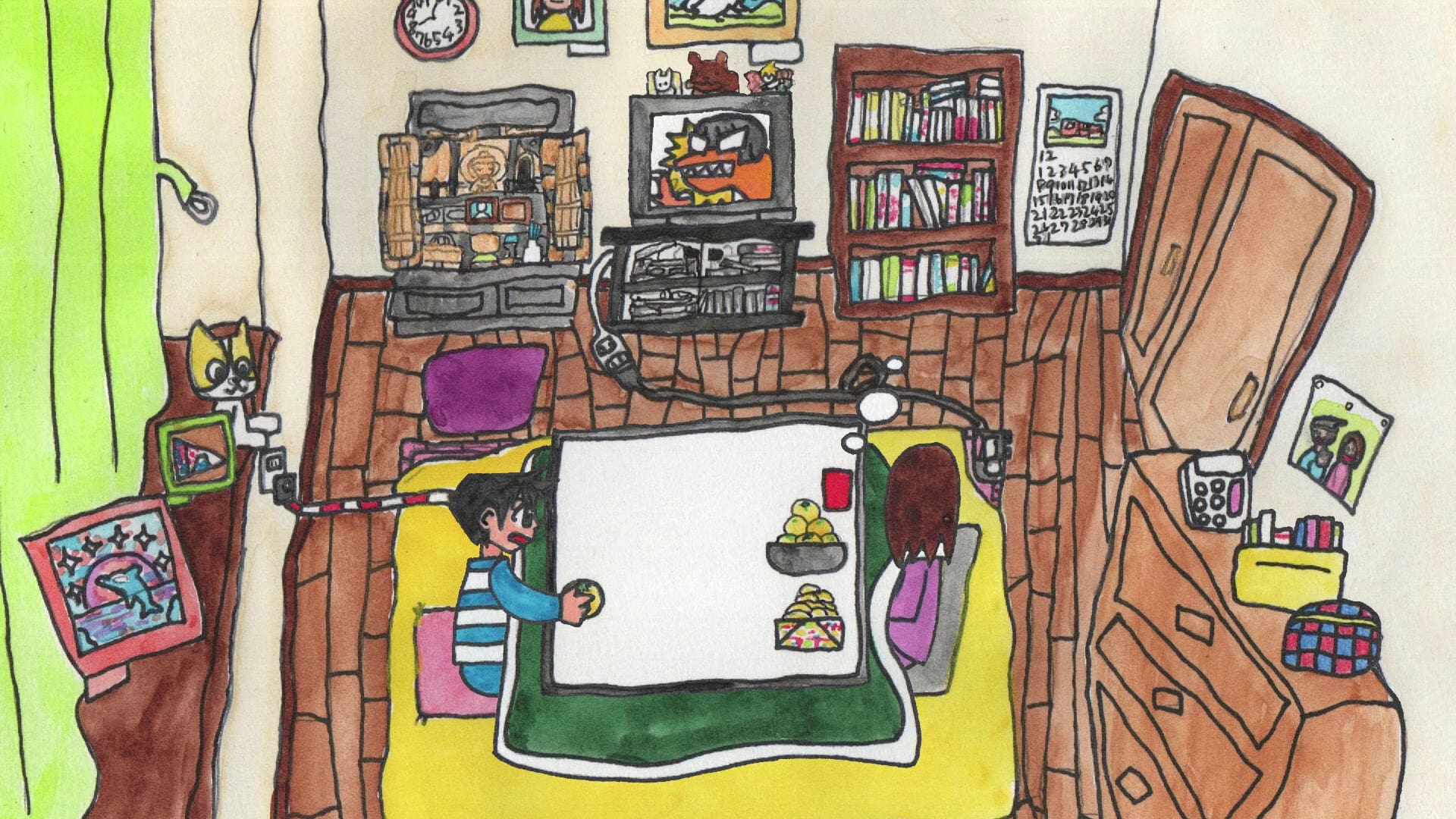
The cutaways to sequences resembling kids’ drawings are equally profound. I presume these can be traced back to your earlier short film. There seems to be a sensitive understanding in your filmmaking of how our formative experiences shape us as adults.
Kawajiri: This is a love story, and so there needed to be a progression to show how the characters evolved. It was important for the progression in their personal experiences of romance to be reflected in the film’s animation style.
I love these pivotal moments between the two of them and how they create a ripple effect on the environments surrounding the characters. When they kiss for the first time, their character designs’ art styles swap places. When their eyes first meet, seated next to each other in the cinema, the background gets colored in through a time-lapse sequence; we even see your software cursor on the screen doing that work.
Kawajiri: I’ll tell you the motivation behind that. There’s a word in Japanese that roughly translates to the fact of seeing each other as sexual partners (seiteki taishō). It’s not used anymore; it’s kind of derogatory. But what I wanted to express with that idea is how the heroine and hero come to see each other as sexual partners, and consequently have their own representation of the other. That translates into the way that the world around them changes and how they see it. This was my artistic expression of that.
When you make a film like this, you’re eventually, inevitably, going to have a sex scene. I’m curious as to how you approached directing it and whether the scene was rotoscoped as well.
Kawajiri: Yes, we did achieve that scene through rotoscoping. We covered their fronts so that the actors’ genitals wouldn’t be shown. Our goal was to meet classification requirements such that school-age children could see the film. I really didn’t want it to be restricted to the adult category. I once heard Satoshi Kon say in an audio commentary that he almost fell into this trap. There was a scene where bodies were impacting each other repeatedly, pistoning against each other, and that’s what shifted the rating. So that was something that I tried to avoid in this film. Basically, if only one body was impacting the other, one-sidedly, that was deemed okay.
There was another film that I drew inspiration from for that sequence: Out of Sight by Steven Soderbergh. There’s a scene in that film where sex is happening, but it’s intercut with the characters sitting together at a bar, and that makes it okay as well. So I used techniques from both of these films to make sure that I could show something as raw as I wanted, without falling into the trap of the adult classification.
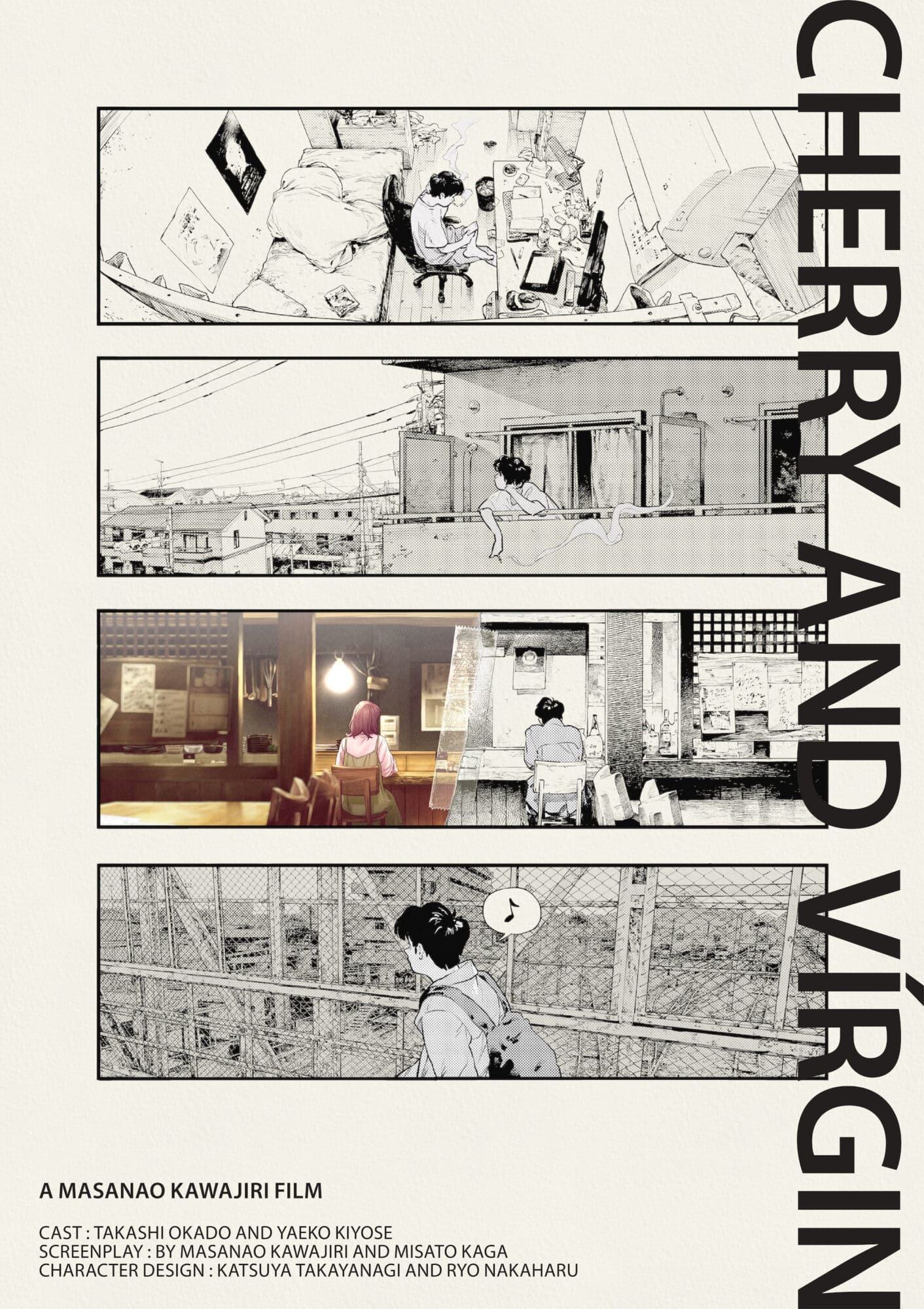
Cherry and Virgin premiered at the Fantasia International Film Festival on July 18. Thanks to Alexe Frédéric Migneault for interpreting.