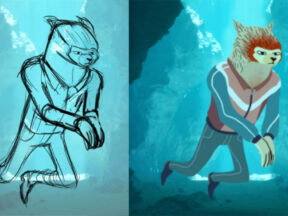
.png)


How Animation Captured The Magical Realism Of Emi Martínez’s Childhood Memories In Netflix Doc
Stay informed with free updates
Sign up to get our news digest — delivered directly to your inbox twice a week.
Netflix recently debuted Emi Martínez: The Kid Who Stops Time, a new hybrid documentary about Argentina’s World Cup-winning shot-stopper, just in time for this year’s World Cup.
The film, which chronicles the rise of Emiliano “Dibu” Martínez, skipped the traditional documentary formats and opted for something a bit more animated. There are still plenty of interviews, match highlights, and archival footage, but director Gustavo Cova and his team built something far more dynamic for one of soccer’s most dynamic personalities: a hybrid feature that uses hand-crafted 2D animation to transform Martínez’s childhood memories into a magical-realist coming-of-age story. It’s deeply hand-made and deeply Argentine in format and execution.
The project grew from an idea by writer Hernán Casciari, who imagined a fantastical version of Martínez’s youth. Cartoonist Ricardo Siri, better known as Liniers, joined the project early, and his distinctive illustrations became the foundation of the film’s animated sequences.

For Cova, “The biggest challenge of this project was trying to make a film that was completely different from anything conventional.” He told us, “We wanted to tell the story of Emiliano Martínez’s childhood, his resilience, and everything that led him to become the best goalkeeper in the world and win the World Cup. But we wanted to tell it from another place, not as a classic documentary.”
That decision led the filmmakers toward an unusual blend of documentary and fantasy. A magical realism that has long been a narrative tradition in South America, which has recently caught on in the mainstream thanks to films like Encanto and Netflix’s hugely ambitious Colombian live-action series 100 Years of Solitude, and Prime Video’s The House of the Spirits, among others.
Rather than using animation as a supplementary device, as has been done plenty of times in other documentaries, the animated sequences become the primary vehicle for exploring memory, emotion, and childhood imagination.
“We ended up with a very unique film,” Cova explained. “It isn’t really a documentary. It’s a tale told through testimonies and animation. The animation carries the narrative.”
It’s worth pointing out that those who worked on the series chose animation to revisit Martinez’s childhood, not because animation was seen as a medium for kids, but because the art form allowed them to portray the faults and virtues of memory in ways live-action could never achieve.
“I’ve always used animation as a technique for telling stories,” Cova said. “Not as a children’s medium, but as another tool that lets you show a story from a place that live action can’t access.”
That philosophy shaped every aspect of the film’s animated half. The story introduces a talking football that embodies Martínez’s fears and self-doubt and imagines a magical switch hidden in his body that allows him to stop time. These ideas are not presented as literal events but as expressions of childhood psychology. They would look ridiculous in live action, but fit perfectly into the magical way Martinez remembers his youth.
“When you’re a child, fantasy and reality are mixed together all the time,” Cova said. “Our memories are also mixed with the fantasies we had at that moment. We thought it was fascinating to play with that.”
The director describes the talking ball as both Martínez’s conscience and his fears, constantly reminding him of what he might never become. The ability to stop time functions as a metaphor for the extraordinary reflexes that would later make him one of football’s elite goalkeepers.
Regarding design, the film’s animation is equally rooted in personal expression. Rather than chasing the polished aesthetics that dominate contemporary animation on most major streamers, the production sought to preserve the handmade qualities of Liniers’ paper-bound cartoon artwork.
“Liniers works in a very artisanal way,” Cova said. “He draws on paper with ink and watercolors. His illustrations aren’t digital at all. We wanted to bring that same concept into the animation.”
The result is a feature animated in traditional 2D, with watercolor-inspired textures and backgrounds that closely echo the artist’s original illustrations.

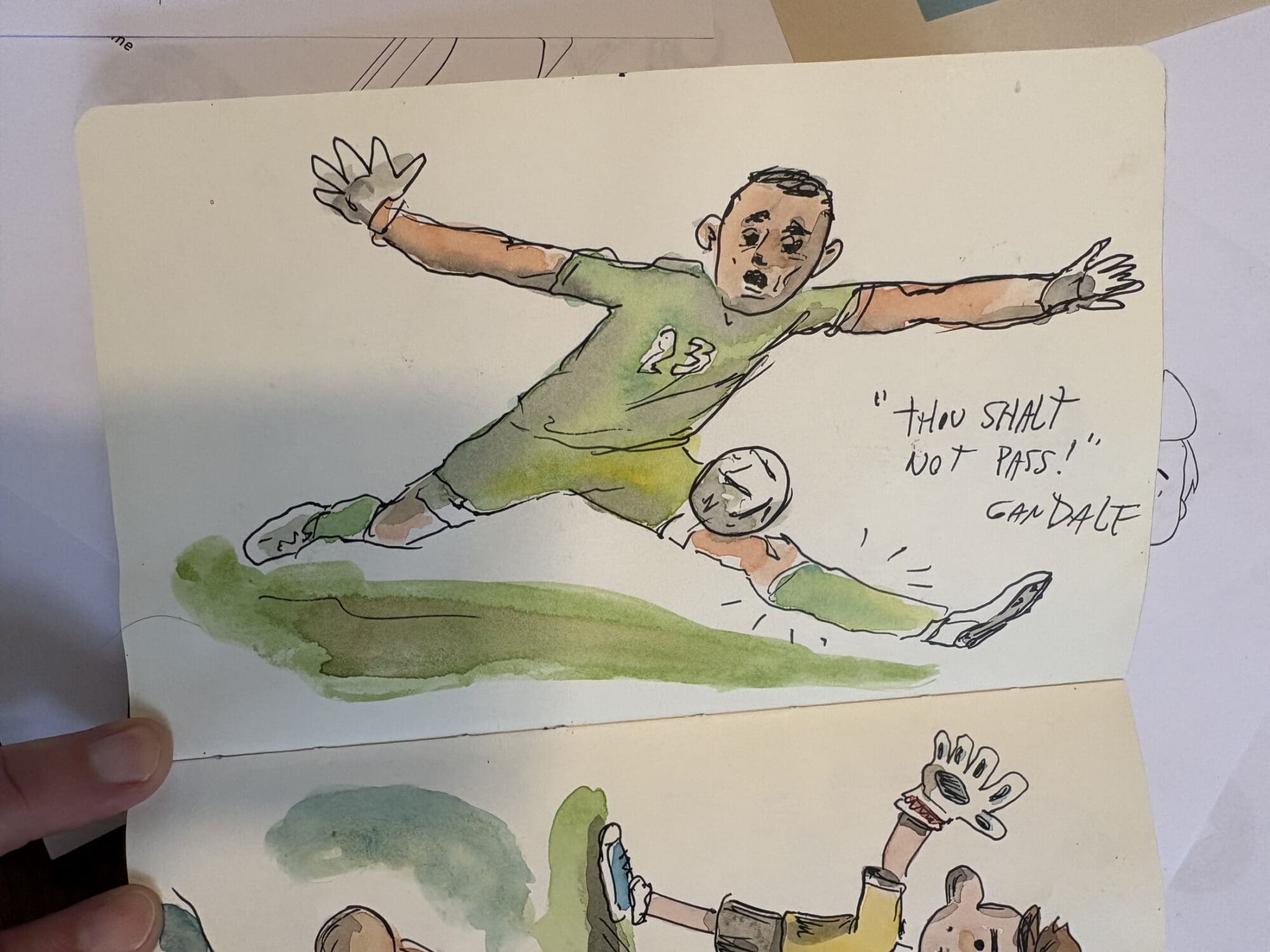
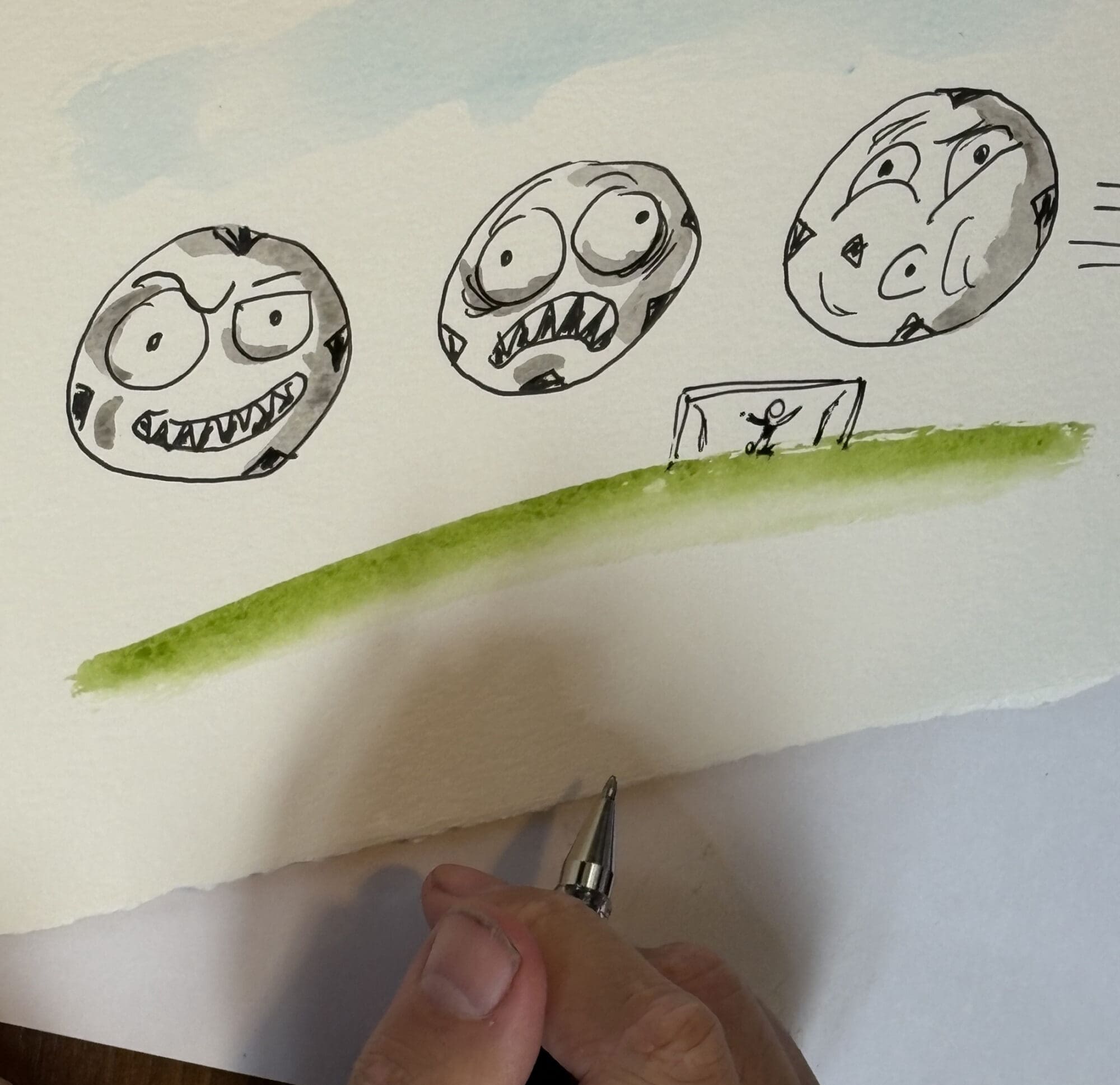
Adapting those illustrations to the screen required close collaboration between Cova, Liniers, and the Buenos Aires-based studio Hook Up Animation, which helped translate the cartoonist’s distinctive pen-and-ink-and-watercolor artwork into movement while preserving the handmade qualities that define his illustrations.
“Our film looks very different from most cartoons, anime, or 3D productions,” Cova said. “It’s very traditional 2D animation. We applied textures and built the backgrounds using Liniers’ watercolor style, always respecting his artwork.”
“We were very careful,” he went on. “The animation is frame-by-frame. The line isn’t perfect. The line breaks. It vibrates because from one frame to the next, it isn’t exactly the same.”

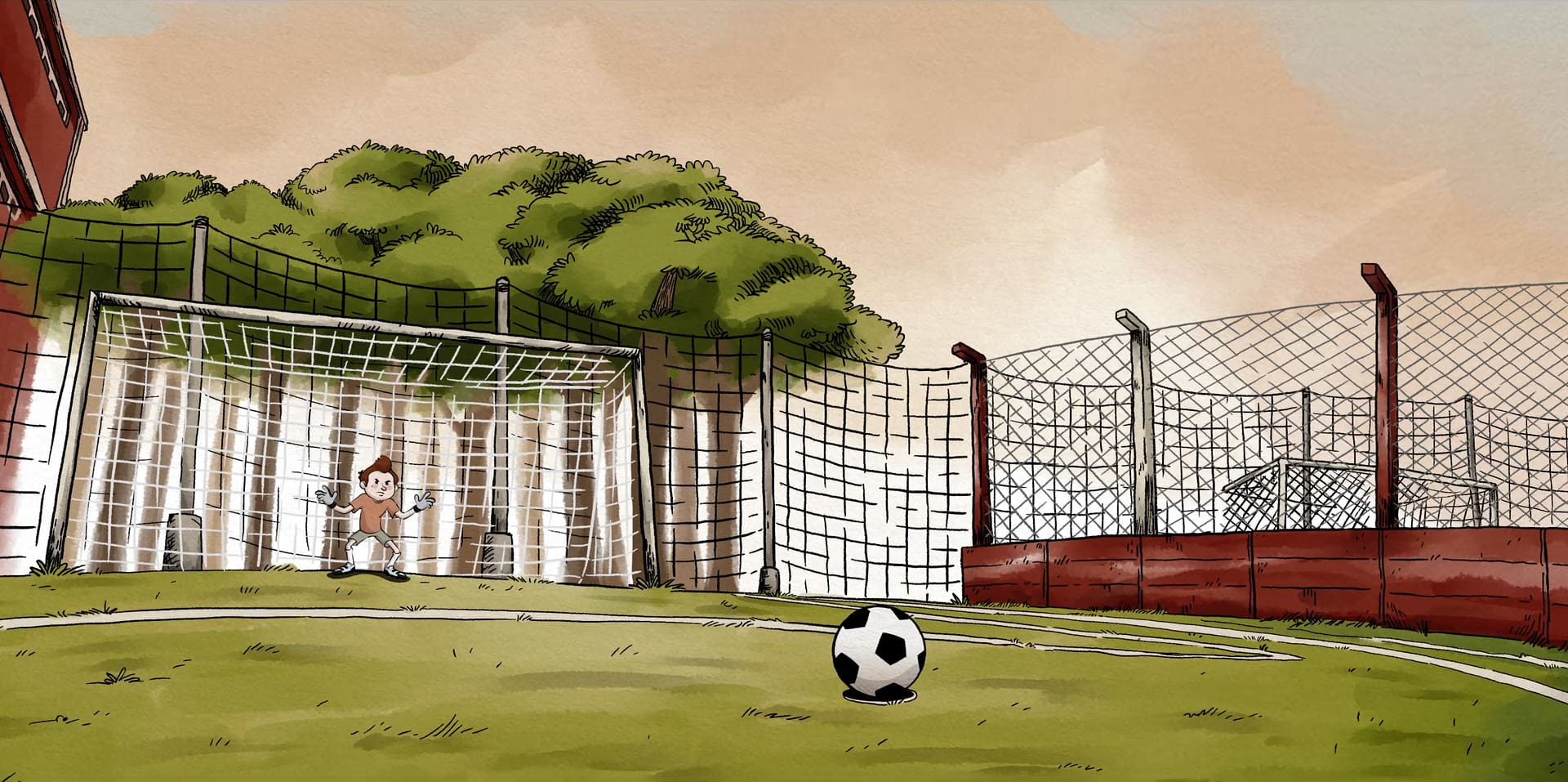
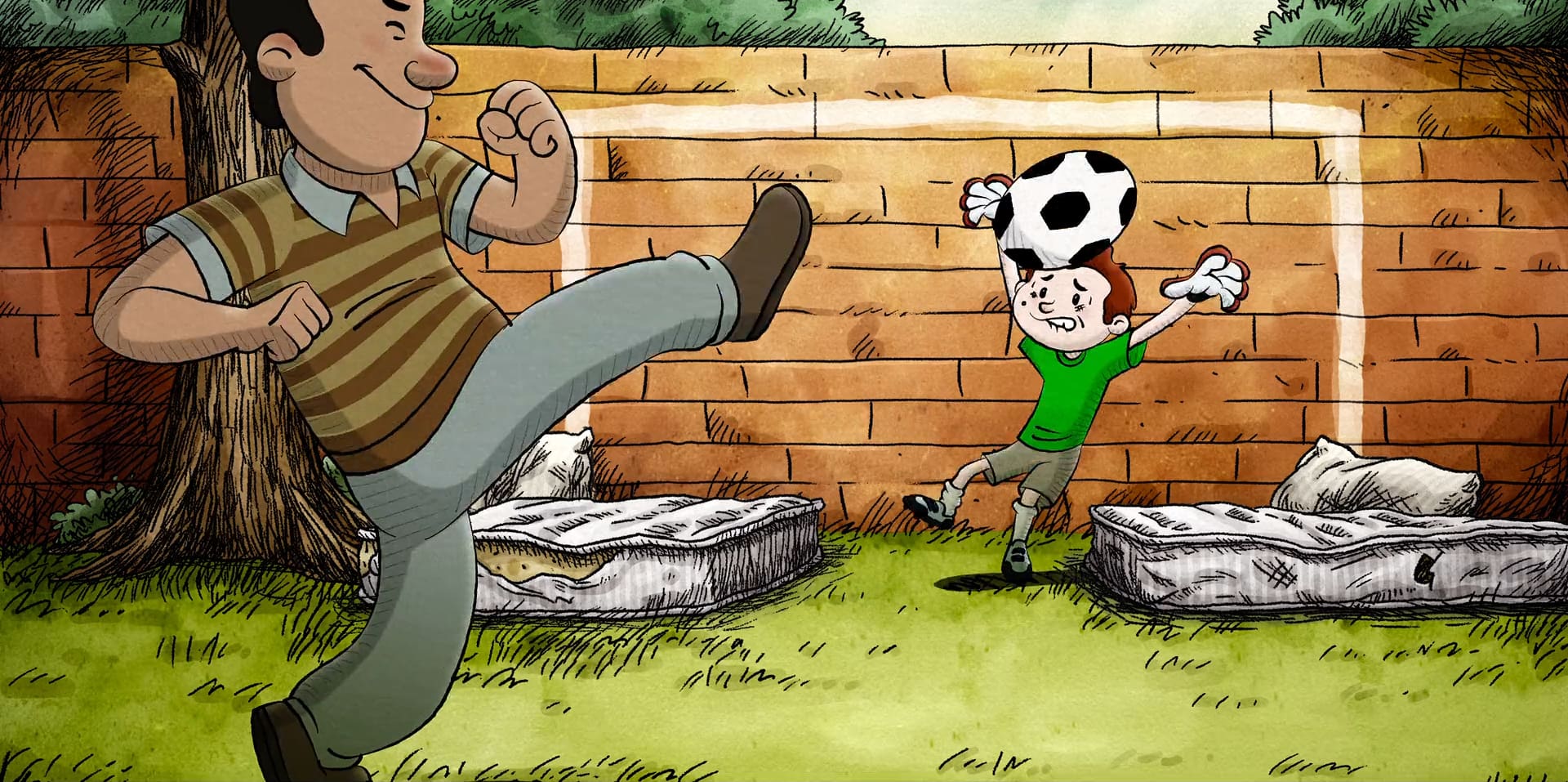
The crew also incorporated textured shading techniques inspired by Liniers’ comics, embracing imperfections that many productions would remove.
“Those little flaws make it feel more natural,” Cova said. “They create that handmade feeling in the final image.”
Cove believes the design choices feel especially significant in a period when many animation productions are exploring AI-assisted workflows.
“There’s so much artificial intelligence and so much that feels plastic,” Cova said. “Going back to traditional drawing gave us freedom and a visual richness that I think audiences really appreciate.”
The production itself, he said, was unusually fluid. Rather than locking every element during preproduction, the film evolved continuously as interviews uncovered new stories and characters.
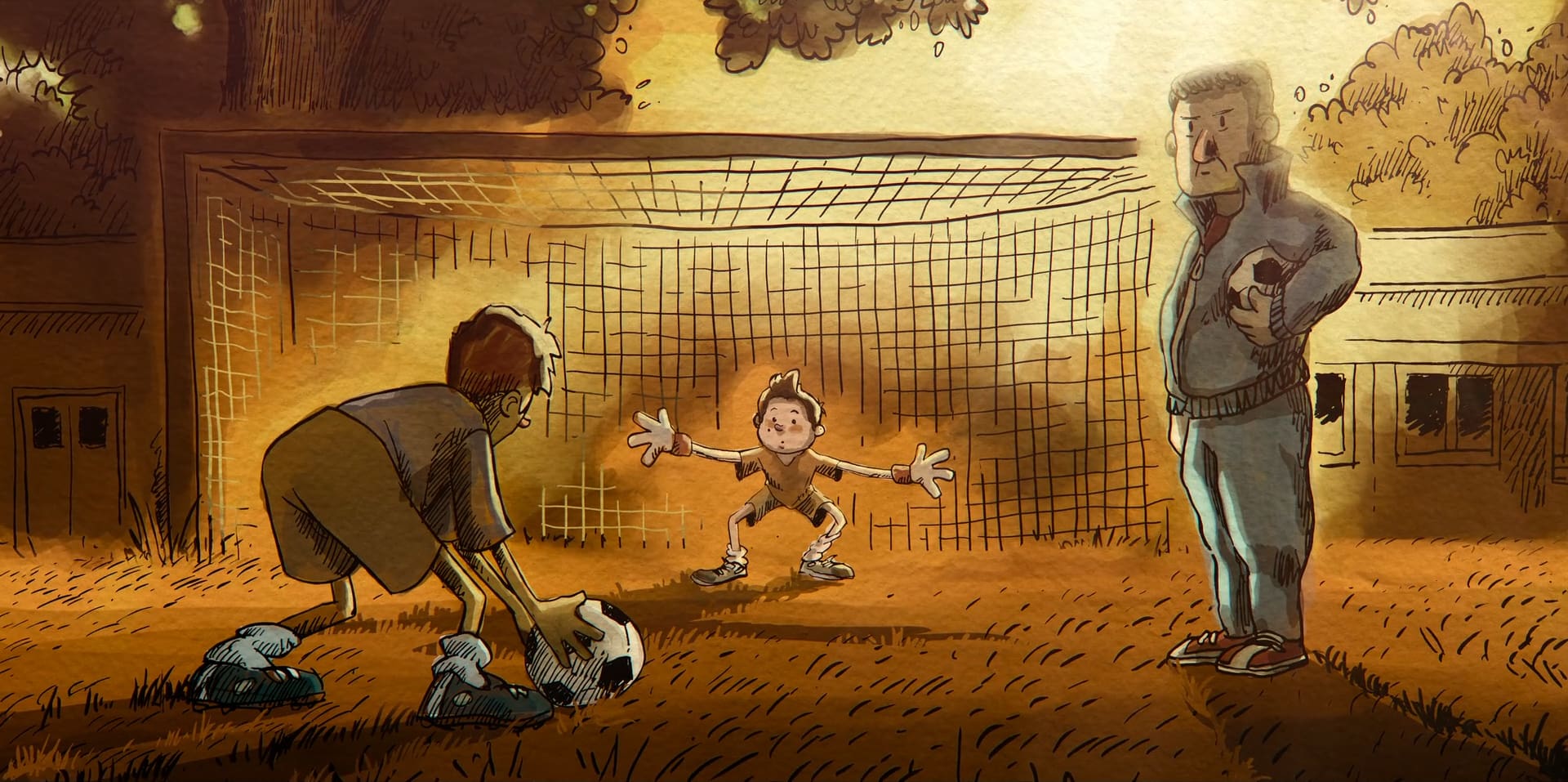

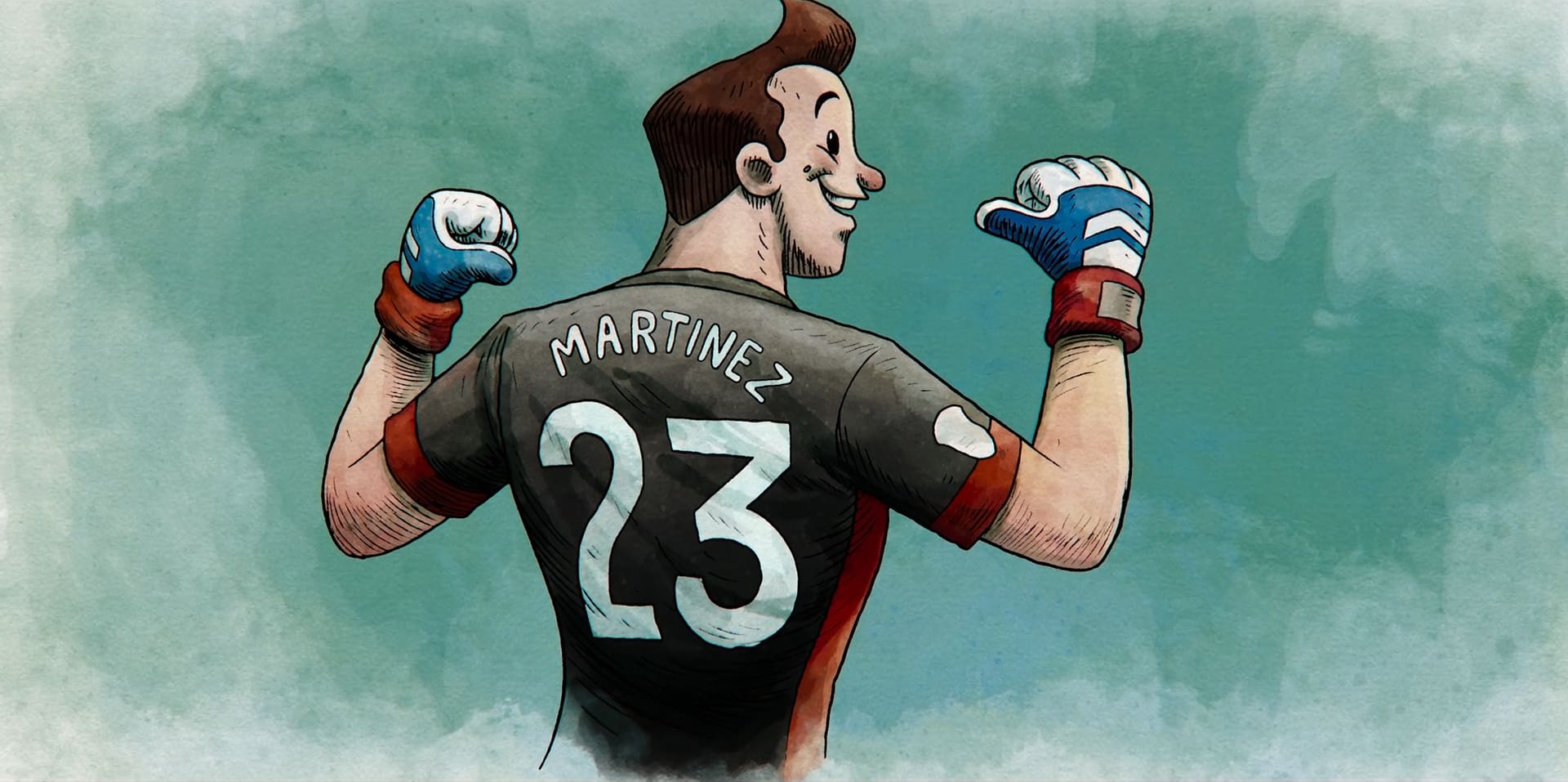
“One interview would open the door to another character we hadn’t considered,” Cova recalled. “Sometimes I’d call Liniers and say, ‘I need you to draw a coach from England. How do you imagine him?’”
Of course, because this is a documentary about one of the world’s best-known soccer players, many characters needed to look like their real-life counterparts. Martínez and his family reviewed artwork throughout the development process, often providing direct feedback.
“We would send drawings through WhatsApp,” Cova said. “Emiliano would say, ‘No, my dog looked more like this,’ or ‘My mother’s hair should be that color.’ The characters gradually shaped themselves until we found their identity.”
The result of all that work, the blend of techniques, and the dynamic personality at the film’s core is a rare hybrid documentary less interested in football statistics than in the imaginative inner life behind one of the sport’s top figures. The Kid Who Stops Time is an all-ages example of how animation, when used with care and for the right reasons, can elevate what might otherwise be mundane into something extraordinary.