.png)
Blending Myth And Modern Life, Mexico’s 2D Gem ‘My Friend the Sun’ Premieres In Guadalajara (EXCLUSIVE)
Stay informed with free updates
Sign up to get our news digest — delivered directly to your inbox twice a week.
My Friend the Sun (Mi amigo el sol) will world premiere later today at the prestigious Guadalajara International Film Festival, marking a major moment for Mexican animation and for director Alejandra Pérez González, who steps into the feature spotlight after more than a decade working behind the scenes as a storyboard artist.
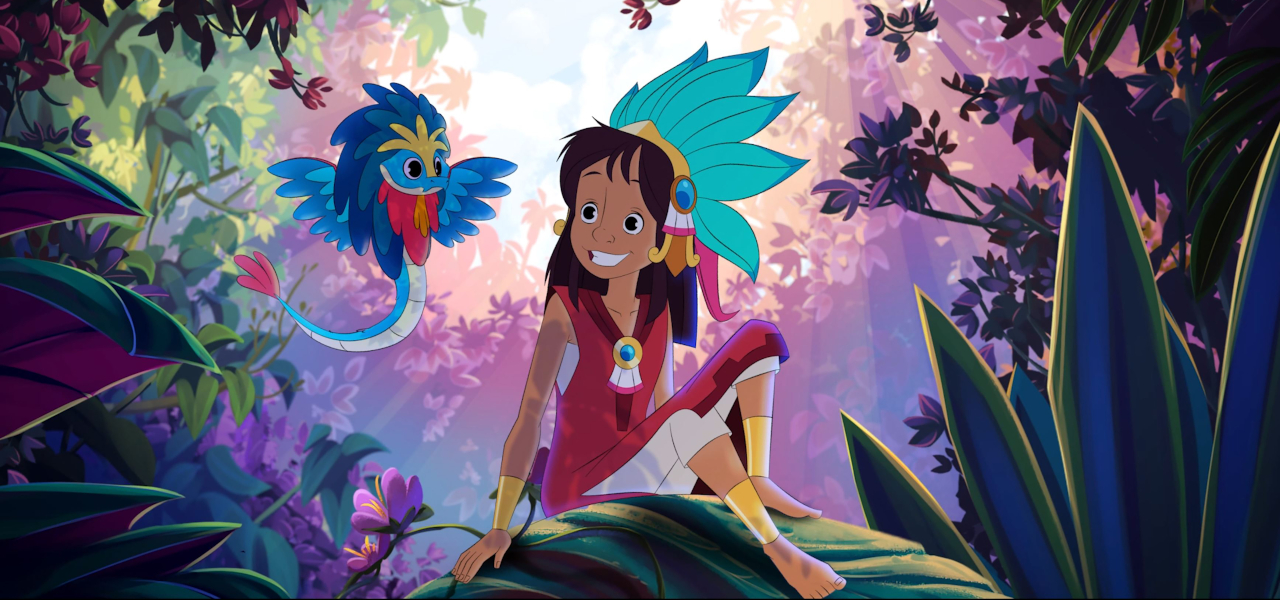
My Friend the Sun follows Xóchitl, a young girl whose everyday life with her hardworking father is transformed when she encounters a mystical connection to ancient forces rooted in pre-Hispanic mythology. As the boundary between the modern world and a mythological realm begins to blur, she is drawn into a journey that reflects both cultural heritage and personal growth. At its core, the film centers on the emotional bond between father and daughter, exploring sacrifice, imagination, and the tension between childhood dreams and adult responsibility, while weaving together contemporary life with echoes of Mexico’s ancestral past.
A Long Time Coming
The film, produced by Fotosíntesis Media, has been in development since just before the pandemic, but Pérez González joined in 2021. By that point, much of the groundwork had already been laid, including a teaser used to secure funding. What followed was a near-total reinvention that took half a decade.
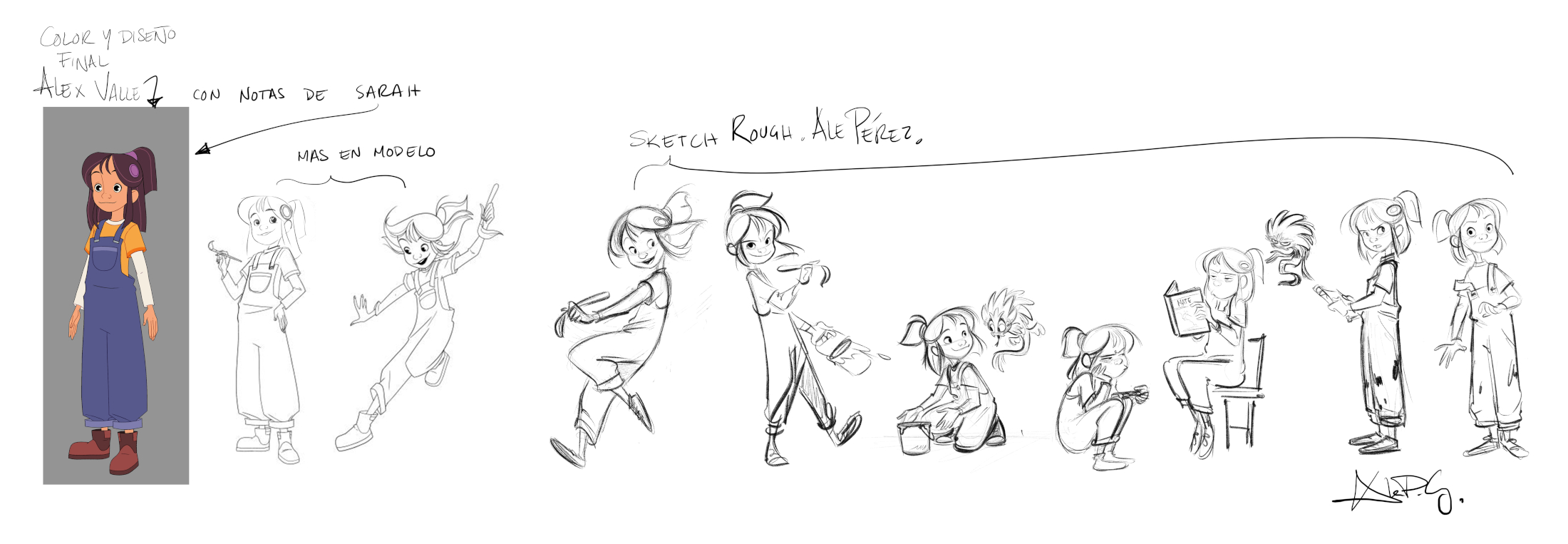
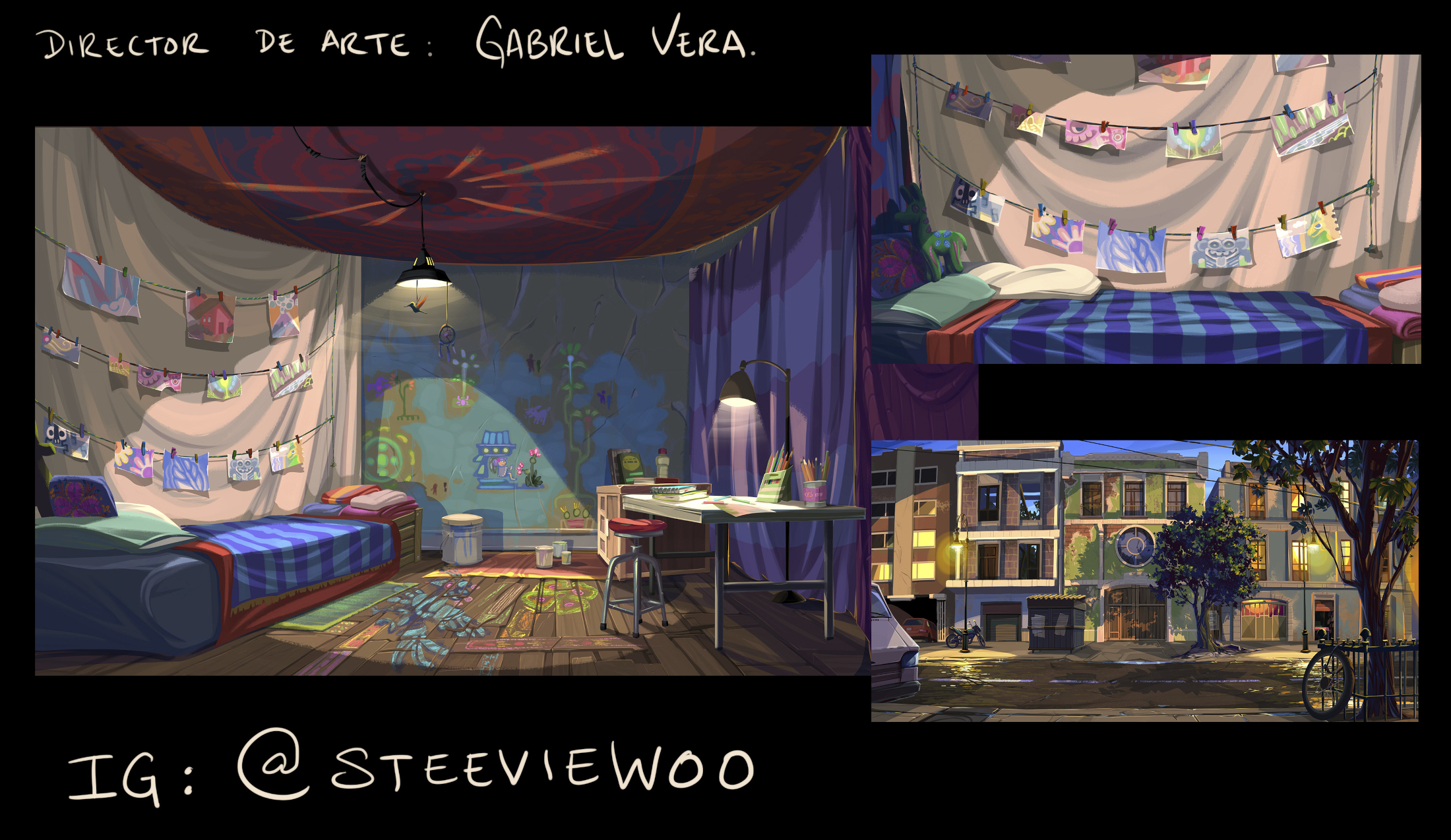
“They told me, ‘we’re going to start production, everything is ready, you can change everything we did for the teaser,’” she tells Cartoon Brew. “And I did. I changed the character, I changed Xóchitl, I changed all the designs, even the sets.”
That level of creative latitude is unusual for a first-time feature director, especially one stepping into a project already in motion. But Pérez’s background made her a natural fit. She spent over ten years as a storyboard artist in Mexico, including time at Ánima Estudios and Huevocartoon, building a reputation for strong visual storytelling.
“I think it helped that I was a storyboard artist,” she says. “In every job I’ve had, you become a mini director of your sequence. The director gives you the pitch, but you’re the one imagining it visually for the first time after the writer.”
A Shift in Authorship
The decision to bring Pérez on board also reflects a broader push for representation in Mexico’s animation industry. She is a co-founder of MUMA (Mujeres en el Mundo de la Animación), an initiative supporting women working in animation, and her visibility through that work helped put her on the radar.
“They said, ‘ What if a woman directed it? ‘ Who would we choose?” she recalls. “We didn’t see many women in leadership roles. People who had worked with me said I could be a good option.” The rest is history.
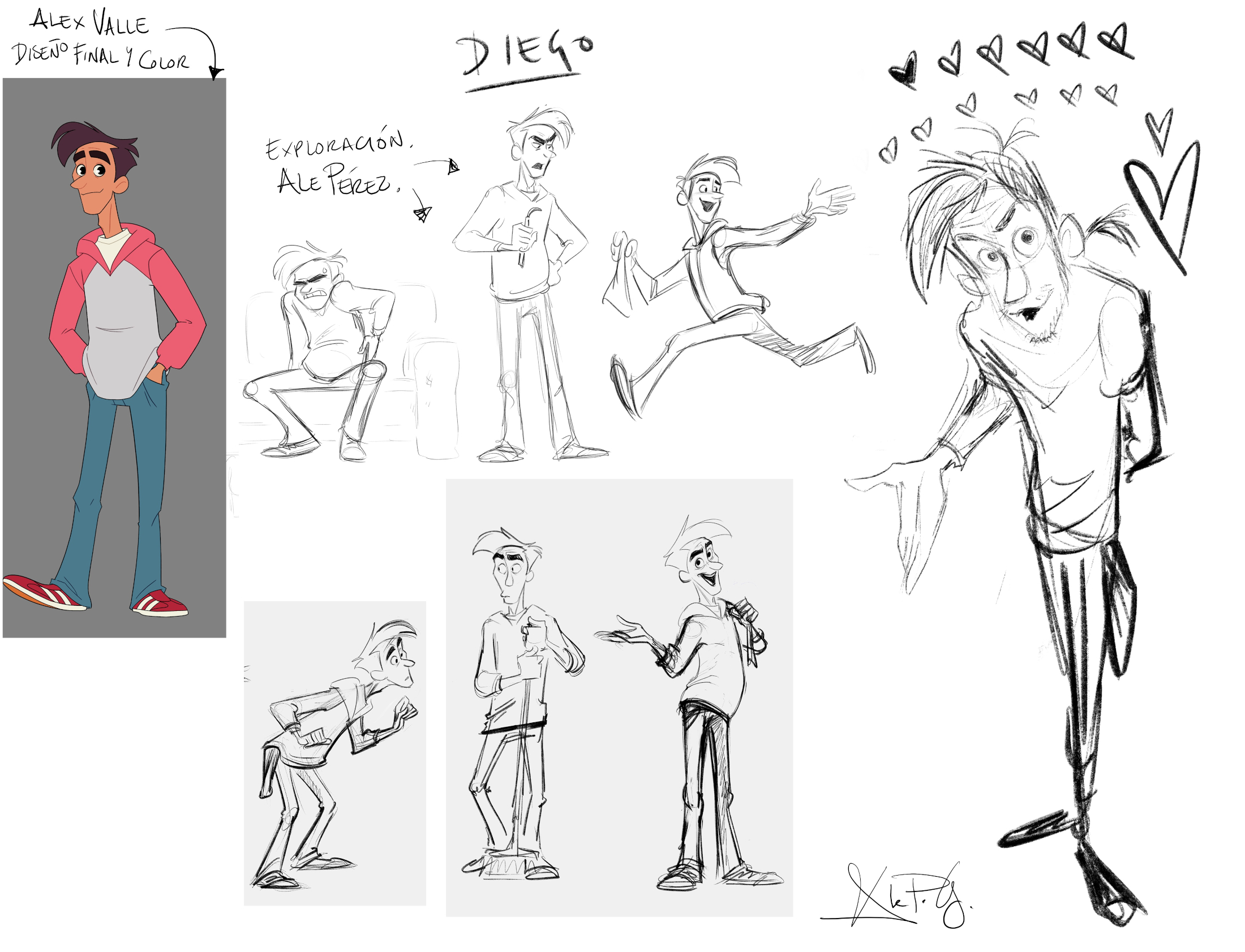
Once she stepped into the director’s chair, Pérez immediately decided to prioritize emotional clarity and character expressiveness, even if that meant stripping away visual complexity.
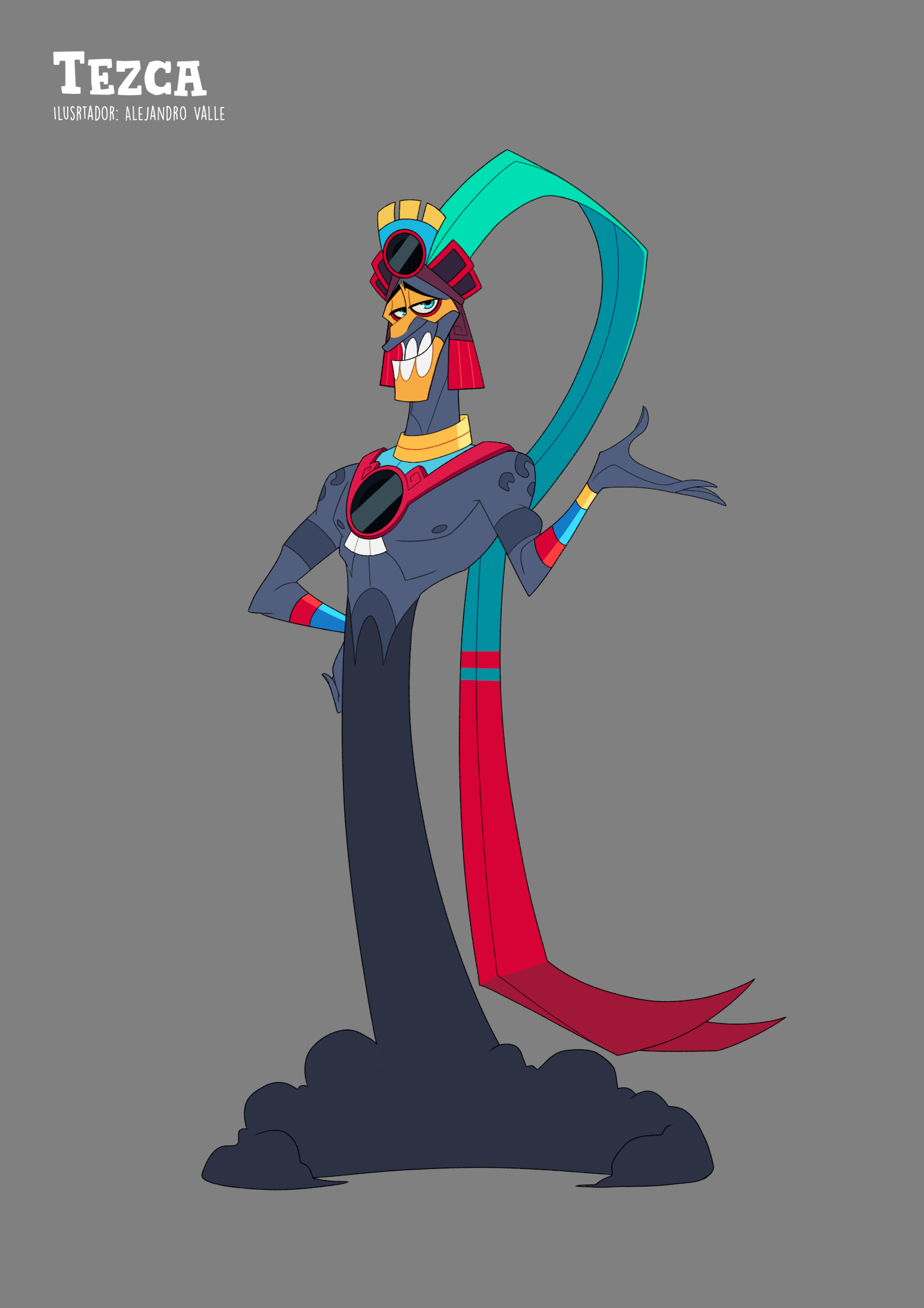
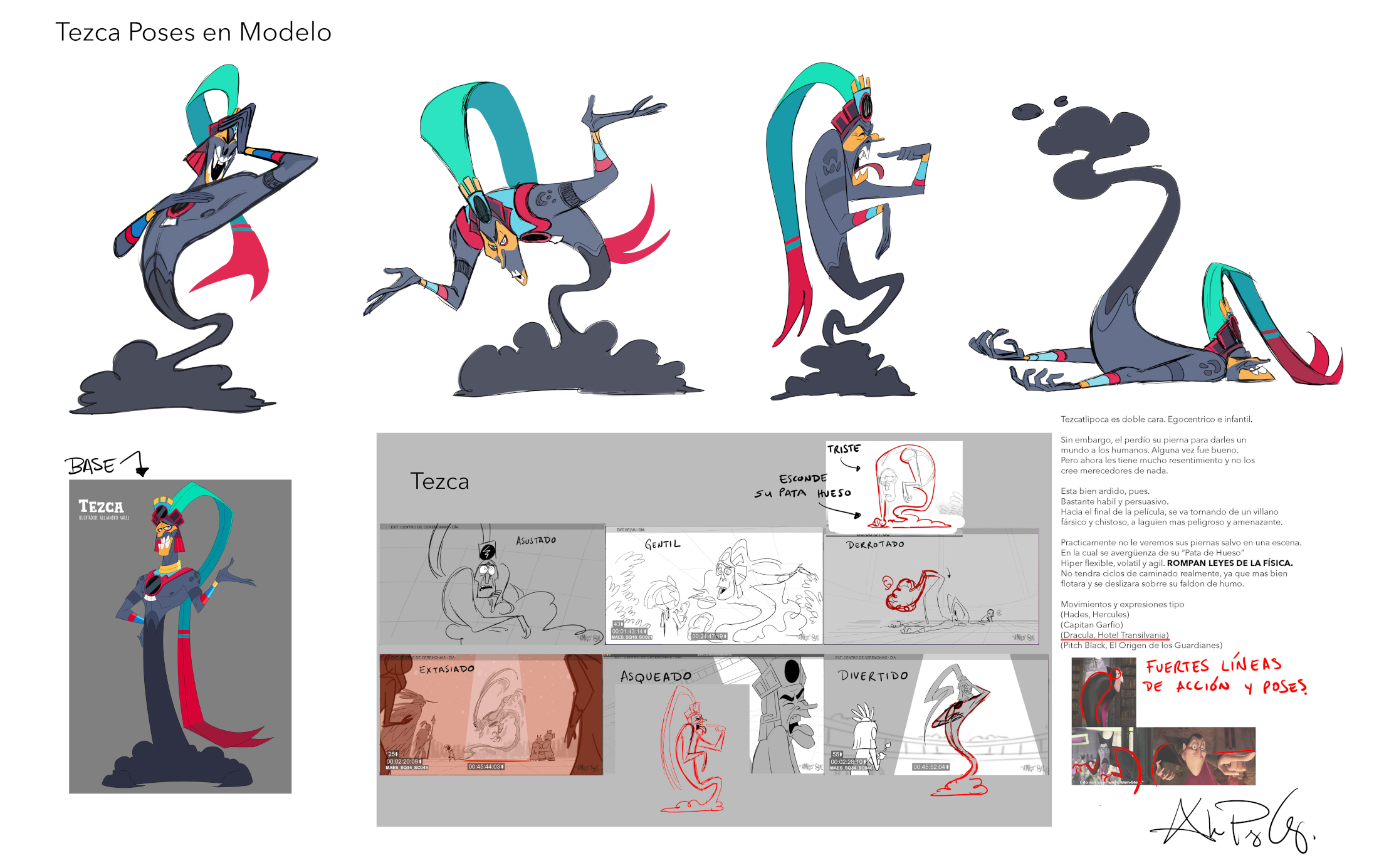
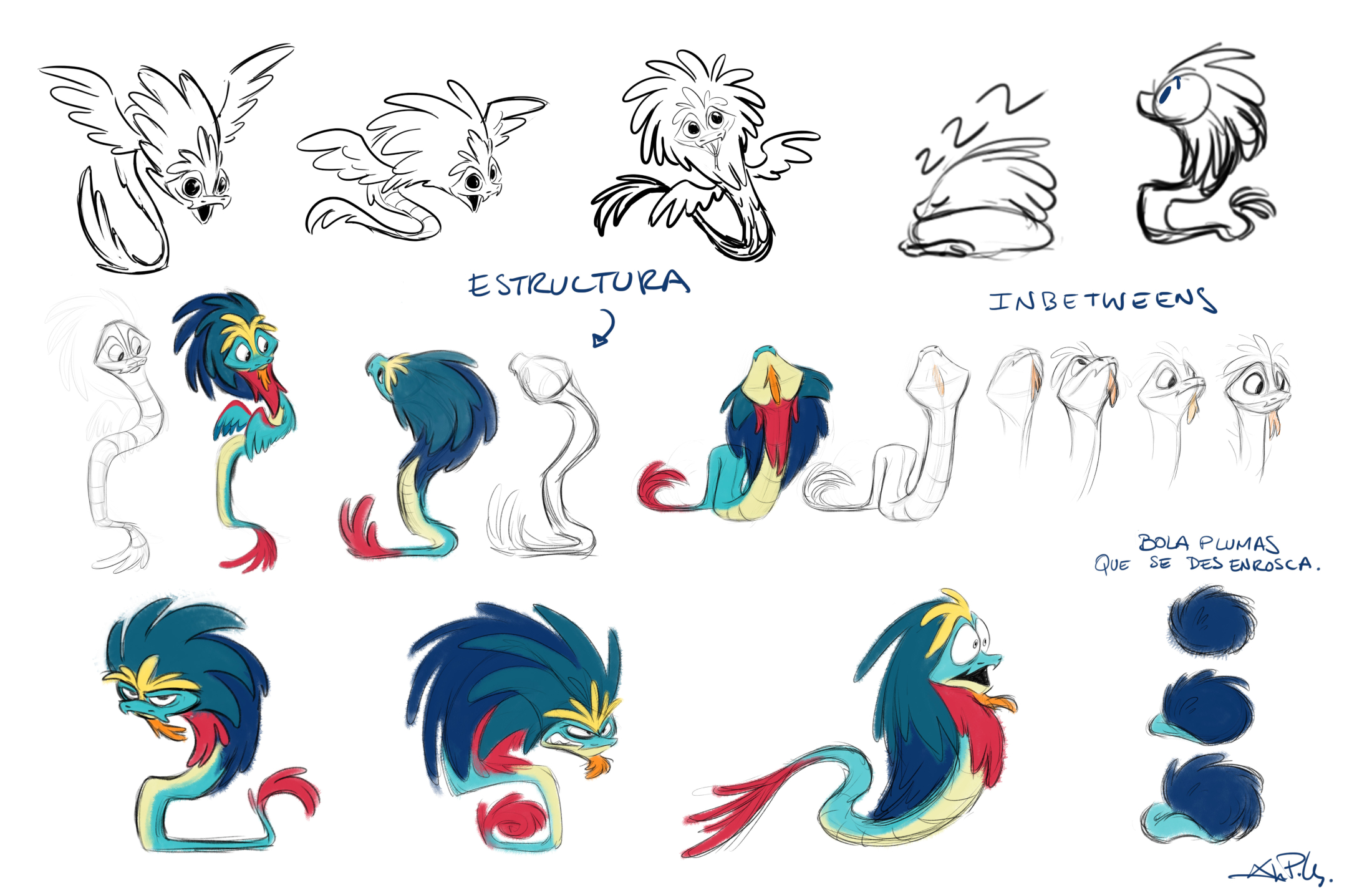
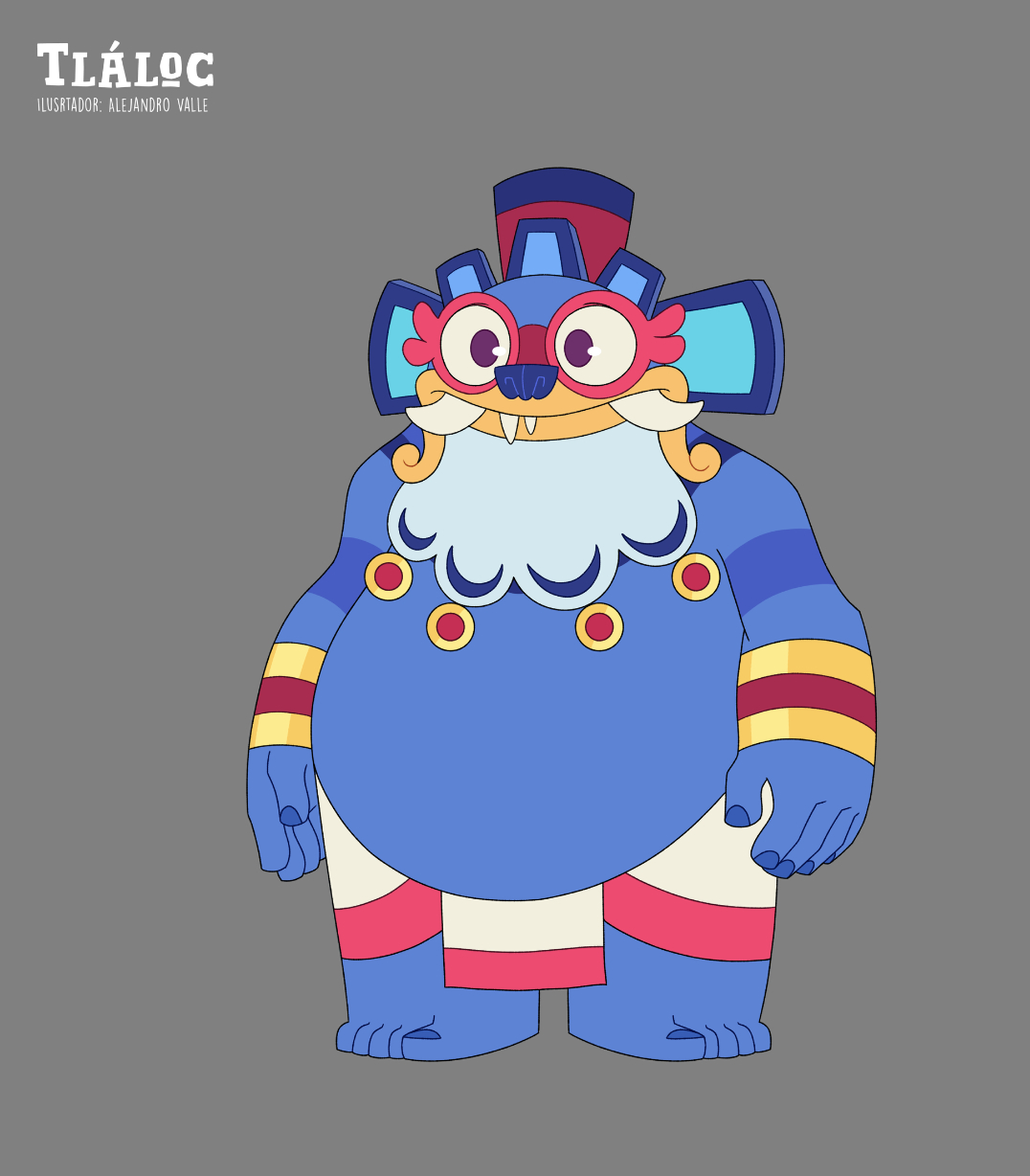
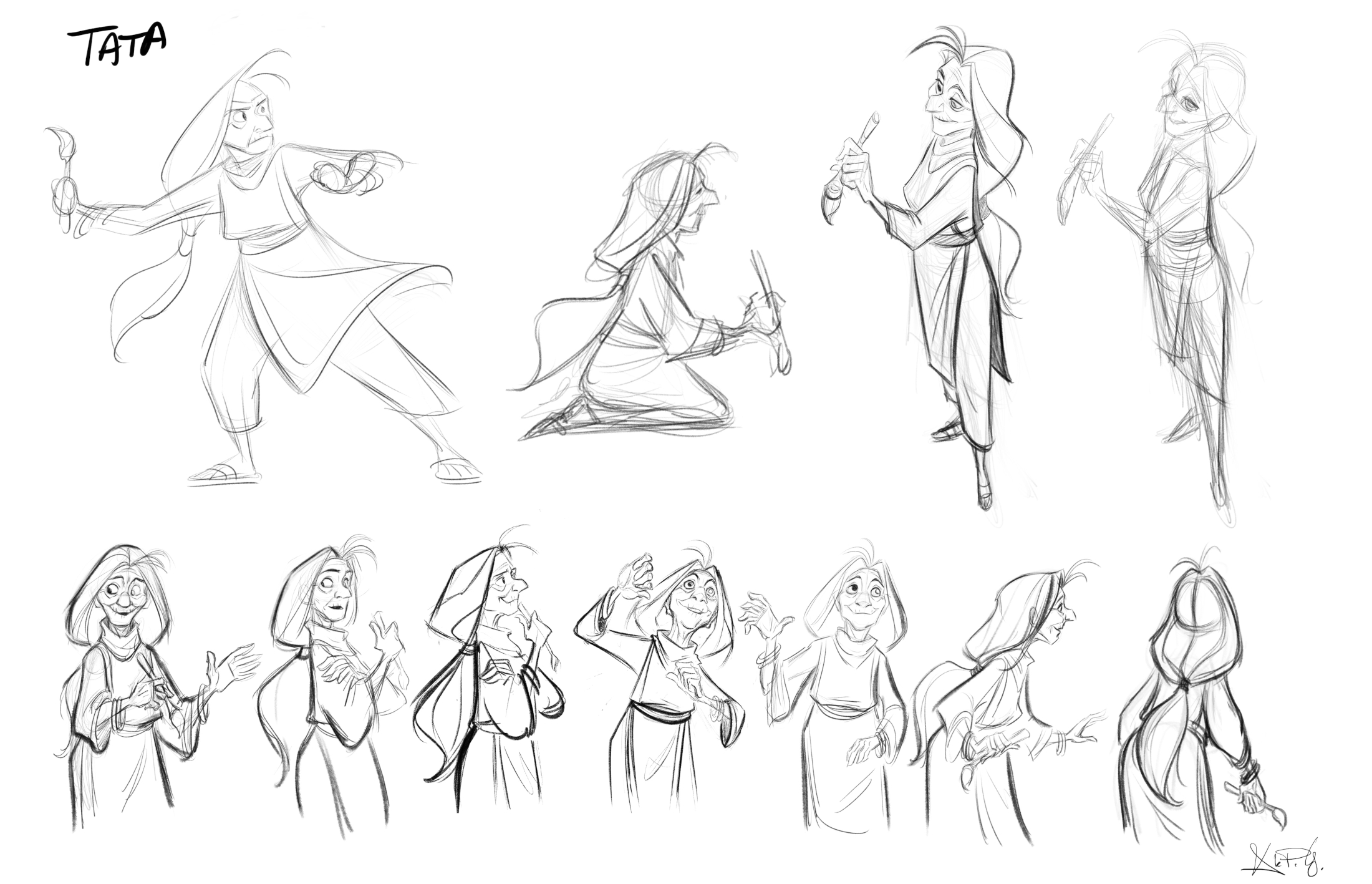
“I pushed a lot for expressive characters,” she says. “For that, you have to simplify. Simplify as much as possible. Sometimes designers want to add a lot of detail, patterns, and textures. But this is 2D animation, and I wanted it to be easy for the animator to move the character, to bring it to life.”
Cultural Imagery
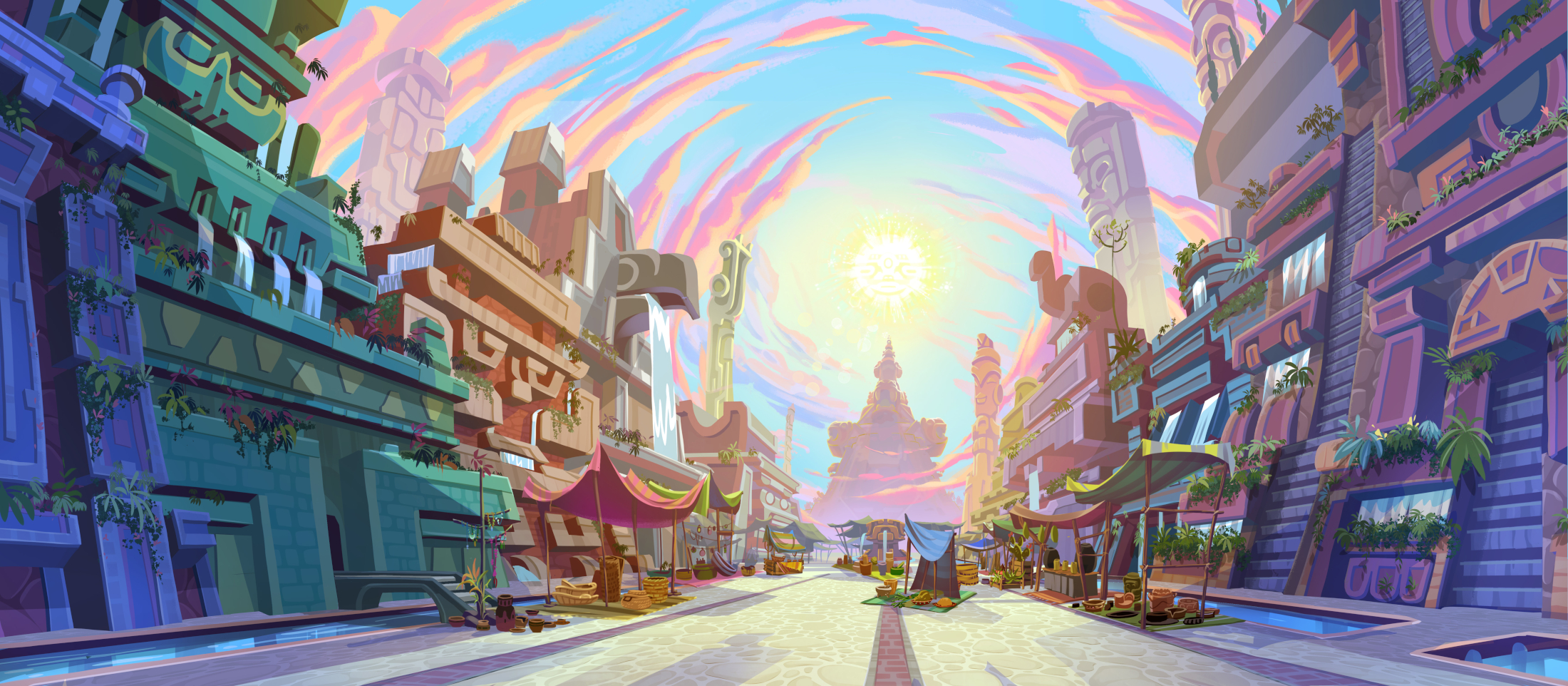
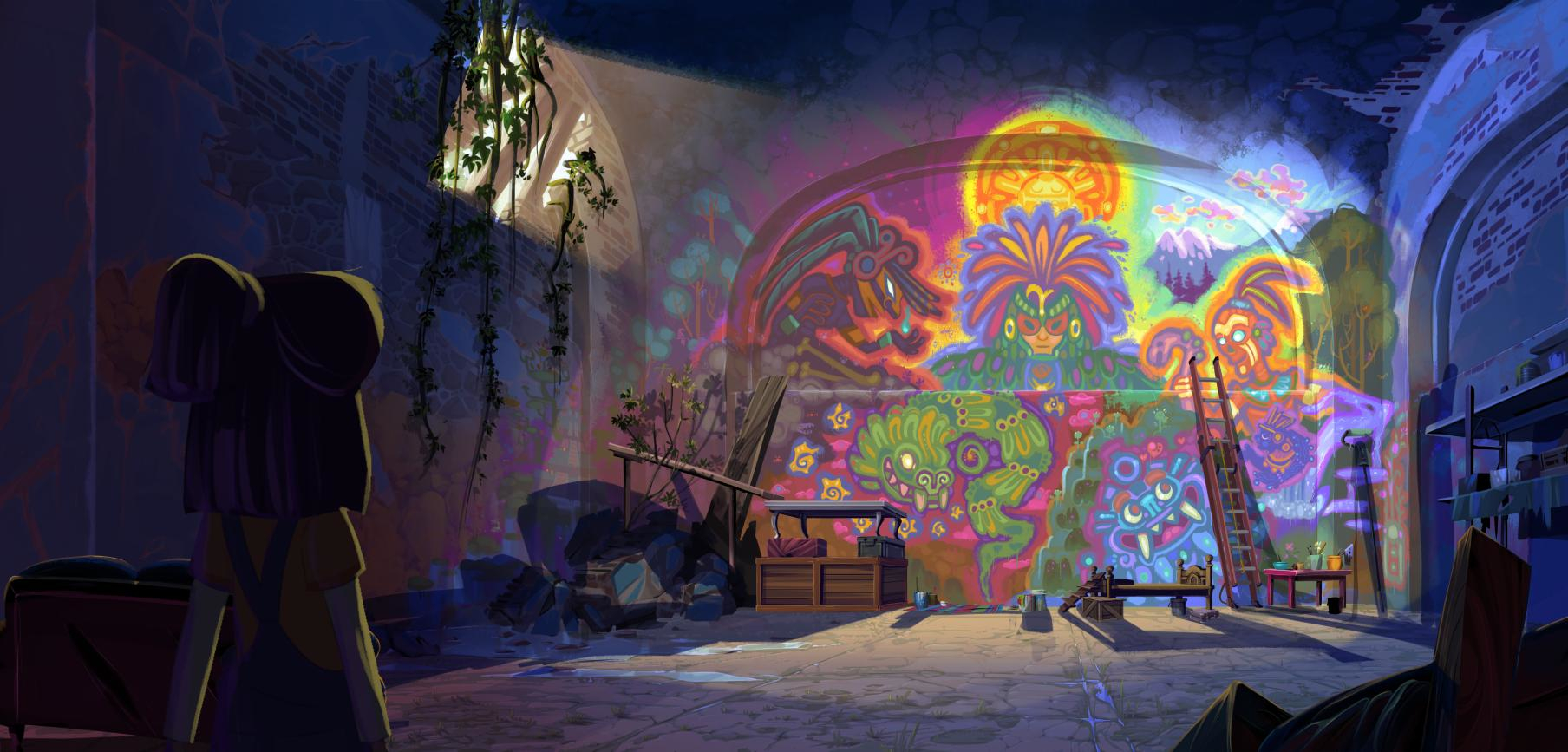
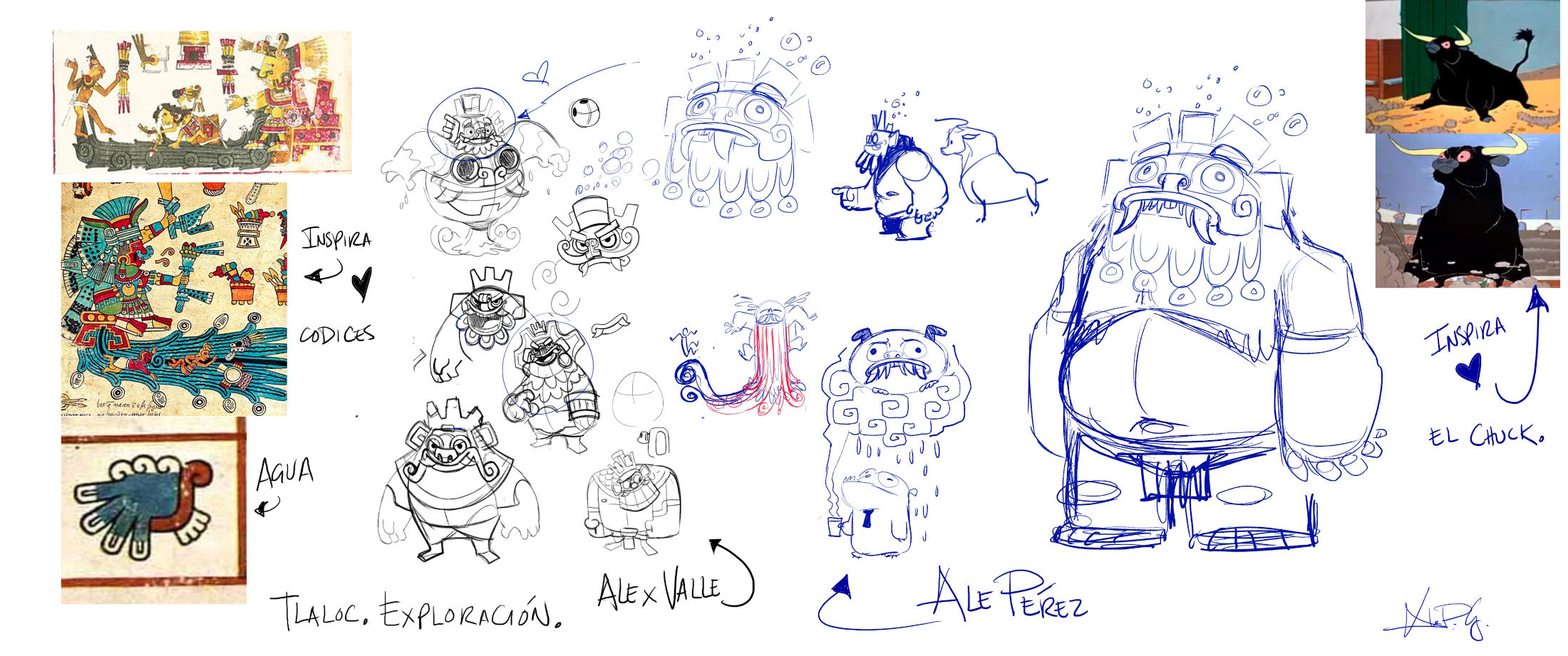
My Friend the Sun draws from pre-Hispanic mythology and iconography, but its visual approach is not about strict historical accuracy. Instead, the film treats that cultural foundation as a springboard for stylization and invention.
“When you look at codices, you see they’re full of details, very defined, sometimes strange faces,” Pérez says. “That gives you permission to invent, to play with the elements. It’s a very rich culture. The challenge is how you bring that into animation.”
Rather than leaning into ornate design, the film balances those influences with a modern sensibility shaped by animation performance. “What mattered most was that the characters could move,” she says. “That the animator could bring life to them.”
Why 2D
At a time when much of Mexico’s commercial animation output leans toward 3D, My Friend the Sun stands out for its commitment to traditional 2D animation.
“Fotosíntesis has always made its films in 2D,” Pérez explains. “But what I liked here is that it’s not cut-out. This is traditional animation. There’s no rigging.”
For her, the distinction is crucial. While acknowledging the strengths of digital cut-out techniques, she associates traditional animation with greater fluidity and expressiveness.
“In cut-out, characters can feel stiff,” she says. “Here, we wanted full movement.”
Budget realities also played a role. “3D is usually more expensive,” she noted, reinforcing that 2D was both an artistic and practical choice.
Storyboards to Directing
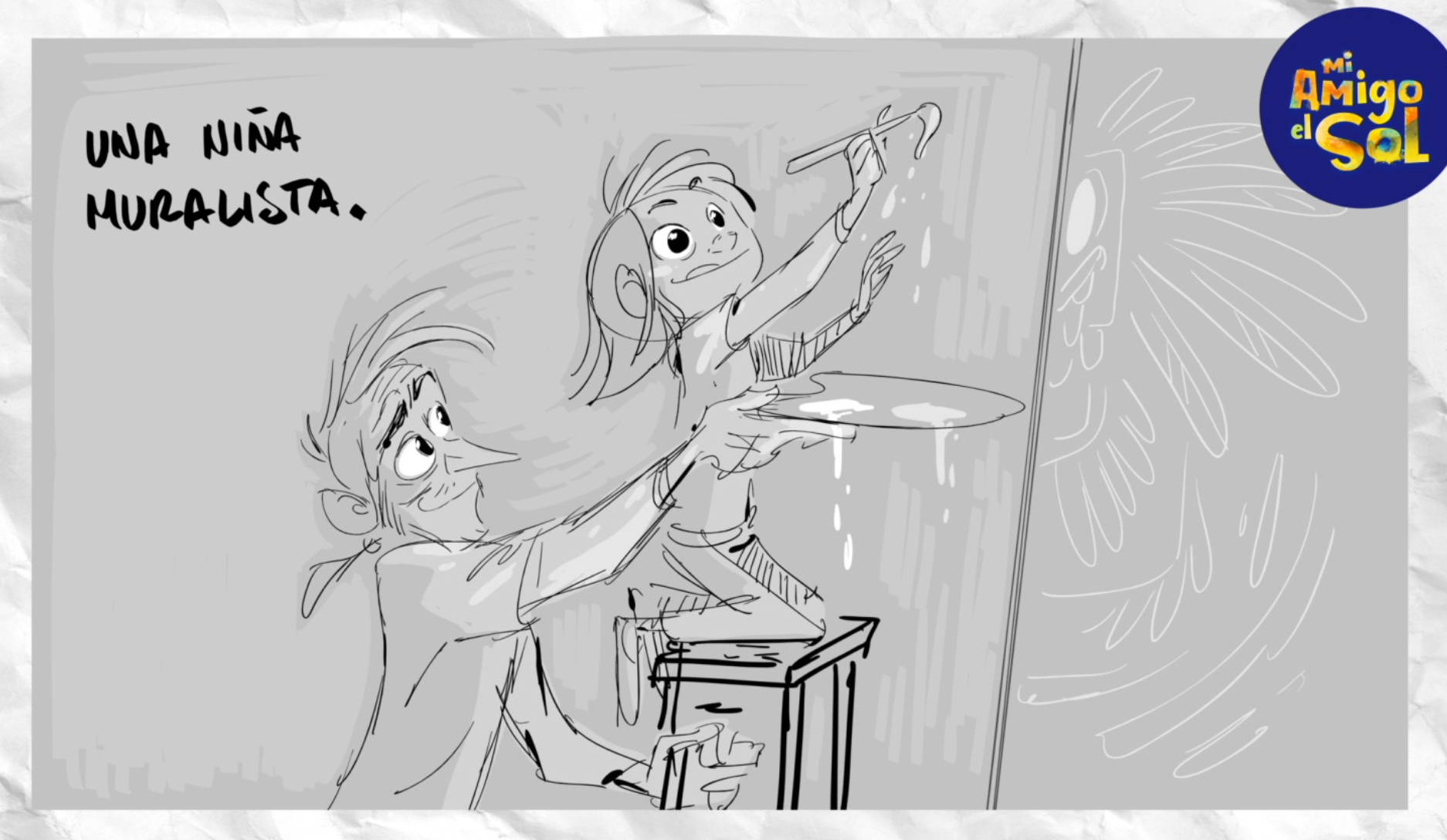
Transitioning from storyboard artist to feature director meant expanding her focus beyond staging and composition to encompass the entire production pipeline.
“There were many things I didn’t know, or didn’t know how they were done,” she admitted. “It was interesting to see how each process develops.”
Her storyboard background, however, proved invaluable when it came to shaping the film’s narrative and visual language. It also gave her confidence to challenge and refine the script, written by studio co-founder Miguel Ángel Uriegas.
“I was very direct,” she says. “If I didn’t understand something, I would say it. If something felt off, I would say it,” she laughs, recalling a fair bit of early trepidation in having to call out her boss like that before it became clear that there was no need for worry.
One key area of focus became the emotional core of the story, particularly the relationship between a father and his daughter.
“I was concerned about how the father’s jobs were portrayed, like as jokes,” she explains. “I wanted to show a father who worries, who works every day for his daughter. He leaves behind his childhood fantasies because he has responsibilities.”
That emphasis helped steer the film toward a more grounded and universally resonant narrative.
Teamwork Makes the Dream Work
The interplay between storyboard and script became a defining aspect of the production. The original screenplay wasn’t treated as a fixed monolith to work from. Instead, the team allowed the animatic process to inform ongoing revisions, creating a more flowing and improvisational production.
“In storyboard, things always come up that worked on paper but don’t work visually,” Pérez says. “You realize something feels strange, and you have to change it.”
She maintained close communication with Uriegas throughout, proposing adjustments that would then be formalized in the script.
“I would tell him, ‘ What if we do this instead,’ and he would say, ‘ Okay, give me a moment,’” she recalls. “He would rewrite it so we had a guide, and then we continued with the animatic.”
This iterative workflow, rooted in storyboard thinking, allowed the film to evolve organically while maintaining coherence.
WFH
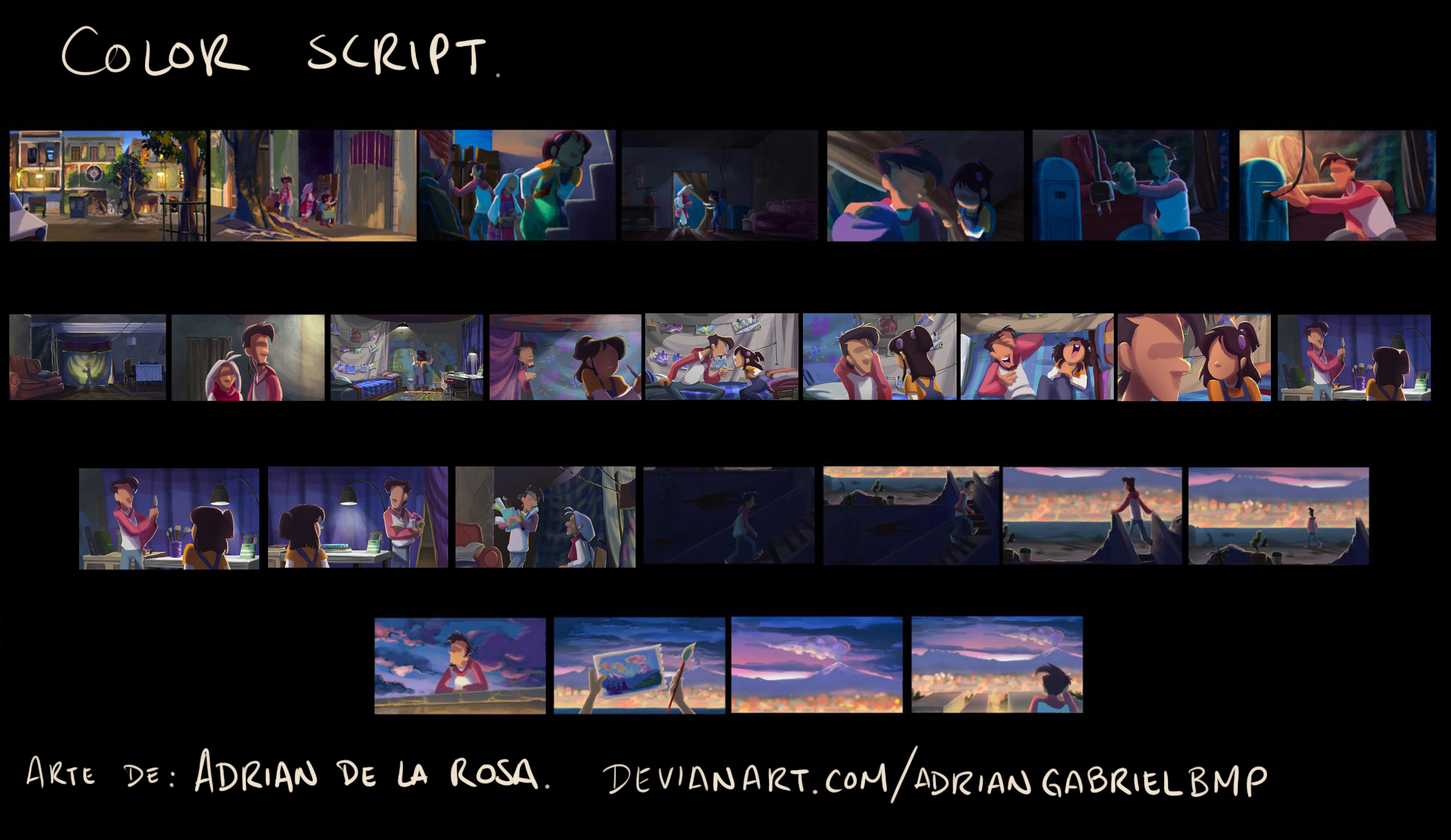
Like many recent animation projects, My Friend the Sun was produced largely remotely, with collaborators spread across different countries.
“This film was made like we’re talking now, on Zoom, on Discord,” Pérez explains. “We had people in different places. One of the art directors lived in Ecuador.”
That distributed setup reflects a broader shift in animation production, where geographic boundaries are increasingly fluid. For Pérez, it was simply part of a now-normal process.
Looking Ahead
Following its premiere at the Guadalajara festival, My Friend the Sun is expected to continue its festival run while producers finalize distribution plans.
“We want it to reach theaters and large audiences,” Pérez says. “That’s the plan, but we don’t yet know exactly when.”
Given its blend of culturally specific storytelling and universal themes, the film is well-positioned for international exposure. Its focus on a parent-child relationship, filtered through mythological elements, gives it both local identity and global accessibility.
For Pérez, the journey from storyboard artist to feature director has been equally challenging and rewarding. It has required her to expand her skill set while staying grounded in the visual storytelling instincts that defined her career.
“Everything comes from storyboard,” she says. “Cinematic language, composition, camera movement. That’s where we plan everything.”
As My Friend the Sun makes its debut, it also signals a shift in who gets to shape animated features in Mexico. Pérez’s path into directing may not be typical, but it reflects a growing openness in the industry to new voices and perspectives.
And for audiences in Guadalajara this week, it offers a first look at a film that has been years in the making, and one that carries both personal and cultural weight into its premiere.