.png)
‘A Road Movie On Foot’: The Long Journey Behind Brazilian Annecy Player ‘Son Of A Bitch’
Stay informed with free updates
Sign up to get our news digest — delivered directly to your inbox twice a week.
Ismael inherits an insult before he has much of a chance to become anyone else.
In the small village of Veredas, his mother runs Casa Rosa, the local brothel, and because of that, he is known, bluntly, as the “son of a bitch.” It is less a nickname than a verdict. So Ismael does what many young men do when trapped by family, geography, and other people’s stories about them: he leaves.
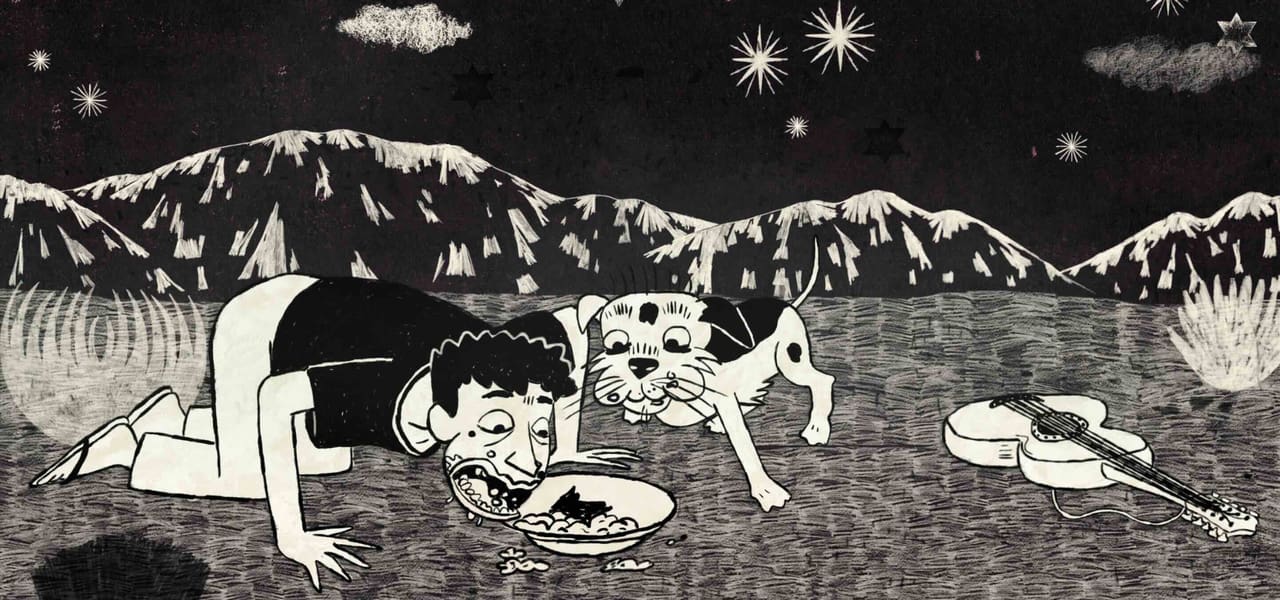
That departure sets O Filho da Puta (Son of a Bitch) in motion. Directed by Érica Maradona, Otto Guerra, Tania Anaya, and Sávio Leite, the Brazilian animated feature follows Ismael across the sertão in search of two things he has never known: his father and the sea. Alongside him is Bacalhau, his three-legged dog, and a copy of Moby-Dick, the only trace he has of the absent father.
A boy, a dog, a missing father, a famous book about obsession, and the ocean. In other hands, this might become something precious or painfully literary. Son of a Bitch has other ideas. It is earthy, rude, funny, harsh, and occasionally tender. It is a road movie, yes, but as Guerra points out, “a road movie on foot.” Nobody is racing toward revelation here. Ismael has to walk.
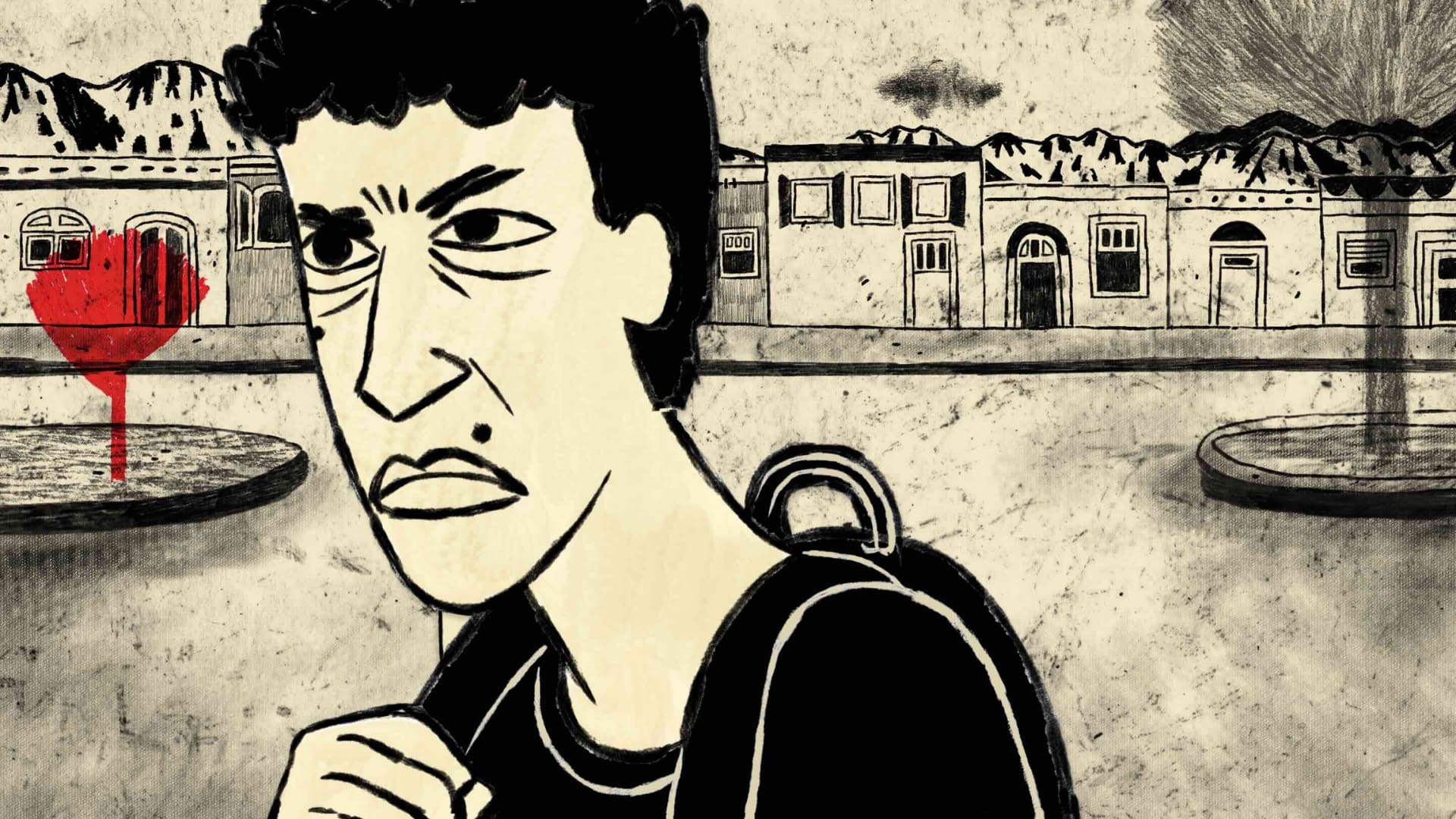
For Guerra, the appeal was immediate. The script first came to him in 2011. “The biggest attraction for me was the fact that the story was cohesive,” he says. “A strong protagonist, the dog as a kind of counterpoint to the boy, his very clear conflict with his mother, the nonstereotypical view of the women of Casa Rosa, and the fact that the film is a road movie on foot.”
Then he adds, simply, “I fell in love.”
That love carried the project a long way. There are easier things to make than an independent, adult, hand-drawn animated feature in Latin America. There are probably saner things, too. But animation, especially outside the industrial pipeline, has always demanded a strange tolerance for slowness, uncertainty, repetition, and belief.
Guerra describes Ismael’s path in classical terms. “A film that tells the hero’s journey is always attractive,” he says. But he is not talking about a clean mythic template. What interested him was the mixture: “Drama, comedy, surrealism, deep Brazil, the sertão. These are exciting ingredients.”
That collision gives Son of a Bitch much of its charge. The film has the shape of a quest, but the quest is dragged through dirt, vulgarity, pain, humor, and oddness. Moby-Dick is there, but so is Bacalhau. The absent father suggests destiny, trauma, maybe even literary grandeur, but the world around Ismael keeps pulling the story back to bodies, jokes, hunger, shame, desire, and survival.
There is also Casa Rosa. It would have been easy to turn the brothel and the women who work there into caricatures. Guerra says one of the elements that drew him to the story was precisely “the nonstereotypical view of the women of Casa Rosa.” The insult attached to Ismael comes through his mother’s work, but the film is more interested in what sits behind labels: people, compromises, damage, comedy, tenderness, and mess.
The production itself was split across places and people. Son of a Bitch is a co-production between Otto Desenhos Animados, from Rio Grande do Sul, and Anaya Produções, from Minas Gerais. That geography helped shape the workflow.
“The co-production was between Rio Grande do Sul and Minas Gerais,” Guerra says. “It was divided. Part of the animation was done with direction here in the south, and another part in Minas. Animated film lends itself to collective direction because there are no locations.”
That’s one of the beauties of animation production. It can be passed across rooms, cities, teams, and years. In this case, the shared direction was built into the production from the start. “The actors were recorded in Belo Horizonte,” Guerra adds, “because the film takes place in the sertão of Minas Gerais.”
For all that shared authorship, the film doesn’t feel smoothed out by committee. If anything, it carries a rough, stubborn personality. The art direction is raw, expressive, and sometimes almost abrasive. A cleaner or prettier film might have betrayed the material. This story needed some dirt, some awkward bodies, bad tempers, and people who look as if life has pushed them around a bit.
Guerra points to Érica Maradona as central to that visual force. “I got to know Érica Maradona’s work in 2014,” he says. “It had everything to do with it: the rude and absurdly human, poetic style. This ‘marriage’ was very lucky.”
The images are refreshingly rough, raw, and oh-so-alive. The characters are not polished into charm. They seem drawn from heat, frustration, libido, hunger, and stubbornness. It’s grotesque without contempt, ugly but never cruel. Not an easy balance.
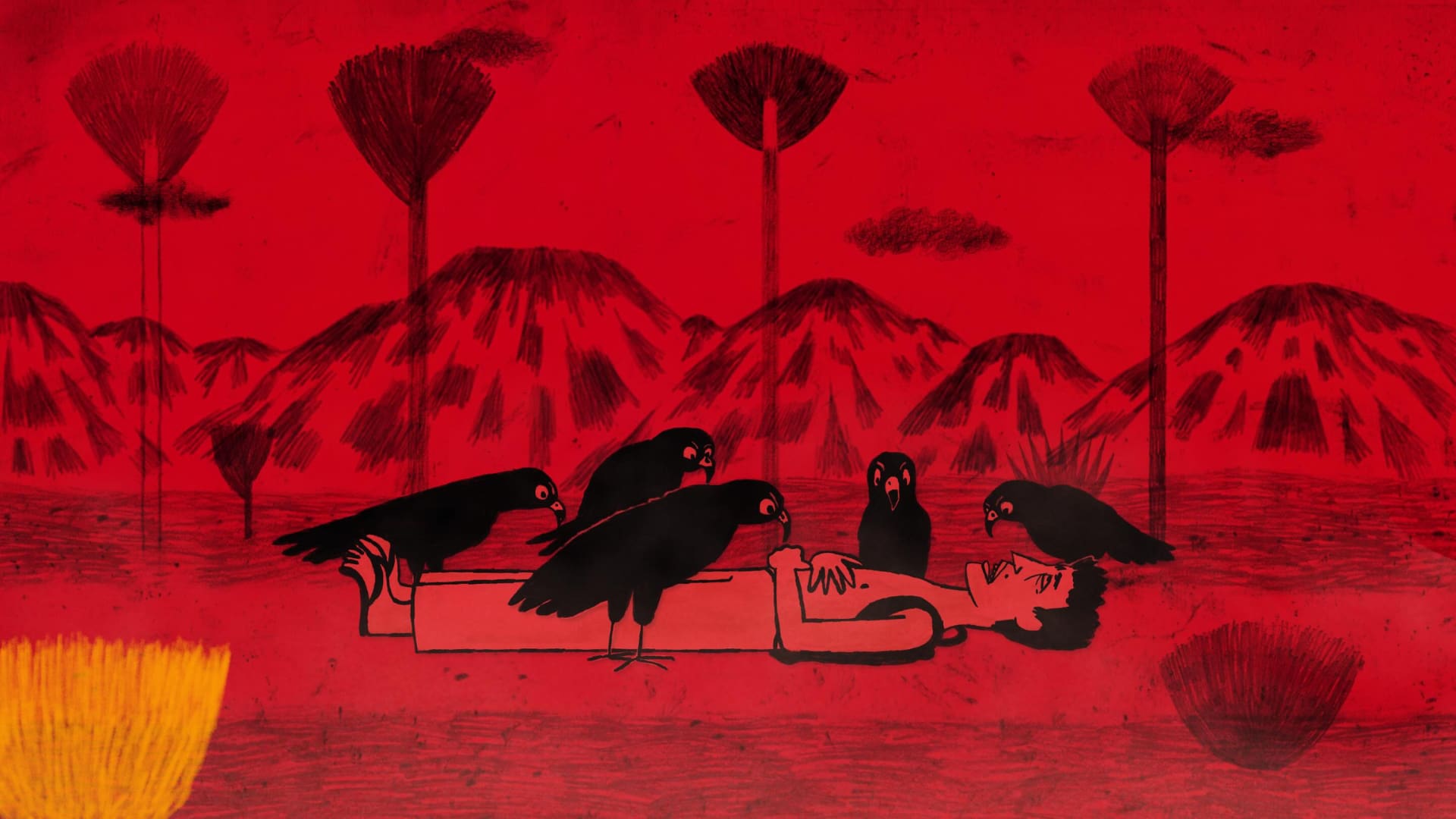
Color also plays a major role. Reds, yellows, blues, and other strong tones often dominate entire scenes, pushing the emotional temperature before anything is said. Guerra again credits Maradona’s instincts.
“Érica’s color palette is, in my opinion, dazzling,” he says. “The mood of each sequence has to do with the colors, marking each change.” In Son of a Bitch, color doesn’t sit politely in the background. It steps forward and often dominates, signaling tonal shifts.
The long making of the film was shaped by the usual independent-film problem, money, and by larger forces beyond anyone’s control. “We produce series, features, and short films simultaneously,” Guerra says. “What usually takes the longest is raising funds. But the sum of our production company, which has almost fifty years of activity, together with Anaya Produções, made the film possible.”
The method also slowed things down. “The animation, all made by hand by a small number of animators, also contributed to the extended timeline,” he says.
Then came the political and historical obstacles. Guerra refers to “the coup d’état against Dilma Rousseff, disguised as impeachment,” and says it functioned as “a propelling spring” for the project. The film also passed through the pandemic and, as he puts it, “an absurd flood” that closed the airport in his city for months.
That is already enough to kill a film. But Guerra says he never believed Son of a Bitch would be abandoned.
“I never thought for a moment that this film might not be completed,” he says. “We kept seeing the images and falling in love with the film, and when passion is involved, nothing can interfere. Ehehehehehe, only death.”
You don’t finish a handmade animated feature over ten years because it is efficient. You finish it because something keeps pulling you back.
Ismael goes looking for a father and the sea. The filmmakers kept searching for their finished film through funding delays, political upheaval, a pandemic, a flood, and years of handmade labor.
No one gets there quickly. And that’s okay. That’s precisely the point.