.png)
‘Tangles’: The Messy Lines Between Love And Loss In Leah Nelson’s Buzzy Annecy Player
Stay informed with free updates
Sign up to get our news digest — delivered directly to your inbox twice a week.
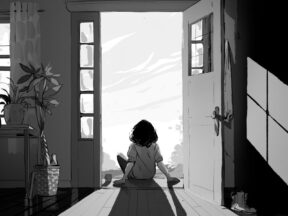
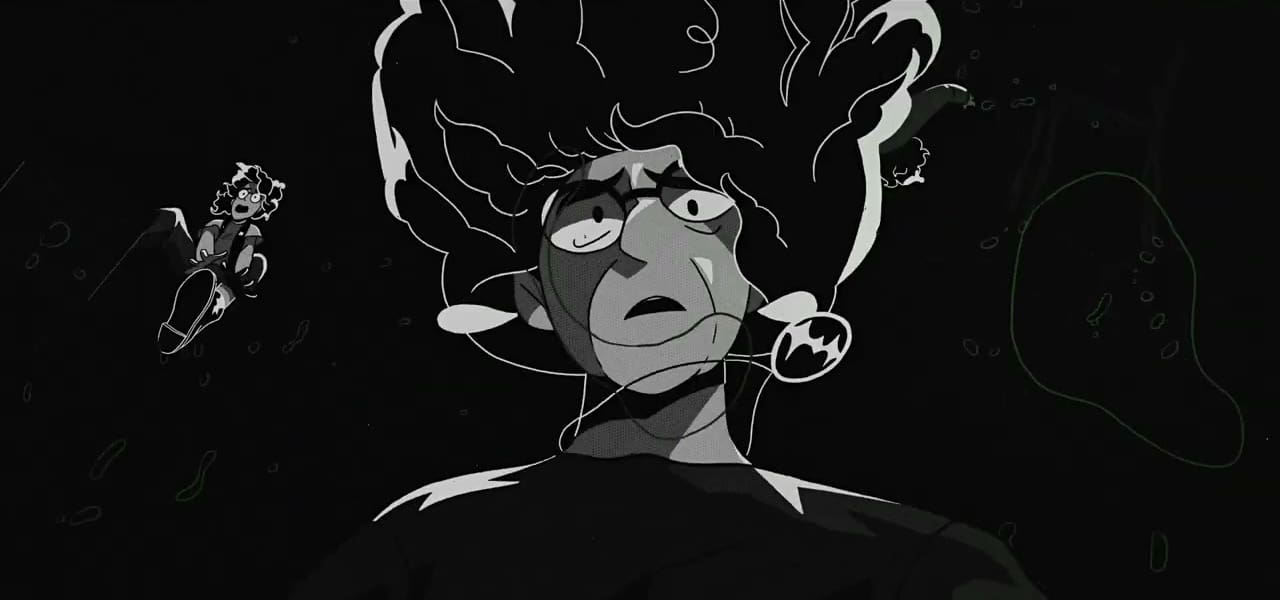
Screening in competition at next week’s Annecy International Animation Film Festival, Tangles adapts Sarah Leavitt’s graphic memoir about her family’s experience with her mother’s Alzheimer’s. Directed and co-written by Leah Nelson, the animated feature boasts a voice cast that includes Abbi Jacobson, Julia Louis-Dreyfus, Bryan Cranston, Seth Rogen, Sarah Silverman, and Pamela Adlon, with Louis-Dreyfus and Rogen also producing alongside Evan Goldberg and Lauren Miller Rogen.
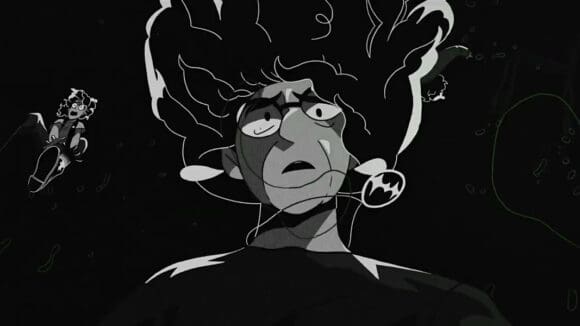
Tangles is a potent and emotional film that masterfully navigates the messy lines between love and loss, grief and denial, moving from moments of tenderness and raw emotion to bursts of outright comedy.
Cartoon Brew interviewed Nelson via email about adapting Leavitt’s deeply personal memoir, directing the film’s remarkable cast, and finding humour within the painful realities of Alzheimer’s and caregiving.
Cartoon Brew: What first drew you to Sarah Leavitt’s graphic novel as source material? Was there something in the drawings, the family story, or Sarah’s voice that immediately suggested animation to you?
Leah Nelson: I was given the graphic novel at a party! A producer friend put the book in my hands and said, “You need to do something with this, and you need to meet Sarah.” It was a little bit of strategic matchmaking on her part. She knew that I owned an animation company in Vancouver, Giant Ant, but she didn’t know that I was dealing with dementia in my family at the time.
It was a hard read because I was afraid to turn the page to see what was to come, but I’m so glad I did because it was a cathartic experience. The way Sarah told the story of her mother’s Alzheimer’s was so raw and uninhibited, and funny! I saw it as a dark comedy. The complex family dynamics, the honest portrayal of the messiness of caregiving, and the characters who were relatable and authentic all made me feel it could translate into a feature, and I never questioned whether or not it would be an animated film.
Sarah’s drawings in the book are sparse and expressive, and although we created a completely original visual language for the film, it was also her illustrations that initially captured my attention. It reminded me a lot of Persepolis, a film I had always admired, so it lit a fire in me to make this into a movie.
The film stays close to the graphic novel’s black-and-white, hand-drawn feeling, but it also has its own rhythm as cinema. What was the biggest challenge in translating something so intimate from page to screen?
It was definitely challenging to adapt the graphic novel, which is a series of vignettes and memories, into a linear narrative that would propel the story forward and take the audience with it. But that structure is part of what is so wonderful about the book, so I was determined to find a way to preserve it.
In the beginning, we often got the note that the screenplay felt too “vignette-y,” so it became our mission as screenwriters, Sarah Leavitt, Trev Renney, and me, to get that note out of the feedback. In hindsight, I’m glad we were pushed by Seth Rogen and Evan Goldberg and the team at LYLAS, including Lauren Miller Rogen, who are accomplished writers themselves. It helped us find the balance between creating something engaging and moving and retaining the quirky, dynamic world that exists inside our protagonist’s mind. I’m very proud of the script, and it’s one of the reasons we were able to attract such amazing talent to the project.
It’s true that the graphic novel is very intimate and personal. It’s a memoir, after all. My intention was always for the film to immerse the audience in what it felt like for Sarah, to get inside her psyche and use animation to visualize her emotions, not just depict what happened to her and her family. This was my north star throughout the adaptation and all the way through production. The graphic novel was always within reach, and I referred to it often as a way of reminding myself what had captured me about the work in the first place.
This is a star-studded voice cast, with actors who bring very distinct comic and dramatic identities. Was it intimidating directing them, or did the animation process create a different kind of freedom for everyone?
Um, no, it wasn’t intimidating at all, and I was completely chill the whole time.
Just kidding. Of course, it was intimidating! Listen, this is my first feature, and these are some of the most accomplished actors in the business. But I learned quickly that they are also the kindest, most generous actors in the business. They were completely trusting of my direction and supportive of our vision for the film. As soon as we got rolling, any nerves melted away. I felt completely in my element and loved every moment of it. It was surreal to be in that position, and I definitely had to pinch myself.
Because it was very important to me to get authentic, naturalistic voice performances, we made an effort to have the actors in the booth together and build in time for improvisation. This is extremely rare and required a lot of scheduling Tetris, but it was so worth it. We got incredible material that you simply can’t write on the page: authentic arguments between family members, very intimate moments between lovers, and very funny dialogue that could only come from having, for instance, Sarah Silverman and Pamela Adlon in the booth together and letting them riff.
Bryan Cranston and Abbi Jacobson could have gone on for hours, and it was hard to say cut. Julia Louis-Dreyfus, I mean, what can I say? She’s a comedic genius. But she also brought so much heart and tenderness to her portrayal of Midge. It was a dream to work with her. She’s also a producer on the film, so she was very much in touch with our ambitions for Tangles.
One moment I’ll never forget was a day with Bryan Cranston in the recording booth. I was inside the booth with the actors, so there was a beautiful closeness without a pane of glass between us. Bryan plays Rob, a father and husband losing his soulmate to this cruel disease. There were some very intense moments in the script in which Bryan portrayed the pain, anger, and guilt of this man’s experience. It was dark and intense, and he was really going for it.
I was watching this Walter White-level Bryan Cranston magic, and it was incredible to witness up close. Suddenly, Bryan broke character, looked at me, smiled his warm smile, and shrugged his shoulders as if to say, “How was that?” I had to snap back to reality and remember that I was the director and he was asking me for feedback! He is an incredibly generous actor and truly loves what he does. I’ll never forget that. If you ever get a chance to see him live onstage, do it!
Midge is such a strong presence. Sharp, funny, principled, political, and unafraid to speak her mind. How did you approach the tragedy of someone who has always lived so fully through language and conviction, slowly struggling to find her own thoughts?
We needed to fall in love with Midge in order to really feel the cruel and unfair nature of the disease and the family’s, particularly Sarah’s, heartbreak at losing her. To do this, we curated a few of Sarah’s most vivid memories of her mom so that we could see Midge through Sarah’s eyes. These memories show Midge as the hero mom and the principled advocate, and tell us a little about how she saw death, which can become a difficult conversation as dementia takes hold and a person separates from reality.
For instance, when Midge is trying to remember the recipe for “that soup she always used to make” in the “knife soup” scene, we feel that loss in the way Sarah’s face drops as her mom struggles. As you said, we can feel the tragedy of it, dementia eroding the qualities we associate most with our loved ones. It was a delicate balance to achieve without spending too long in the past, but it was important to me that we got to know “healthy” Midge well enough to feel the loss of that person.
I often said to my team that there are many Midges in the film. It’s not just one character, and we needed to get each one right. Ultimately, it was also Julia’s deft and sensitive portrayal of Midge, along with the animation team’s careful and thoughtful work in bringing the character to life through very intentional movement, that allowed us to depict not only her changing mind but her body as well.
I watched my own grandmother decline from Alzheimer’s over many years, and one thing the film captures especially well is the partner’s denial, the way love can turn into concealment or a refusal to face what is happening. How important was it for you to show that denial not as cruelty, but as another form of fear and grief?
It was hugely important. Rob’s experience, as seen through Sarah’s perspective, needed to feel authentic. That meant not being afraid to show that grief can present as anger, that caregiving is hard and messy, and that, despite our best intentions, we may not always know the right thing to do for our loved ones.
Rob’s denial was particularly important for me to get right because denial is a very powerful force. It can cloud our judgment, but it is also, I think, the heart’s method of self-preservation. Rob needed to be loving and caring, but also wrong at times, for us to relate to him.
The other thing to remember is that with Alzheimer’s and dementia, we are grieving our loved ones while they are still with us. We needed to witness Rob moving through all of those phases and understand how his love for Midge could sometimes make it harder for him to accept what was happening to her.
The film is primarily about Alzheimer’s, but there is also a clear queer coming-of-age story running through it, with Sarah finding herself, her community, her politics, and her own way of living. Was it important to keep that thread alive rather than allowing the illness story to take over everything?
This thread of the story was important to me because it was part of Sarah’s lived experience. I wanted to depict it authentically, and luckily for me, I was writing the script with Sarah herself. Although this is an adaptation and some aspects are fictionalized, it was great to have Sarah to draw from and use as a sounding board as we depicted our character living in late-1990s and early-2000s San Francisco.
It was also very important to the story because anyone who has gone through something difficult in their life or family knows that it’s not all they have going on. You may be dealing with this while also trying to have a career, begin a new relationship, or plan a wedding. Life has to go on when Alzheimer’s descends on your family, and because the decline is often extended over many years, the juggling of life while it is happening is very real.
So yes, it was important to focus on other things happening in Sarah’s world because that felt most authentic to the experience.
The black-and-white style gives the film a strange old-school quality, but it also feels raw and immediate. Did monochrome become a way of thinking about memory, family history, or the fragility of what gets preserved?
I never really thought of it as old-school or as memory, per se, but raw and immediate, definitely! The decision to stay within the stark black-and-white visual language came initially from the graphic novel. In my mind, it complements the grit and rawness of the storytelling, and I never craved color in any of the illustrations, so retaining the black-and-white approach in the film was always my intention. I also just think black and white is really beautiful.
Where we use color in the film, it needed to be intentional and to intensify a moment when Sarah’s emotions have spilled over. If it wasn’t adding to the scene, I didn’t see any need for it.
There is humor, bluntness, awkwardness, and family absurdity throughout the film, even within its most painful material. Was it a struggle to find the right balance among those dramatically different emotions?
Yes, of course. I set out to make a dark comedy, and for me, that means taking risks and trying to find those moments where you’re not sure humor belongs. But when you put it there, you realize that it is innately human to see and seek humor in hard times, and that we relate to it. This, in turn, gives us permission to laugh, and we can sometimes find a kind of cathartic release in that.
What I love about this kind of honest storytelling is that you also don’t need to have jokes all the time. If the moment just needs to be heartbreaking or scary, you do that and don’t try to add any levity. I think Sarah Leavitt did this expertly in her book, and she did so without ever belittling her mother’s experience or the gravity of what was happening.
It was also true for Sarah’s family, my family, and many others going through this whom I talked to over the years. You need to find humor and laugh together because otherwise it’s just too depressing. It’s okay to laugh. This is what Sarah’s book made me feel when I read it, and I hope people will feel that when they see our film. Caregiving is messy and hard, but you’re not alone. With this film, we are trying to shine a light into those dark corners of grief.