.png)
From Graphic Novel To Ambitious Animated Feature: Inside Annecy WIP ‘The Shiatsung Project’ (EXCLUSIVE BTS)
Stay informed with free updates
Sign up to get our news digest — delivered directly to your inbox twice a week.
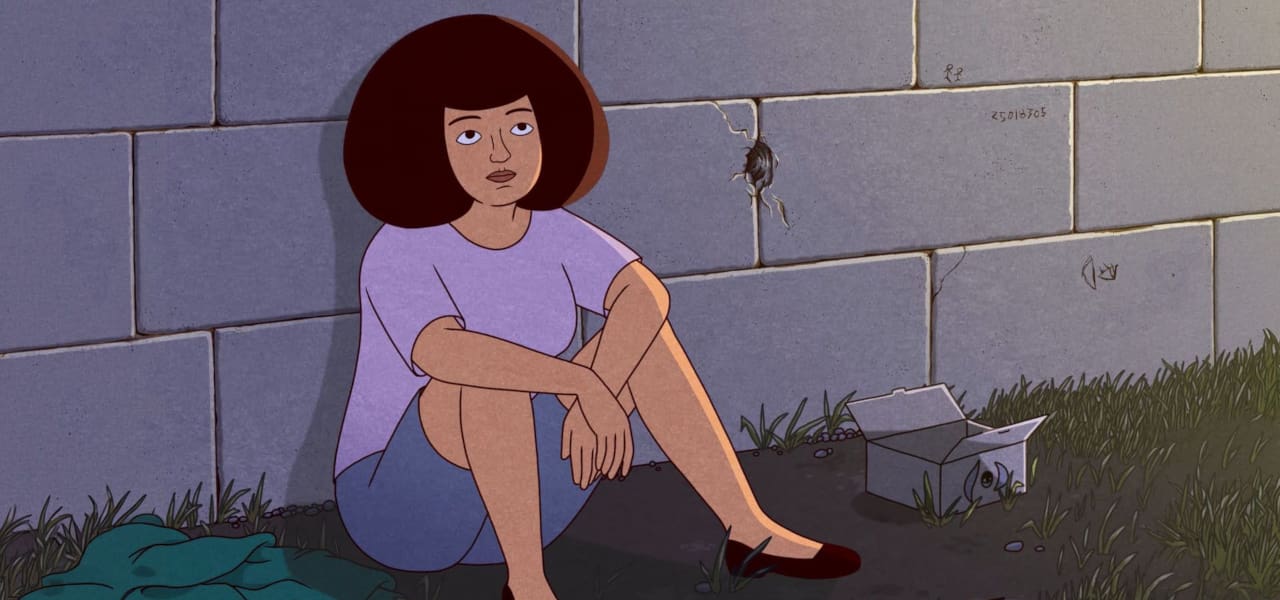
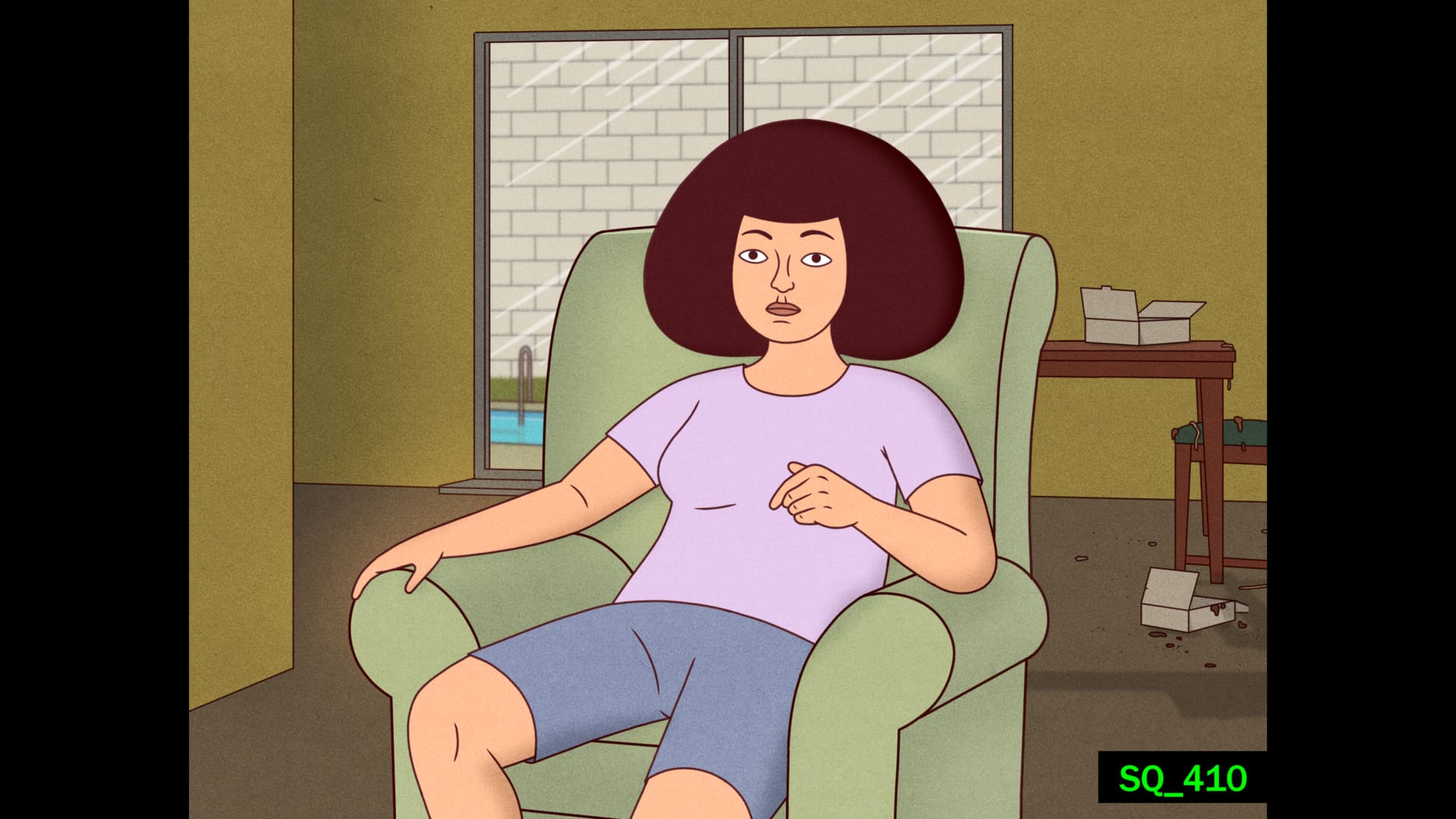
A woman lives alone in a suburban bungalow surrounded by an impenetrable wall. Her only companion is a talking screen. It feeds her, teaches her, answers most of her questions, and keeps enough from her to make the arrangement feel more like care than captivity.
That is the premise of The Shiatsung Project, the new animated feature from Brigitte Archambault and Eva Cvijanović, being presented in Annecy’s 2026 Work in Progress feature lineup. Based on Archambault’s 2019 graphic novel Le projet Shiatsung, the film is co-produced by Embuscade Films and the National Film Board of Canada, with Félix Dufour-Laperrière, Christine Noël, and Jelena Popović producing.
The project is notable before even getting to the story. It is a fully Canadian animated feature adapted from a Quebec graphic novel, and it brings the NFB into a feature co-production, a less familiar space for an institution still most closely associated with animated shorts. Equally rare is the involvement of both the NFB’s French and English animation production units.
In a private run-through of the Annecy presentation, Cvijanović described a film shaped by resourcefulness as much as design.
“Compared to other feature films, it’s a very low-budget film made by a small team,” she said. [Co-producer Félix Dufour-Laperrière of Embuscade Films confirmed that the budget is CAD $2.8 million.]
The woman is called Mona during production, though she remains unnamed in the film. What begins as a closed, almost functional domestic arrangement starts to shift once her questions become less practical and more existential. She no longer wants only food, lessons, or instructions. She wants to know why she is there, what exists beyond the wall, and whether there are other living beings outside her enclosure.
“There are questions that he refuses to answer,” Cvijanović said, “the kind of existential questions, anything that has to do with companionship.”
Shiatsung, she added, is not simply the screen in Mona’s living room. “Really, it’s the whole system” that has made possible “a baby growing up alone, being raised by a TV screen.” At first passive-aggressive, that system gradually becomes more openly oppressive, extending beyond the screen into drones and other forms of control.
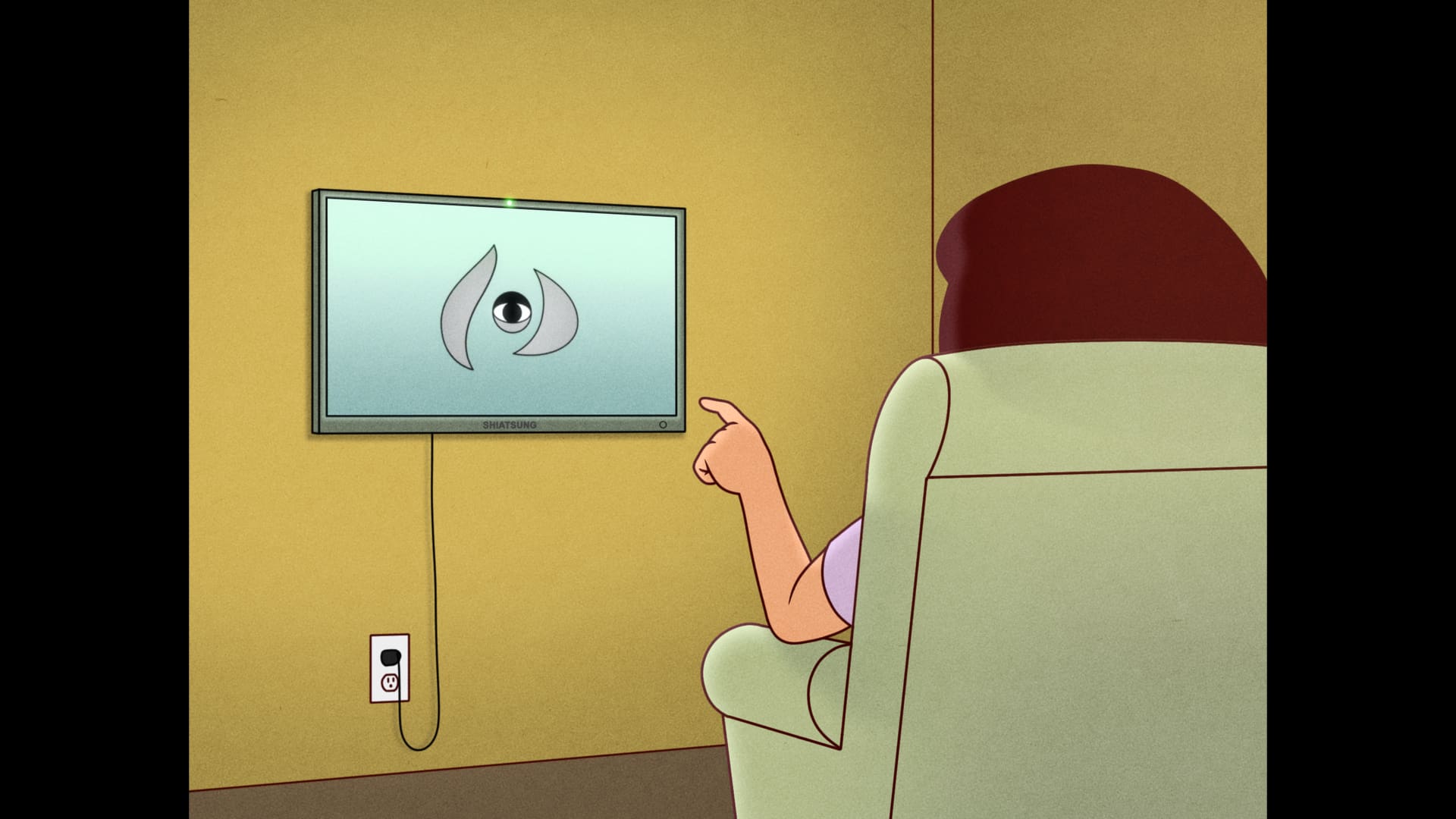
Mona, meanwhile, is shaped by a contradiction that gives the film much of its tension. She has been sheltered from the world, but also from many of its imposed rules.
“In some sense, she’s very naive,” Cvijanović said. “In some sense, she’s very free, and in another sense, she’s a complete prisoner of this space and of this system.”
Adapting Archambault’s book was not simply a matter of transferring the graphic novel to the screen. Cvijanović, who previously adapted Branko Ćopić’s famous story into Hedgehog’s Home, her acclaimed NFB short, knows the problem well: comics and animation do not often think the same way.
In the book, Mona’s inner life often comes through narration. For the film, the directors had to find another way into that interior space.
“A big part of it is that she’s alone all the time, and she has a really wild and vivid imagination,” Cvijanović said. “We really leaned into these scenes of daydreaming and fantasy and her dreams and nightmares.”
The film also pushes the ending further than the book. Archambault’s graphic novel ends on a more ambiguous note, with Mona pregnant. For the feature, the directors added a birth scene and an epilogue set a few years later. Cvijanović said she felt the film needed “to go a bit further” and provide “a bit more resolution, a bit more satisfaction,” without necessarily closing down the story’s unease.
Archambault’s authorship remains central. She wrote the script and created the world, while Cvijanović describes her own role as bringing more of “the cinematic touch,” especially through editing and the animatic. During that stage, Archambault voiced all the characters herself before the roles were cast, which helped her hear and adjust the dialogue.
That was especially important for Mona. Cvijanović stressed that the character is not generically French-speaking.
“She’s not just French, she’s Québécoise,” she said. “The Québécois identity and accent and language are present in the film.”
Mona is voiced by Éléonore Loiselle, whom Cvijanović describes as able to move between naivety, toughness, anger, resistance, and a kind of childlike openness.
Shiatsung is voiced by Benoît Brière. The team briefly tested an AI-generated voice for the character but abandoned the idea almost immediately.
“We tried it, and it was incredibly boring,” Cvijanović said.
The film needed Shiatsung to have personality, timing, and a genuine relationship with Mona.
“He needs to be funny,” she said. “There needs to be a real relationship between the two of them for the film to be watchable.”
Visually, The Shiatsung Project has been built through a similar blend of intention and compromise. Archambault’s preferred tool is Toon Boom, and the film has a clean, vector-like look. But the studio worked in TVPaint, a bitmap animation program.
“It was an interesting challenge for animators to have this very clean, very perfect line in a bitmap animation program,” Cvijanović said. “But they actually did it really well and adapted to it quite fast.”
The production also uses DaVinci Resolve for editing, Unreal Engine for spatial references and camera work, After Effects for compositing, and Kitsu for production tracking. Because much of the film takes place in and around one house, Cvijanović built Mona’s home and surroundings in Unreal. That allowed her to test camera positions, lenses, lighting, and movement in a 3D space before handing references to the animators.
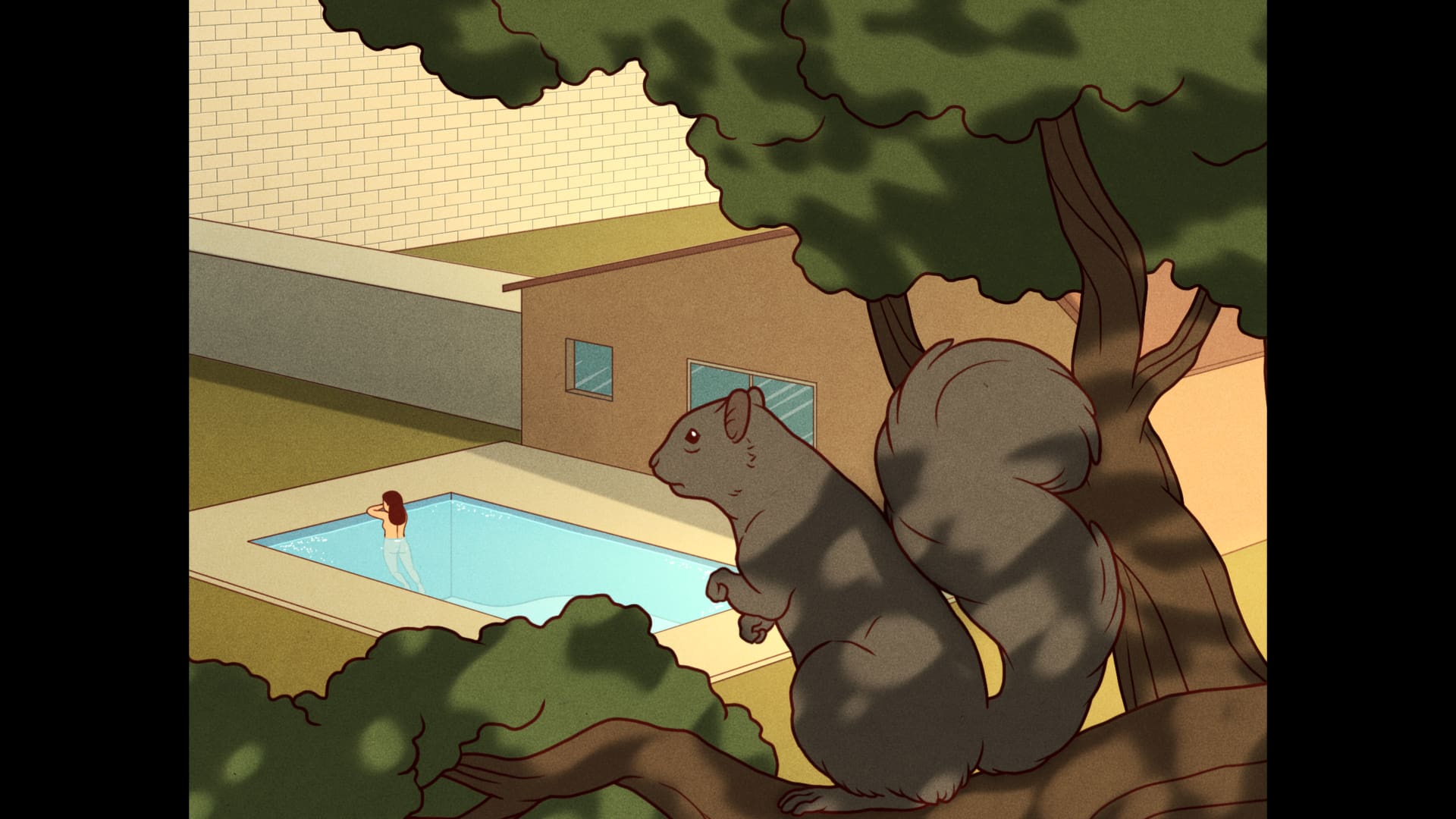
“I took the time to build everything because it’s a feature film in such a limited space,” she said.
Unreal became “a pretty important tool” in the directors’ back-and-forth. Archambault would ask for references for a sequence, Cvijanović would send them, and the drawings would move back through the pipeline.
The small team also shaped how the work was assigned.
“We cast people to the scenes and to the characters in the film,” Cvijanović said. “Instead of forcing them into a specific style, we merged what we wanted with what their strengths were.”
Some animators handle specific emotional registers of Mona. Others specialize in backgrounds, effects, babies, animals, or the odd little cartoon Mona watches on her screen. It is a practical approach, but also an aesthetic one. Different hands contribute to the world without pulling it apart.
Compositing is where much of the final atmosphere is built. Mona’s base palette remains stable, but shifts in time of day, dream states, and mood are added later. The team even developed its own terminology for temporarily locking shots. Instead of calling them finished, they call them “iced.”
As Cvijanović put it, compositing “is never quite done or could go on forever,” so icing a shot lets the team freeze it until it needs to be revisited.
Music has been part of the process from early on. Composer Martin Cesar, also Cvijanović’s real-life partner, worked on the demo and remained in conversation with the editor throughout production. Cvijanović sends him scenes; he sends back music, and she sometimes recuts his cues before sending them back again. The sound team has also begun working before the film is locked, building the sound world gradually rather than waiting for the final cut.
The NFB’s role helped make some of that flexibility possible. Cvijanović said Dufour-Laperrière approached the NFB, and its involvement “allowed us to make the film without going for co-producers outside of Canada.”
“It’s a completely Canadian production,” she said.
She also emphasized that the NFB contribution is not only financial.
“The great thing is that the NFB is an institution,” she said. “It’s not just the money that’s invested, but it’s also the services and everything else.”
For an independent animated feature, that support helps stabilize the daily creative reality. Cvijanović said the project still has to be economical, but the team is not constantly “gasping for air” financially. There is room to add a shot, improve one, or “make a shot more luxurious-looking” when needed.
“It’s nice that now there’s a little bit of breathing room,” she said, “and we can allow ourselves to have fun.”
What lingers from Cvijanović’s presentation is how closely the film’s personality seems tied to the conditions of its making. The small team, the low budget, the NFB support, the graphic novel source, and the mix of tools and workarounds all appear woven into The Shiatsung Project’s strange, varied character.
For Cvijanović, it has been “the dreamiest project I’ve ever been involved with.” Which is not a bad place to be when you’re making a film about a woman trapped in a bungalow with a domineering and menacing screen.