.png)
‘Empathy Was Essential’: ‘We Are Aliens’ Director Kohei Kadowaki On Hybrid Rotoscoping, Visual Rhythms, And Childhood Influences
Stay informed with free updates
Sign up to get our news digest — delivered directly to your inbox twice a week.
Two boys, classmates in a rural Japanese town during the Heisei era. One is seemingly normal; the other is seemingly not. Influenced by hallway rumors, the “normal” of the two, Tsubasa (Ryota Bando), starts to fear that his friend Kyotaro (Amane Okayama) is, in fact, an alien. An impulsive incident reshapes the boys’ relationship, sending them on diverging paths in a journey that spans 20 years of their lives.
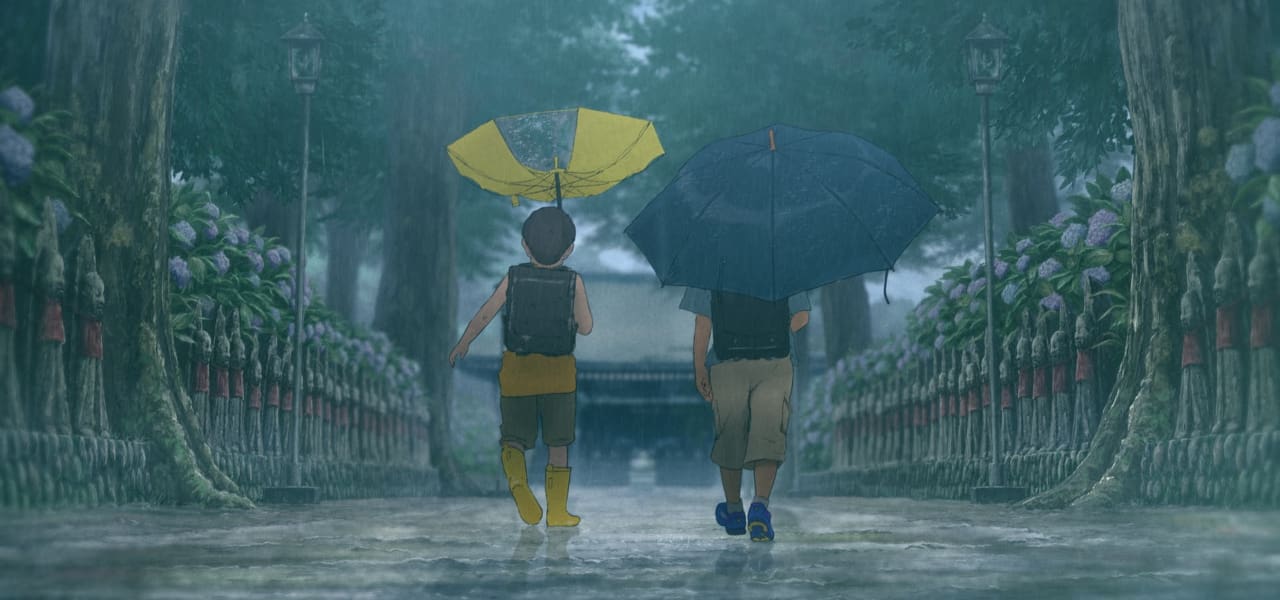
Visually distinctive, kinetic, and narratively somewhat nihilistic, We Are Aliens premiered in Cannes’ Directors’ Fortnight last month and screens in competition at Annecy this week. The film utilizes a hybrid animation approach, incorporating rotoscoped footage alongside traditional animation. It’s an appropriately uncanny aesthetic that resembles a familiar abstraction of our own reality, shifting gradually and unsettlingly toward surreal and horrific hallucinations.
Ahead of the film’s Annecy screening, writer-director-editor Kohei Kadowaki kindly answered our questions over email.
Cartoon Brew: This is your debut feature. Could you outline your background in animation?
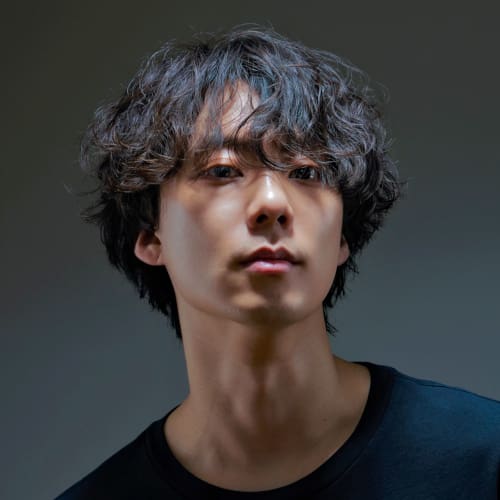
Kohei Kadowaki: I made a couple of short films while I was in university. After graduating, I joined an animation studio, but I left fairly quickly. For the next few years, I mainly worked on animated music videos. To be honest, that’s pretty much the entirety of my career as an animation filmmaker so far. There isn’t much more to tell than that.
How long was We Are Aliens in development, from concept through completion?
The project took five years from initial conception to completion, with the actual production lasting three and a half years.
The rotoscoped look of this film is highly distinctive. Tell me how you approached rotoscoping sequences and incorporating them into the non-rotoscoped elements.
Creating a strong sense of empathy was essential to the design of this film. Most of the animators on the project had little or no prior animation experience, so I felt it would be difficult to create the seemingly unnecessary movements unique to children entirely from scratch. That’s why I turned to rotoscoping, which is particularly effective at capturing those subtle, natural gestures. At the same time, I was aware of the technique’s limitations. Rotoscoping can achieve remarkable realism, but it also sacrifices some of animation’s expressive qualities. If used carelessly, it can end up feeling less satisfying than either live-action or traditional animation.
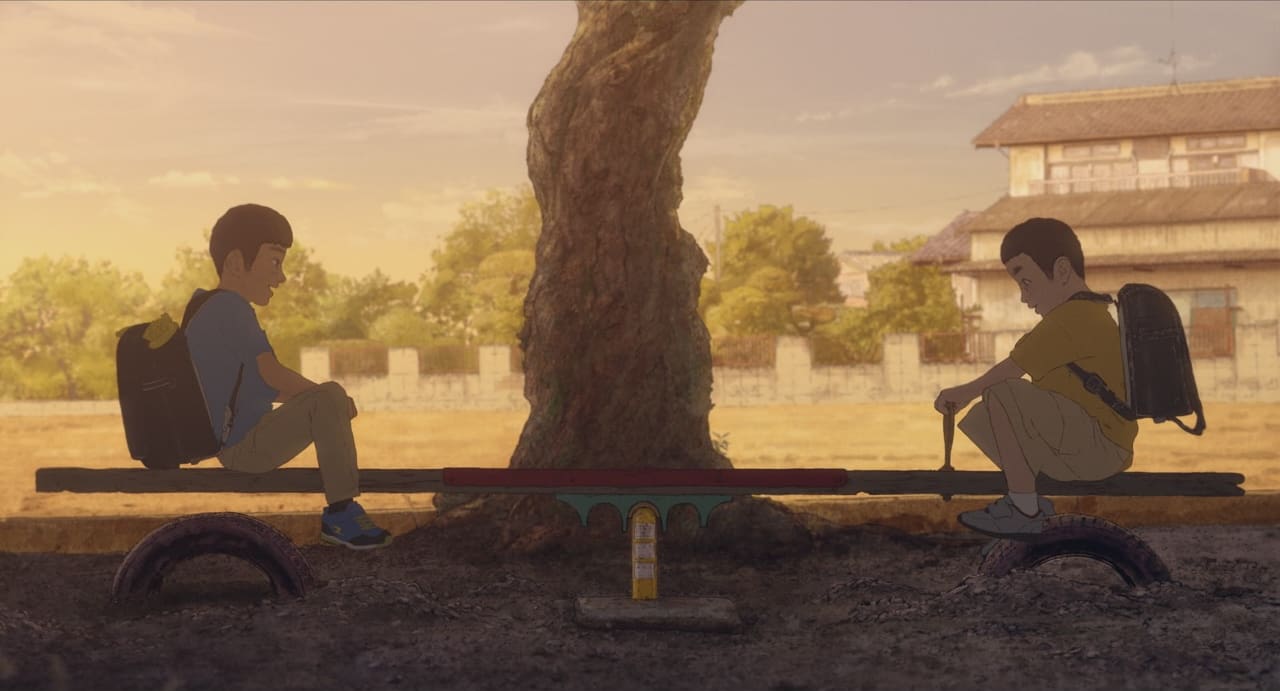
For this film, we developed a hybrid approach. We used rotoscoping to capture delicate movements, facial expressions, and subtle shifts in body weight while animating elements such as hair and clothing through more traditional methods. I also avoided storyboard compositions that would expose the weaknesses of rotoscoping.
I believe this was a visual language that needed to be invented specifically for this film. By paying close attention to the way the characters move, I hoped audiences would intuitively recognize something of their younger selves, or perhaps a childhood friend, in them. I think the film’s sense of immersion comes from that feeling of personal recognition.
This is a social drama. Equally, it incorporates horror elements. Could you tell me about the genre tensions at the core of this work?
Because the film follows the lives of two characters, it naturally feels broader in scope. To maintain a satisfying rhythm, I felt it was important to incorporate moments of suspense and other genre-film elements. By creating a pattern of tension and release, building up, then exploding, and repeating that cycle, I wanted the audience to intuitively understand how to engage with and enjoy the film as it unfolds.
Where does the animation have the most detail and dynamism? It’s in the characters’ eyes: hyper-expressive, and less solid in their outline when they get mad, paranoid, scared, or sad.
I didn’t set out to place any special emphasis on the eyes, but I do think they reveal a great deal about a character. Because of that, I approached them very carefully. In fact, I personally refined almost every eye in the film by hand to achieve the final look.
I like that pencil outlines are evident in the film’s art style, and that drawing itself is so key to the film’s diegesis, both narratively and in the characters’ everyday lives.
I didn’t consciously make drawing itself a central theme of the film, but perhaps, because I am an artist, I found myself approaching it with a stronger sense of intention and care than I realized.
This is a violent and visceral film, with many close-ups of bodies hitting surfaces and pencils piercing skin. Is that bodily realism difficult to animate? What challenges did you face in this regard?
I wanted the film to reach audiences on the level of genuine feeling and lived experience. Exaggeration is often a key part of animation, but because the animation in this film is more realistic than usual, I felt that anything unconvincing would be noticed much more quickly.
Because of that, I was constantly aware of avoiding those pitfalls, and I thought very carefully about them from the storyboard stage onward.
Was Hirokazu Kore-eda’s film Monster a key influence on this film? Aspects of this film’s narrative and structure appear to be in dialogue with that film.
I have great respect for Director Kore-eda, and when I saw the trailer for Monster, I felt there might be something in the film that resonated with my own work. So I went to see it on opening day. By then, however, animation production on my film was already underway, and it was too late to incorporate any inspiration I might have taken from it. I remember thinking that I wished I had seen it much earlier.
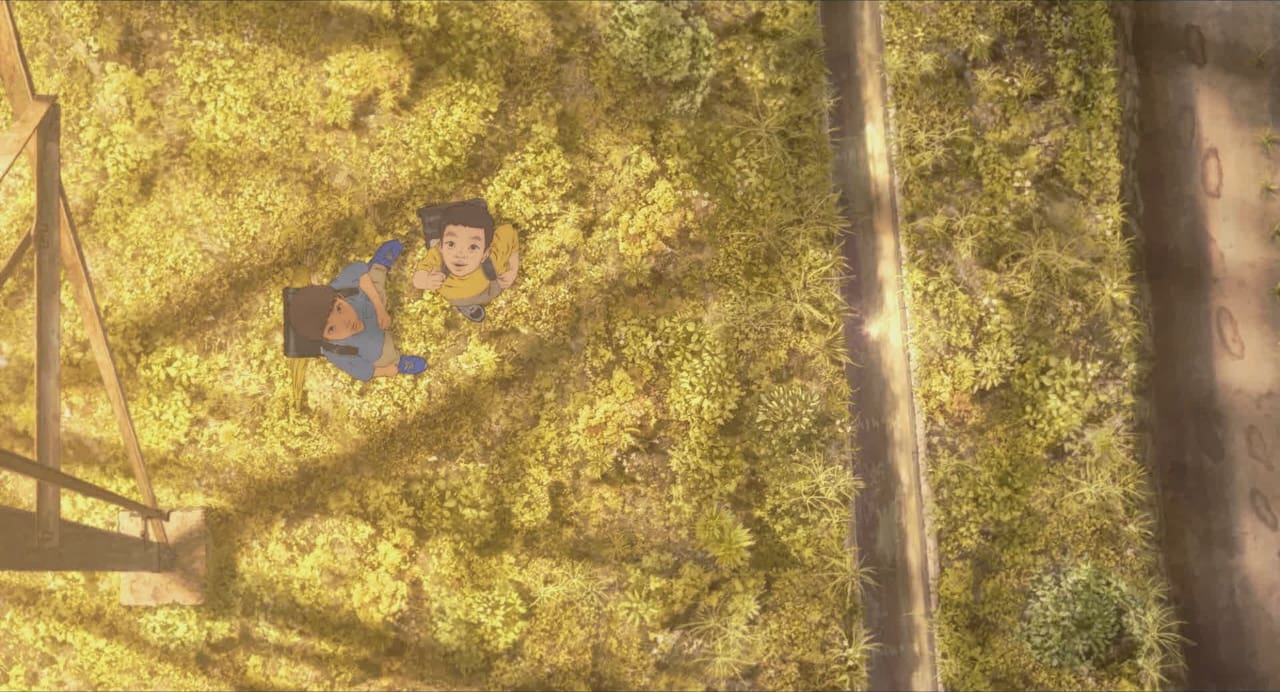
I admire your understanding and command of everyday spaces, whether in a classroom, a bedroom, an intersection, or an empty park viewed from above. Could you tell me about conceptualizing and drawing these locations, and what the shot angles you utilize mean to you?
I based the setting on places I know well, and then pieced together the elements that the story required. I paid close attention to camera angles and perspective throughout the film. Every shot was carefully considered, to the point where I could explain why it was framed from that particular angle and with that particular lens. I wanted each layout to carry the specific nuance and meaning that the scene required.
Where is the film set, and is that setting personally meaningful to you? You capture it in highly lifelike, breathing detail.
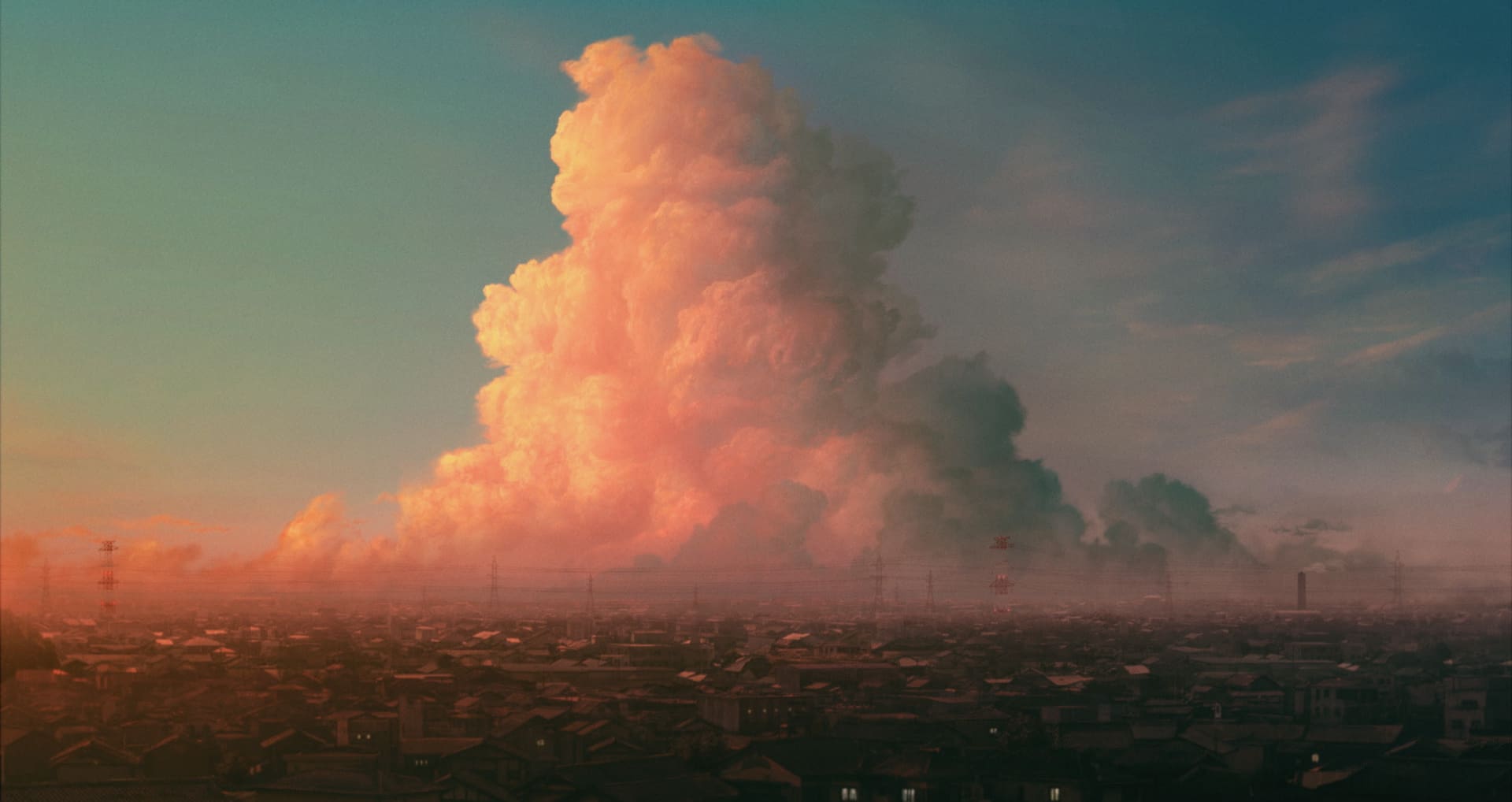
The film is clearly set in Japan, but apart from a few specific locations in Tokyo, I intentionally avoided naming particular places in the childhood sections. I wanted those scenes to feel universal and relatable, no matter where the audience comes from. As a result, most of the locations in the film are part of an original town that I pieced together from my own location scouting and childhood memories.
This is the second feature from the film label Nothing New. Having seen their live-action feature AnyMart at Berlin this year, and now We Are Aliens, it strikes me that this fledgling production company strongly supports a new style of social realist horror. Could you tell me about their support of this project and their role in its development?
Nothing New is a film label dedicated to developing talented filmmakers and creating works with global audiences in mind. Regardless of genre, they collaborate closely with creators who share a common vision, refining projects through ongoing discussion and creative exchange.
I worked closely with Nothing New throughout the entire process, from the earliest stages of development to the completion of the film. Their support was especially invaluable during the script development phase, and I found them to be an incredibly reliable creative partner.
We Are Aliens had its world premiere in Cannes’ Directors’ Fortnight and screens in competition at Annecy.