.png)
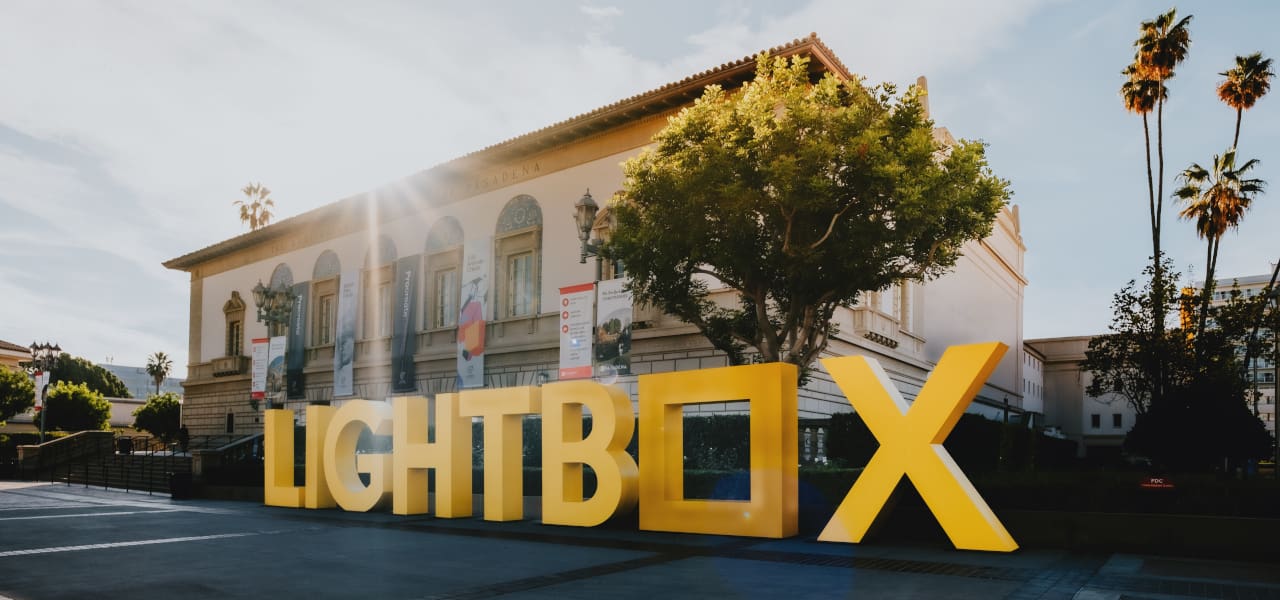
LightBox Founders On Building Community And Taking A Hard Line Against Generative AI: ‘We Think Generative AI Is Theft And It’s Not Real Art’
Stay informed with free updates
Sign up to get our news digest — delivered directly to your inbox twice a week.
“We thought that there was a lack of a place where you were able to come and not only network but also build community,” says Jim Demonakos, one of the co-founders of LightBox Expo, which takes place this year, October 23–25, at the Pasadena Convention Center.
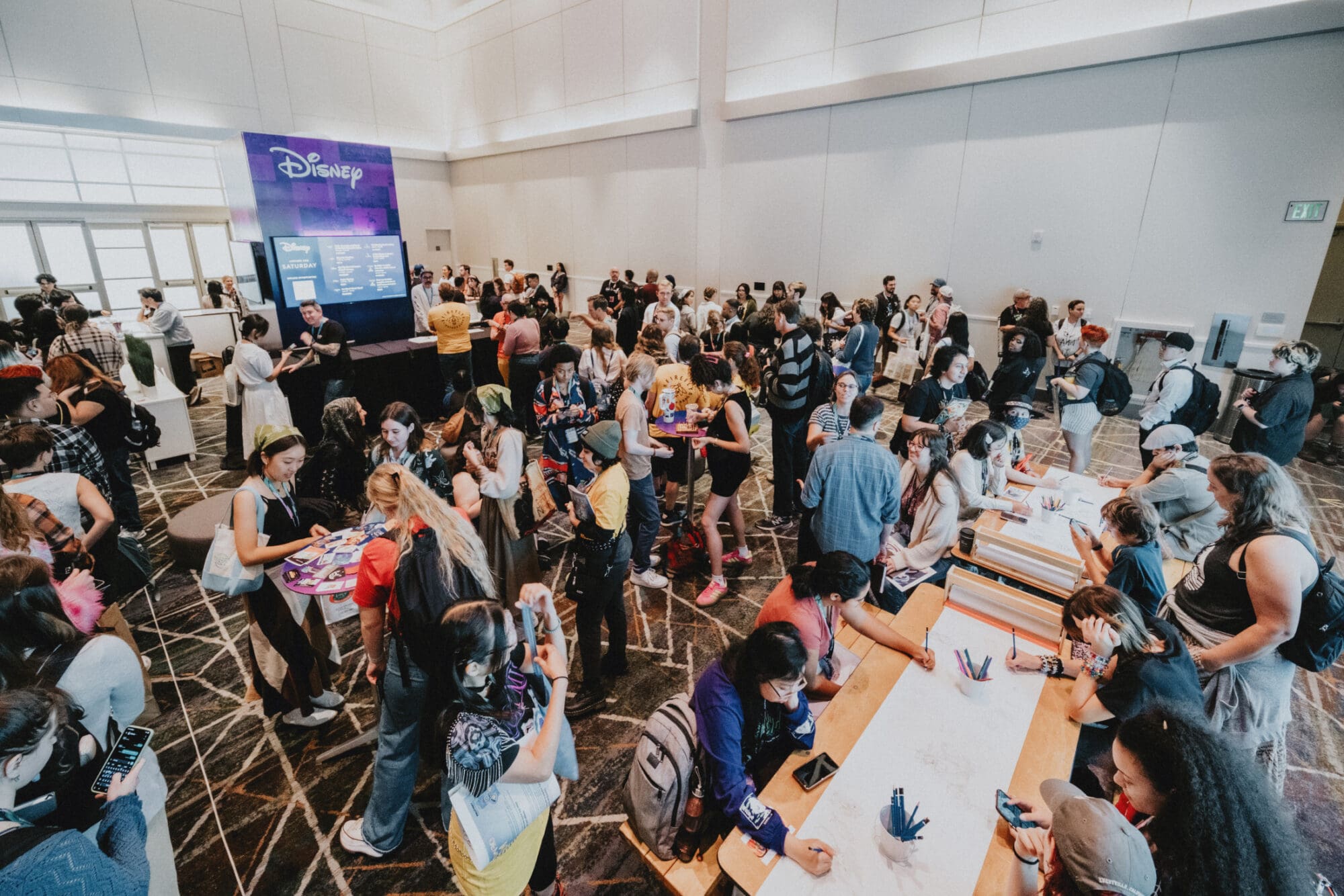
Demonakos, alongside animation industry veteran Bobby Chiu, whose credits include the live-action Alice in Wonderland, founded LightBox in 2018 and held the first event in Pasadena, California, in 2019. In the years since, it has grown considerably, with continued support from major studios and artists across the entertainment industry. With a strong educational focus, LightBox now offers more than 200 sessions led by industry professionals.
The 2026 program features presentations on Laika’s Wildwood and DreamWorks’ Forgotten Island, as well as an in-person appearance by Brad Bird to discuss his upcoming Netflix-backed film, Ray Gunn. Other highlights include a panel marking the 40th anniversary of Disney’s The Great Mouse Detective, a session on the making of Coyote vs. Acme, and a celebration of the 20th anniversary of acclaimed Irish studio Cartoon Saloon, with founders Tomm Moore, Nora Twomey, and Paul Young attending in person.
Animation legend and LightBox presenter John Musker said, “It certainly is energizing for me to participate in the effervescent LightBox Expo. It’s fun to connect with the kajillion students, fans, and animation colleagues celebrating this art form we all love. LightBox is appropriately named, not just calling to mind the essential apparatus with which so many of us have produced animation, but it is a bright beacon which draws devotees of all ages, especially young ones who are animation’s future, from around the world.”
According to Demonakos, a graphic novelist and pop culture event organizer, LightBox attendees are divided almost evenly among three groups: “One-third is working professionals, people who are actually in the entertainment art industry making work. One-third is aspiring professionals, meaning they’re outside of school doing art on the side, and their goal is to become a working professional. And then one-third of the audience is a student, at any level from high school to college, looking to get into the entertainment or animation industry.”
Most attendees are in their mid-to-late 20s, and the expo also averages close to a 50/50 split between male- and female-presenting attendees. Beyond the annual event, LightBox’s global community gathers online in a Discord channel with 33,000 active users. During the expo, hundreds of them connect in person at a park near the convention center.
Cartoon Brew sat down with Chiu and Demonakos to discuss this year’s event, including how the state of the animation industry shaped the program and LightBox’s strict no-generative-AI policy, which applies not only to panels but also to work sold in Artist Alley.
Cartoon Brew: What is the appeal of LightBox for both seasoned professionals who have been in the animation industry for a long time and someone who’s just out of college and testing the waters? What can people at different stages of their careers get from the expo?
Bobby Chiu: This event is really for any kind of artist. If you’re just starting off or you’re a student, a big part of your success in being an artist is definitely growth. You want to keep learning. We have so many of the best artists on the planet teaching what they do and how they do it.
Also, inspiration is a huge thing for so many artists, including seasoned artists. They will still be super inspired when they come because it’s the top-level artists that attend LightBox Expo. And even if you’re doing extremely well in your career, you’ll see people there that completely motivate you, especially when you’re just starting off, things like that.
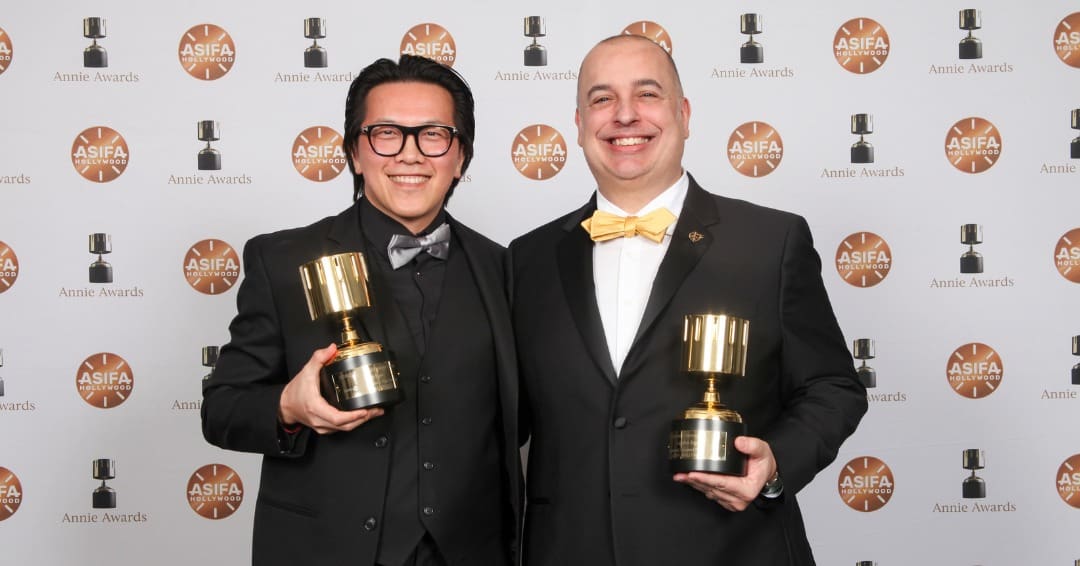
And we’ve been recognized by ASIFA-Hollywood as being the place to network, to meet other artists as well. This is the big, big gathering that happens once a year for all sorts of artists and creatives to meet up again and celebrate what they do and share what they do.
At first glance, the program is extensive. What are the key challenges of organizing an artist-focused animation event of this magnitude? What do you each bring to the equation that has helped turn LightBox Expo into such a large gathering?
Chiu: There are, of course, a lot of challenges to putting something like this together, which is why I feel like not too many people have done it. There are not a lot of people who are equipped to handle all the various challenges, from the attendees to the speakers, to our sponsors, to the guests, to our teams, all that stuff.
But we also have very unique tool sets. Jim started Emerald City Comic Con, which at its height had over 100,000 people visit. And I’ve done so many workshops for Schoolism for over 10 years, going to communist countries, going to countries that have religious police or where English is not their first language, and doing that for 10 years and about 12 to 14 workshops per year. These very special ingredients have made it so that I really feel like we are the ones to tackle all of these challenges to put on a show of this size.
Jim Demonakos: Bobby has such a big hand in the programming. The number of submissions, the amount of curation and juggling, it’s always very impressive. And then on my end, I especially work on the Artist Alley and the exhibitor area. We got over 1,500 applications this year for 250 spots.
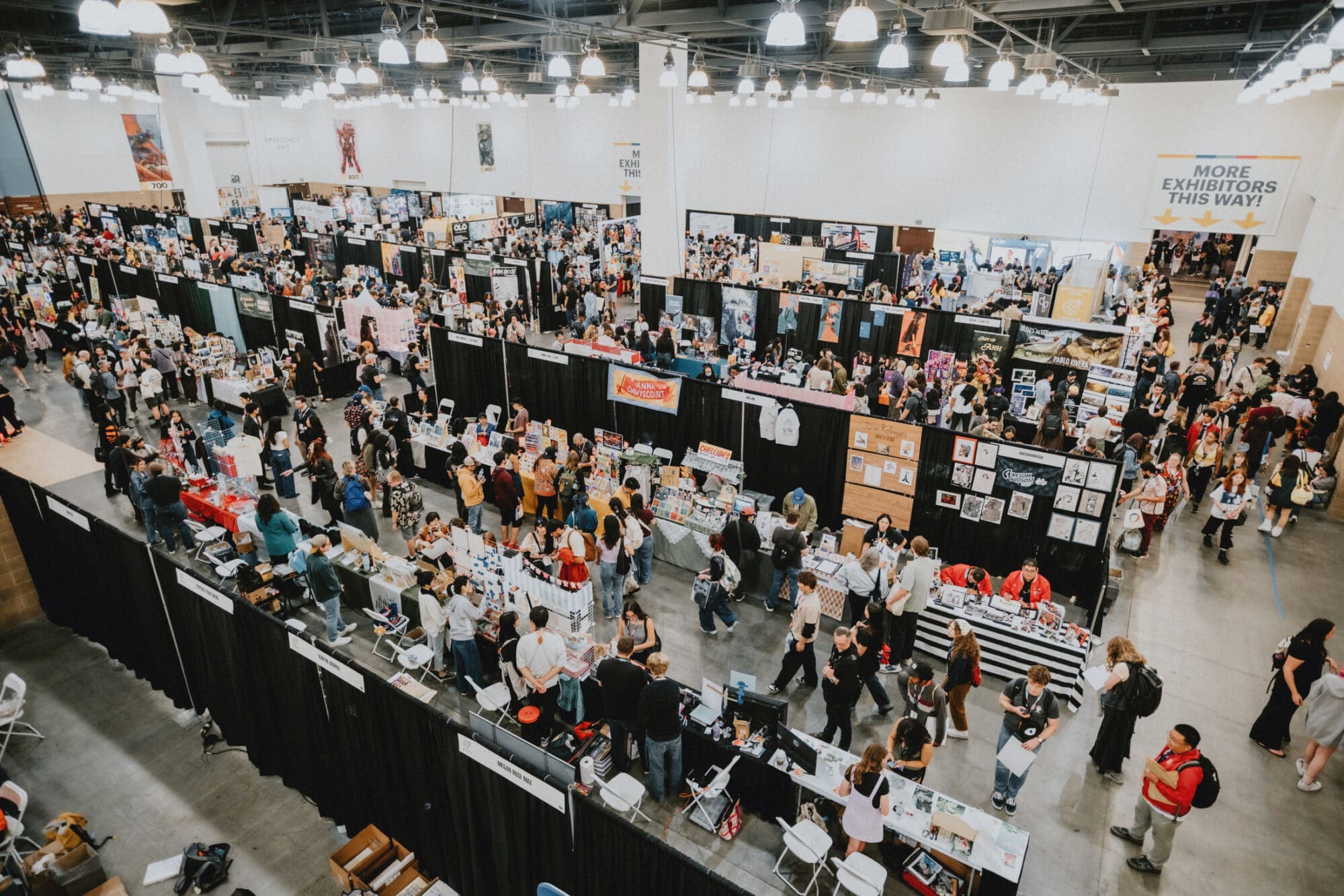
We’ve created this system where if you have a table this year, you only have a 20% chance to get a table next year, and if you have a table two years in a row, then you can’t have a table the third year. Not only is all the programming brand new every year, but the Artist Alley is at least 80% brand new every year as well, and it really makes it so that it’s aspirational and not gatekeeping, so that you know that every year there’s an opportunity for you to get in.
There are so many events where you go, and it’s the same people at the Artist Alley. For us, we do this level of curation. The people who apply get looked at by our advisory council. You just have a chance year after year. There are people who get a table, and they’re like, “I’ve been trying to get a table at LightBox for five years, and I’m so excited that I finally got in.” You hear that over and over, and it’s nice to see that instead of it being like, “Sorry, if you’re not one of our friends, then you can’t get a table,” because that’s what it feels like in a lot of places. Here it’s open to everyone, which leads to such a great vibe in the Artist Alley and the exhibit floor.
In terms of curating the program, how much is influenced by feedback from animation professionals about what they want to see in these panels or the concerns they have as the industry goes through a difficult period?
Demonakos: One of the things that we heard a lot is that what’s happening now in the animation industry is that it’s hard to find jobs, and there’s just a lot of concern about different entry-level positions, as well as how do you maintain your career.
One of the things that we focused on, too, with the programming is that there are a lot of different levels. It’s not just beginner, but there’s also like, “Oh, you’ve been in the industry for a while. How can you maintain?”
And there’s a lot of interaction with the studios as well. In a nice parallel to what Bobby was saying, there’s, “Here’s a path that leads through the studio system,” but there’s also, “Here are a few different panels on what’s the path to being independent and outside of that so you’re not so affected by any shifts in corporate mandates.” That’s one of the things that was underlying what we’re looking at for programming this year, to make sure that we’re supporting people at every level.
Chiu: I’m doing a panel myself called “Ending the Era of the Starving Artist” about a Kickstarter that I’m doing, which is hopefully going to prove this new way of making money from your own independent art. It’s through something that I’ve been working on for the last three years through another company called An Infinite Story that I co-founded, and it’s like the intersection between a comic book and a game.
[Chiu is referring to Magrid’s Magic Shoppe, which he co-created with longtime friend and collaborator Jim Bryson. The two previously worked together on the comic book app Niko and the Sword of Light.]
I wanted to talk about your AI policy. Is that new this year, or has it been around in previous years? I was surprised by its direct tone. It’s rare to see events or institutions take such a decisive stand on the subject. Even places that have an AI directive are often loose or unclear about their policies, but yours makes a strong statement.
Demonakos: First off, we’ve had an AI policy for four years now, possibly five, specifically on our exhibit floor and in Artist Alley. We essentially consider AI work bootleg because you’ve stolen it from someone. Because that’s what it is. And why would you allow someone who sells stolen work into your event?
And then what we did is we expanded that to make it so that it’s the policy for the event itself. We’ve had it more subtle over the last few years, and last year we started to bring it more to the forefront, actually making it attendee-facing. Before, we were focused just on the people who would be exhibiting.
Now, we wanted to show that we’re supporting this for everybody, that this is an event that values human artists, and that’s what we’re all here for. We don’t shy away from having such a strong statement because we don’t think there’s anything wrong with saying that we think generative AI is theft and it’s not real art, and that’s not what we’re about.
Has there been any pushback from AI companies or other parties promoting its use in creative fields? Many of them are powerful entities heavily invested in making it common practice.
Demonakos: In a funny way, no. We’ve been generally lauded by the artists. You’re right that there are companies that really push AI, and those are not people that come to LightBox because they’re not going to find a receptive audience to what they’re pushing.
We’ve had no feedback from anyone that’s like, “I’m not going to come to the show because you don’t support AI,” or anything like that. You see it even, obviously, out in the world, with Guillermo del Toro just recently again talking about it. Why would you even need to use it or want to use it? Because it takes away the humanity from the art that we’re creating.
Chiu: The presentation that I plan on doing at LightBox is us pushing back against AI, because the thing that I’m going to be talking about is how can what I’m working on do the same thing that a lot of people want AI for — something with less time spent, fewer people involved, and less money needed — except that I am not using any AI for that.
It’s refreshing to see so many of the panels focus on showing different pathways rather than encouraging the use of AI or an attitude of defeat in the face of companies pushing it. Your program seems designed to steer artists toward alternatives.
Chiu: Something that I talk about sometimes is that even though I wouldn’t wish any kind of chaotic situation on anybody, with the chaotic times that we have with the art industry right now, I always believe that in chaos is where you find the most opportunities as well.
I always try to look on the bright side of things, and that’s why I’m actually very excited about these times, even though that might sound kind of weird, because when people are unhappy — not that I would wish that on anybody — they’re looking for change, and that’s the best time to introduce new ideas.
Major studios have been supportive of LightBox from the beginning. Why do you think their interest in the event has continued over the years?
Demonakos: You can see the rundown of the studios on the sponsor list. You have the Disney family of companies, DreamWorks, Paramount, Illumination, Laika, you name it. And they’re here year after year to do recruiting. They’re not at their booth selling Blu-rays; they’re there to talk to people about how to get in the industry, what they look for.
Sony, for example, did a panel last year at LightBox where, on the panel, they had a person that they discovered at LightBox two years previously and who has been working now at Sony Pictures Animation.
You can’t promise people they are going to get jobs at the event, but have there been many instances of attendees making important connections there? Is it common for people to advance their careers significantly through LightBox?
Chiu: Pretty much on every level, from people meeting their best friends and their community at LightBox because they don’t have a community where they live, to people getting their first jobs or perhaps having a very key moment interacting with a professional, where they give you some feedback that really changes your perspective. All sorts of not just art jobs, but jobs throughout the pipeline.
Not that everybody is going to find a job, but it has definitely happened many times. Not only that, but there have also been two marriage proposals at LightBox. [Laughs.] That’s how much it means to people, that they would propose to their significant other at our event.
How is LightBox different from an event like Annecy, aside from the film-screening component? Would you say they are similar events on different continents, but catering to different parts of the industry?
Chiu: We love Annecy. I would say that with Annecy, it’s more about screening your new thing that you made. There are perhaps a lot more directors than there are artists. There are still a lot of artists at Annecy, but at LightBox, it’s on a completely different scale.
It’s literally like your Instagram has come to life and you’re bumping into people that you follow, but you’ve never met before. I hear that all the time, not just at LightBox, but just walking down the street when LightBox is happening, at the hotel, and it happens to me as well.
I remember just bumping into Dermot Power for the first time in the elevator and introducing myself. He introduces himself, and I’m like, “Oh, you’re Dermot that worked on Harry Potter, that worked on all these incredible movies that we all love.” It’s literally like your art Instagram has come to life and is walking around you.