.png)
‘Diary of a Wimpy Kid’ Creator Jeff Kinney On The ‘Intoxicating’ Nature Of Animation Storytelling
Stay informed with free updates
Sign up to get our news digest — delivered directly to your inbox twice a week.
Anyone who has raised a child or spent any extended time with one in the last 20 years will have almost certainly encountered author and cartoonist Jeff Kinney’s Diary of a Wimpy Kid empire. His first line-drawn, black-and-white book about hapless middle schooler Greg Heffley debuted in 2007 and immediately ignited a global phenomenon. Since then, Kinney has written 20 books in the main Wimpy Kid series and this year reached the extraordinary milestone of 300 million copies sold worldwide.
That level of success inevitably led to adaptations, including four live-action theatrical features. In 2021, Disney+ rebooted the franchise in CG feature form, launching a new run of animated Diary of a Wimpy Kid films. The latest installment, Diary of a Wimpy Kid: The Last Straw, debuted last week on the streamer. It is the second holiday-themed film and the fourth produced by Vancouver, British Columbia–based Bardel Entertainment.
“We’ve had the privilege of introducing our kids to the holiday classics like the Peanuts specials and The Grinch and things like that,” Kinney told Cartoon Brew about jumping into holiday animation tradition. “And we’re taking our crack at it in the Wimpy world, to make something that lasts. To do that, you have to have something that’s got some heart to it. What we strive to do is to tell a story that’s emotionally resonant, that somebody might want to return to next year.”
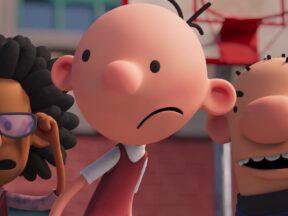
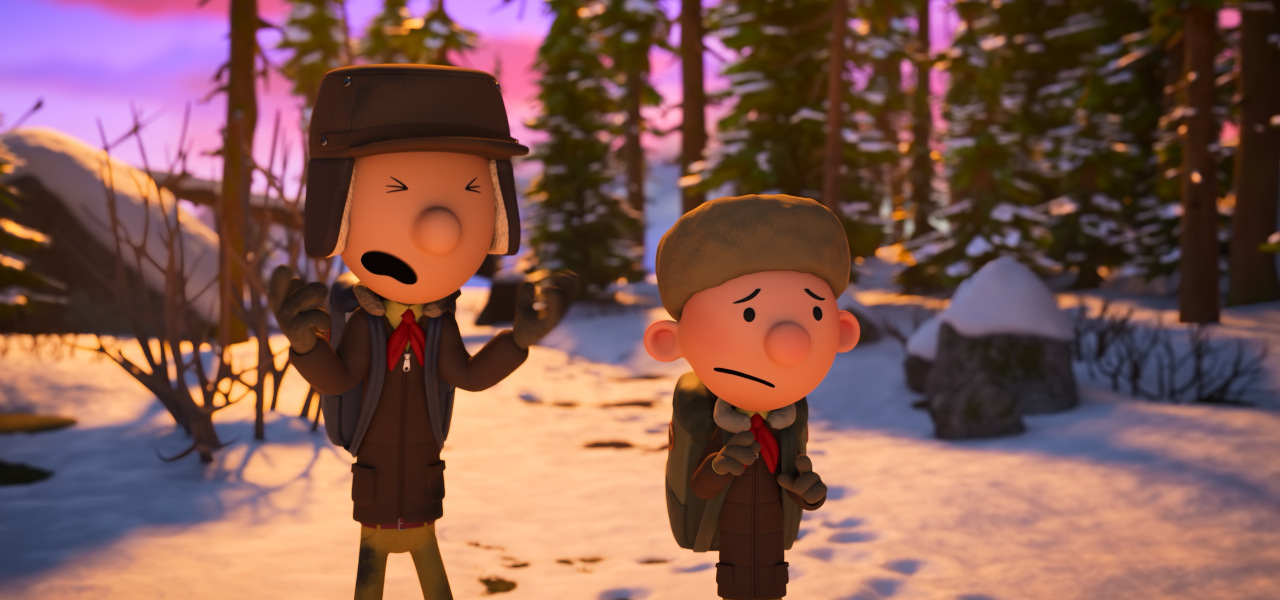
All four animated Wimpy Kid films have been scripted by Kinney, marking his first foray into screenwriting. In The Last Straw, he and first-time franchise director Matt Danner (Muppet Babies) use the cheerful holiday season as a contrast to the contentious relationship between clueless tween Greg (Aaron D. Harris) and his demanding, impatient father, Frank (Chris Diamantopoulos).
“I think Matt thinks very naturally in the language of animation,” Kinney said of Danner’s contributions. “He’s always thinking about how to plus a scene. He’s always thinking, ‘Okay, you’ve got the emotional part down on the page, or the dialogue, but how can we make this visually interesting?’”
Kinney continued, “What Matt has really taught me is this idea of the ‘game of a scene,’ where every scene, even if it’s a small scene, has some sort of rhythm to it. Or, that there’s some sort of joke that’s riding right underneath the surface. I always think about that now when I’m writing a scene. I think about what’s the game of the scene? What’s going to make this work? What’s going to make this scene understandable so that the audience is tracking what’s happening and seeing, and so that’s been a gift to me.”
Greg has always been a character who navigates the world like a physical comedian. He’s a champion of pratfalls and unintended disasters — an ideal fit for animation. But Kinney said Danner and the Bardel team expanded that comedic sensibility across the rest of the characters as well.
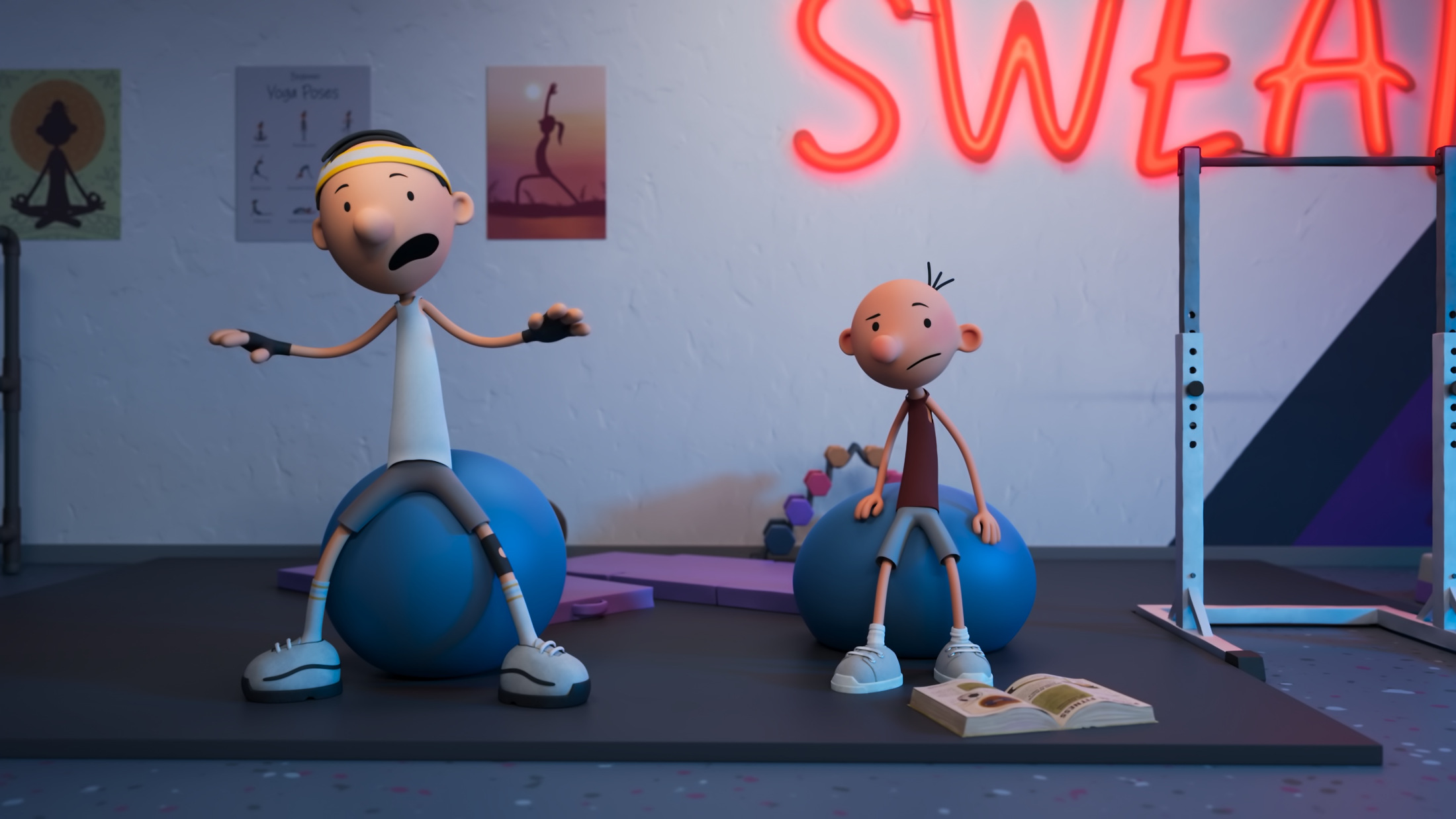
“The scene that I can’t take credit for is where Greg and his father are talking in the gym,” he said. “There’s a lot of exposition, but during the scene, Frank, Greg’s father, is doing these really ridiculous, sort of isometric exercise poses. It’s very, very funny. But it’s not anywhere on the page. It’s not what I conceived of, and if [my script] had been let stand, it would just be two people talking to each other. And that’s not good enough for animation. You have to use the benefits of the language, and use the advantages of animation to tell a better story, to amplify your story.”
With four CG-animated films behind him, Kinney said the process has opened his eyes to how different animation storytelling is compared to writing the books’ joke-driven narratives.
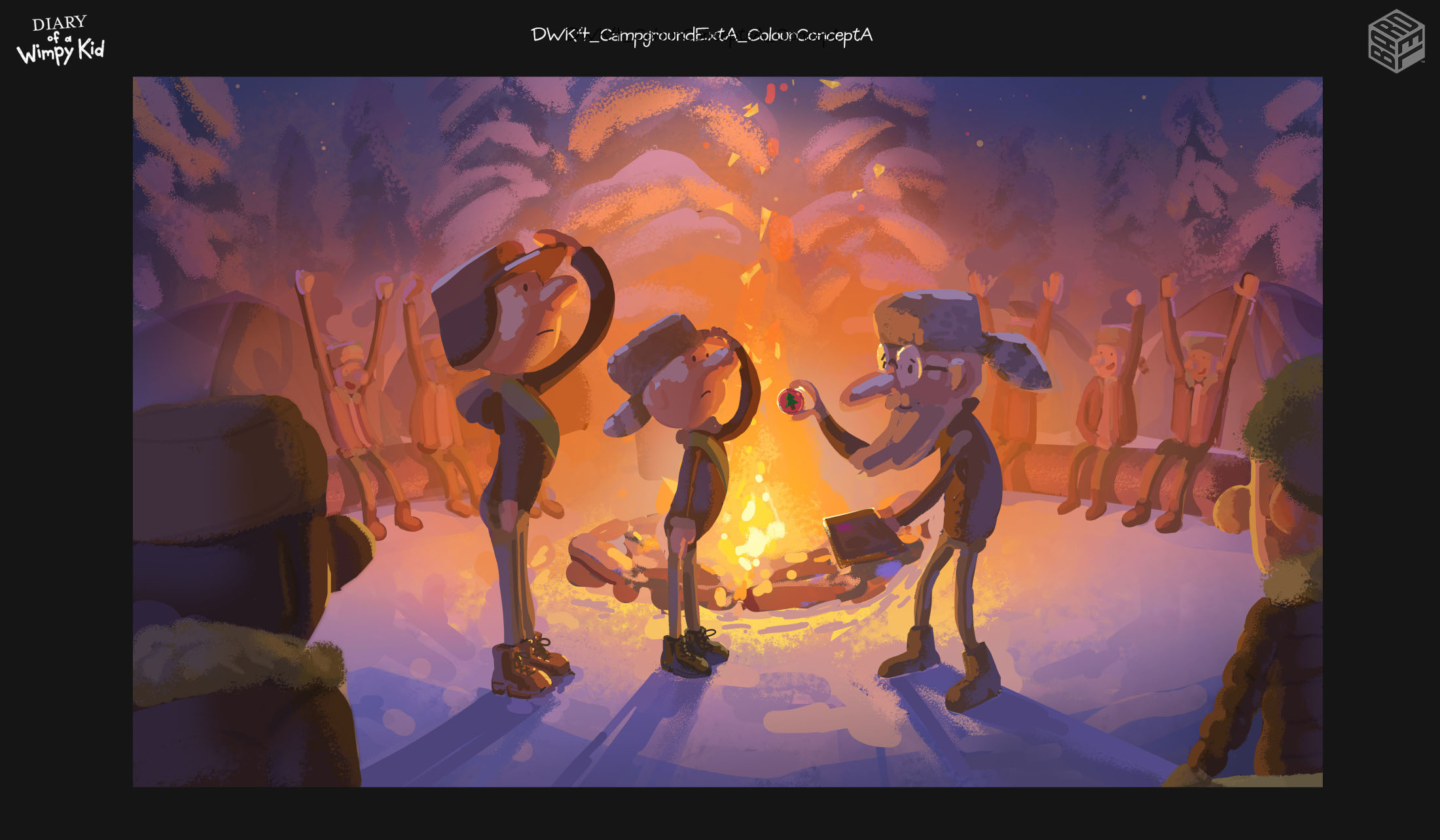
“I think right out of the gate, it took a little bit of time to get the modeling right with just a little bit back and forth,” Kinney said of adapting his line drawings into a 3d version of his world. “But the workers at Bardel are very, very skilled. I remember when I saw the first real animation test of Greg and Rowley talking together in Rowley’s room in the first movie, and I was really blown away. I couldn’t stop watching it because there was so much nuance to it. It was very sumptuous to look at. And I kind of couldn’t believe that we could do that because the budget behind these movies is not a Pixar-level budget. So to have something that looks so lush for a reasonable price is really satisfying.”
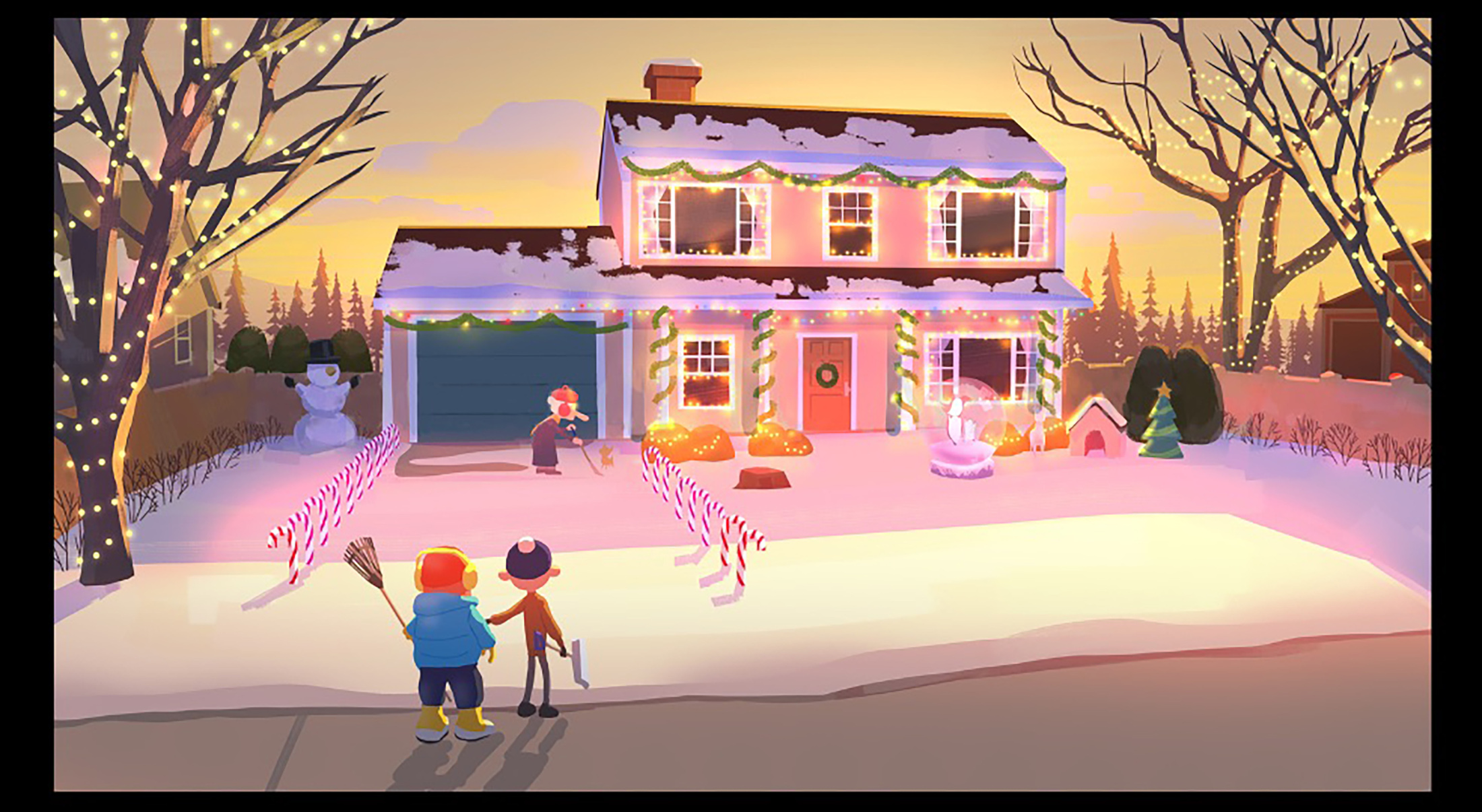
He added that there is something exhilarating about seeing even a single script direction — such as “EXT. SNOWY NEIGHBORHOOD – DAY” — become an entire town rendered on screen.
“By writing those words, you’ve set something in motion, and it might cost, like tens of 1000s of dollars, if not more, money in the budget and in manpower, to produce that scene that you wrote with just one sentence. That kind of thing can be very empowering and sort of intoxicating, because you’re literally creating worlds with your words.”
As for the future of Wimpy Kid in animation, Kinney said: “The hope is to make a movie where we take the Heffleys really out of this environment and put them in a totally different environment, and that will be a big challenge to us. I think that will add a lot of depth to the Wimpy Kid world and universe, so that’s the hope that we keep expanding this thing, so that we have a whole library of movies set with these characters. And, to tell really funny stories for years to come.”