‘At This Rate, There Will Be No Future’: Anime Icon Rintaro On Animation’s Aversion To Risk
Stay informed with free updates
Sign up to get our news digest — delivered directly to your inbox twice a week.
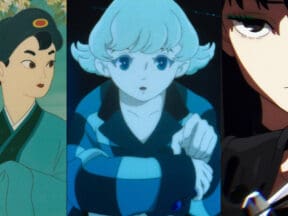
BUSAN, South Korea – The animation art of Rintaro is both singular and incredibly long-lived. The programming at the 31st Busan International Film Festival, held October 6–15, offered a reminder of that. The festival’s special focus program on Japanese animation featured Japan’s first feature-length color animated film, the 1958 Toei Animation film The White Snake Enchantress, on which Rintaro has a credit as an in-between animator.
The director also worked with the likes of Osamu Tezuka during the founding of Mushi Production, specifically as an episode director on series like Kimba the White Lion and the 1963 Astro Boy, the latter also a major milestone in the history of anime. Not that Rintaro’s legacy is defined by the work of others: his work as director of the Leiji Matsumoto adaptations Galaxy Express 999 and its sequel Adieu Galaxy Express 999, through to works like The Dagger of Kamui and, more recently, Metropolis, is remarkable and one of a kind in its own right.
Visiting the festival for a masterclass, Rintaro spoke to Cartoon Brew at a roundtable interview shared with a journalist from Korea’s Cine21, reflecting on the changes to the industry he has witnessed over his illustrious career.
Following mention of his masterclass, titled A Living Legend in Japanese Animation, the now-85-year-old director was asked about what he considered turning points in Japanese animation, and whether he knowingly set out to steer the course of the industry, still in its infancy when he began working.
“I just try to create something new, something that has not existed before. And back then I didn’t really have a lot of film or video works available, so it was easy for me to find something new or create something new,” he says. “But these days, from the moment you wake up, the moment you go to bed, you are surrounded by content. So it’s difficult to find something new, or create something new [today].”
Speaking more about what set his work apart, Rintaro described his work – when pushing for more cinematic animation in the Japanese industry – as taking the form of a sort of collage.
“When it comes to Disney animation, you have a very natural style; how it differs from my work is that I use montage, so I overlap these montage images to create animation,” he says. “So, for example, if you watch this particular part of a big picture, we get closer to that part, and that’s called montage. And the same device or tool is used in Galaxy Express 999, and that’s why my works are different from general works of animation. In Japanese animation, we have a central axis or frame that you follow naturally to create a work of animation, but my work departed from that framework. The same has been done by other Japanese animators like Osamu Tezuka, and we have been at the forefront of this new type of animation.”
When it comes to learning from the past, Rintaro has kept this mindset through to his most recent works, such as the short film Nezumikozo Jirokichi, a tribute to pioneering Japanese filmmaker Sadao Yamanaka that imagines what one of his lost films might have looked like. Asked about embracing an older cinematic language in the present day, Rintaro responded that the imagery of silent film persists.
“When I studied film, you learn that the origin of film lies in silent film, and the images created by silent film filmmakers are actually very much still in use these days,” he says. “They’re very valid to this day. So out of respect for silent films, I decided to create this film. So people in contemporary society go back to silent films if they’re interested, but they don’t really think of silent film as the origin of all films. But silent films carry the soul, or the essence of film,” he says.
Besides looking at the past, both his own career and film history in general, Rintaro was also looking forward. A few of his answers suggested unease about the overstimulation of modern engagement with art, which became a common theme of the roundtable. The conversation continued into the filmmaker’s perspective on how viewership has been transformed by streaming, particularly the binge-watching encouraged by full-season drops rather than weekly releases.
“From the viewpoint of a fan, it’s wonderful that you get to watch everything without having to wait for the next installment,” Rintaro considers. “But in the entire landscape of film and cinematic culture, I think you can actually take a certain sense of joy or pleasure from this experience of waiting for the next installment that many people these days don’t experience.”
The idea of “content” perhaps hung over the rest of the conversation as it turned toward the current culture of remaking popular works. Asked about this trend and what it means for originality in animation, Rintaro responded: “I think this focus on the market worldwide has been the cause because it brings more money in to bring things back from the past that are already safe and popular.”
He continues, “But this and what we artists or writers pursue, there must be a balance between the two. So that’s why when people bring back works from the past – and I don’t think that’s necessarily a bad thing – that doesn’t contribute to creating a new future. So if we were to create a new future, then we have to embrace the risks involved, and on different social levels, try to resist current trends as well. Because at this rate, there will be no future.”
The director then linked the culture of animated remakes to the ongoing issue of generative AI.
“If we look at society from above, AI will also be pushing towards remaking works from the past because AI is about recommending the mean or the average, and that is the safe option that you can recommend. So it will not actually recommend for you to create something with risks or something more original, or there will be a situation where original ideas, original works, will not be as successful as before,” he says. “The conversation or the discussion around the originality or the creativity of AI will continue into the future. So this is a task that we must all look into and face together. As a global community, I think we have a huge burden or a task on our backs, on our shoulders.”
The Cine21 reporter went on to ask Rintaro about collaboration with AI, contextualizing the question by mentioning the wave of people using generative AI to make “Ghibli-style” images. Rintaro responded that, in terms of the impact on animation, “whether or not they use AI tools is up to the producer of each project,” going on to say that “so, as a director, I do think about how to use AI, but I would want to do it very, very carefully.”
When asked for their own opinion, the Cine21 reporter spoke about being skeptical of AI because it can only use what is borrowed.
Rintaro responded with a couple of takes, each perhaps a little more skeptical than the last. First, he likened AI to a blade, with its own uses but a high likelihood of danger if mishandled. He then added that “one year, I came across a scary story about a mother who actually studied on her tablet how to draw pictures of her child to bring different Lego blocks on the screen to complete the picture and color it in as well.”
He continues, “Now what’s really scary is that AI has the entire recipe, telling her exactly what to do every step of the way, and instead of her selecting what colors she wanted to use, she was told which color to use for each part. After she completed the picture, she congratulated herself.”
He adds, “And it just goes to show we have lost the ability to think sometimes, and we do exactly as we are instructed. And I think that’s very symbolic of what’s happening to us, and how far AI has kind of made its way into our everyday lives – and we need to think about how far we’ve let AI into our everyday lives.”
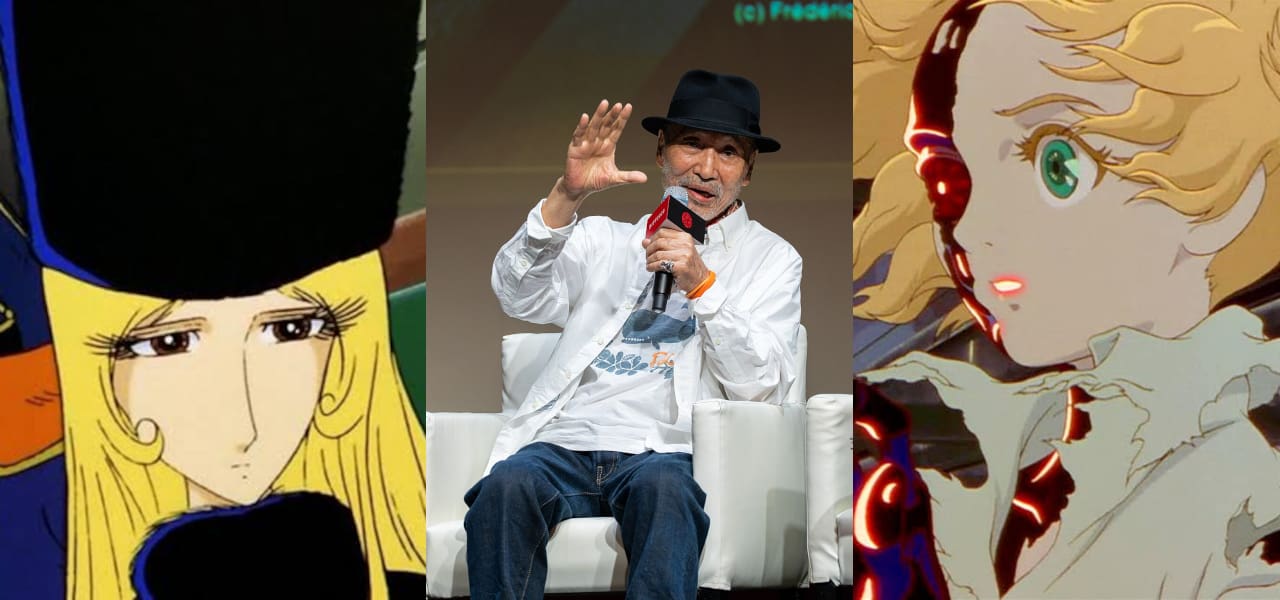
Pictured at top: Rintaro, Japanese animation director, at the 2026 Busan International Film Festival (BIFF) for a Masterclass – Source: Wikimedia Commons