.png)
How To Make An Animation Market Worth Your Time And Money
Stay informed with free updates
Sign up to get our news digest — delivered directly to your inbox twice a week.
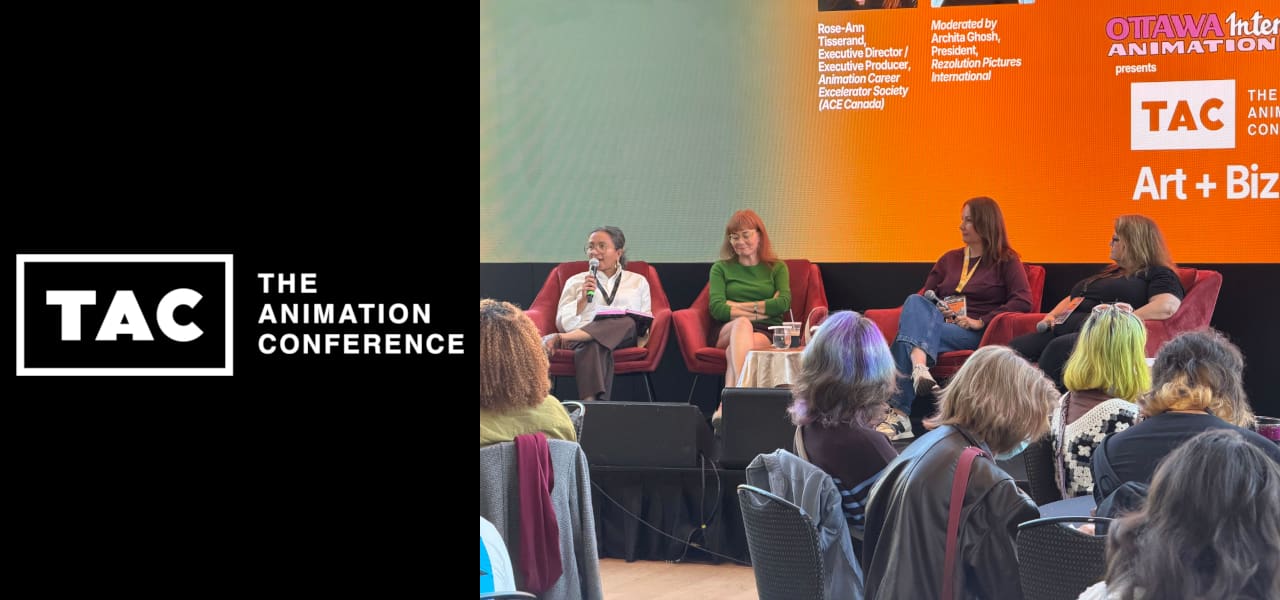
OTTAWA, Canada – Do people still make deals at animation markets? At The Animation Conference (TAC) panel at the Ottawa International Animation Festival titled Why Are Markets Still Relevant?, moderator Archita Ghosh put the question to Brooke Keesling of ASIFA-Hollywood, Christine Huot of Mainframe Studios, and Rose-Ann Tisserand of ACE Canada.
“Long game,” Tisserand replied. “Ten years ago it was a shorter game.” Producers could pack their schedules with meetings and sometimes leave with a development deal, she said. Today, “you go to markets to network, connect, and keep the long-term game going.”
Her advice for approaching those meetings was simple: “Be curious, not transactional.” Ask people questions and get to know them, she said, rather than treating each conversation as a pitch.
Huot described meeting a director at an Ottawa career fair in 2018 and hiring him in 2023. They had kept in touch and followed one another on LinkedIn, and when she was putting together a crew, he came to mind. “Don’t feel like, ‘I didn’t come away from this with a job,’” she said. “I’m just about making great connections.”
Keesling has also hired people years after first meeting them at an event. She tells her CalArts students, whom she teaches once a week, “Don’t think of networking as making fake friends that you can use to get you jobs.” Collaborating on one another’s films and forming friendships can matter as much as meeting a recruiter.
Ghosh pressed the panel on the sometimes overwhelming cost for young and inexperienced filmmakers. Should an emerging creator with $500 left spend it to attend a market in hopes of scoring a deal? “If they have only $500, that’s in the whole world, I’d be very careful with that,” Tisserand said. If the money is available and meant to invest in a project or career, she said an event can be worthwhile, provided the attendee does some homework first.
And if the cost is out of reach? “Can you volunteer?” Huot asked. “Because that’s a way to get a pass to get in here.” Even those who cannot attend can follow the festival’s films and participants, she added, then use what they learned to start a conversation online.
Keesling cautioned against letting the pressure to attend eclipse the work itself. “If you don’t have the $500 to go to a thing, just keep making stuff at home,” she said. “Making work is the most important thing.”
For those heading to a market, the panelists recommended being as prepared as possible, researching attendees and their projects, updating portfolios and reels, and keeping work ready to show on a phone. Tisserand still carries business cards and writes reminders on the backs of the ones she collects. Huot also scans LinkedIn QR codes: seeing someone’s face helps her remember a conversation later.
The panel agreed that the work of attending a market doesn’t end with the closing ceremony. Tisserand suggested getting back in touch within a couple of weeks and reminding them where and what you discussed. “If you wait too long,” she said, “then the value of the market may have less worth.”
After that, the panelists favored occasional messages with a reason behind them: new work, a relevant project, or an availability update. As Huot put it, “I like to hear how people are doing.” A TAC meeting in Ottawa may be brief, but the relationship it starts does not have to be.