.png)
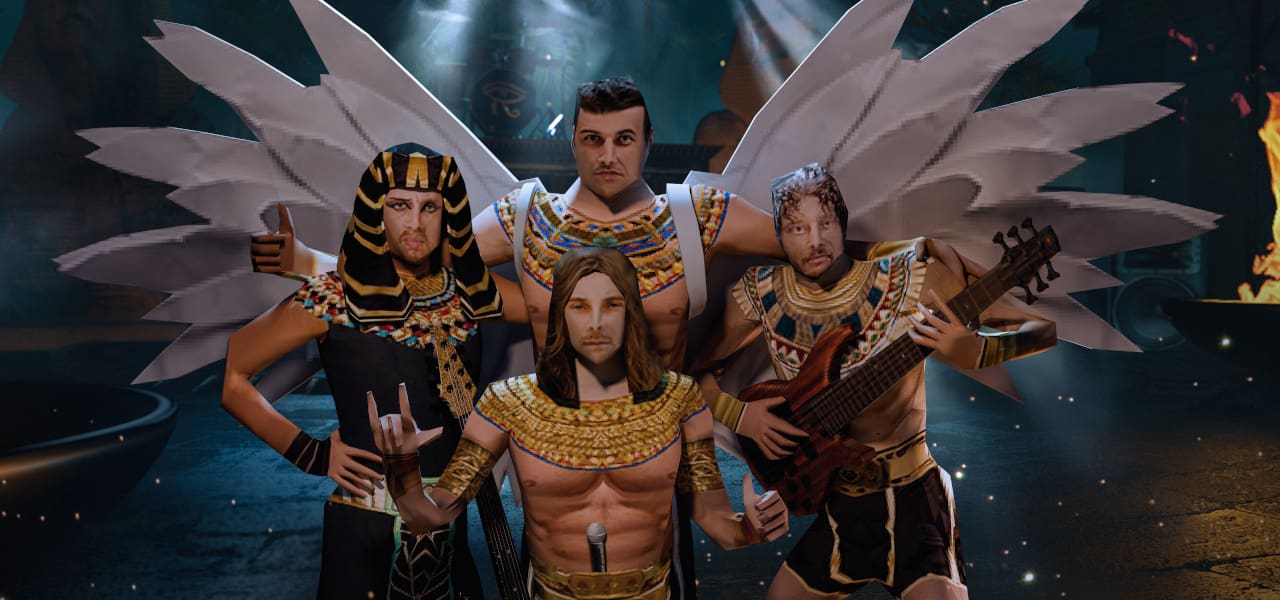
Egyptian Gods, Prog Metal, And PlayStation Graphics Collide In Dima Grigorev’s Video For Shokran’s ‘Imhotep: The Falcon Of Gold’
Stay informed with free updates
Sign up to get our news digest — delivered directly to your inbox twice a week.
When progressive metal band Shokran approached Montreal-based concept artist Dima Grigorev about making a short animated clip for social media, he countered with a far more ambitious proposal: “Why not make an entire music video?”
The result, “Imhotep: The Falcon of Gold,” is a delirious, PS2-Style collision of ancient Egyptian symbolism, TV talent competitions, and mosh pit mayhem. The band performs to win the favor of a panel of Egyptian gods while an increasingly unruly crowd circle-pits, stages a wall of death, and gets tossed through the air like in a classic cartoon.
Grigorev recently revisited the five-month production in an extensive making-of video, detailing how he created the music video largely by himself using Blender and Unreal Engine.
Story In Song
Grigorev was already a Shokran fan when the band contacted him. He had listened to its music while studying graphic design at university, when he was especially interested in progressive metal.
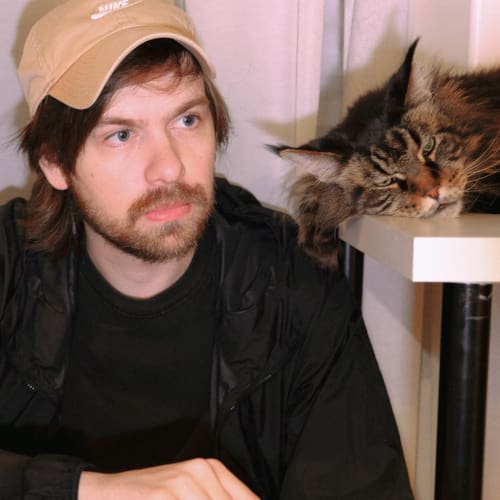
“Shokran sounded so fresh to me,” he recalled. “So when they reached out to me, saying I was surprised is a huge understatement. I was so insanely motivated.”
The band were fans of Grigorev, too, through his Instagram account and gave him almost complete creative freedom right from the outset. He asked the members for front- and side-facing photographs so he could recreate their likenesses, but otherwise received little direction.
“They said, ‘We saw your Instagram. Do whatever you want,'” he told Cartoon Brew.
Grigorev finds that an entirely open brief can make it harder to settle on an idea, especially when one person with no real prior experience in animation is making nearly every creative and technical decision.
“If you give yourself complete freedom to do anything, your brain starts working in the wrong direction,” he explained. “If I don’t limit myself, my thoughts drift too far, and it gets hard to pin down a specific idea because I want to try this, then that, then maybe something else.”
He started by deciding that the video would be built around a concert. He then looked for a simple logline that could bring together the performance, the Egyptian setting, and the song’s major musical turns.
Grigorev repeatedly played the track inside Blender and listened for moments that suggested potential visual and narrative cues. Although he had worked in graphic design and visual effects, he had always done so as a concept artist. Without any production experience, he skipped the conventional storyboard process and instead placed rough animation directly onto the timeline, developing the structure alongside the music.
Four distinct musical moments in the song presented the perfect opportunity for four reactions from a panel of judges. That’s how Grigorev arrived at the talent-show concept.
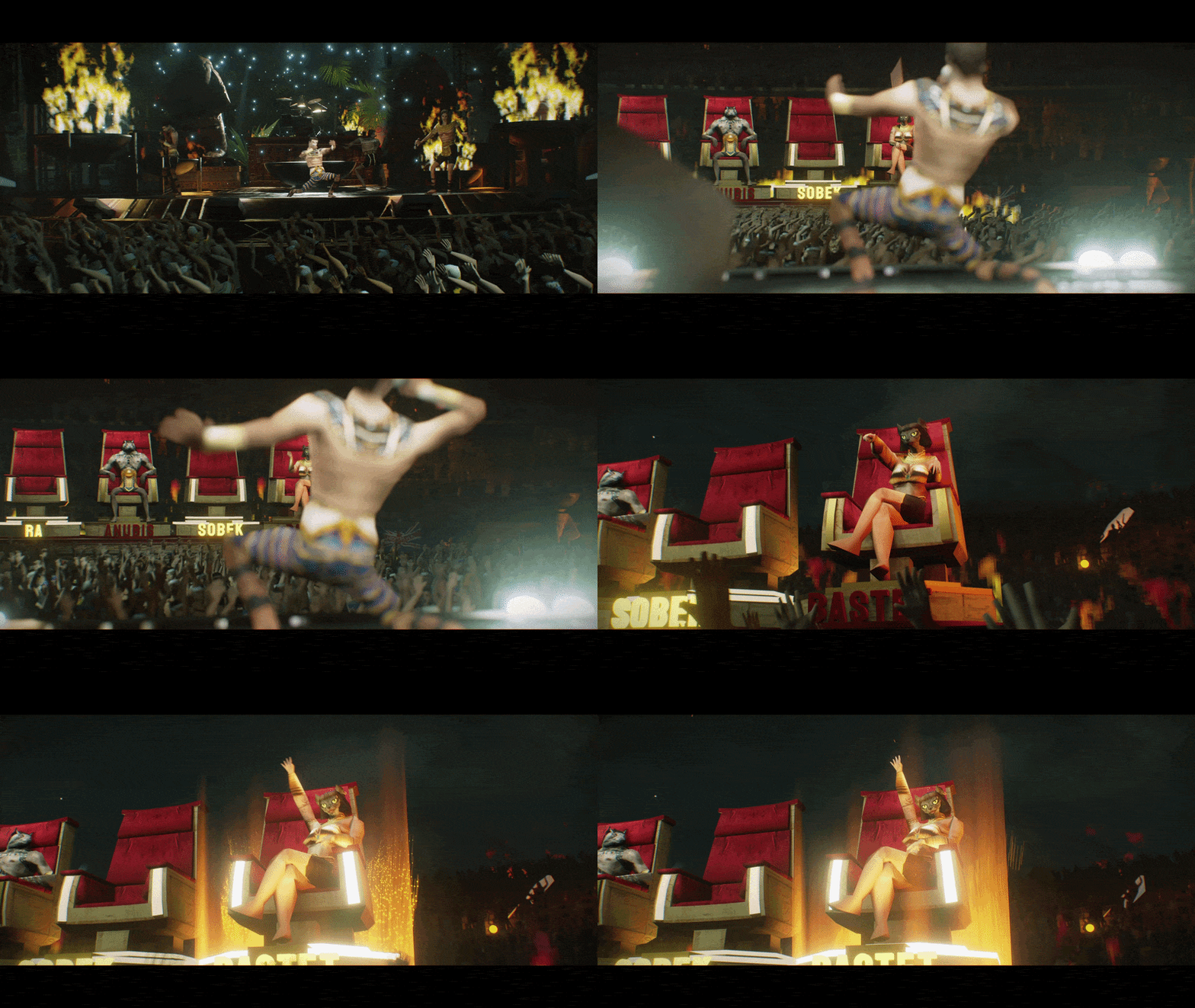
“When it clicked, then I just went full into production because I already knew it was going to be good,” he said. “In my head, everything came together perfectly.”
The setup allowed him to tell a clear story while filling the video with gags, cameos, and personal touches. His Maine Coon cat even appears as one of the mosh pit’s most formidable characters.
Learning Through Movement
After graduating in graphic design in 2015, Grigorev spent five years working as a concept artist in VFX before moving into illustration in the game industry. Cinema remained his main interest, and he eventually began looking for a more personal creative outlet.
He first tried writing music and put together around 100 demos on his computer. When he considered posting some of them online, he decided they needed a visual component to be compelling enough to catch people’s attention. Much of his professional illustration work already involved 3D software, so he began learning animation through online tutorials.
“I just made the scenes that I had already been making in 3D move,” he said. “Those were my first steps. Since then, I’m just practicing, practicing.”
Grigorev purchased a Perception Neuron motion-capture suit to animate the band’s performance. He had tested video-based mocap services before, but was unhappy with the results. Demonstrations of performers doing acrobatics in the Perception Neuron suit convinced him it could capture the more energetic movement he needed.
“I ordered it just because of the Shokran music video,” he said with a laugh, before adding that he now regularly uses it for personal projects.
The video’s low-poly aesthetic was another practical restriction. A denser visual style would have required far more time than Grigorev had available while working alone outside his day job.
“I could have made something much more visually dense and polished, but then I wouldn’t have been able to pull it off with this level of speed and efficiency,” he explained.
An Unreal Shift
According to Grigorev, the video’s crowd physics proved to be his biggest technical challenge during production. Grigorev originally planned to have a friend with experience in Houdini create the simulations, but the artist became too busy with other work. Grigorev had no experience with Houdini himself, so he sought another solution and found it in Unreal Engine.
For the circle pit, he directed the characters along splines and divided them into ragdoll and non-ragdoll versions. Parameters allowed him to adjust their speed as they moved in increasingly chaotic ways.
For the wall of death, Grigorev enabled ragdoll physics for the entire crowd. He then created opposing spawn and target points, sent the two sides charging into each other, and adjusted the gravity to make the collisions more exaggerated.
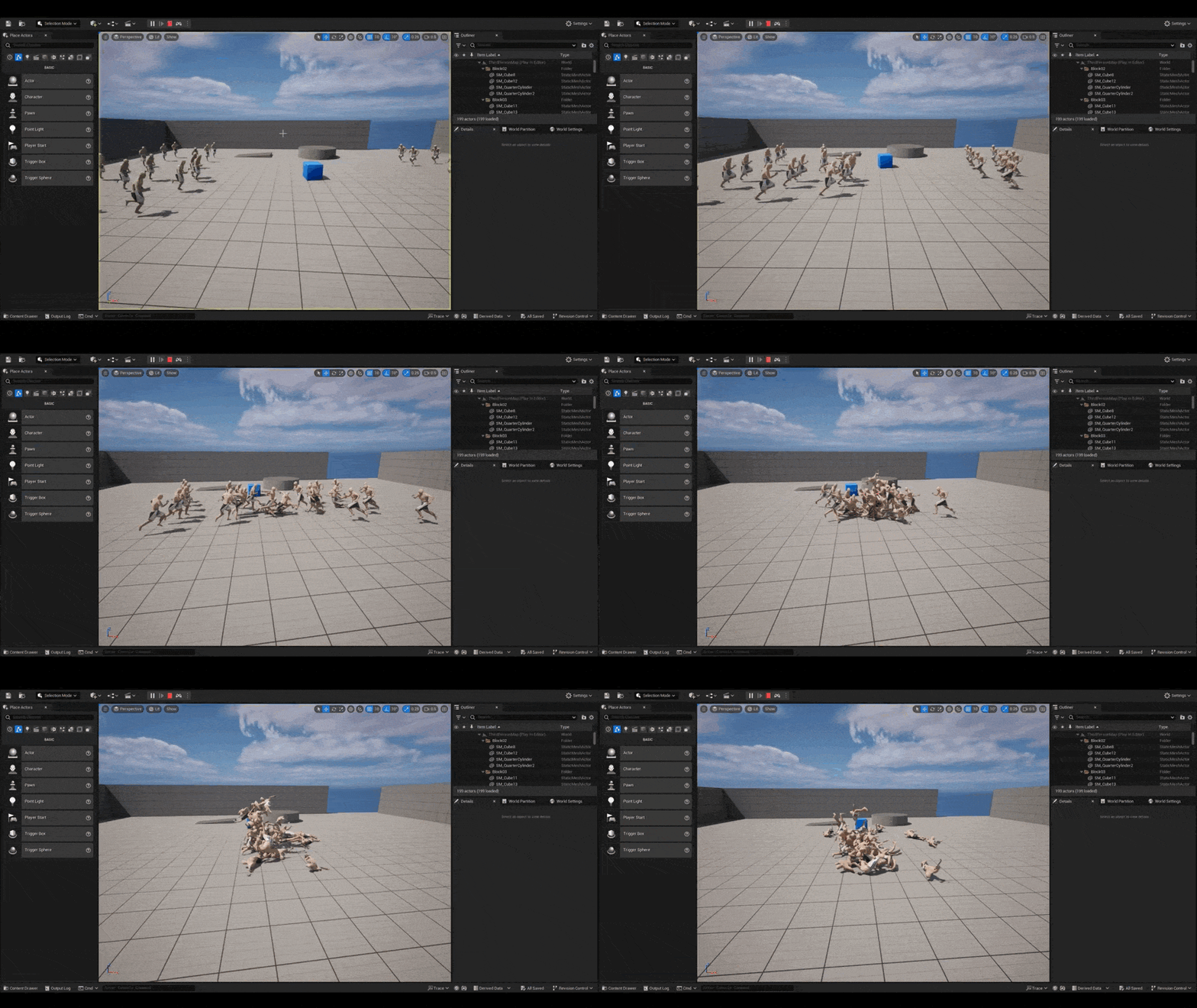
“I watched so many tutorials, and I just followed them religiously,” he admitted. “If you asked me to recreate this stuff, I wouldn’t be able to. I’d need to watch the YouTube video again.”
After running each simulation several times, he selected the most entertaining result and exported it to Blender. He did little manual cleanup afterward. Camera movement, focus changes, and editing helped smooth the transitions between different crowd behaviors.
The awkwardness of the physics suited the supernatural video. Characters collide and fly apart with the unpredictability of an older video game, making the crowd scenes pure slapstick comedy without diminishing their scale.
Crowd simulations were Grigorev’s first exposure to Unreal. This change became necessary when Blender slowed significantly as scenes grew more complex, while Unreal offered faster rendering and a more responsive viewport. He now uses both programs in his personal work.
Directing The Viewer’s Attention
Grigorev’s concept art background helped him integrate large crowd simulations with the characters driving the story. He used lighting, focus, and composition to direct attention toward the most important part of each shot.
“Hide what you don’t want people to focus on, and add detail only where you want the viewer to look,” he explained. “You have to guide the viewer’s attention actively.”
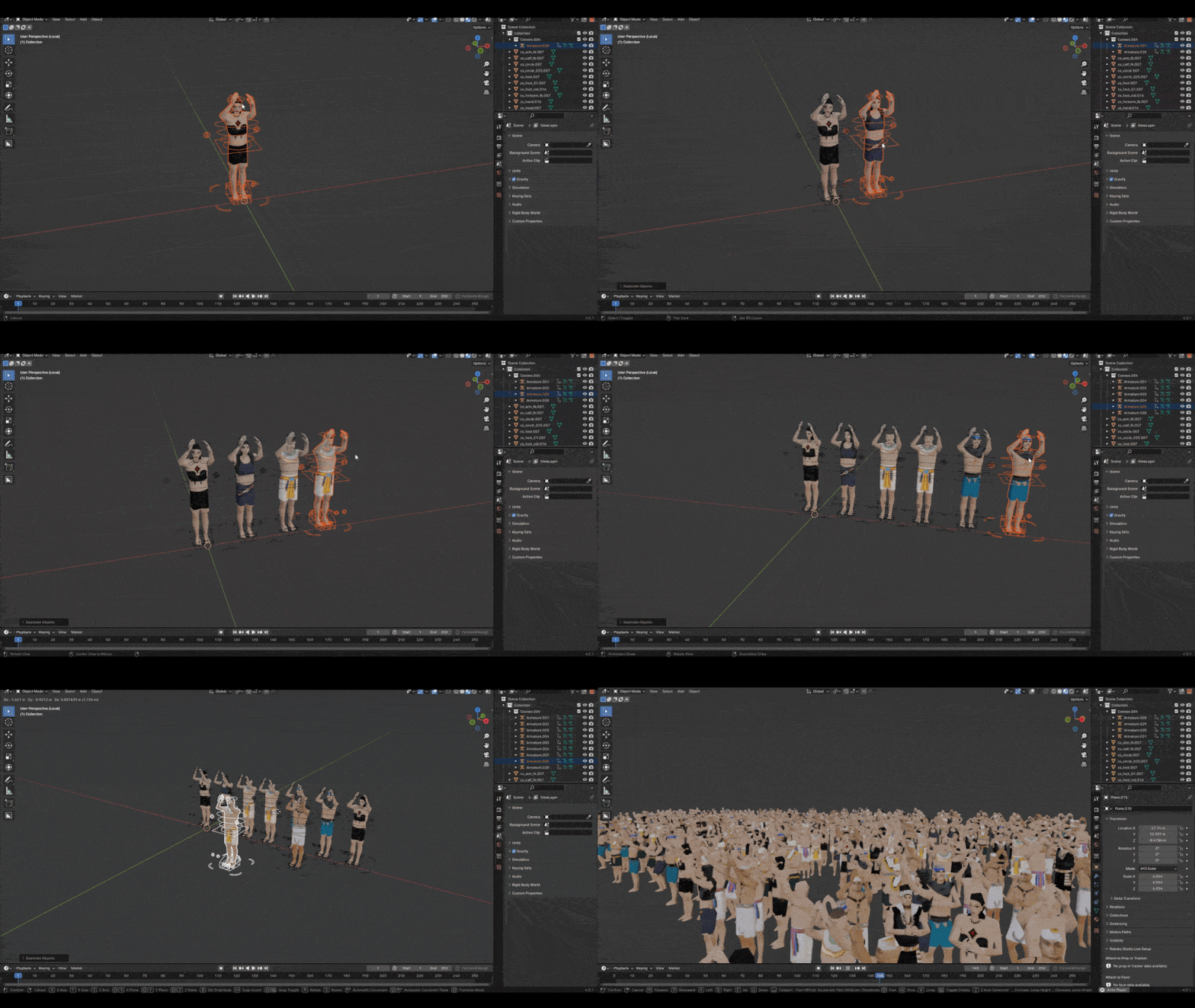
That approach allowed him to reuse models in the wider crowd without making the repetition obvious. Characters closer to the camera received more deliberate designs and performances.
“I feel like CG artists often miss this because they want to show every single detail they built and keep everything in focus, even when it’s not needed,” he said. “By showing less, you can tell a lot more and create the illusion of something much more complex.”
The production was initially scheduled to take three months but ultimately required about five. Grigorev completed it for free, working after hours and on weekends while also taking French classes. He joked that the energy drink featured in his making-of video was what he used to maintain his schedule.
Indie Rising
The project also gave Grigorev space to develop a style separate from his commercial work. “Big studios just don’t want to take the big risks and do something completely new,” he said. “But indie artists, we’re trying to find our own style.”
As animation and real-time tools become more accessible, Grigorev expects to see more artists independently produce projects like his.
“It’s getting so much easier for artists and animators actually to bring their ideas to life,” he said.
For “Imhotep,” that meant expanding a proposed social media clip into a complete music video and learning Unreal Engine so a crowd of low-poly metal fans could tear into each other.