.png)
Aria Covamonas, Acclaimed Experimental Mexican Filmmaker, Dies At 46
Stay informed with free updates
Sign up to get our news digest — delivered directly to your inbox twice a week.
Aria Covamonas, celebrated Mexican filmmaker and experimental animator known for her radically non-linear works and appropriation of public-domain media, was found dead in Oaxaca on July 6, 2025. She was 46. No cause of death has been reported.
Born Aria Leonora Guzmán Casanova in Monterrey, Covamonas was a self-taught artist whose work stood at the intersection of surrealism, dadaism, and philosophical inquiry. Her distinctive style, recognizable for its use of hand-animated cutouts, archival imagery, and mismatched historical audio, earned her international acclaim and a cult following among experimental cinema circles. Her death has left the artistic community in shock, and public appeals have been made to locate her next of kin, as no relatives have yet been identified.
Her most recent and ambitious work, The Great History of Western Philosophy (La gran historia de la filosofía occidental), debuted earlier this year at the International Film Festival Rotterdam (IFFR). The film went on to win Best Picture at the 24 Frame Future Film Fest and screen in Annecy’s prestigious Contrechamp selection last month. Covamonas described it as an “imaginary machine” that generates meaning from fragments of images and sound.
“We have this idea that meaning appears when I say a word. I think that is incorrect,” she told ZippyFrames in February of this year. “I wanted to create a machine that does that with images and pieces of pre-existing sound from other films… The game is like an imaginary machine where you have a field and a set of rules. You just want to see what happens when you let this chain of significance run, and the meaning appears in that movement.”
That approach defined much of her filmography, which includes Camille Saint-Saëns’ The Carnival of the Animals (2017), Taxidermy for Beginners and Unidentified Item No. 984 (2018), Hideouser and Hideouser (2019), Introduction to the History of Western Philosophy (2020), Socrates’ Adventures in the Under Ground (2021), and I Can’t Go On Like This by Aria Covamonas From Planet Earth (2023).
That last title also screened in Annecy in 2023, when Mexico was the festival’s country of honor. At the time, Covamonas recorded a brief video that, while bleak in subject matter, showcased her sharp sense of humor and concluded with an important message about seeking help during times of desperation.
Working without a script, Covamonas built her films from meticulously curated archival materials, including footage sourced from the U.S. Library of Congress, the Internet Archive, and scanned images from rare book collections. Her cut-out animation method, inspired by German Dadaist Hannah Höch, evolved from her beginnings as a visual artist who illustrated texts.
“That technique is completely stolen from Dadaist artists, specifically Hannah Höch,” she said. “I started by illustrating texts… They are asking to be animated.”
The Great History of Western Philosophy is a fractured epic that fuses Western philosophical icons with figures from myth and pop culture; Plato meets Mickey Mouse in a cosmic satire governed by Chairman Mao. But the film resists linear interpretation. According to Covamonas, it functions, like so much of her work, more like a dream.
One of the film’s most distinctive audio elements is its use of Mandarin-language dialog lifted from Chinese public domain films, often accompanied by mismatched subtitles. The result is deliberately disorienting to viewers who understand the spoken language, as they hear one thing, while others must interpret the incongruent English captions.
“I was very tempted while making the movie to just skip the subtitles,” she said. “I don’t speak Chinese… I had to make up the interpretation myself, but Chinese-speaking people would get this weird and absurd output.”
The public domain was Covamonas’ go-to library for assets used in her films, and she was a staunch critic of modern copyright legislation. Speaking with The Hollywood Reporter, Covamonas explained: “I am a big advocate of the public domain and of limiting copyright. This was kind of a celebration of that. How copyright exists today is absurd and only benefits the exploiters, not the people who make the work. Nobody deserves to own something for 100 years. 10, 20 years – like patents – would be reasonable. You create something, you can exploit it to get money. It is fair to get paid for your work for an amount of time, not 100 years.”
Covamonas’s work resisted tidy explanation and rewarded ambiguity. Her artistic process was both methodical and improvisational, composed of “units” just two seconds long, which she would repeat if inspiration faltered. She would commonly animate only four seconds per day this way, making her output all the more impressive.
Despite her growing recognition, especially domestically after multiple presentations at the Morelia and Guadalajara film festivals, Covamonas remained on the margins of the mainstream film industry. Her legacy lies in her challenge to dominant narrative models of storytelling and her unwavering commitment to experimentation.
In the absence of surviving family, artists, filmmakers, and activists in Mexico have begun mobilizing to ensure her work is preserved and remembered. Most of her films are not available online, making their safekeeping all the more vital.
Covamonas often compared her films to dreams. “It’s the same when you dream,” she said. “After the dream, you interpret what you think.” For audiences and artists, interpreting the dreams she left behind will define a large part of Covamonas’ legacy.
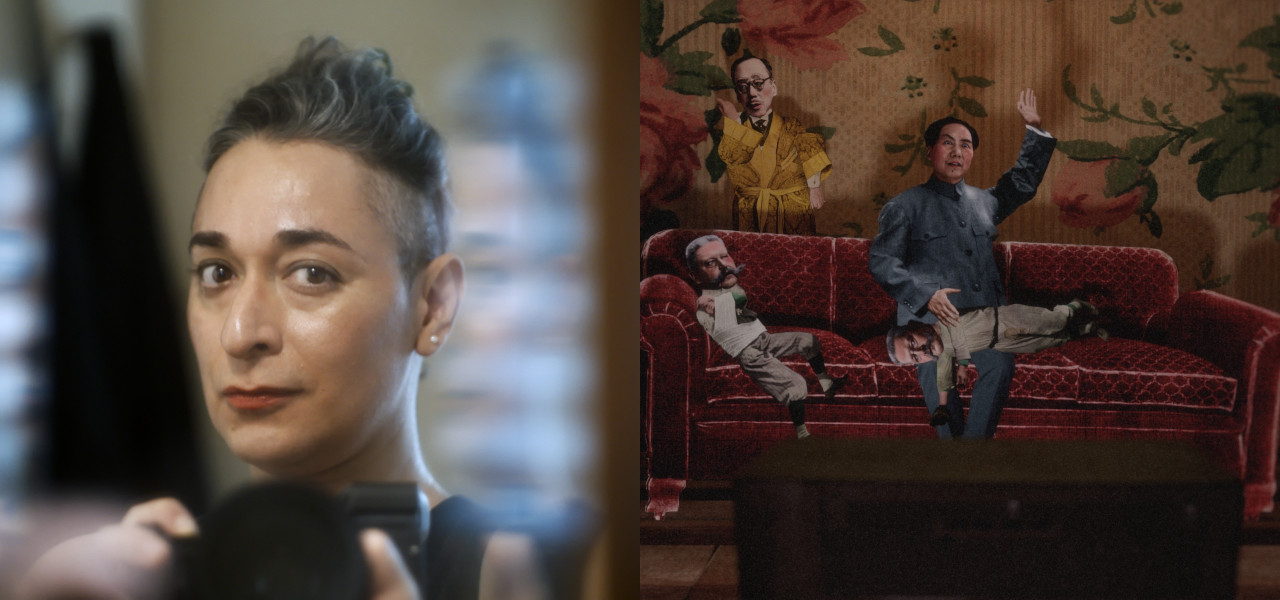
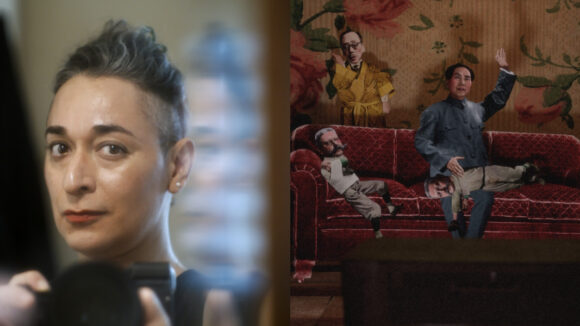
Pictured at top: Aria Covamonas, The Great History of Western Philosoph