.png)
Roger Allers, Co-Director Of ‘The Lion King’ And Key Disney Renaissance Figure, Dies at 76
Stay informed with free updates
Sign up to get our news digest — delivered directly to your inbox twice a week.
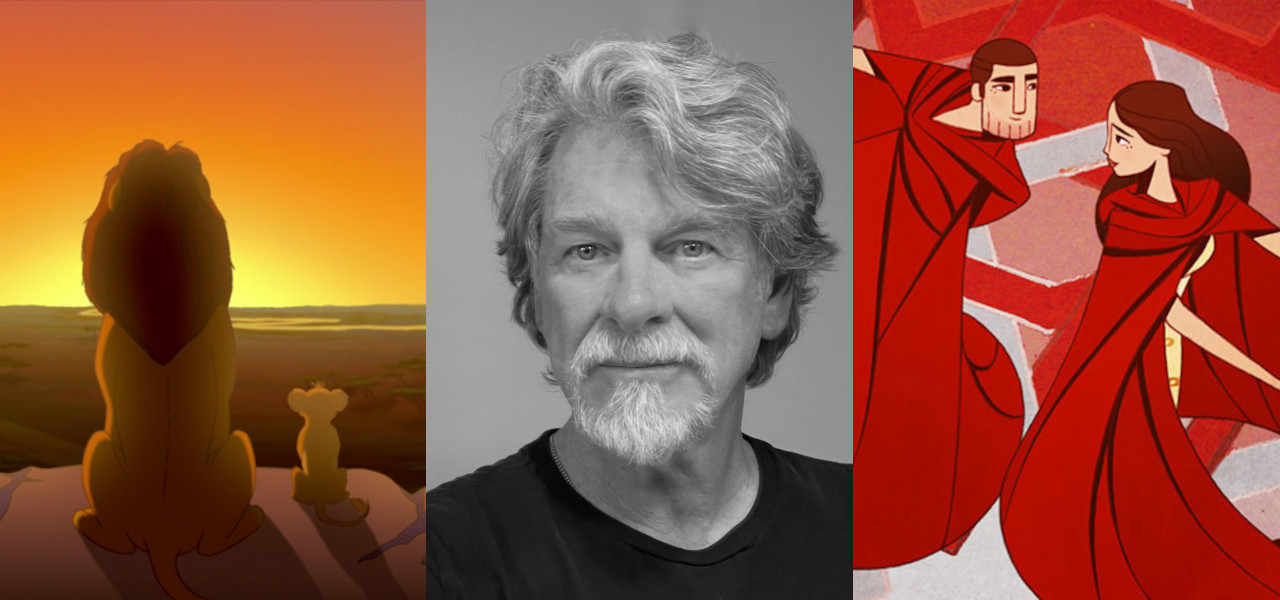
Roger Allers, an animator, director, storyboard artist, and writer whose career helped define a chapter of modern American feature animation history, died on January 17. He was 76.
Allers was best known for co-directing Disney’s modern classic, The Lion King (1994), a film that became the highest-grossing 2D animated feature of all time and one of the defining works of the Disney Renaissance era. But his impact extended far beyond the borders of the Disney empire.
Over more than four decades, Allers worked a wide range of roles across the production pipeline. He moved from storyboard and story development positions into feature directing. Over the years, he experienced the collaborative joys and frustrating creative constraints of major studio filmmaking before later shifting to independent and international projects that allowed him far greater artistic freedom.
Allers was born on June 29, 1949, in Rye, New York, and raised in Arizona. He developed an early interest in animation after seeing Disney films as a child, particularly Peter Pan, which he later cited as a formative experience. As a student, he explored fine arts before joining the animation industry in the late 1970s, initially working on projects such as Animalympics and contributing to pre-production on the CG spectacle, Tron. Other early credits included Nelvana’s Rock & Rule and a stay in Japan to work on story development for the anime cult favorite Little Nemo: Adventures in Slumberland.
These early experiences exposed him to experimental, international animation and large-scale production environments, shaping his interest in story as the foundation of quality filmmaking.
He joined Walt Disney Animation Studios in the mid-1980s, just as the studio was rebuilding its feature animation division after several fallow years. Allers became a key story contributor for much of the company’s Renaissance catalog, including Oliver & Company, The Little Mermaid, Beauty and the Beast, and Aladdin. After a falling out over the development of Kingdom of the Sun, which became The Emperor’s New Grove (detailed more extensively below), he worked on the short The Little Matchgirl, which was meant for the 2006 Fantasia anthology, but was instead released as a stand-alone short, earning an Oscar nomination.
Here’s a video of Allers frantically pitching storyboards for Beauty and the Beast‘s “Be Our Guest,” posted by long-time Allers collaborate and Oscar-nominated Disney producer Don Hohn.
His work during this period reflected the growing importance of story departments in Disney’s production pipeline, as the studio increasingly emphasized character-driven narratives and emotional clarity after more esoteric and challenging outings in the previous decades.
Allers’s most prominent role came with The Lion King, which he co-directed with Rob Minkoff. Allers was foundational in shaping the film’s overall narrative structure, blending mythic storytelling and classical, theatrical drama.
Released in 1994, the film became a colossal commercial success and a defining title of the period, animated or otherwise. Allers also co-wrote the book for the Broadway stage adaptation, which opened in 1997 and became one of the most successful musicals in theatre history, still playing on stages around the world nearly three decades later.
Joined by Minkoff for an interview with the Fat Guys at the Movies blog in 2011, Allers expressed his undying love for the film and its stage adaptation:
I still love this movie. I’ve been involved with the stage show all these intervening years, so for me it’s never gone away! But I’m so pleased with the audience’s positive response to this new release after all these years.
Here is a COVID-era video interview that Allers and Minkoff did discussing The Lion King, and a myriad of other fascinating topics.
Despite success of The Lion King, Allers’s relationship with Disney strained in the following years. He was the original director of Kingdom of the Sun, an ambitious musical feature developed in the late 1990s. The project faced heavy studio oversight and producer-imposed changes, including significant shifts in tone, story, and leadership. Eventually, it was reworked into The Emperor’s New Groove after Allers’s departure.
In 2014, speaking with the Italian comic website Fumettologica, he candidly described that period as professionally and emotionally devastating:
I put four years of my heart and energy into that one. Though I may have seemed calm for the camera (as I always tried to be for my crew), inside, it was a chaotic struggle resulting in annihilation.
After leaving Disney, he co-directed Sony Pictures Animation’s first feature, Open Season (2006), with Jill Culton and co-director Anthony Stacchi. While the shift to CG was a major one, the film still shared many similarities with what other major American studios were doing at the time. That was not the case with his next project.
In 2014, Allers directed his late-career standout, The Prophet, an animated adaptation of Kahlil Gibran’s writings. Structured as an anthology, the film brought together multiple directors and animation styles under a single narrative framework, with Allers leading production as director and creative coordinator.
Speaking with Cartoon Brew in 2015, Allers described the project as an “animated leap of faith,” emphasizing both its creative ambition and its production challenges:
My task was to find a way to create a story that would allow a graceful entrance into Gibran’s philosophical poetry. To create a narrative that would give all generations, those unfamiliar with the book or even very young viewers, an effortless EasyPass into Gibran’s profound world.
He told us about the difficulty of financing and distributing animated features that fall outside conventional commercial models, noting that the industry often struggles to support films that are not easily categorized. Although the interview was more than a decade ago now, it’s thesis remains extremely relevant today.
More optimistically, he also championed animation as a medium that is fully capable of addressing philosophical and spiritual material, if given the opportunity.
Throughout his career, Allers consistently framed animation as a collaborative art form grounded in story. In his Fat Guys at the Movies interview, when asked what’s most important to him while working on a film, he replied:
What’s most important to me is having an environment of mutually respectful, creative energy with my co-creators/artists.
In his later interviews, he frequently expressed concerns that mainstream feature animation was becoming too risk-averse, particularly in its narrative and thematic choices.
Allers continued working well past standard retirement age, picking up story credits on films including Ted, Ted 2, Ron’s Gone Wrong, and Wallace & Gromit: Vengeance Most Fowl.
Within the industry, Allers was widely regarded as a serious story thinker and a director deeply invested in character and structure. His career closely tracked the broader evolution of American feature animation, from the resurgence of hand-drawn, four-quadrant films in the late ‘80s and through the ‘90s, to the early years and evolution of CG animation, to diversely staffed and boundary-pushing indie films.
That is, perhaps, why much of his work has stood the test of time so successfully. Allers’ work was intensely focused on story and character development and uncompromising in that regard. He could do humor, but never at the expense of the story or for a cheap laugh. His films were multi-generational in a way that few manage to achieve today, and evoked emotions increasingly difficult to find in Western animation, which tends to favor far safer box-office bets and characters that can be easily turned into merch.
His legacy is best remembered through The Lion King, but his broader resume is a wonderful story of taking on opportunities, even if they’re not sure things, and shifting away from the traditional constraints faced by filmmakers working in major studios.
Allers is survived by his husband Genaro Pereira, ex-wife Leslee Hackenson, daughter Leah, and son Aidan.
Messages from across the industry flooded the internet after news of Allers’ passing. We’ve collected several here:
Rob Minkoff, Allers’ co-director on The Lion King:
It’s hard to process the sudden loss of my dear friend and collaborator, Roger Allers. We had lunch together recently, and he was in fine health. To think that it could change so quickly is truly devastating.
I met Roger in the summer of 1983, when he was animating Flip on Little Nemo. But our bond was cemented years later when we partnered on The Lion King. Going through that experience together changed both of our lives in ways too numerous to mention. It forged a friendship and closeness that endured long after the film was finished.
Roger was not just a collaborator, nor just a friend, but a brother. And now we all must face a future made a little less bright without him.
The only solace is knowing that his work will live on through the many wonderful films he helped bring into the world.
May flights of angels sing thee to thy rest.
Andreas Deja, Disney legend, longtime Allers friend, and supervising animator for Scar in The Lion King:
Very saddened by the passing of Roger Allers, who was both a valued colleague and a close friend for many years. I worked closely with Roger on The Little Mermaid, Beauty and the Beast, Aladdin, The Lion King, and more, where he was thoughtful, collaborative, and deeply committed, bringing a creative presence that elevated everyone around him. I join my Disney family and the whole animation community in sending love to Roger’s family, and to the many friends and colleagues who had the privilege of knowing him.
Disney CEO Bob Iger wrote in a statement:
Roger Allers was a creative visionary whose many contributions to Disney will live on for generations to come. He understood the power of great storytelling — how unforgettable characters, emotion and music can come together to create something timeless. His work helped define an era of animation that continues to inspire audiences around the world, and we are deeply grateful for everything he gave to Disney. Our hearts are with his family, friends and collaborators.
Former IATSE president and USC School of Cinematic Arts professor Tom Sito:
Tonight, all of us in the world of Animation are saddened by the sudden passing of Roger Allers.(1949-2026) I met Roger first in 1978 while I was assisting Dan Haskett in NYC on Steve Lissbergers’ Animalympics. Then later in Toronto on Rock & Rule. He then left to go work on Tron. We hooked up again in Burbank for the big films of the Walt Disney Renaissance in the 1990s, culminating in his direction of The Lion King. Roger was a dear friend and a consummate professional. As hard as pressure and deadlines and politics plagued a film project, I never saw him lose his composure. In my mind’s eye, I will always keep the image of that sweet smile of his. Until we meet again old friend.