.png)
Fueled By Fandom, Open-Source Tools, And Art History: Why ‘Ebony Witch’ Is A Model Modern Indie Pilot
Stay informed with free updates
Sign up to get our news digest — delivered directly to your inbox twice a week.
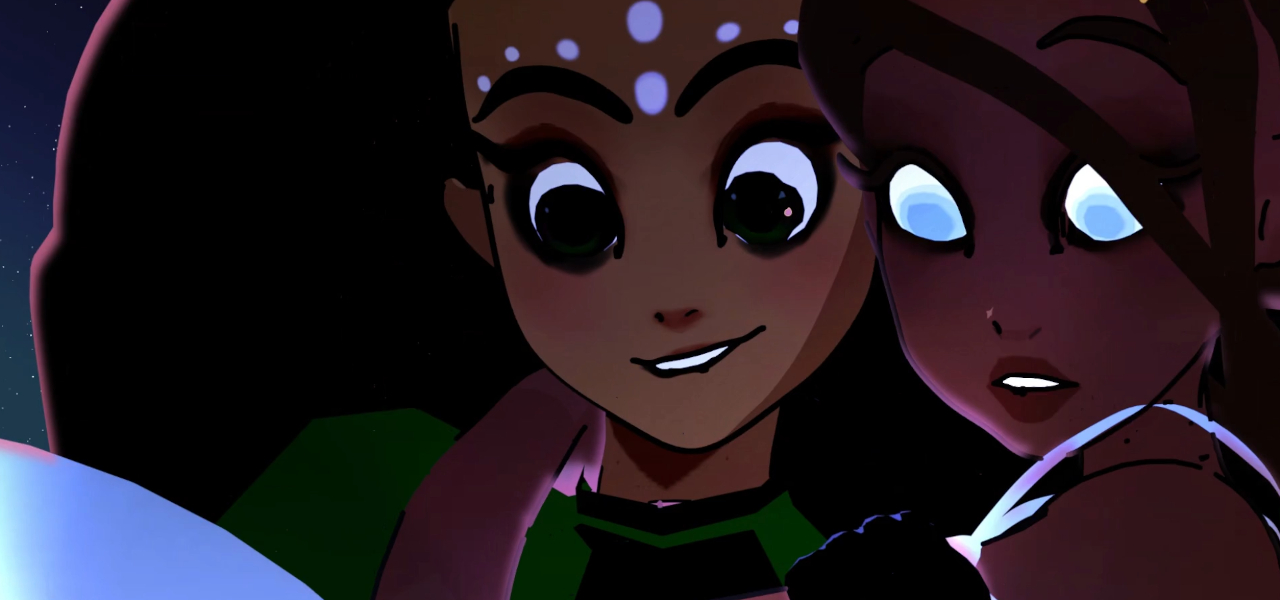
There’s a moment early in the pilot for The Ebony Witch where the hopeful series quietly defines itself. Color floods the frame, shapes bleed into one another without outlines, and the world feels painted rather than constructed. It doesn’t resemble the dominant look of indie animation right now, nor does it feel like it’s trying to echo studio work. Instead, it leans into something older and less literal, drawing more from fine art than from television.
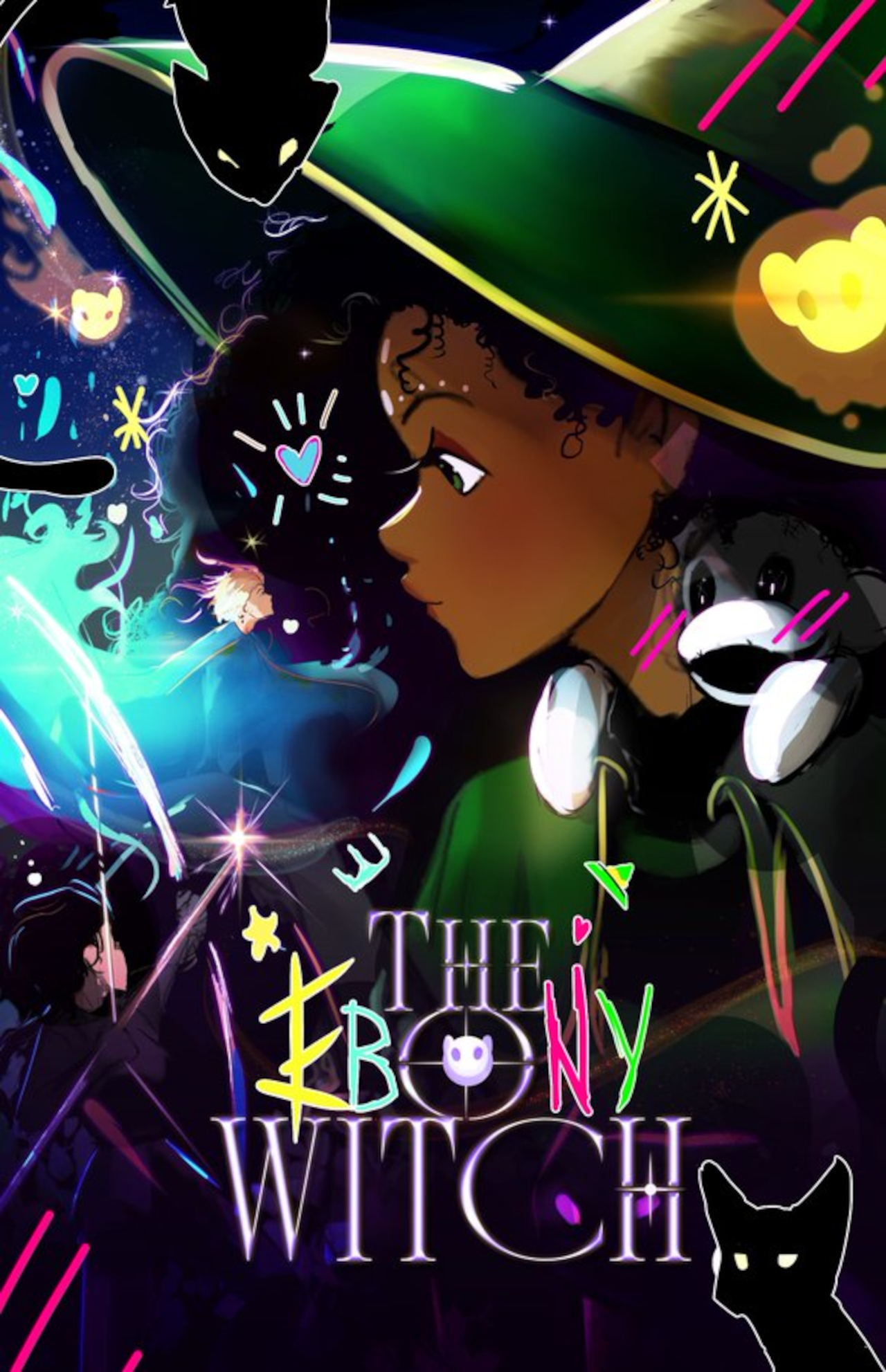
The Ebony Witch follows Bonnie, a young girl navigating a fractured fantasy world where magic has faded into myth and memory. Guided as much by instinct as by circumstance, she sets out on a quiet but determined journey to restore what’s been lost, encountering strange creatures, shifting allegiances, and a landscape that feels as alive as it is unstable. Told largely through visual storytelling and set to sweeping classical music, the pilot unfolds more like a moving painting, prioritizing mood, motion, and worldbuilding over narrative exposition.
“I’m a big fan of impressionists,” creator Lydiah Ndanwu (Poppihin) tells Cartoon Brew in a discussion of the popular pilot, which racked up more than 150,000 views in its first few weeks on YouTube.
“I’ve been a big fan of artists more than shows. I really like Salvador Dalí, I have almost all of his collection books, and I borrow from Cartoon Saloon, I know they go for an Art Nouveau thing. But I’m trying to focus more on Dadaism and Impressionism.”
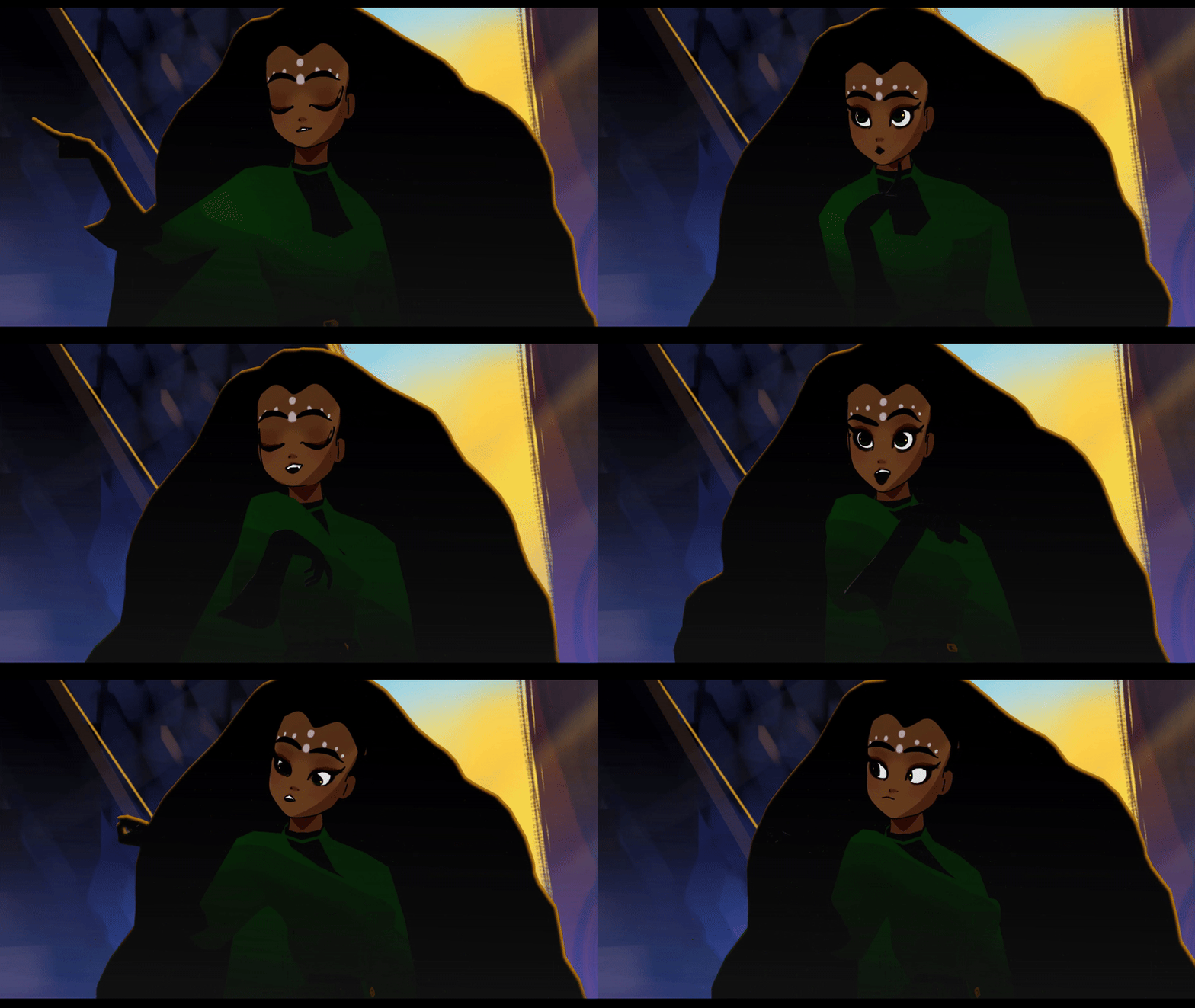
The result is a visual language that avoids linework entirely, relying instead on color boundaries to define form. That choice gives the pilot its distinctive look and required rethinking of how characters are read on screen. “That’s one of the reasons Bonnie’s hair is so big,” Ndanwu says. “We needed one framing device,” a way to anchor the character visually in a world where outlines don’t exist.
Building Around Color
Color does most of the heavy lifting in The Ebony Witch, not just aesthetically but structurally. Each character is built around a palette that defines their presence in the frame and, to some extent, their role in the story.
“Bonnie’s is green, because green is my favorite,” Ndanwu explains with a chuckle. “Characters I’m not fond of are on the red spectrum. Cat is always black. Black is a sphere of color, it’s just so emo, I love it.”
That system becomes even more interesting given her own limitations. “I’m a very colorblind person,” she says, a detail that might seem at odds with the richness of the pilot’s palette. Rather than restrict herself, she pushed in the opposite direction. “I decided that for this project, it will be as bright and colorful as possible. The spectrum that I cannot perceive, my friends will get to go through it.”
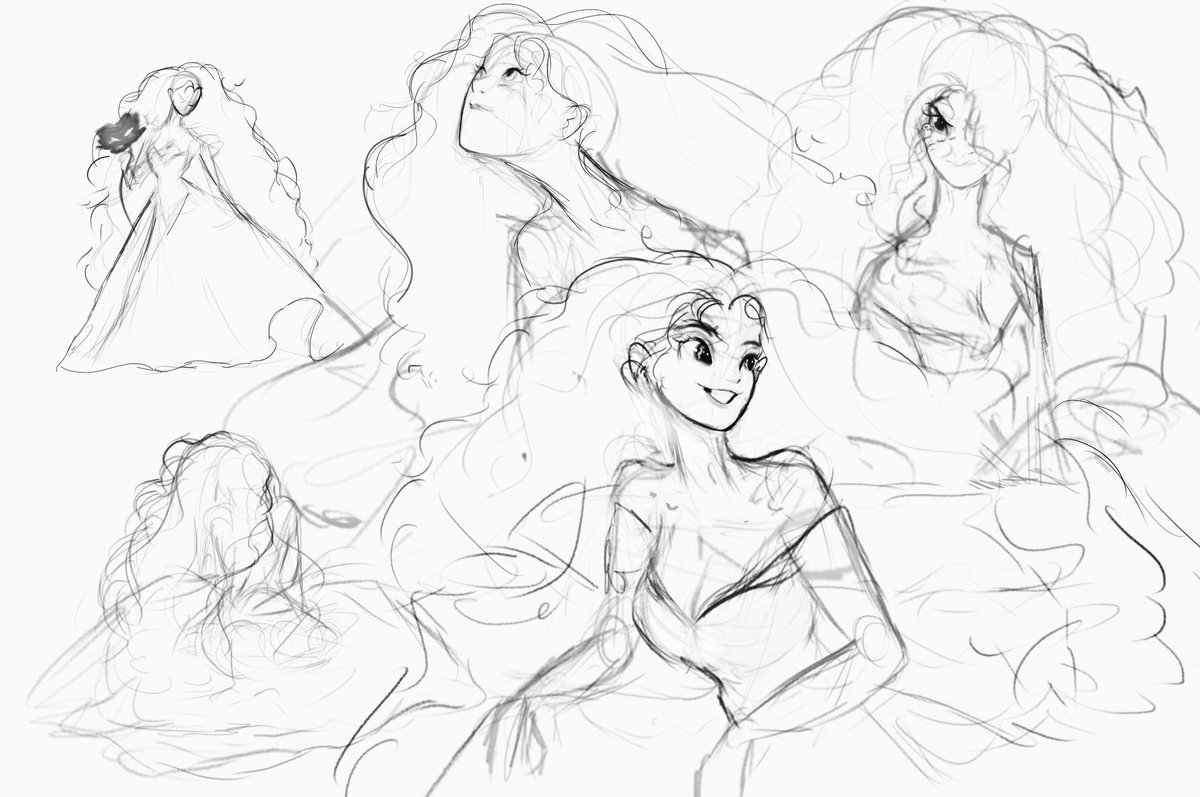
The series blends 2D and 3D elements in a way that’s intentionally difficult to parse. “We paint everything in Krita, map it in Blender, so everything you see is technically 3D, but everything is also technically 2D,” she says. “The cat is fully 2D. The girl is in 3D. The ground is fully painted on, but the sky is a real face.” The ambiguity is part of the appeal, creating a visual texture that feels layered rather than assembled.
Process as Promotion
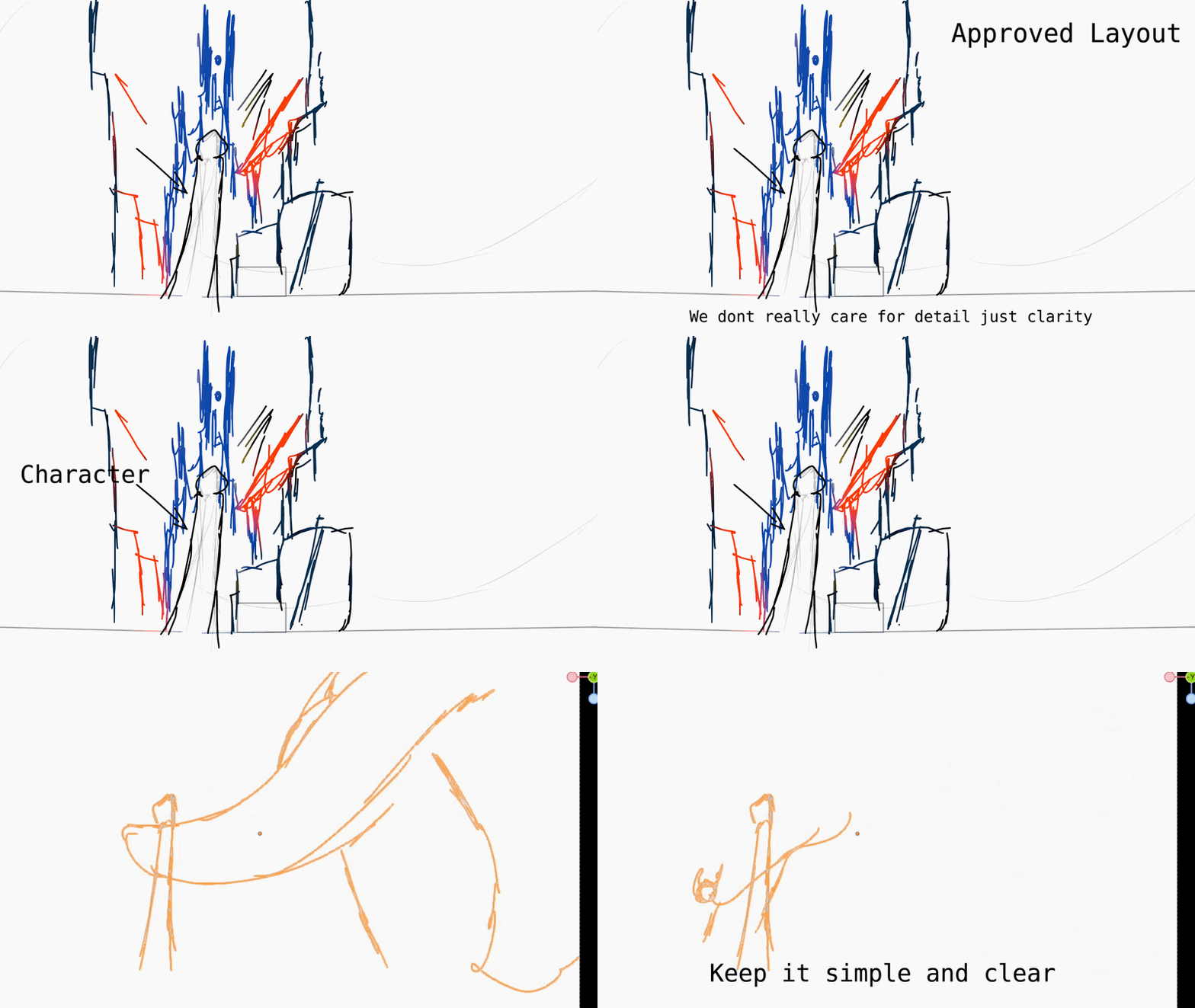
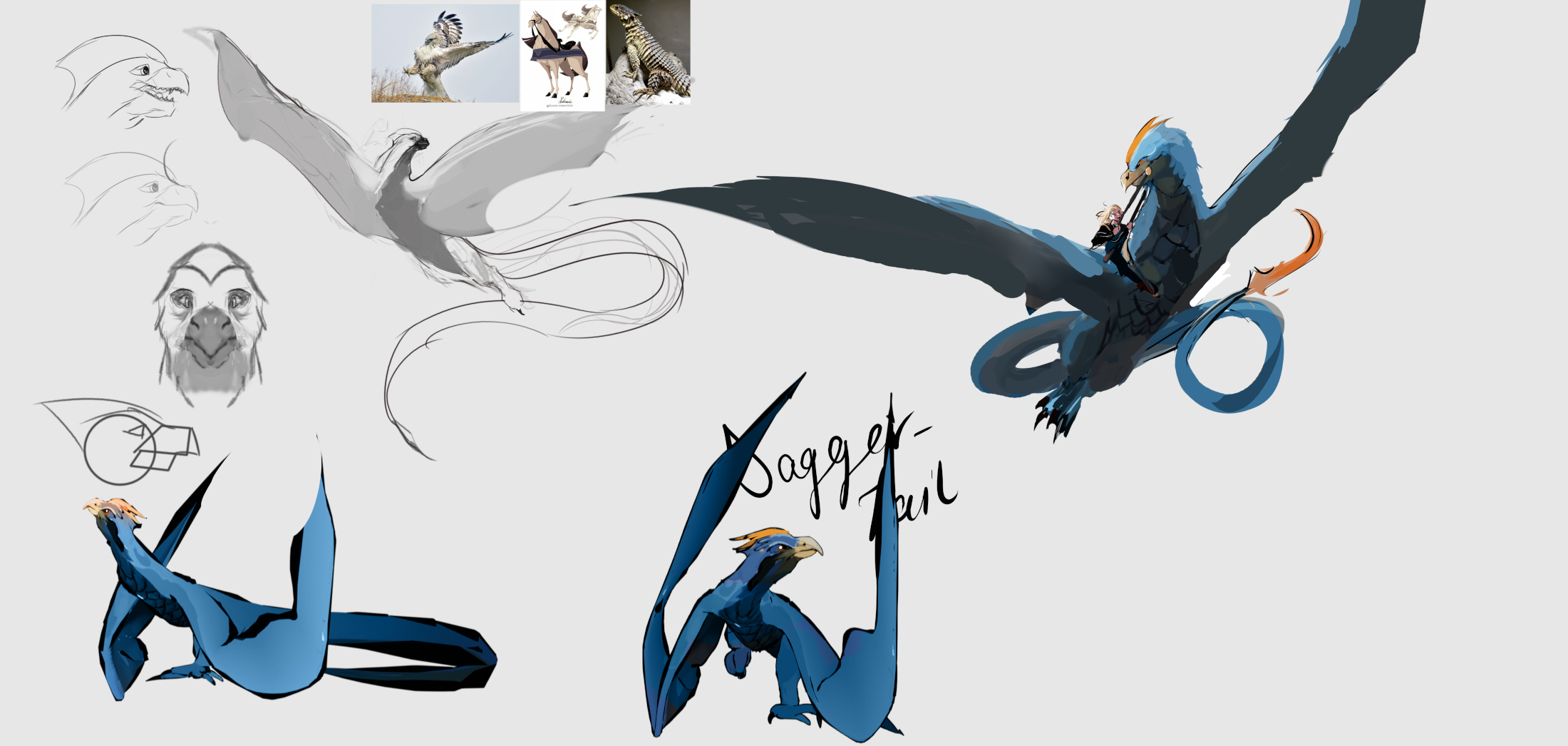
Before the pilot was finished, The Ebony Witch already had an audience. That didn’t come from a marketing push so much as from exposure to the process itself. Ndanwu spent months sharing behind-the-scenes development and production materials, streaming long sessions, and opening up her files to anyone curious enough to ask.
“I’d stream for eight hours like, ‘Hey, I’m designing these characters, this is the program I’m using,’” she recalls. “If someone asks for the project files, I’ll just share them, because that’s how I’ve learned.”
That openness served two purposes. It built interest in the project, but it also created a feedback loop that directly influenced the story. “One of the characters exists because of that feedback,” she says. “Someone said, ‘This chick doesn’t have any friends.’ She has enemies and pursuers and romantic interests, but she doesn’t have a single friend. I was like, okay, that’s fair and valid. I had not thought of that. So I designed one for her.”
For Ndanwu, that kind of interaction is essential, especially in a space where many creators are figuring things out without formal training. “Feedback is important, especially if you’re doing indie stuff,” she says. “A lot of us are not formally trained. Art school is mad expensive, even programs are expensive, so if you can’t do the route of education, you do the route of learning from people.”
Accounting To Animation
Her own path into animation reflects that reality. There’s no traditional art school background behind The Ebony Witch, and that absence shaped both the timeline and the mindset behind the project.
“I’ve always wanted to go into the art field, but it wasn’t exactly an option because art school was mad expensive,” she says. “So I decided I’ll take the smart route, do accounting, and then, once I got the degree, I could basically do what I want.”
That plan led to a dual life that still defines her day-to-day. “By day, I’m handling the books, and then by night, I’m making my own projects,” she says. Over time, she supplemented that self-directed learning with mentorships, including time in Sony’s Talent League, where she worked with industry professionals like Phil Lord and Tyree Dillihay.
Those experiences helped shape the project’s early development, but they also highlighted areas she needed to strengthen. “One of my mentors told me I have a good sense of the technical bits, but I’m very weak narratively,” she says. “He told me the best thing going forward was to draw a comic, then I’ll actually know what storyboarding is. That comic became this project.”
Learning To Direct In Real Time
Developing the project on her own was a huge task. Leading a team through it was another thing entirely. “That has been terrifying,” Ndanwu says, describing the transition from solo artist to director.
In the early stages, she kept things close-knit. “I started out working with people whose moms I knew,” she says, describing a practical way of building trust while learning how to manage a production. As the team expanded, the role shifted from making art to making decisions.
“You have to manage people’s feelings,” she says, recalling a sequence that had to be cut down significantly. “An artist can work weeks on a highly detailed shot, create something beautiful, well done, well shot. But it may be too long. In that case, you have to cut it down, and the artist may be, rightfully, a bit upset.”
Balancing creative ambition with practical constraints became a constant negotiation. “Even if it’s an independent project, you still have to use some structure and impose limitations,” she says. “You can’t just say, ‘ This is our project, we can do whatever we want,’ because then someone will struggle if you make them animate all of it.”
That structure extends to financing and making sure everyone involved is compensated for their time. “A core thing for me is, even if I can’t pay you standard industry rate, you do need to get paid, and you need to get paid on time,” she says. “A lot of people are willing to work for free, and that is… how can they do that?” Her background in accounting proved unexpectedly useful here. “The only reason I’ve been saved is that I do bookkeeping. I can stretch a dollar,” she laughs.
More than Crowdfunding
The pilot itself came together through a mix of crowdfunding, personal investment, and grants, but Ndanwu is clear-eyed about what comes next. “Kickstarter is great to start, but I don’t want us to be crowdfunding every episode,” she says. “That’s not logical for the audience, and logistically it’s a nightmare.”
Instead, she’s building a more flexible model that combines multiple revenue streams. Merchandise is one avenue, as is community support through platforms like Patreon, though she notes that it’s not always as reliable as people assume. Grants have been particularly valuable, both financially and in terms of visibility.
She’s also experimented with more direct engagement. “We talked to local cinemas, libraries, book fairs, and did screening events with other indie filmmakers,” she says. “People would pay small ticket fees, and over a couple of weekends, we were able to raise a not-insignificant amount of money.”
At the same time, she’s expanding the project beyond animation itself. “This is based on a book,” she says. “I want to cut out the chapters into zines, add some art, and allow people to actually purchase the stories themselves. That way, they can explore the world while the project is still being made.”
Responsibility And Momentum
Running an indie production has forced Ndanwu to think differently about scale and responsibility. “If someone starts relying on you for their income, they might have families and rent,” she says. “It’s one thing to affect yourself, it’s another to affect other people.”
That awareness shapes how she approaches the broader indie space as well. “A lot of people really want to make something, which is great. Curiosity is important,” she says. “But a lot of people are not aware of how responsible you have to be. If you take on that role, you have to step up.”
At the same time, she sees the current moment as unusually open, both creatively and technically. “Artists are doing such amazing things right now,” she says. “The indie scene feels like a cafeteria. Everyone’s doing their own thing, and everyone’s kind of nice. People are chatty,” she says, noting that a few big-name indie artists have helped tremendously in the past by name-dropping Ebony Witch on their platforms.
For all the complexity behind The Ebony Witch, a sense of possibility remains at the core of the project. “The whole point of this was to be like, yeah, anyone can make something,” she says. “There are so many tools, I wish more people would not be scared and just make use of them.”
It’s a simple idea, but one that carries a lot of weight when paired with the reality of what it takes to follow through. In Ndanwu’s case, it means long hours, hybrid workflows, constant iteration, and a willingness to build in public.
“By day, I’m handling the books,” she says. “By night, I’m making my own projects.”
For now, both sides of that equation are still essential, but with a finished pilot and a hungry fanbase, who knows what Ndanwu’s future may hold?