.png)
French Fantasy Series ‘Ewilan’s Quest’ Reaches 2.6M Views; Debuts English-Subtitled Episodes (EXCLUSIVE)
Stay informed with free updates
Sign up to get our news digest — delivered directly to your inbox twice a week.
On Valentine’s Day 2026, producer and animation veteran Sophie Saget and the team at French studio Andarta Pictures celebrated more than love. They celebrated the launch of their very first project, Ewilan’s Quest.
A month and 2.6 million views later, we’re excited to debut two English-subtitled episodes of the series, marking its first step toward reaching international audiences.
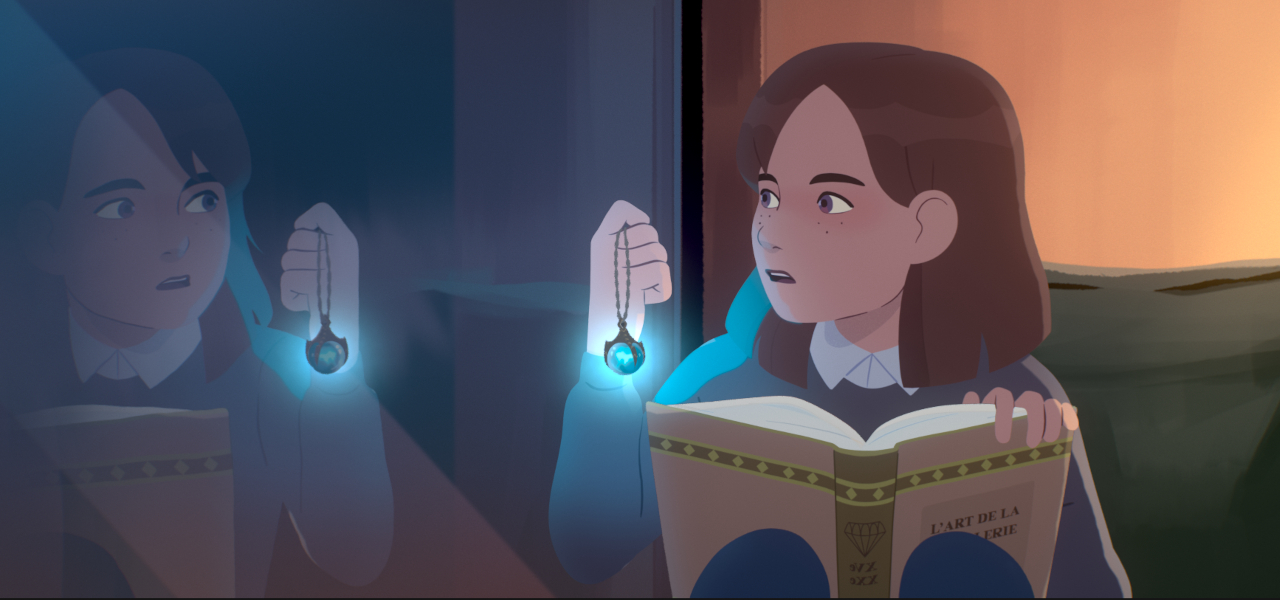
Based on one of the most acclaimed French children’s fantasy series of the early 2000s, created by the late Pierre Bottero, Ewilan’s Quest follows Camille, a 13-year-old living the uneventful life of a French teenager. Things take a dramatic turn when she is accidentally hurled into the world of Gwendalavir, inhabited by creatures as extraordinary as they are dangerous.
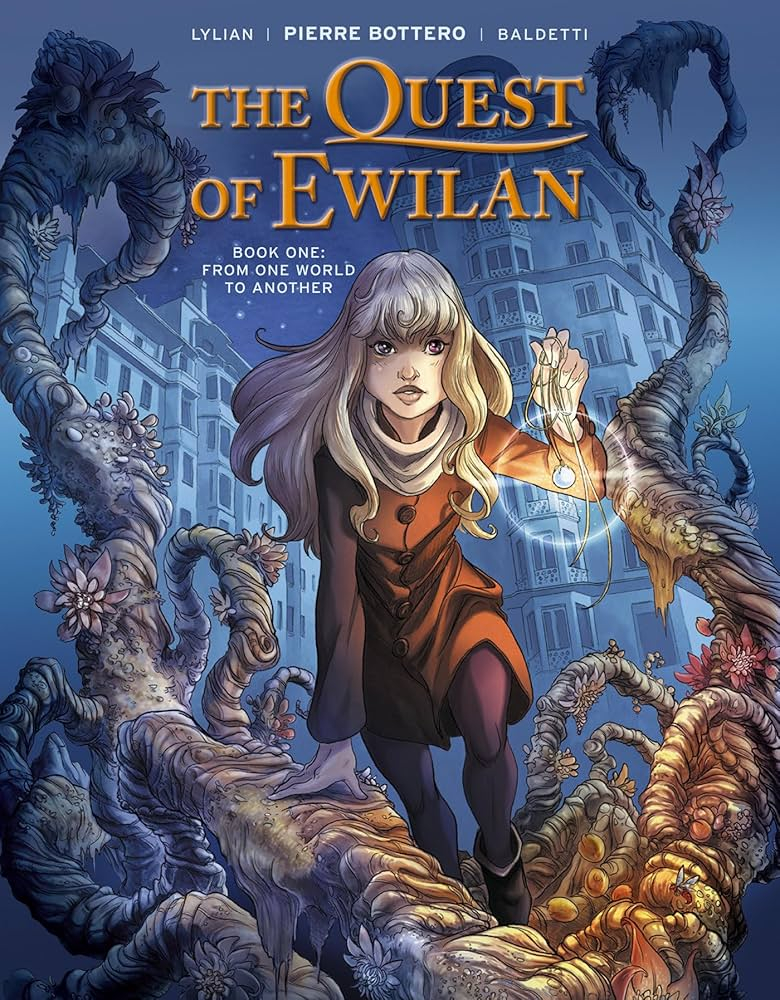
There, Camille and her friend Salim discover her real fate and real name, Ewilan. Her parents are not dead. They have become prisoners of the terrible Ts’lich in an ongoing war that may destroy Gwendalavir once and for all. Ewilan’s arrival brings fresh hope for saving an embattled world, as she has inherited a prodigious talent for Design, a unique kind of magic.
A whimsical adventure featuring strong female characters in the tradition of C.S. Lewis’s Narnia and Madeleine L’Engle’s Time Quintet, the book series sold more than 2 million copies, sparking a comic book adaptation, fan fiction, and online forums nourished by a very strong fanbase. Sophie Saget, producer and founder of Andarta Pictures, was working at the time for French animation powerhouse Folimage as an executive producer when she discovered the books through a friend whose daughters kept rereading the series.
Saget, a Gobelins alumna, did not recognize the series’ potential at the time because it did not fit into Folimage’s production pipelines. But when she left Folimage to start her own company, Andarta Pictures, in 2017, her friend returned to the idea and bought her the entire series to read.
“As I started to read them,” recalled Saget, “I was amazed at the potential of this universe, so I reached out to the publisher, convinced that an adaptation was already in the works. It turned out the rights were available, and as I had just founded Andarta, it felt like the perfect time to sign this bold, singular, very ambitious project of adapting Ewilan’s Quest into a series format.”
Crafting an 8×26-minute heroic fantasy aimed at children proved a hefty challenge, one that took many years and more than 300 workers, divided among Andarta, L’Incroyable Studio, and Brussels-based Vivi Film Productions. But for Saget, whose career started on large productions such as A Monster in Paris and the first Despicable Me feature, producing this series was definitely within reach.
“France has a huge pool of talent, and many of them eventually go abroad to work for Disney, Pixar, or Ghibli. In that sense, it felt like a waste that we could not produce such high-end projects here. Because our French industry is very dependent on public funding, I wanted to try another approach. As Ewilan’s fanbase was already very strong, we started to build merchandise and community-based content, and they responded very well.”
After an initial crowdfunding campaign that gathered more than €200,000 in 23 days, Andarta opened its online store and began producing its own product lines while developing the script and adapting Bottero’s universe. It was a difficult endeavor, as Ewilan’s Quest presents both a very complex and sometimes vague world, relying on the art of “Dessin” (translated here as “Design”), a type of magic based on the power of imagination and mind drawing to bend reality, master the elements, and create objects out of thin air.
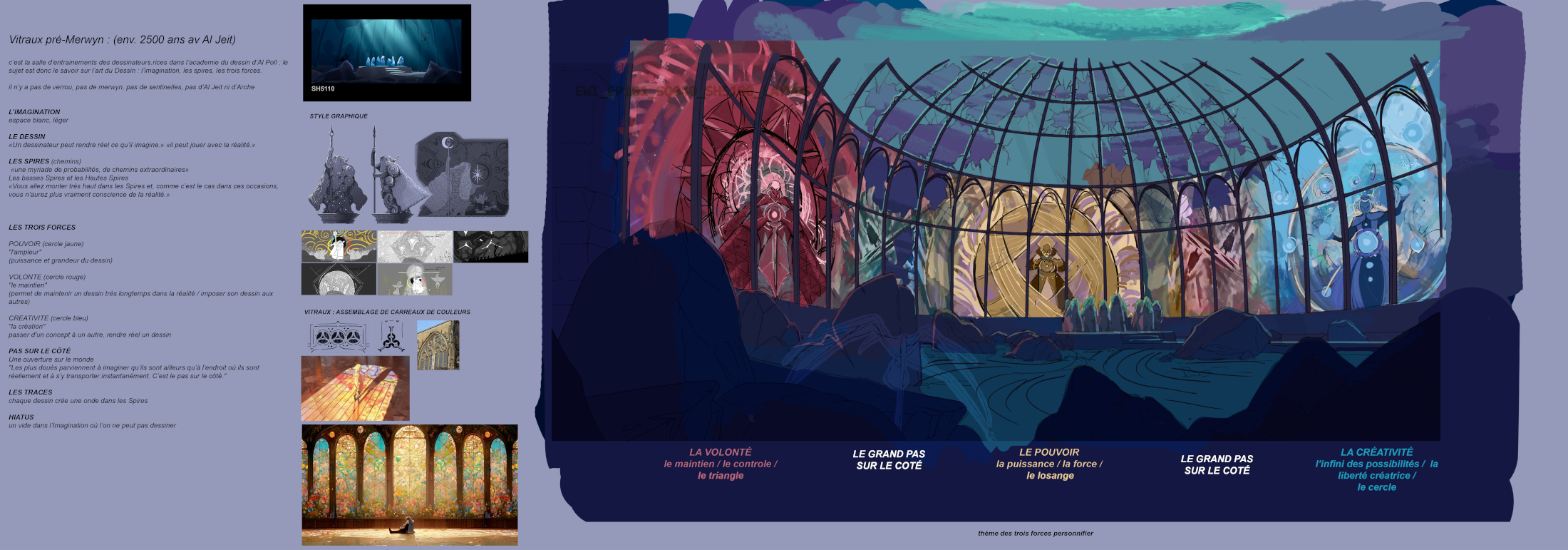
It took no fewer than three directors, Ève Ceccarelli, Fabien Daphy, and Justine Mettler, and five screenwriters, Diane Morel, Alexandre Manneville, Anastasia Heinzl, Xavier Vairé, and Pierre-Gilles Stehr, to translate this universe to the small screen. The journey lasted almost eight years and culminated in the February release of Ewilan’s Quest on France Télévisions’ platforms, along with Belgium’s RTBF and Switzerland’s RTS online services.
According to Vairé and Stehr, who were the last to work on the series and reshaped the first season into an 8×26-minute format, adapting Ewilan’s Quest meant both staying true to the universe and betraying it at the same time.
“Many elements in these novels are revealed very quickly, both about the character’s parents, her origins, and the world into which Camille/Ewilan tumbles. We chose to delay this entry into a more fantastic realm to strengthen the context and original drama, without having to revisit elements already introduced. In a literary context, this works because we are inside the character’s head, but a cinematic adaptation requires more exposition and setup. Settings must be prepared, information revealed gradually, and we used the possibilities of animation to add a strong visual dimension to this story where art and drawing are key.”
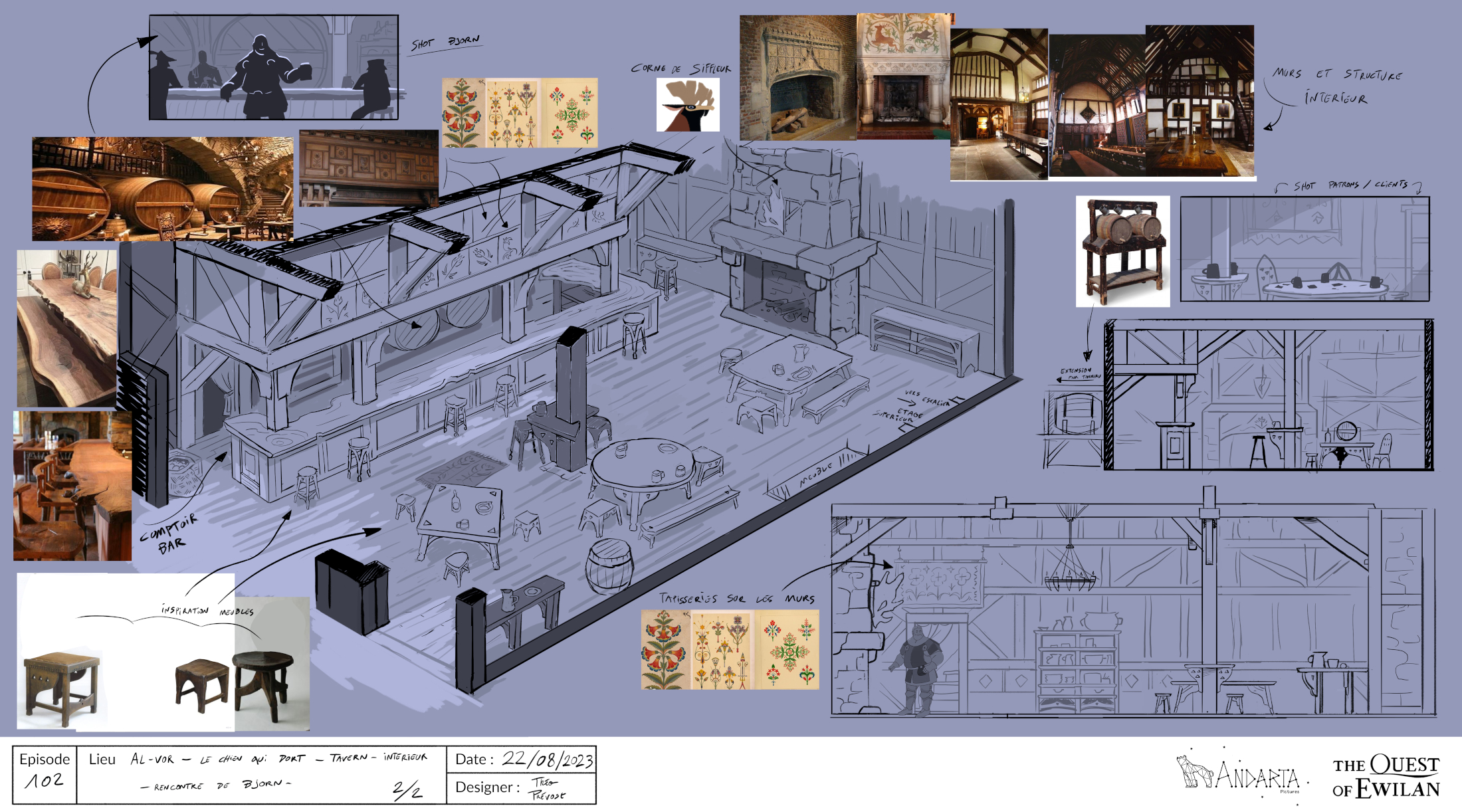
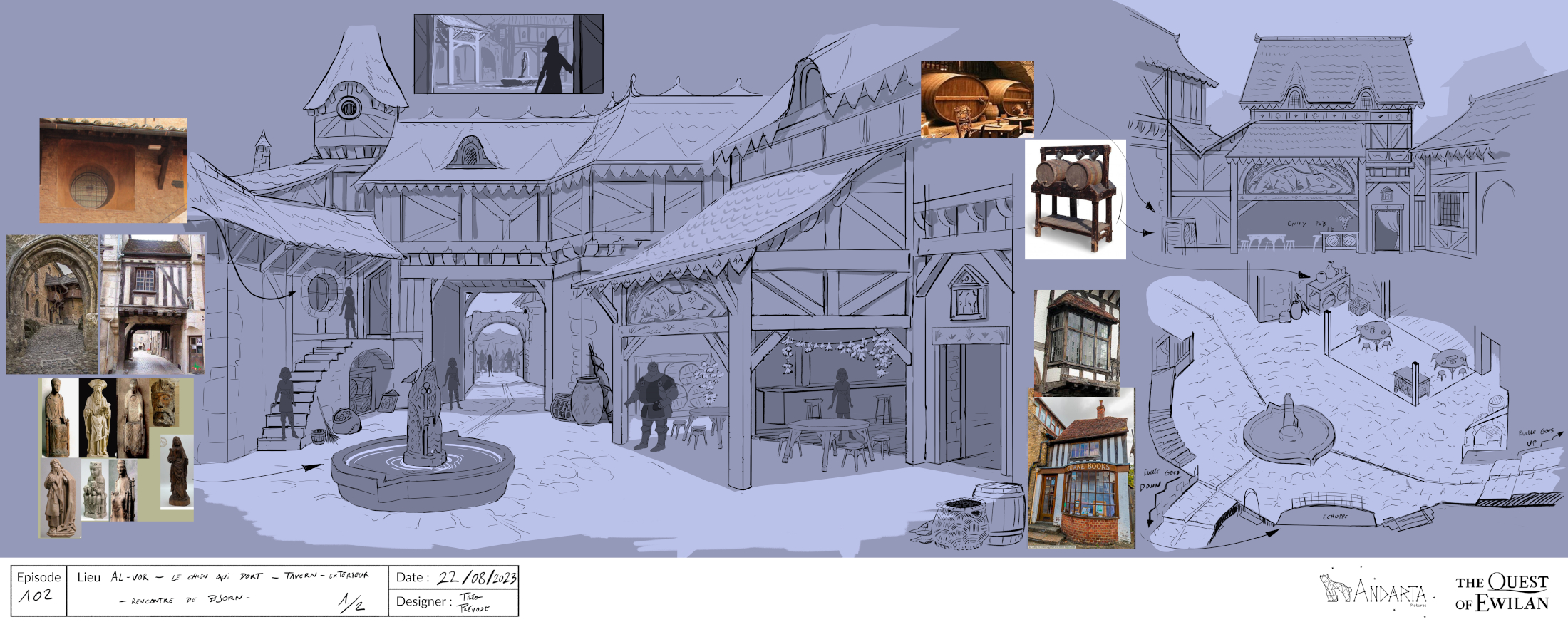
It was this same singular approach to art, design, and drawing that appealed to the trio of directors. Ève Ceccarelli, a director, storyboard artist, and animator who graduated from Gobelins and La Poudrière and worked on both shorts and animated features such as Funan and the Academy Award-nominated Wolfwalkers, joined the project with Fabien Daphy after production was already well underway.
“Ewilan’s teams were built layer upon layer, with every person who spent time on this project adding to its richness. Along with Fabien, Justine, Pierre-Yves, and Xavier, we continued the path already traced by previous teams in a highly collaborative process, aiming to enhance production values and bring more realistic, human designs to the project. Bottero’s universe feels very intimate, and we wanted to retain this aspect in the look and feel of Ewilan’s Quest.”
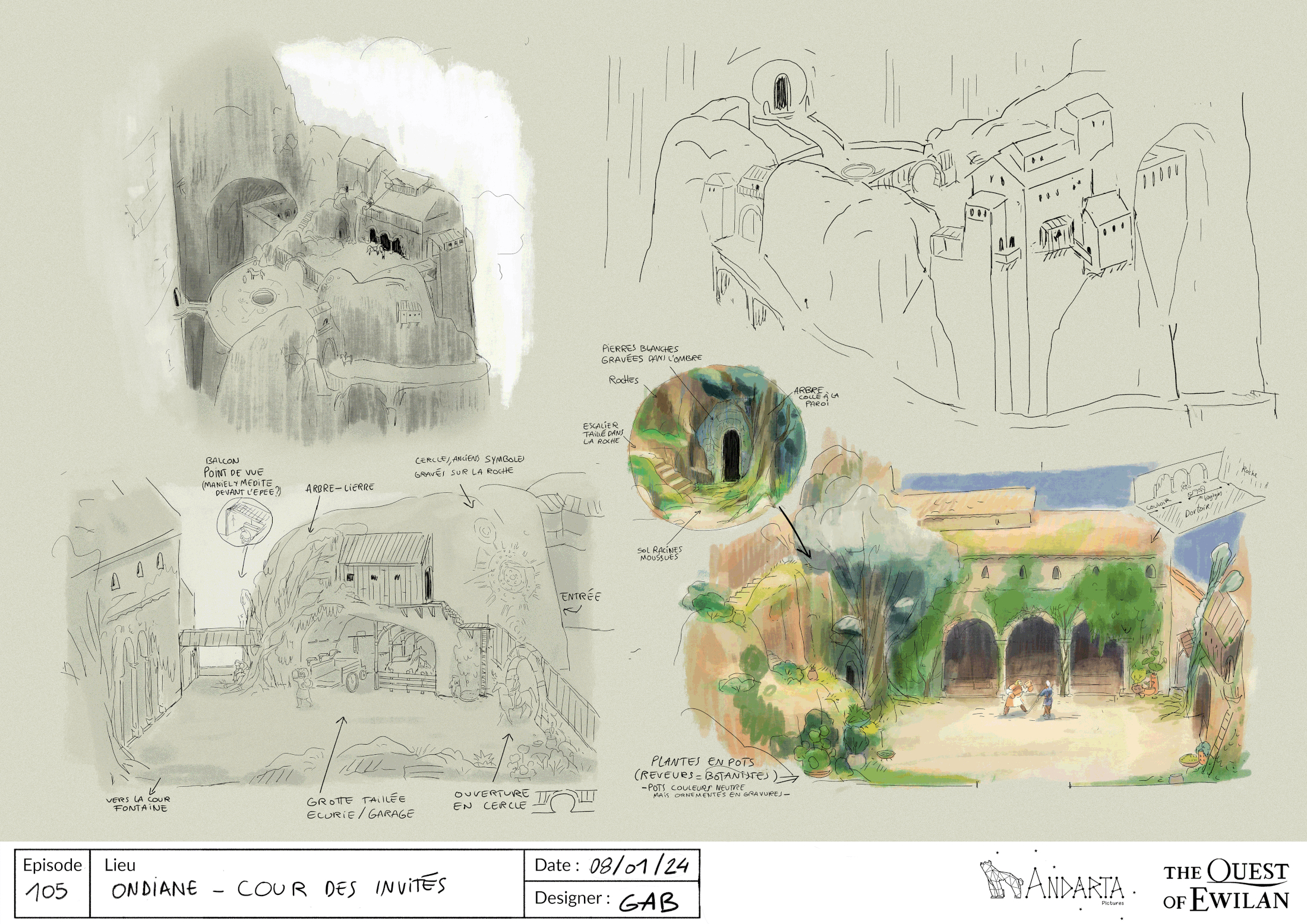
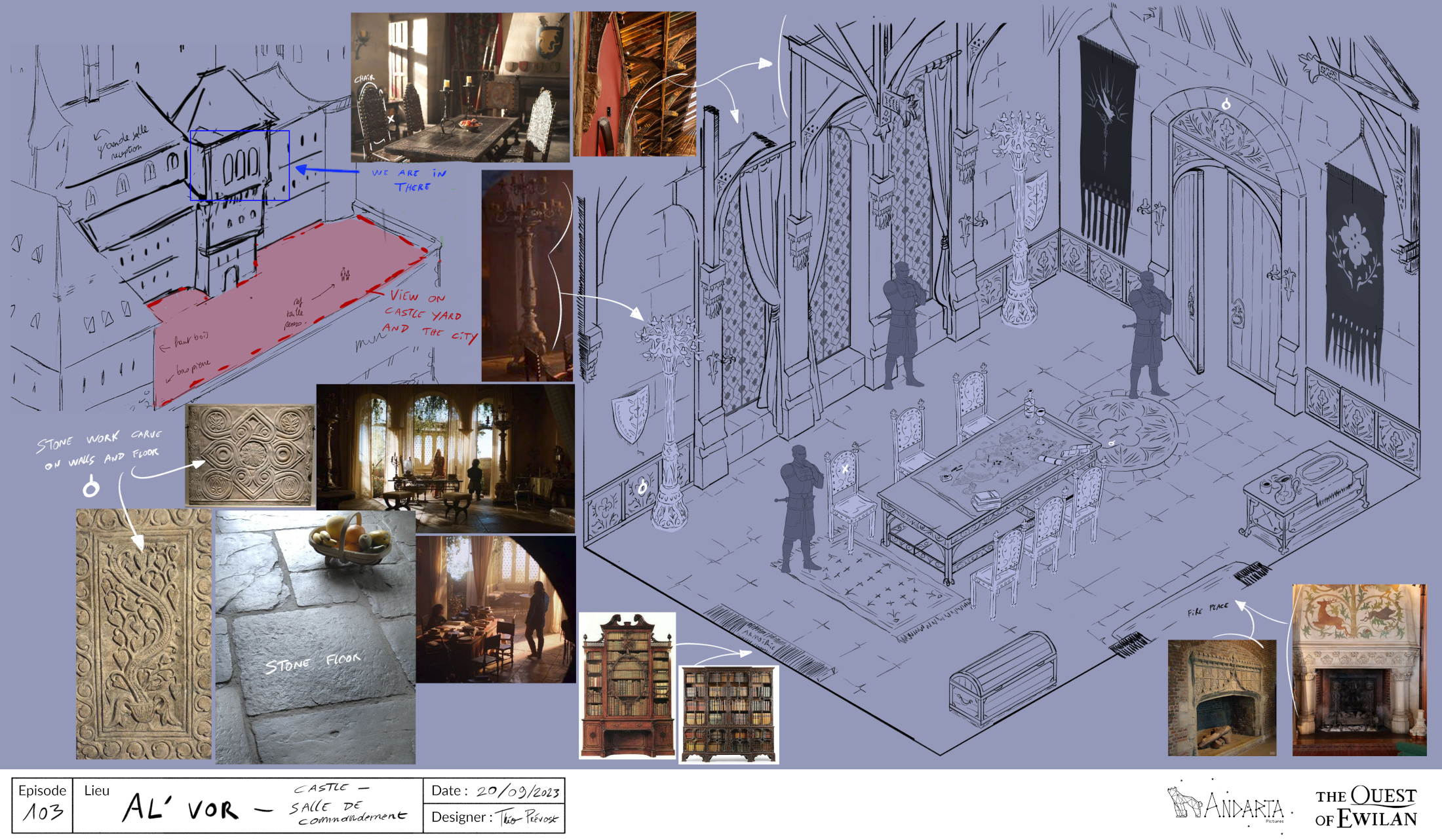
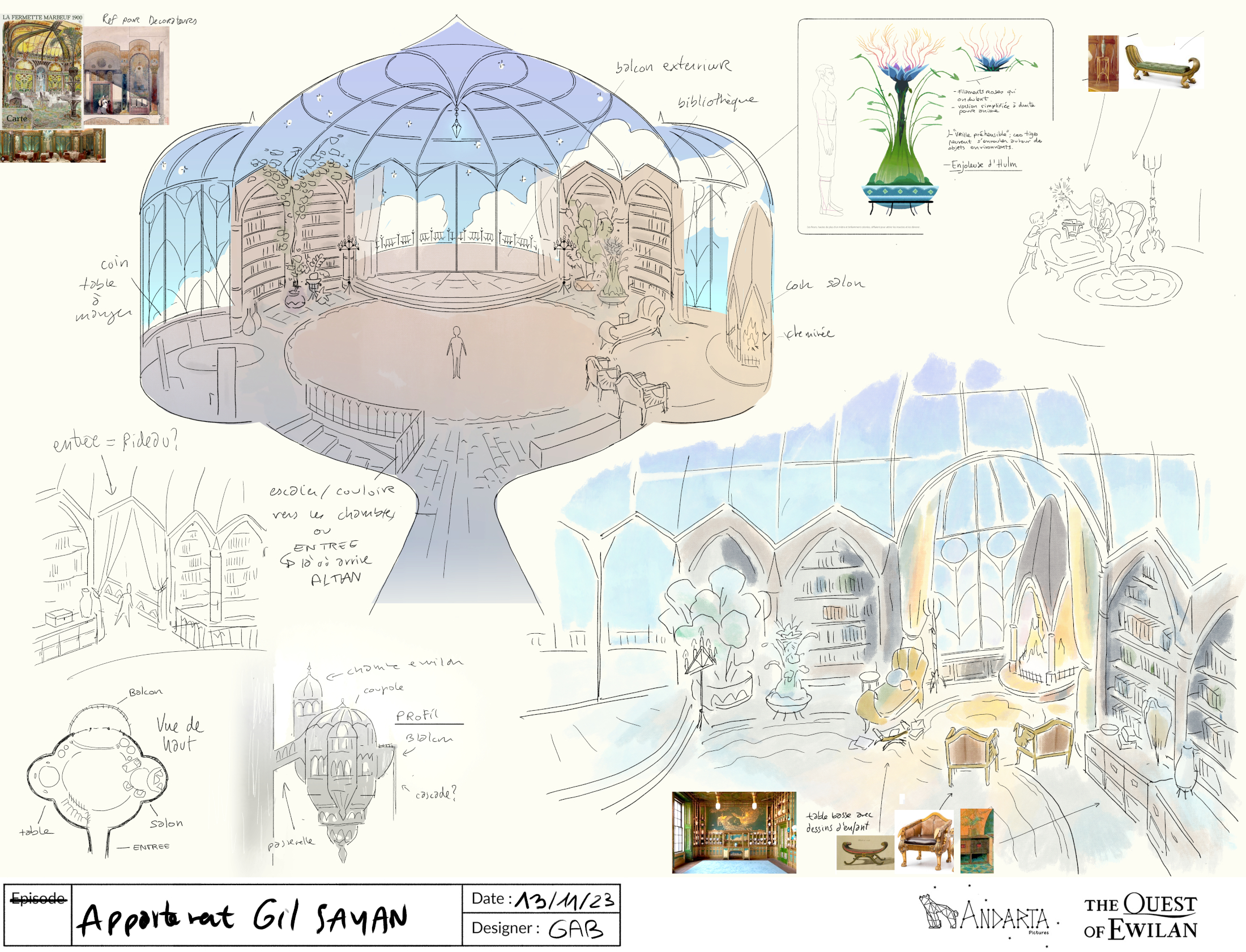
To portray the Design Camille/Ewilan uses in the series, the magical art of drawing from her imagination, Saget and her team chose early on to blend different artistic styles reminiscent of oil and acrylic painting, gouache, and pastel shades on grainy paper. In that sense, Ewilan’s Quest seemed destined for animation, something that becomes clear when the girl unveils her powers.
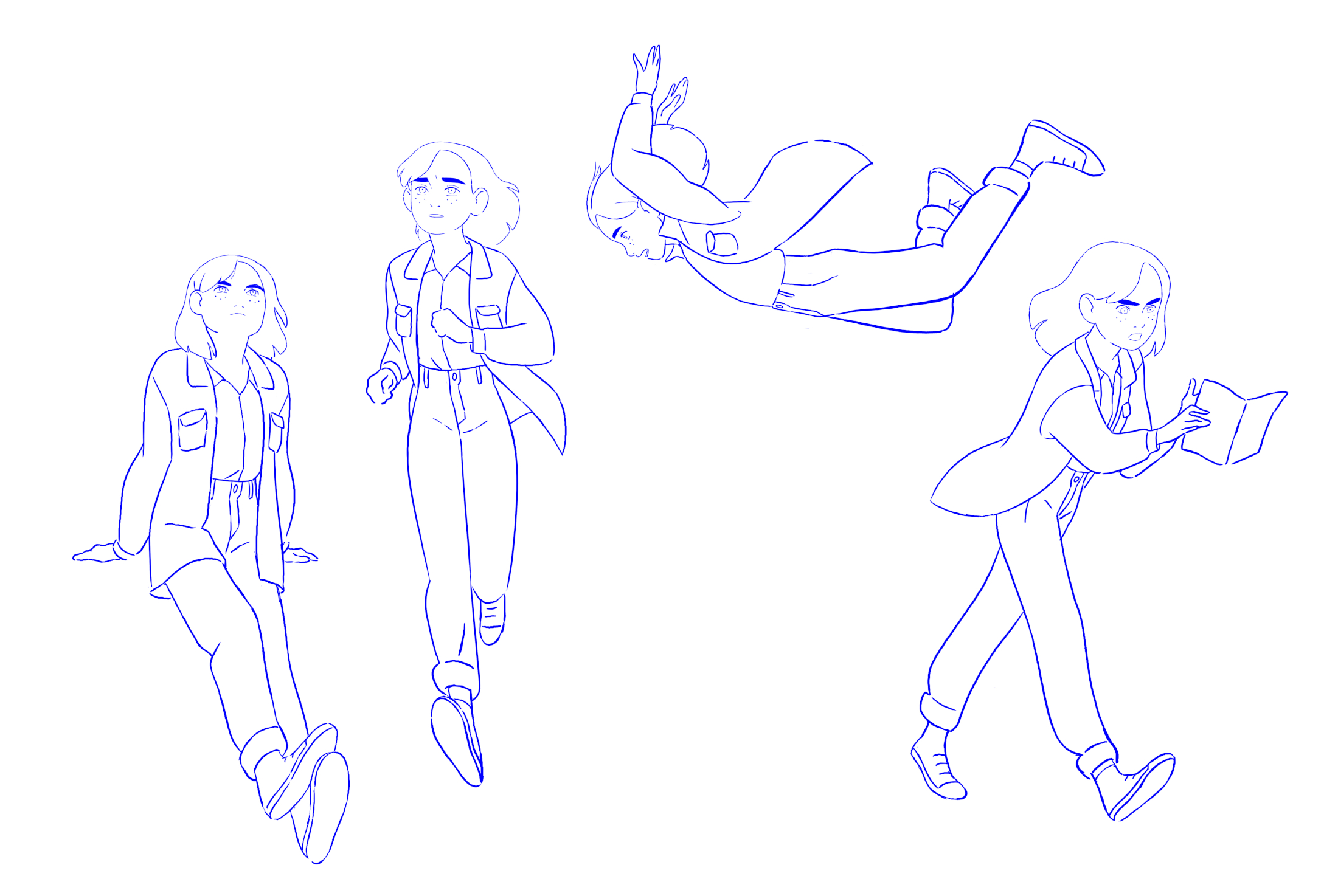
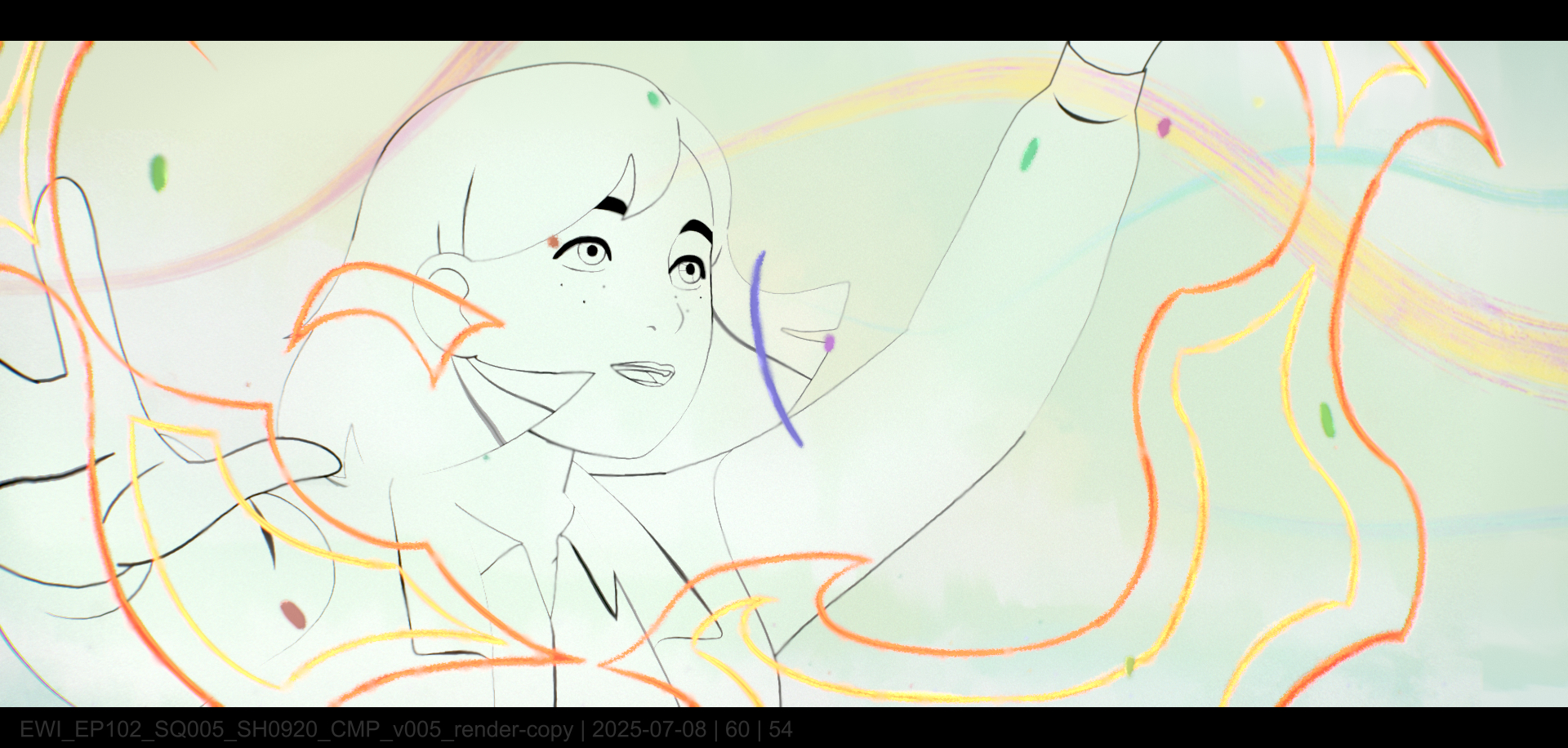
“It quickly became a playground for the artists,” shared Saget and Ceccarelli, both very enthusiastic about this aspect of the series. “We loved working with this idea of creating by drawing, as it allowed us to push artistic boundaries and try new techniques. All these possibilities converge in Ewilan’s imagination and the pathways she navigates as she ‘draws’ and ‘designs’ these creations. The worlds she travels through are described as mindscapes by Pierre Bottero, and being able to give a strong visual identity to these worlds was key to achieving what we wanted for this adaptation.”
Saget, Ceccarelli, Vairé, and Stehr all acknowledge that this interpretation of Bottero’s novels is their own and Andarta’s. As with many fan-based communities, the production encountered some reluctance during development, but Saget addressed these challenges from the very beginning.
“As soon as the adaptation was announced, I started receiving messages and comments on social media. People were genuinely interested and very excited about the project. The very first person I hired was a communications manager, because I was spending entire days replying and interacting with the community. As a young production company, we found it quite easy to bring fans on board through dedicated social media channels, without much secrecy in our development process. Of course, not everyone was happy with our take on Bottero’s world, both narratively and visually, but we stayed in touch with our community, explaining our choices and bringing them along on the journey. In the end, I think it paid off.”
The numbers appear to support Saget’s view. The series has now generated more than 1 million streams across France.tv, Okoo, and YouTube, alongside over 210,000 hours of total watch time, underscoring strong engagement with its serialized format (averaging around 120,000 views per episode). Ewilan’s Quest also became the best launch ever on Okoo. On linear TV, the series reached 1.6 million cumulative viewers across two Saturday broadcasts on France 4, further confirming its broad audience appeal across platforms.
Following this streaming success, France Télévisions aired the entire season in two parts on back-to-back prime-time Saturday evenings, gathering large audiences on both occasions.
“It’s been a wonderful experience,” shared Ceccarelli, “and having such positive feedback from fans, but also from audiences beyond the usual animation buffs, is heartwarming. Even among my family and friends, I’ve received praise from people of all ages, which I did not expect at all. It moved me a lot to feel this recognition for our teams’ work.”
Fans are now eager to see more, but Saget remains cautious.
“I see the success and the appetite, but I also see what it took to get us here. Before rushing ahead, we want to consolidate and expand the reach of this first season and find the right ways to move forward.”
Andarta is handling international sales for Ewilan’s Quest, and discussions are underway about an English translation of the original books before the series itself is translated into English. The first season has already been sold to Italian public broadcaster Rai, with an Italian dub currently underway.
“There is definitely space in the world for a French, children-aimed Lord of the Rings,” the team emphasized. “Ewilan’s universe is rich and complex, and it has the capacity to open discussions between children and adults about their own struggles and challenges in our stressful times. Camille/Ewilan begins as a lonely, insecure teenager who slowly becomes more self-assured and confident in her own abilities, without anyone to show her the way. She is a very strong and sincere figure, and she can definitely appeal to a global audience.”
