.png)
‘Mating Season’ Creators On Blending Animal Sex Jokes With Genuine Emotional Stakes In Their ‘Big Mouth’ Follow-Up (EXCLUSIVE)
Stay informed with free updates
Sign up to get our news digest — delivered directly to your inbox twice a week.
After nearly a decade of turning adolescent anxiety into one of streaming animation’s most successful adult comedies, the creative team behind Big Mouth faced a seemingly simple question when considering what came next. As co-creator Mark Levin tells us, they wanted to make something “that we would want to see, that we could fall in love with and that we could tell honest stories in a reflection, even though in this case we’re using animals to tell the story.”
The result is Netflix’s Mating Season, an animated adult romantic comedy series from Levin, Jennifer Flackett, Andrew Goldberg, and Nick Kroll, produced with the prolific indie animation studio Titmouse. Set in a world populated by sexually adventurous bears, raccoons, foxes, deer, and other woodland creatures, the series shifts the focus from puberty to adulthood and the exhausting search for connection, both physical (especially physical) and emotional.
“We were interested in telling stories about the next phase of life,” Flackett says. “Big Mouth was such a specific time of life, and it had its own set of rules. And we were interested in that kind of period of life when you’re kind of in your 20s, and you’re looking for your person.”
The creators briefly explored live-action versions of those themes before deciding that the material they wanted to cover would be better done in animation, with its fewer limitations.
Mating Season, in its earlier forms, was being developed as a feature. Eventually, though, the team realized there was too much terrain to cover in a single story. “There are so many stories to be told here, it’s better as a series,” Flackett insists.
Animals Behaving Like People
Part of the appeal came from the freedom animals offered thematically and visually. While Big Mouth often approached sex through metaphor, Mating Season embraces the absurdity of animal behavior more directly.
“There was something about it that we never really liked to show very much between humans,” Flackett recalls of Big Mouth’s sexual content. “So we always went to metaphor. There was a skating metaphor. There was a train metaphor…”
“With Mating Season, sex between animals is funnier. And you can look at it in a way where you’re not like, ‘Oh, my eyes,’” she laughs.
That framework opened up new storytelling possibilities. “When you get something like the copulatory tie, or Fawn wanting to tame a wolf, all of those things play so beautifully into a human and animal narrative,” Flackett said.
To better nail down their metaphors, the team conducted extensive wildlife research. Goldberg said the staff spent hours watching nature documentaries together and studying real animal behavior.
“We like to write, but we also like to learn and research,” Goldberg says. “We’ve watched a ton of nature videos. We’ve done a lot of animal research. We’ve even sat together as a writing staff and just watched nature videos.”
At the same time, the emotional material remained grounded in modern relationships and contemporary anxieties.
“We want to be talking about how we live now,” Flackett says. “We really like talking about how people find love. That to us is just really interesting.”
Despite the show’s raunchy surface, the creators repeatedly emphasize that emotional connection remains the center of the series.
“The characters are trying to connect with other animals,” Goldberg says. “Which is, I think, why we do a lot of the stupid stuff we do as people.”
Levin added that while sex and relationships move the story along in their shows, it’s the friend groups that ultimately ground both Big Mouth and Mating Season. “At the end of the day, it comes back to the core relationships between the main characters,” he said. “And that gives us a real anchor for the show.”
More Human than Human
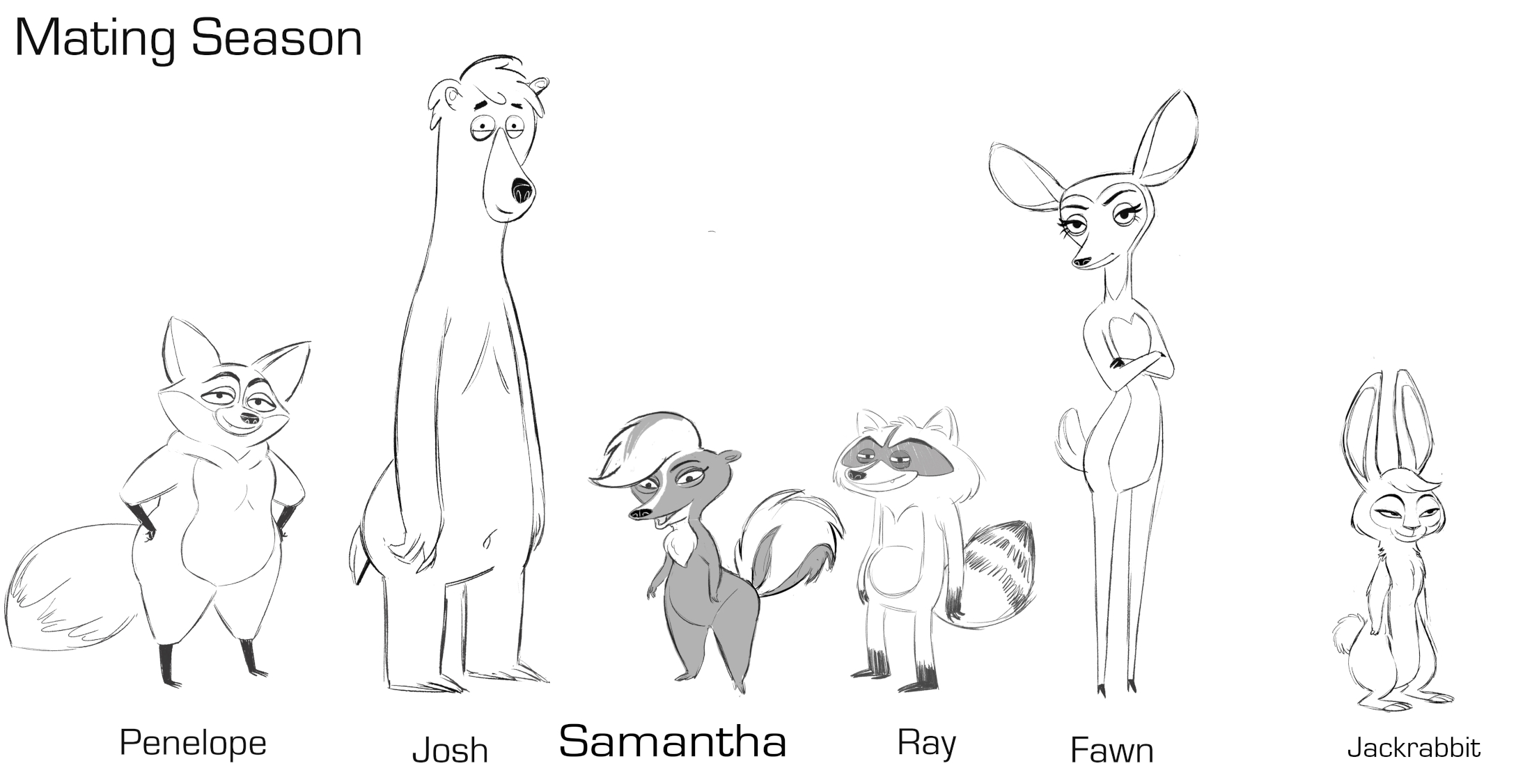
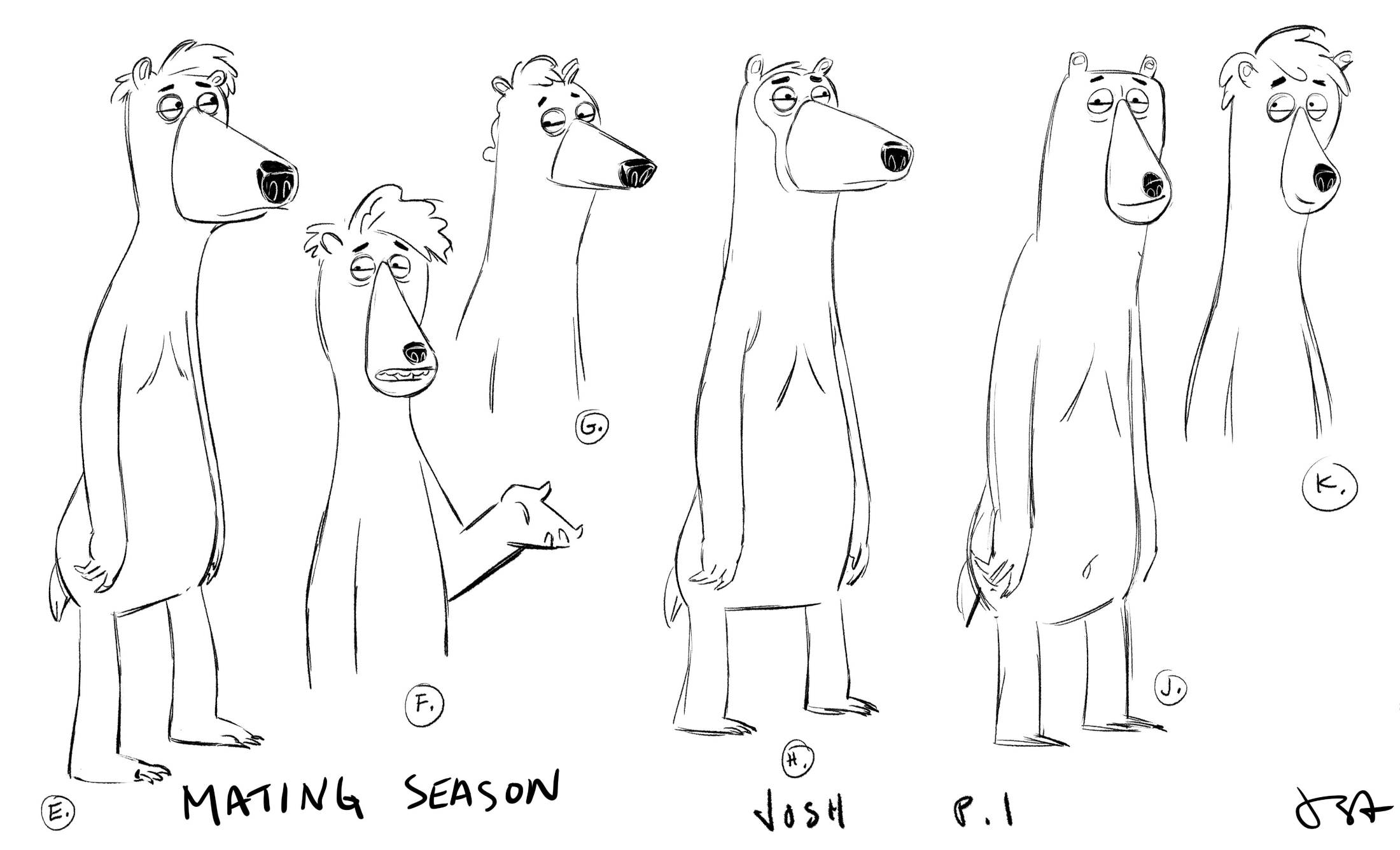
One of the show’s biggest animation challenges involved figuring out how anthropomorphic these characters should be. The animals walk upright during conversations and dates, but shift onto all fours during moments of instinct, panic, hunting, combat, or… other more primal activities.
Animation supervisor Anthony Lioi said they discovered early that the transition between human and animal behavior would define the show’s visual identity.
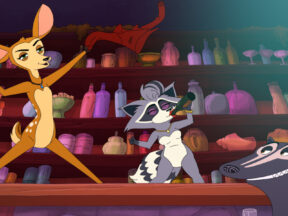
“We designed Fawn the deer standing up on two legs,” Lioi explains. “So her proportions were such that it’s like, that doesn’t work when she just goes on all fours.”
The solution became part of the comedy. “We just drew a real deer with Fawn’s head,” he says. “And then it was like, what if the gag and the joke is that as they return to all fours, they become more animal.”
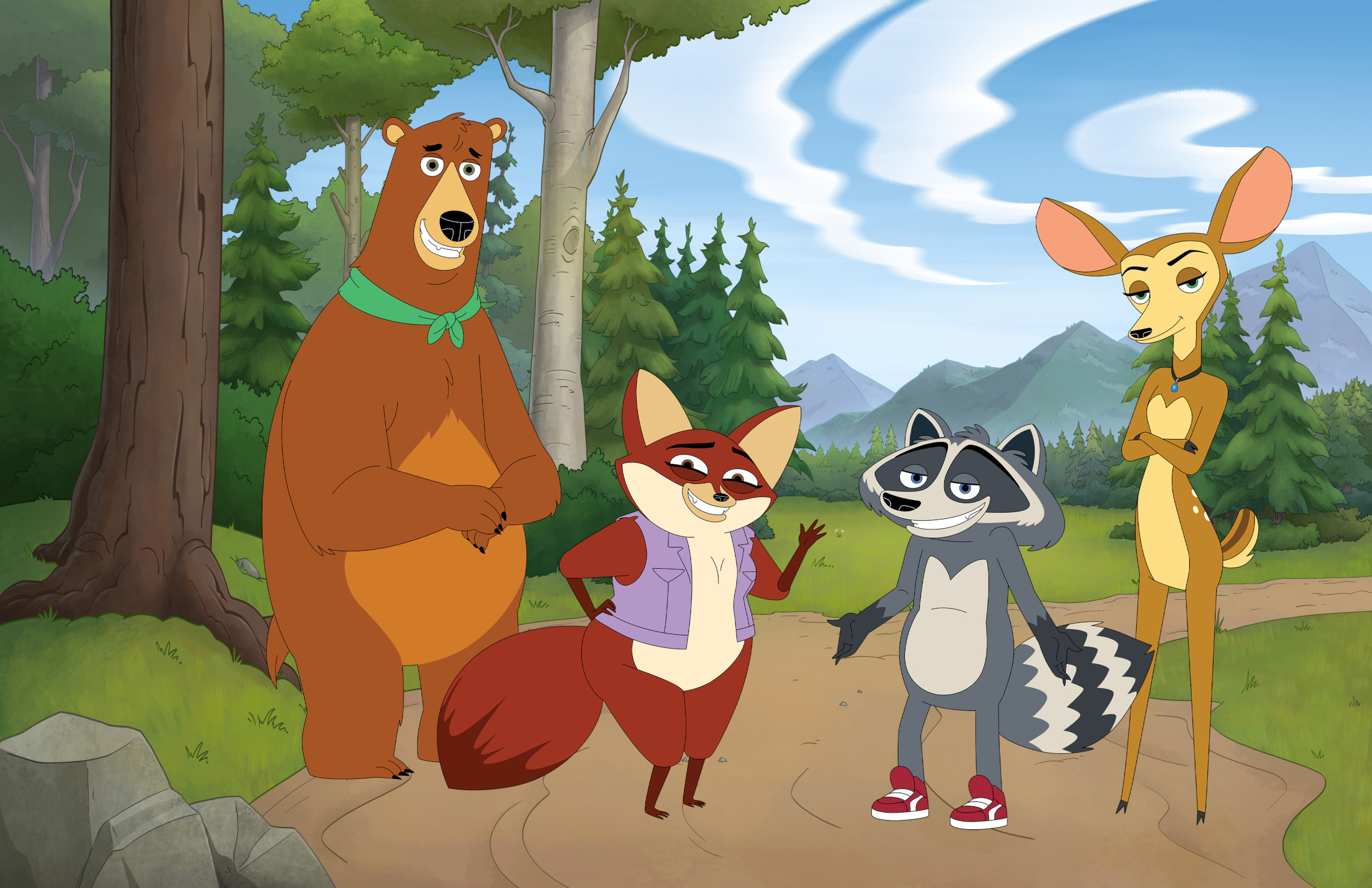
Goldberg says the creative team gradually established rules for when characters revert to instinct.
“They act like people until they have a reason not to,” he explains. “If they’re going to get down and charge each other and fight, they’re going to be animals. If they’re going to run away in fear, they’re going to be animals. But if they’re on a date, they’re more like people.”
Those discoveries continued throughout development. Lioi describes how practical design issues evolved into recurring comedic opportunities.
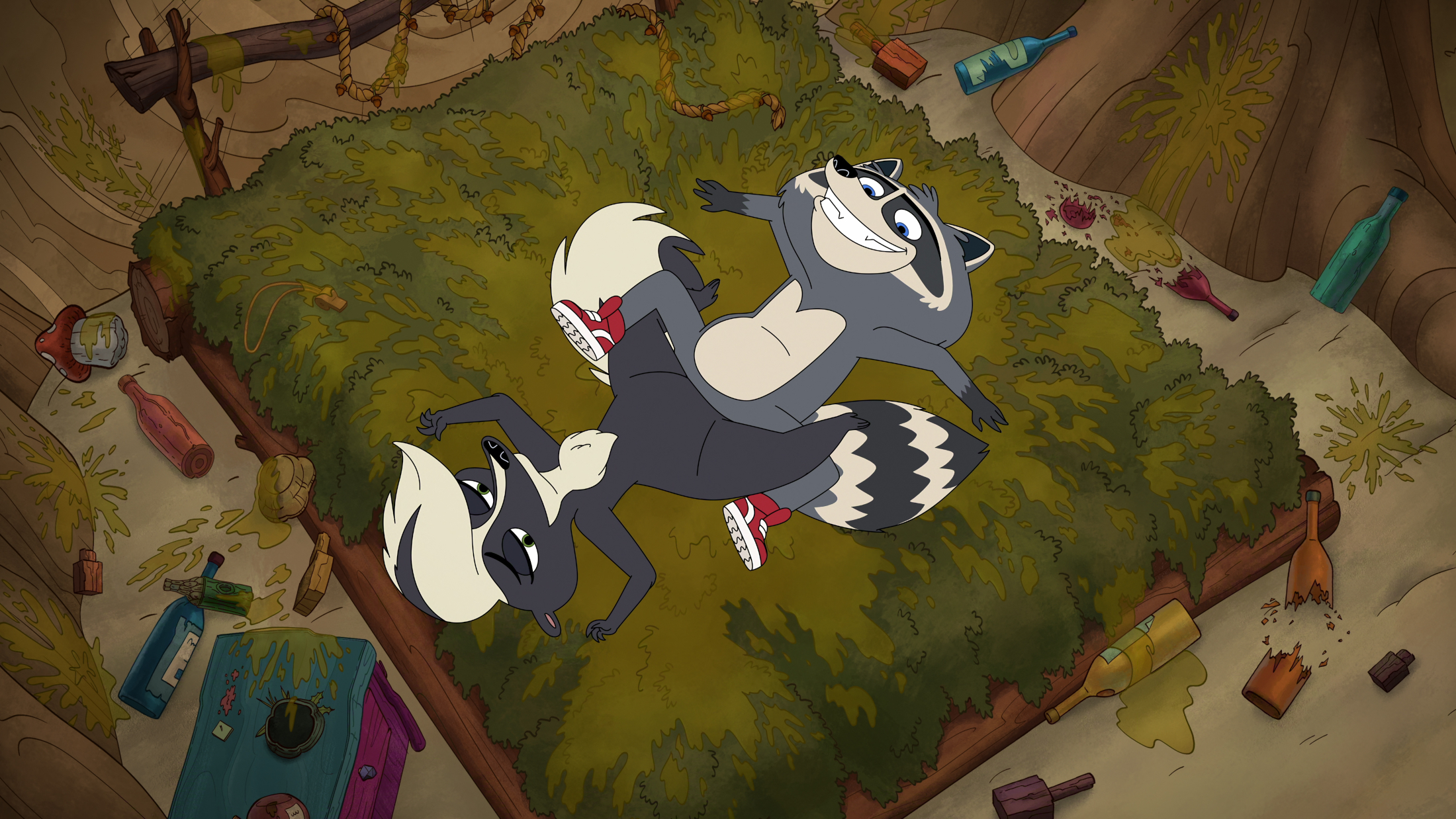
“Ray Raccoon was tiny compared to his best friend, Josh,” he recalls of early explorations. “So then we had to go, ‘Oh wait, how do we get a two-shot in here?’ That got us to figure out pretty soon, Ray could climb up Josh, and then that added all these other physical gags and opened our minds to new ways to play with them.”
The production’s confidence in its work benefited from the fact that much of the Big Mouth crew remained intact.
“It wasn’t like a first season in a lot of ways,” Flackett said. “It was kind of like our 11th or 12th season together.”
The Titmouse Relationship
The series also continues the long-running creative partnership between Netflix and Titmouse, one that helped define the initial success of Big Mouth.
Goldberg credits Lioi with helping establish that connection in the first place.
“We went around and visited all the different animation houses in L.A.,” Goldberg recalls. “Titmouse stood out, one, because we liked their vibe, we liked how artist-friendly they are, and two, Anthony was doing a show there. He trusted them. He liked working there. And we valued his opinion a lot.”
Lioi described a production environment built around experimentation and trust. “There was just a freedom there that we could actually play,” he remembers, emphasizing how important it was that the pipeline never felt too rigid.
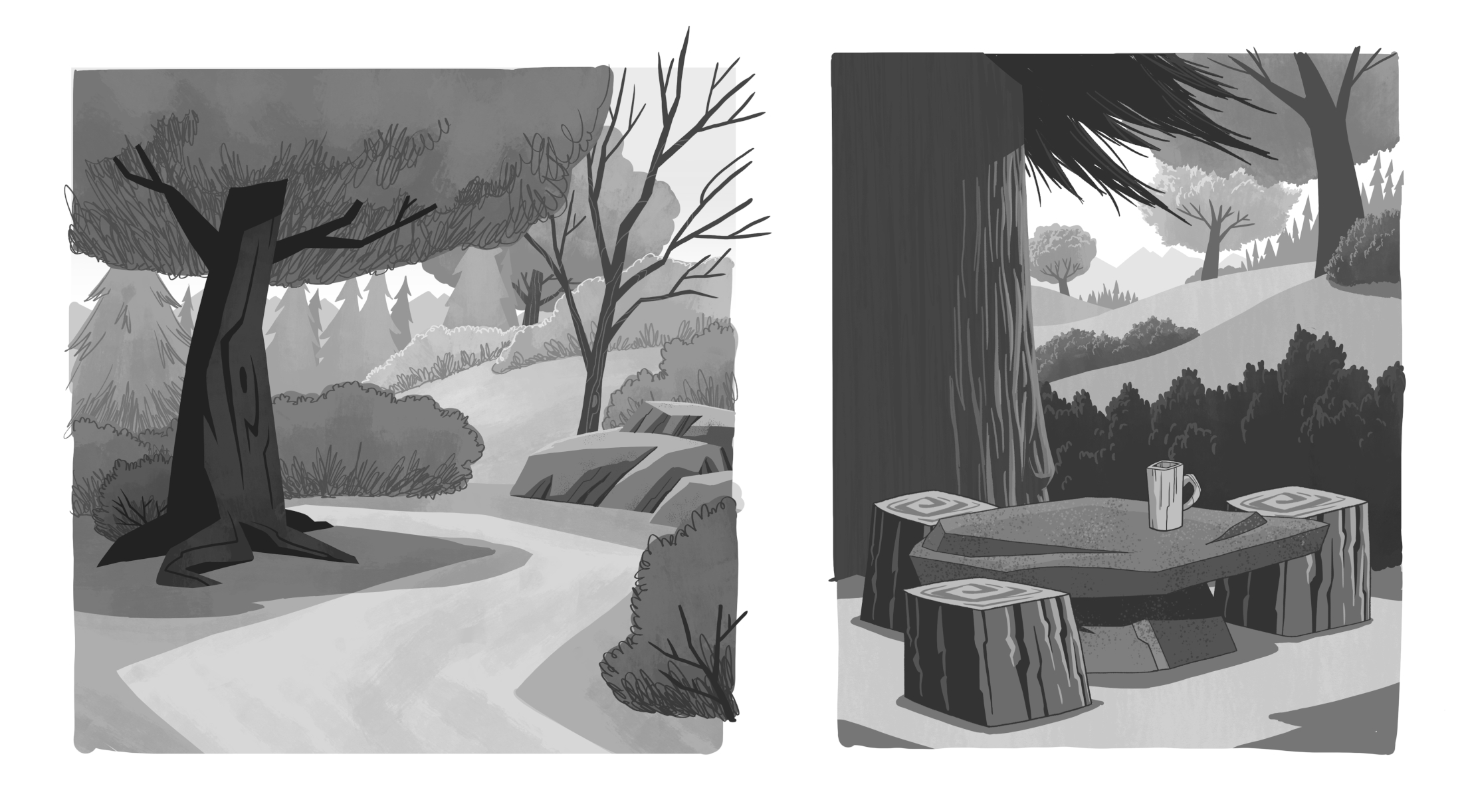

That freedom extends into the production process itself. Levin describes a highly refined script-driven pipeline developed over more than a decade of making adult animation. “We don’t want to waste a lot of pencil mileage on jokes that aren’t working.”
Episodes are extensively rewritten before storyboarding begins, something Lioi said remains surprisingly rare in television animation.
“This is one of the first and only productions where rewrites are actually done before we start boards,” he says. “So many shows I’ve been on, we’re like, ‘We’ll fix it in animatic.’ This team figures things out every step of the way, and it just gets better and better instead of hoping it gets better.”
That collaborative culture has become central to how the creators think about success.
“The process is everything to us,” Flackett insists. “Creating a repeatable and enjoyable process is, in a way, the most important thing. Because you can’t know how the show will be perceived. You really hope the audience likes it. You know that you like it. But the only control you have before release is over the process and making it a good one for everyone involved.”
For a series about desperately searching for companionship in a chaotic world, that philosophy feels entirely appropriate. Underneath all the animal sex jokes and woodland chaos, Mating Season sounds less interested in shock value than in the universal panic of wanting somebody to love you back.