.png)
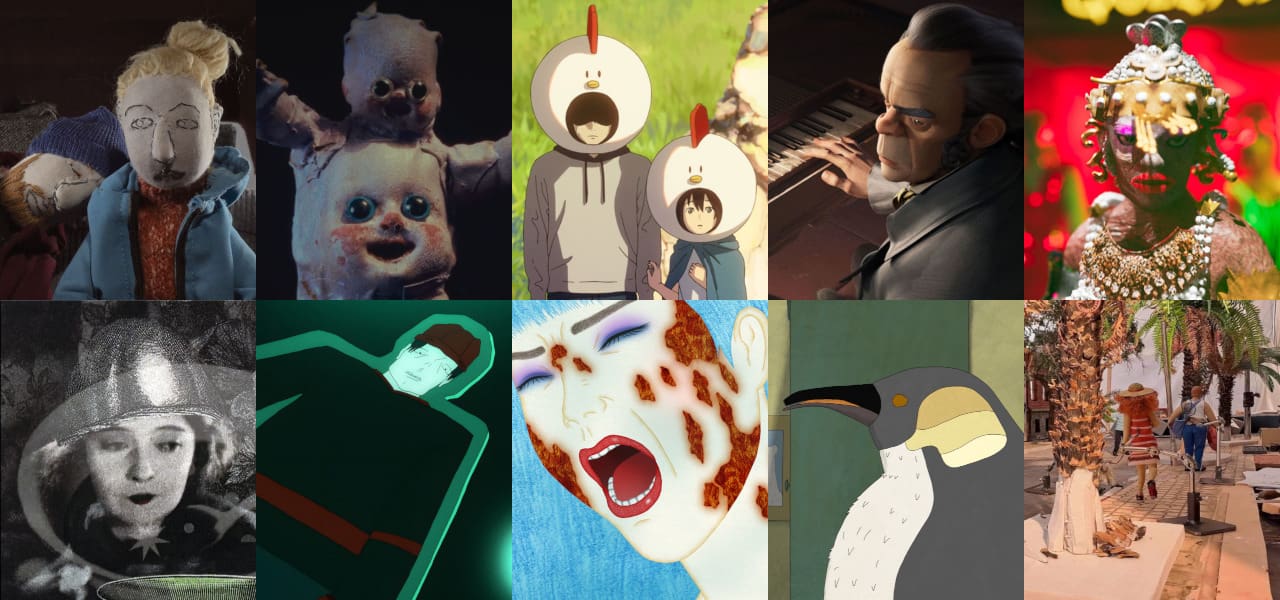

10 Must-Watch Shorts At Annecy 2026
Stay informed with free updates
Sign up to get our news digest — delivered directly to your inbox twice a week.
As always, there’s just too much to sort through in the Annecy selection for most visitors who have enough on their plate already. Economy is not the world’s oldest festival’s bag. But we’re here to help. Here are 10 films that you should jump over lines, crowds, and other distractions to introduce to your freewheeling mindscape.
Chris Robinson picked out our first five:

When the Sea Was Calm, Mamuka Tkeshelashvili (Georgia)
When the Sea Was Calm begins as a sunlit memory of a summer that seems, as childhood summers often do, as if it might never end. In Sokhumi, a teenage boy falls in love against a dreamy backdrop of neighborhood football games, beach days, laughter, barking dogs, waves, heat, and desire. The film’s stop-motion world is serene but restless, its occasional rapid first-person flourishes giving the images the loose, shaky immediacy of handheld footage.
We know this calm cannot last. First comes the rain. Then a plane appears. Missiles fall, explosions tear through the city, dogs howl, smoke rises, and people begin to flee. When war reaches Sokhumi, the girl the boy desires is forced to flee with her family. Amid the chaos of evacuation, she loses her dog. The boy finds it and carries it with him as the city burns.
The long summer of childhood is over.
Tkeshelashvili’s camera seems to stumble through the panic: fast, blurred, fisheye, and unstable. The slightly stilted realism of the stop-motion, with characters often moving as if in frantic fast-forward, turns escape into a waking nightmare. The film captures the terrible scramble for safety: the confusion of an attack, the collapse of ordinary time, and the irrational need to hold onto one small living thing while everything else is being destroyed.
Decades later, the boy, now middle-aged, returns to survey what time and war have left behind. Flashes of archival footage deepen the film’s emotional force, reminding us that this is not simply a fiction but a memory rooted in real devastation.
A heartwrenching reflection on the War in Abkhazia and the destruction of Sokhumi, When the Sea Was Calm also speaks to the experience of anyone whose life has been torn into before and after by war.
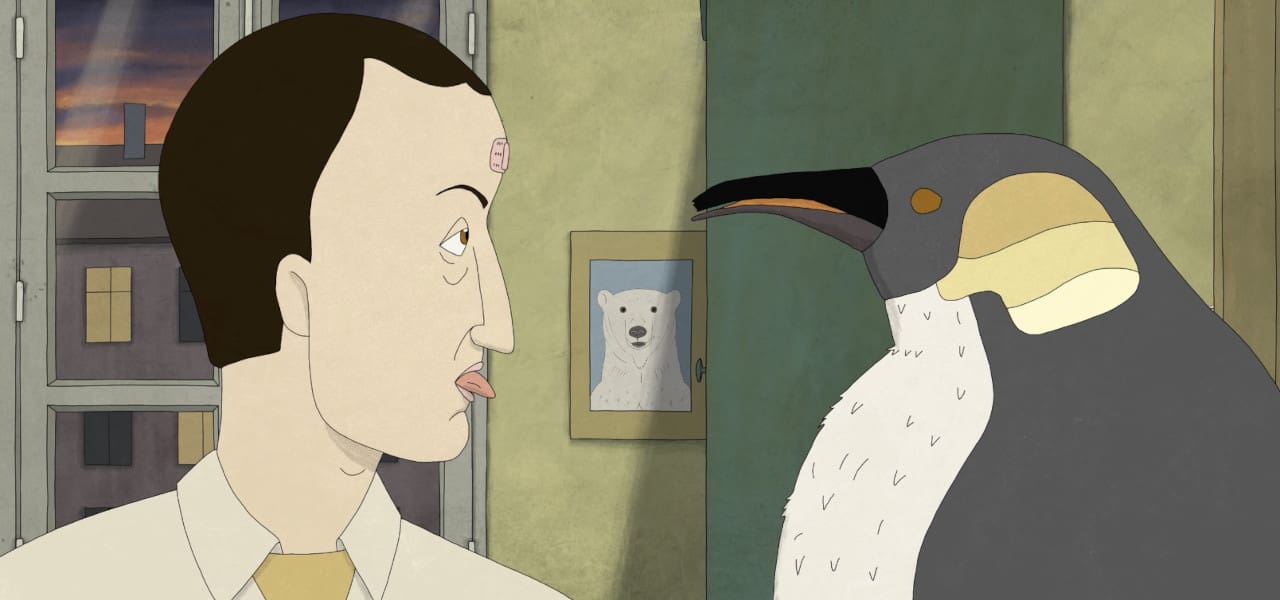
Penguin, Kaspar Jancis, (Estonia)
Remember that unforgettable moment in Werner Herzog’s Encounters at the End of the World, when Herzog wonders whether a penguin can simply go mad, abandon the colony, and wander off toward certain death? Kaspar Jancis’s latest short, Penguin, seems to pick up that question and carry it into stranger, darker, more absurdist territory.
Returning from Antarctica, a hunter brings his partner a rare gift: the penguin he has shot after it wanders away from the colony, alone. In classic Estonian absurdist fashion, Penguin lets the consequences of that simple act unfold with deadpan calm. Later, a statue of the now headless bird topples onto the man while he and his wife are making out, and soon he begins squawking, craving fresh fish, and slowly taking on the behavior of the creature he killed. What begins as a grotesque romantic gesture unsettles the relationship, raising the question that lingers throughout the film: has the man changed, or has his wife simply begun to see him differently?
Dialogue-free and paced with Jancis’s typically languid comic timing, Penguin treats its bizarre premise as if it were the most ordinary thing in the world. The result is a kind of deadpan magic realism, where transformation is accepted before it is understood. No doctor or healer can reverse what is happening, but the real question becomes less about the man’s condition than the woman’s response to it.
Is this simply an absurdist fable about guilt, appetite, and punishment? Or is it, beneath the weirdness, a tender story about love, perception, and the painful generosity of letting someone go when you realize they are no longer happy where they are?

Praying Mantis, Joe Hseih (Taiwan)
Joe Hsieh, the master of animated macabre behind The Present and Night Bus, returns with another stomach-twisting plunge into moral rot. Praying Mantis is garish from the start: neon colors, tacky men, cheap rooms, and a world that seems contaminated before the horror fully reveals itself.
Two men are out drinking and looking for female company when they meet a seductive woman and take her back to a hotel. The encounter begins as familiar macho sleaze, then swerves into the gruesome territory. The woman is not simply a femme fatale, but a praying mantis mutant who preys on men to feed the child waiting in her underground lair.
That setup could have easily become a blunt revenge fantasy: shitty men getting what they deserve. Hsieh pushes it somewhere queasier. The woman’s violence is tied to abandonment, pregnancy, loss, and a monstrous bargain made in the name of maternal love. A mysterious nurse hovers over the story like both caregiver and manipulator, turning survival into a trap. What looks at first like predation gradually becomes something sadder and more desperate: a mother transformed into a weapon for a child who can never stop needing more.
The film’s horror comes not just from bodies being consumed, but from the sense that everyone has already been poisoned by want. Men use women. Women use men. Care becomes control. Love becomes hunger. Even the child’s repeated demand for “more” starts to sound less like innocence than a grotesque echo of the world outside: our appetite, our greed, our refusal to stop taking.
You may not enjoy Praying Mantis. Enjoyment is not really the point. Like Hsieh’s strongest work, it drags you into a vile, beautifully controlled nightmare and leaves you there long enough to wonder whether the monster is the woman, the men, the nurse, the child, or the entire system that made them.

What We Leave Behind, Alexandra Myotte & Jean-Sébastien Hamel (Canada)
The duo behind the spectacular A Crab in the Pool return with another cerebral and cathartic journey, this time following a man still trapped inside the trauma of childhood sexual abuse. Dan is an adult, but some part of him never escaped the hockey rink where he was harmed. Years later, that buried past has left him wounded, voiceless, and unable to feel whole.
The tone and design are far removed from the bright tones and surreal dark humor of Crab. Here, the palette is muted and earthy, bringing to mind the darker tones of Igor Kovalyov. The rink is not a nostalgic Canadian gathering place but a psychic ruin: cold, empty, and haunted by what happened there.
Dan arrives with a gaping hole in his neck. Empty bottles hint at alcohol, collapse, or some attempt to dull the pain. Suddenly, he is thrown onto the ice and bashed around by tabletop hockey players, as if reduced to a toy in someone else’s game. A harsh light falls on him. It belongs to the rink custodian, who finds Dan drunk, covered in vomit, and unable to speak. He appears to take pity on him, but his warning that it is dangerous down there carries a more sinister charge. Is he protecting Dan, controlling him, or standing in for the man who harmed him years earlier? The film’s fractured camera movements echo Dan’s damaged inner state, turning the rink into a maze of shame, memory, fear, and self-blame.
For international viewers, it is worth noting that hockey in Canada is not just a sport; it is a national mythology built on toughness, silence, obedience, and loyalty to the team. In recent years, that mythology has been badly shaken by a disturbing number of sexual abuse and assault scandals in amateur hockey. Myotte and Hamel draw on that unease, using the rink not as a nostalgic backdrop but as a place where authority, secrecy, and tradition can become cover for harm.
What We Leave Behind is not only about the original act of violence. It is about the long aftermath: how abuse can follow someone into adulthood, distort their sense of self, and leave them appearing unstable to people who have no idea what they survived. The film asks for compassion without softening the damage.
The filmmakers refuse any tidy repair. Dan does not simply wake up healed, and the hole does not magically close. The first sign of recovery comes only when he can speak, when the buried violation can finally be named.
This is not an easy watch, nor should it be.

The Stars Watch from Long Ago, Stacey Steers (United States)
The Stars Watch from Long Ago (made in collaboration with John Romano, who masterfully edited the film), is instantly recognizable as a Steers work: hypnotic, mystifying, and nearly silent. Stars, insects, plants, and domestic spaces intermingle as a house spins fecklessly through the universe. Two women and a girl seem to exist inside this spinning home, quietly improvising solutions to an unknown fate. Fires burn. Insects are transformed into soup. Flowers suddenly bloom on a barren planet.
A prevailing sense of disconnection and loss envelops the world: characters in limbo, one way of existence gone, another possibly out there—but where, and when? The film carries a steady sadness, as though the house is fleeing a chaotic world that is, literally and figuratively, on fire. The ending is ambiguous. Taken from a scene in The Spirit of the Beehive (1973), the girl looks with wonder out at the stars—but which stars are these? How near are they? How far? Light-years away, or just beyond reach? Still, there’s hope.
Jamie Lang, here, taking over for the next five titles.
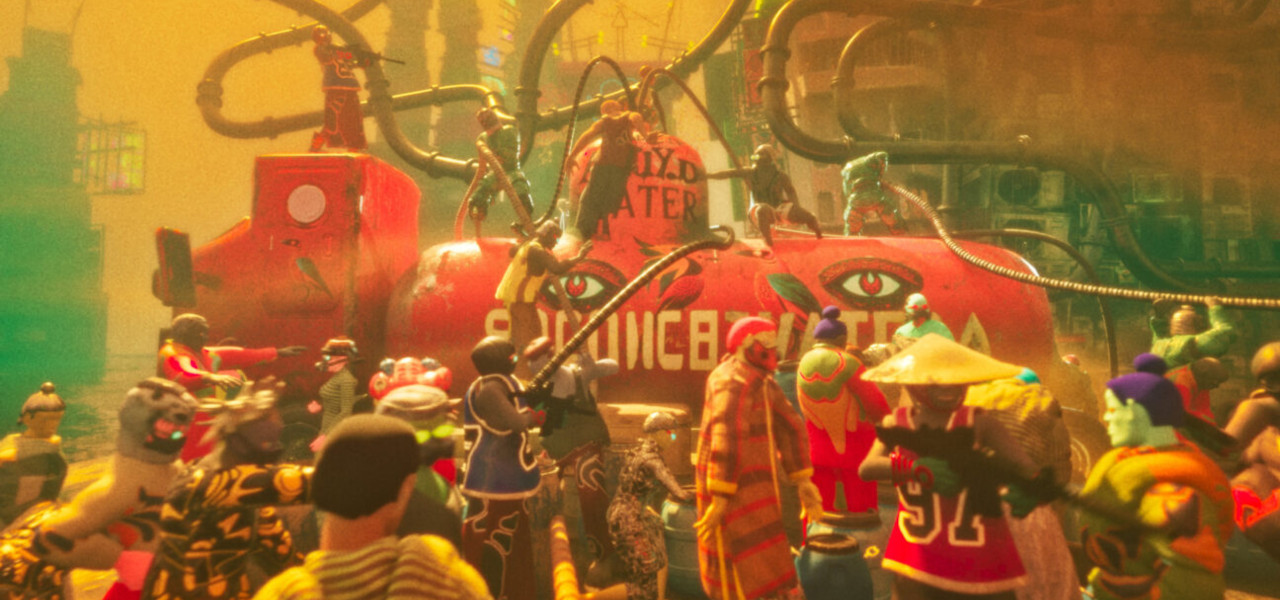
Acid City, Jack Wedge, Will Freudenheim (United States)
At first glance, Acid City looks like a dystopian nightmare. A floating metropolis drifts in the middle of a vast acidic ocean. The sun beats down relentlessly on toxic water, and many of its inhabitants appear physically altered by generations of environmental collapse. Yet the film is far less interested in catastrophe than in the people who have learned to live within it.
Presented as a documentary and first made known to us at its Rotterdam premiere, the short follows a film crew spending a day among the residents of this strange city. Real interviews recorded on the streets of New York are blended with fictional characters, creating an unusual hybrid that feels simultaneously speculative and familiar. Scientists, workers, children, and passersby speak about life in Acid City as if it were simply another place to call home.
It would have been easy to make a film like this that wallowed in despair. But despite Jack Wedge and Will Freudenheim building a city that is crowded, polluted, and precarious, it’s also vibrant. People build communities, develop rituals, adapt infrastructure, and find meaning within conditions that should be impossible.
Visually, Acid City is a marvel of compressed worldbuilding. The city feels (and is) assembled from fragments of countless real places, producing a dense urban landscape that is both alien and recognizable. The rough edges of the animation only strengthen the illusion, making the city feel lived in rather than designed.

The Quinta’s Ghost, James A. Castillo, Spain
Francisco de Goya’s Black Paintings have always felt haunted. Created directly on the walls of his country home (quinta, in Spanish) during the final years of his life, they are works filled with dread, isolation, and mortality. In the Oscar-shortlisted The Quinta’s Ghost, filmmaker James A. Castillo imagines the psychological forces behind their creation, transforming one of art history’s most enigmatic chapters into a gothic animated nightmare.
The film follows an aging, increasingly frail Goya as he retreats to La Quinta del Sordo, the house where he painted his famous murals. Illness, memory, and fear begin to blur together. The home itself seems alive, becoming both witness and participant as disturbing visions push the artist deeper into obsession. The supernatural imagery is frightening, but the film’s deepest anxieties are recognizably human.
Visually, The Quinta’s Ghost draws directly from Goya’s paintings, surrounding viewers with distorted figures and shadows designed by Pakoto Martinez and animated in Quill by Joaquín Martinez (no relation) that seem to smear across the frame. The result gives the feeling of wandering through a fever dream painted two centuries ago.
Like the works that inspired it, The Quinta’s Ghost lingers in the uneasy space between artistic creation and personal torment (hope you’re all good, James!), suggesting that great art can emerge from our darkest encounters with ourselves.

A Couple Clucking Chickens Were Still Kickin’ in the Schoolyard, Seishiro Nagaya (Japan)
Part of Prime Video’s larger anthology of shorts based on Chainsaw Man manga creator Tatsuki Fujimoto’s early works, A Couple Clucking Chickens Were Still Kickin’ in the Schoolyard has flashes of the absurdist themes that would come to define his later work, but they arrive in a story that often feels improvised, with twists and revelations piling up faster than the narrative can support them.
Humanity has been wiped out following a war with alien invaders. In the ruins of that world, a young alien attends school much as a human child once would. While tending the school’s animals, he discovers that two chickens are actually humans in disguise, hiding beneath comically unconvincing mascot heads to avoid detection.
From there, the story races through sacrifice, friendship, and sudden reversals. What lingers after its surprising conclusion is not the plot but the underlying concern with connection. Again and again, Fujimoto returns to the question of whether human relationships can endure in a hostile world. The answer here is bleak. The bonds between the characters matter, but they are ultimately powerless to stop the larger forces bearing down on them.

Merrimundi, Niles Atallah (Chile)
Niles Atallah’s short unfolds in a strange future where singing cherubs melt, reform, and sing again, trapped in an endless cycle of creation, decay, and rebirth.
Narrative is less important here than sensation. The film drifts through a series of hallucinatory tableaux populated by angels, flowers, statues, puppets, and machine-generated voices. Languages overlap and dissolve into one another. Songs become chants. Images emerge from the darkness only to mutate into something else. At times, Merrimundi resembles a forgotten religious pageant. At others, it feels like a computer dreaming with the contents of a museum.
Atallah has long been drawn to the uncanny, but this may be his most unrestrained work yet. The film embraces chaos rather than coherence, layering stop-motion, live action, digital effects, and performance into a dense audiovisual collage. The result recalls the handmade surrealism of Jan Švankmajer and the Quay Brothers while remaining unmistakably Atallah’s own creation.
Beneath the delirium lies a quiet anxiety about the future. Much of the film is framed as a message from a sentient machine attempting to communicate through the ruins of human culture. The machine’s vision of paradise is beautiful, absurd, and faintly unsettling.
Merrimundi is pure imaginative excess, equal parts musical, fever dream, and end-of-the-world prophecy.
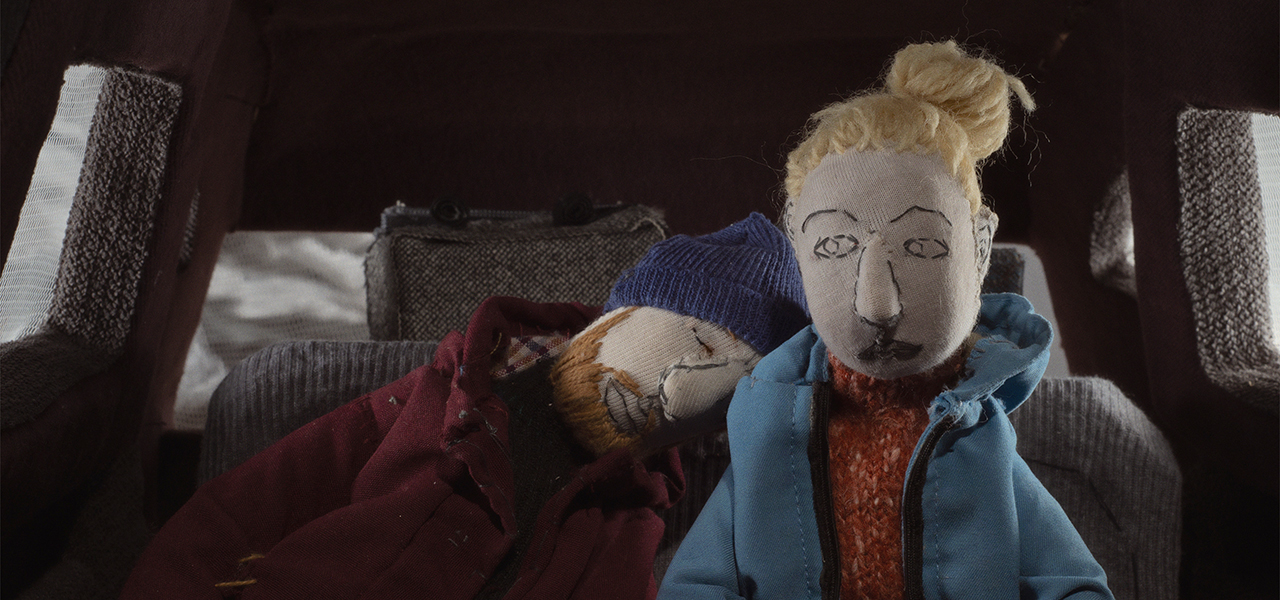
Winter in March, Natalia Mirzoyan (Armenia, Belgium, Estonia, France)
Fresh off winning the Grand Prix for best short at Animafest Zagreb, Natalia Mirzoyan’s Winter in March is a quietly devastating portrait of exile, guilt, and displacement. Drawing on the experiences of Russians who fled their country following the invasion of Ukraine, the film transforms a contemporary political reality into something dreamlike, intimate, and deeply human.
A young couple leaves St. Petersburg behind and sets out for Georgia, hoping to escape a state they no longer recognize as their own. Roads stretch endlessly through snow, border crossings become surreal obstacles, and home recedes into the distance, both physically and emotionally.
Mirzoyan tells the story through handmade puppets and fabric textures that give every frame a hauntingly fragile quality. The characters seem stitched together from the same material as their memories, carrying the marks of a world that no longer feels stable.
Winter in March refuses to reduce migration to politics alone. The film is equally concerned with conscience, identity, and the loneliness of realizing that the place you love and the actions of the state that governs it can no longer be reconciled.
The result is a remarkably compassionate film about people caught between countries, between futures, and between the versions of themselves they were and the people they are becoming.