.png)

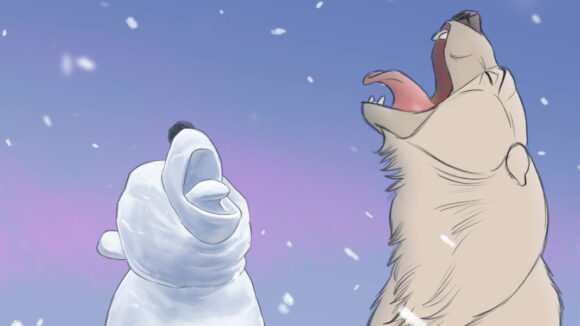
2026 Oscars Short Film Contenders: ‘Snow Bear’ Director Aaron Blaise
Stay informed with free updates
Sign up to get our news digest — delivered directly to your inbox twice a week.
Welcome to Cartoon Brew’s series of spotlights focusing on the animated shorts that have qualified for the 2026 Oscars. The films in this series have qualified through one of multiple routes: by winning an Oscar-qualifying award at a film festival, by exhibiting theatrically, or by winning a Student Academy Award.
Today’s film is Snow Bear from Aaron Blaise, a previous Oscar nominee for co-directing Disney’s Brother Bear; we’re noticing a theme. Snow Bear screened at several top festivals, including Annecy, Tribeca, and Zagreb – winning the Best Film for Children prize at the latter – and qualified for this year’s Oscars through a theatrical run.
Hand-drawn and animated by Blaise over three years, the dialogue-free short follows a lonely polar bear wandering through a rapidly changing Arctic in search of a companion. When other species prove unaccommodating, our protagonist creates a BFF bear out of snow.
Cartoon Brew: What was it about this story or concept that connected with you and compelled you to direct the film?

Aaron Blaise: Coming from a background where I worked on hand-drawn films such as The Lion King, Beauty and the Beast, and Aladdin, as well as directing Brother Bear, I have always loved the art form. Those were wonderful experiences, but large machines with many moving parts and compromises. Making my own independent short has always been a dream. With the rise of CG animation, it felt like 2D was “taken off the menu.” I’ve always said 2D won’t go away if we don’t let it. Snow Bear is my effort to celebrate the medium, help keep it alive, and tell a personal story.
I wanted to capture something deeply personal: awe for the natural world, paired with the emotional depth that only hand-drawn animation can convey.
As I was making it, it became much more. The story reflects my own journey. When my wife of 20 years, Karen, passed away due to illness, I experienced deep loss and loneliness — a helpless feeling of watching her “melt away.” Making this film became cathartic. There were moments while animating where I found myself in tears.
Ultimately, it’s a message of hope, of regaining your footing and finding companionship, as I have with my wife Vedanta.
More than anything, I want viewers to feel a range of emotions — from laughter at our lonely polar bear’s resourcefulness to reflection on finding hope in hard times. If Snow Bear makes audiences pause and feel wonder, I’ve succeeded
What did you learn through the experience of making this film?
Creatively, I had the freedom to take the story anywhere, but that comes with risk. Absolute freedom can result in disaster. So even though it was a short, I approached it as I was trained at Disney: really working out the beats and story in pre-production before animation. It also meant sticking to a schedule — five days a week for three years. I’m a big believer in trusting that process.
There was also a lot new to handle. Even as a Disney director, there were things I never worried about — like post-production costs. We were fortunate that when we showed the boards to Mark Mancina and Marlon E. Espino, within 30 minutes, they said “Yes!” to scoring. Likewise, Skywalker Sound said yes to mix the film. But then my business partner Nick Burch and I had to figure out how to pay for it.
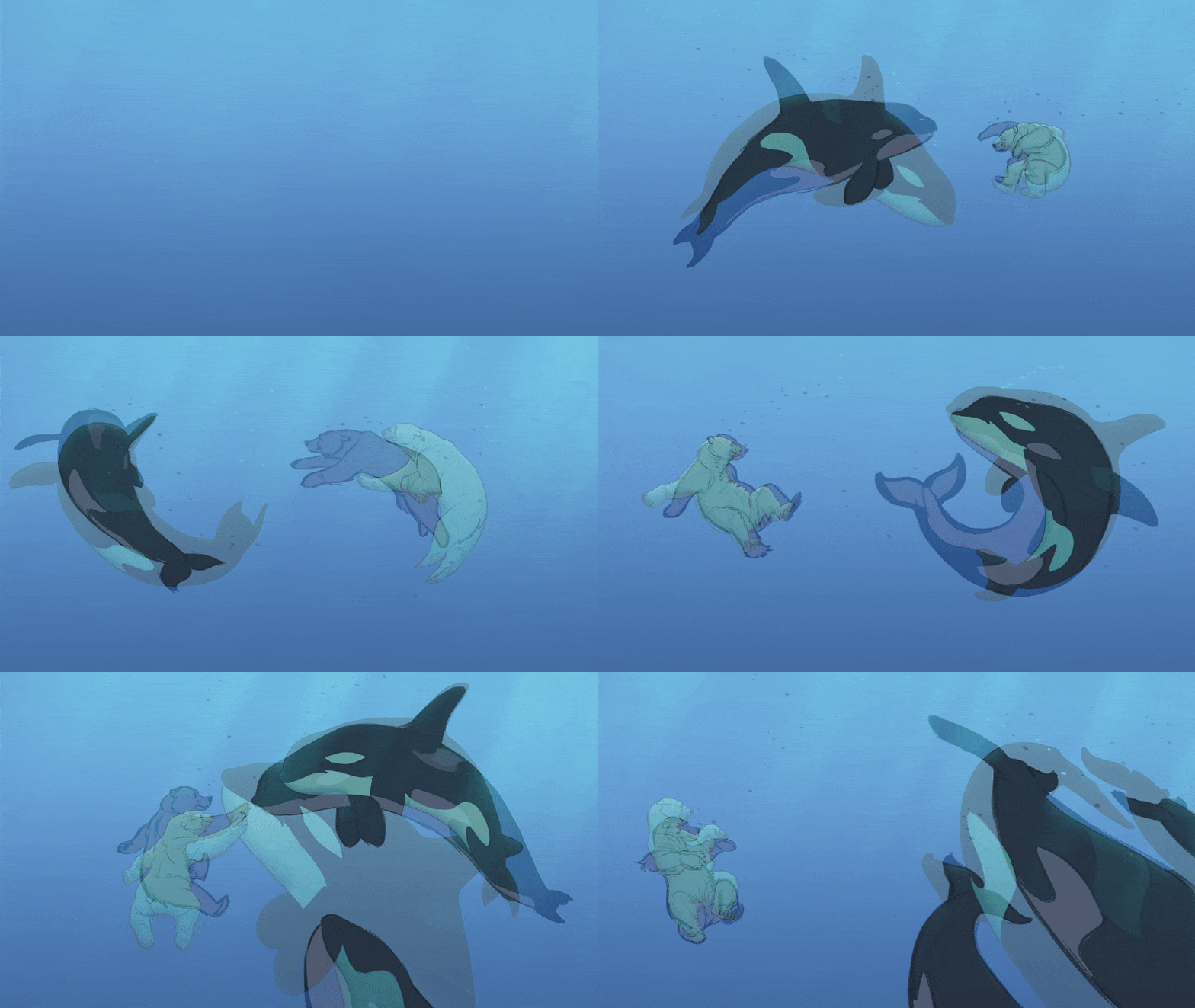
This was a 100% self-financed, independent production — no studio resources. We sold artwork, created classes, even took out loans. We also wanted to build an audience while making it. Twice a week, I live-streamed the process. People tuned in from all over the globe — one day I might be painting a background, the next in-betweening a shot. In the end, we got there, and I’m proud of the result.
Can you describe how you developed your visual approach?
I was trained as an illustrator and painter before animating. From the start, I knew I’d handle all the visuals myself — every background and spec of snow. The look was inspired by two things: my love of animals and wanting a believable, naturalistic feel (no talking animals), and the dramatic Arctic landscapes.

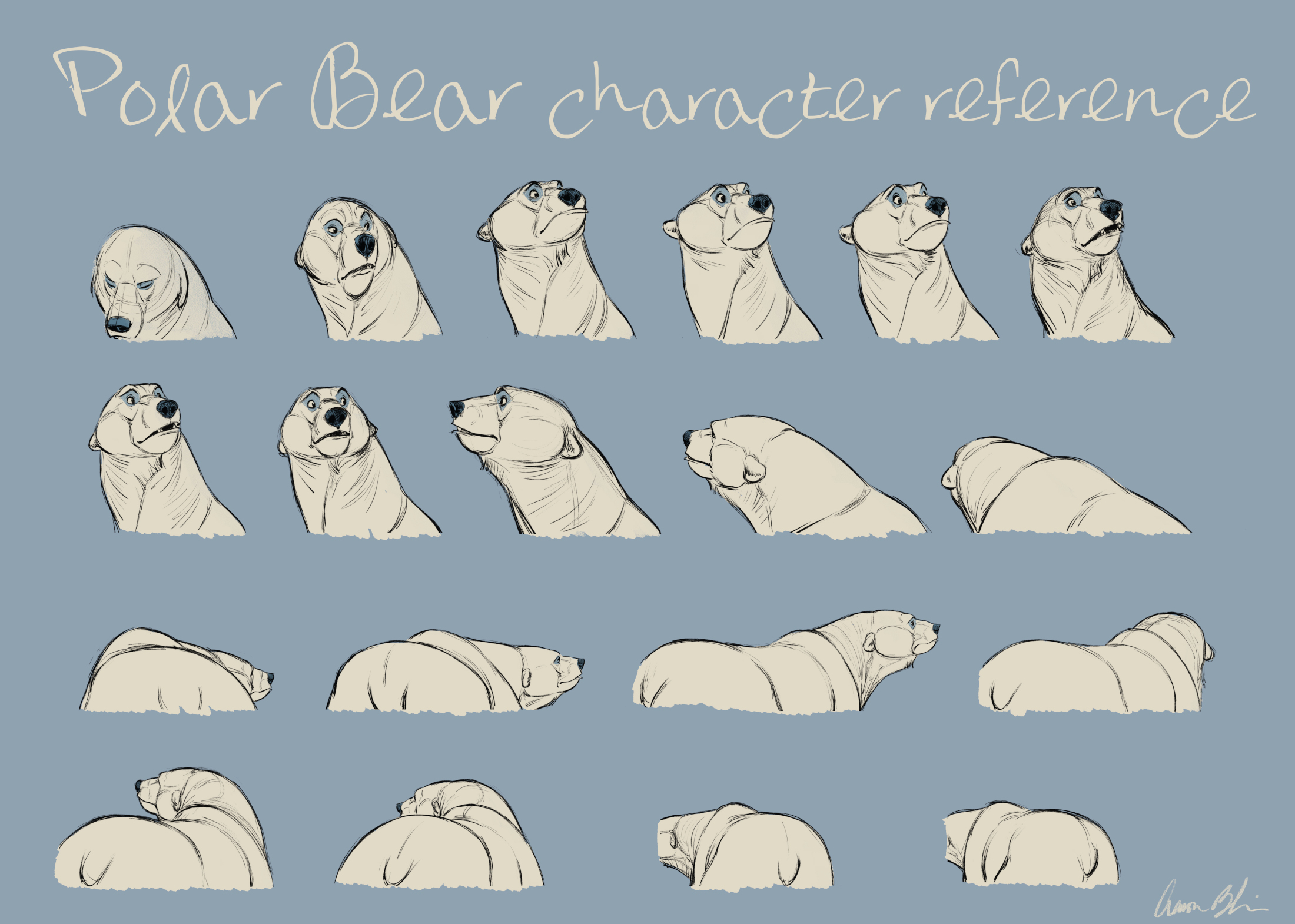

Early on, we joked about how “simple” a white polar bear in a white Arctic would be — but research quickly proved otherwise. The Arctic is vast, dramatic, and unique. We used that visual richness to reinforce the story and its message.
I thought this film would be six minutes and done in nine months… of course, 11,000 drawings and three years later, that wasn’t the case!

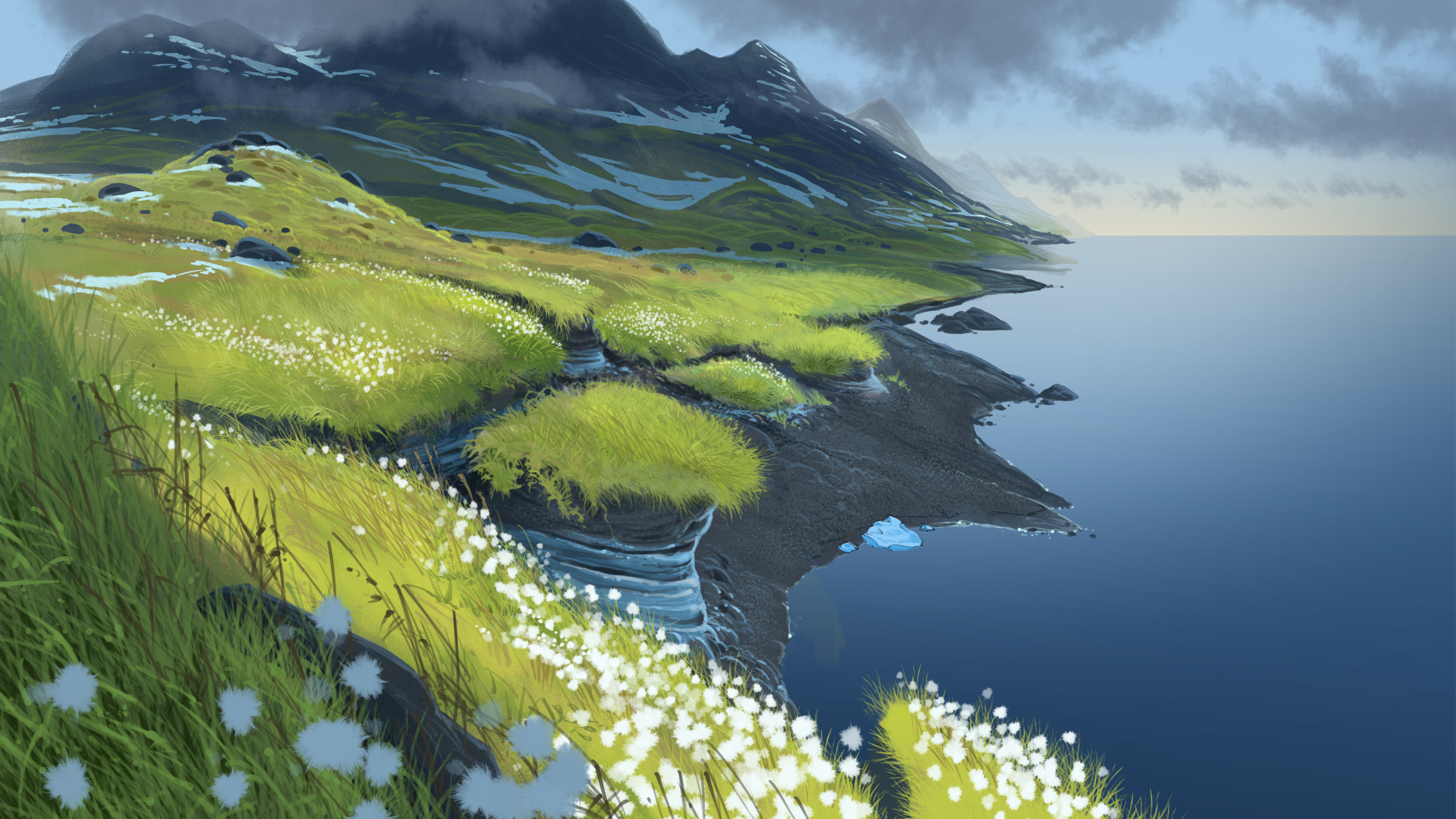
Fans of classic Disney-style 2D will find a lot to love in this short. Its unpolished, sketchy character work harkens back to a time even before you were at the studio. The lines have a vibrancy more like 101 Dalmatians or what we saw more recently in Andreas Deja’s Mushka. Was this a creative choice? Or one of necessity?
It was absolutely a creative choice. I love pencil tests by masters like Glen Keane and James Baxter — they feel alive in a way finals often don’t. I wanted to see the line crawl, to celebrate the medium. In a world of AI imagery, I wanted to remind people this was made by hand. We could have gone cleaner, but my style is what I call “clean roughs,” and I believe there’s hunger for that.
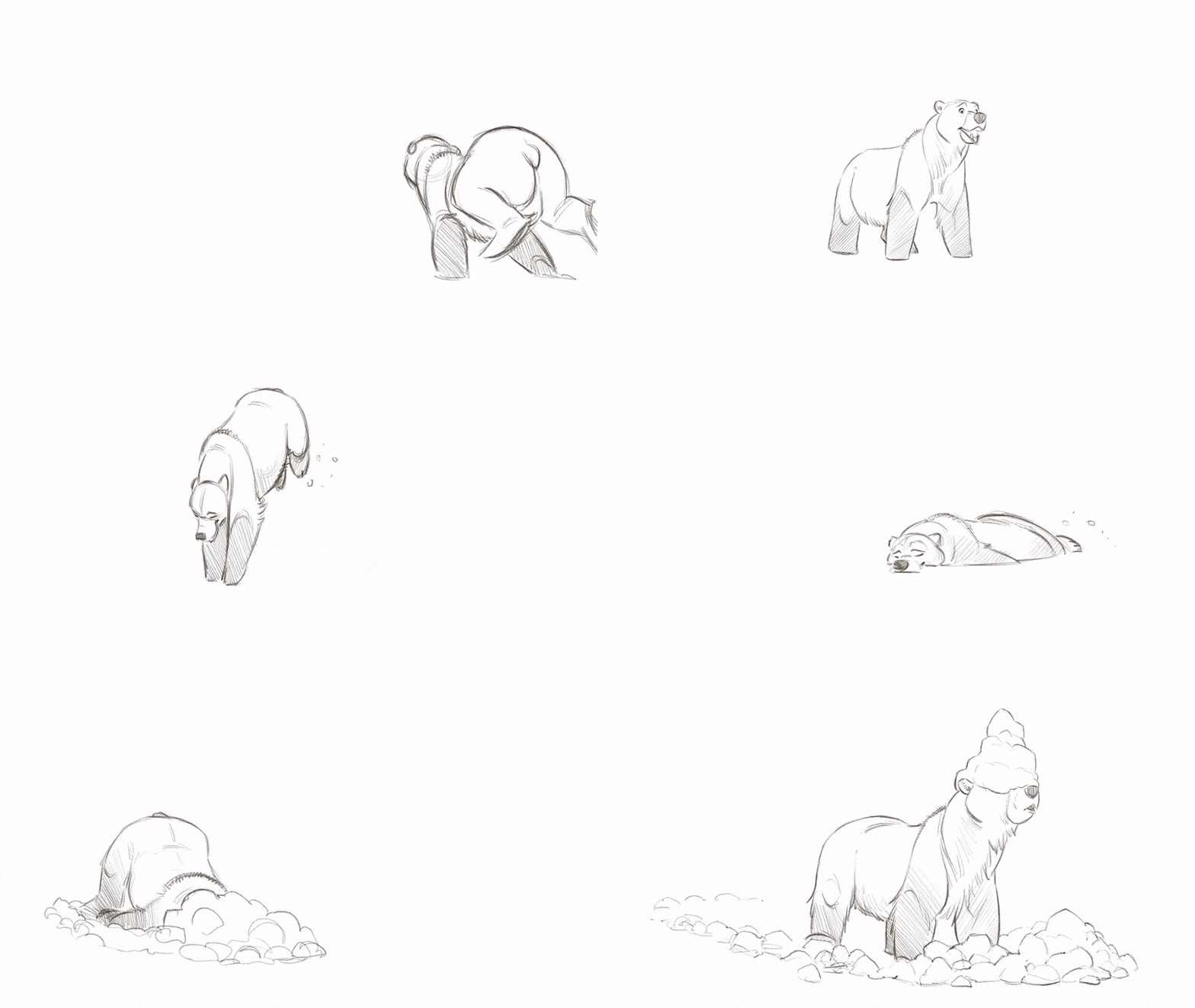

This film is also a proof of concept. There’s a myth 2D is more expensive — not true now with software like TVPaint and digital drawing on my Wacom. It’s a huge time saver. Look at Cartoon Saloon — evidence great 2D doesn’t need $200M budgets. I wanted to hit a high production level at a fraction of the cost, and I think we achieved that.
On a personal note, this film made me fall back in love with animating. While Snow Bear may be my first 2D project in a while, it won’t be the last.
This interview was edited for length.