.png)


Every Frame A Carving: Exclusive Clip From The Handcrafted Short ‘Forevergreen’ From Disney Vets Nathan Engelhardt, Jeremy Spears
Stay informed with free updates
Sign up to get our news digest — delivered directly to your inbox twice a week.
When Disney veterans Nathan Engelhardt and Jeremy Spears, both still heavily involved in the studio’s current pipeline, first began sketching out Forevergreen, they never imagined it would take five years, 200 volunteers, and countless after-hours work sessions to bring their short film to life. But the result is a deeply tactile, heartfelt story that was worth the wait.
In the film, an orphaned bear cub is taken in by a fatherly tree. As the mischievous cub grows up, his attention wanders, and a hunger for trash leads to big trouble. Englehardt and Spears have given Cartoon Brew exclusive access to a clip from the short, in which we see a montage of the film’s key relationship, as well as the bear’s curiosity getting the best of him.

“The germination of this whole thing was when Nathan and I got together — he’s an animator, I’m a story guy but also a wood carver — and we were like, okay, between the two of us, we could probably make something,” Spears explains. “I had just been carving all these bears at the time, and we had a tangible kind of example to hold in our hands and look at.”
That carved bear became the seed of Forevergreen. “We always joke where it’s like, I brought the tree and he brought the bear,” Engelhardt says. “We both love stop motion animation as well; we’re big fans of Aardman. I actually wanted to be a stop motion animator before jumping into CG. But that deep love for stop motion and the tactile never left me.”
That handmade spirit inspired the film’s singular aesthetic; each frame looks as though it were carved out of wood. Spears recalls pitching the idea to their crew: “I think that just stoked everyone’s imagination,” says Spears.
The key challenge was finding a way to translate wood grain, carving marks, and natural imperfections into digital animation. The team built a process that borrowed from stop motion’s replacement techniques.

“I basically modeled that bear and then did an open and close roar with that character,” he explains. “It was essentially an automated face replacement tool, similar to what you would see in stop motion. So totally borrowing ideas from stop motion and then digitizing it in a way that I had never seen before.
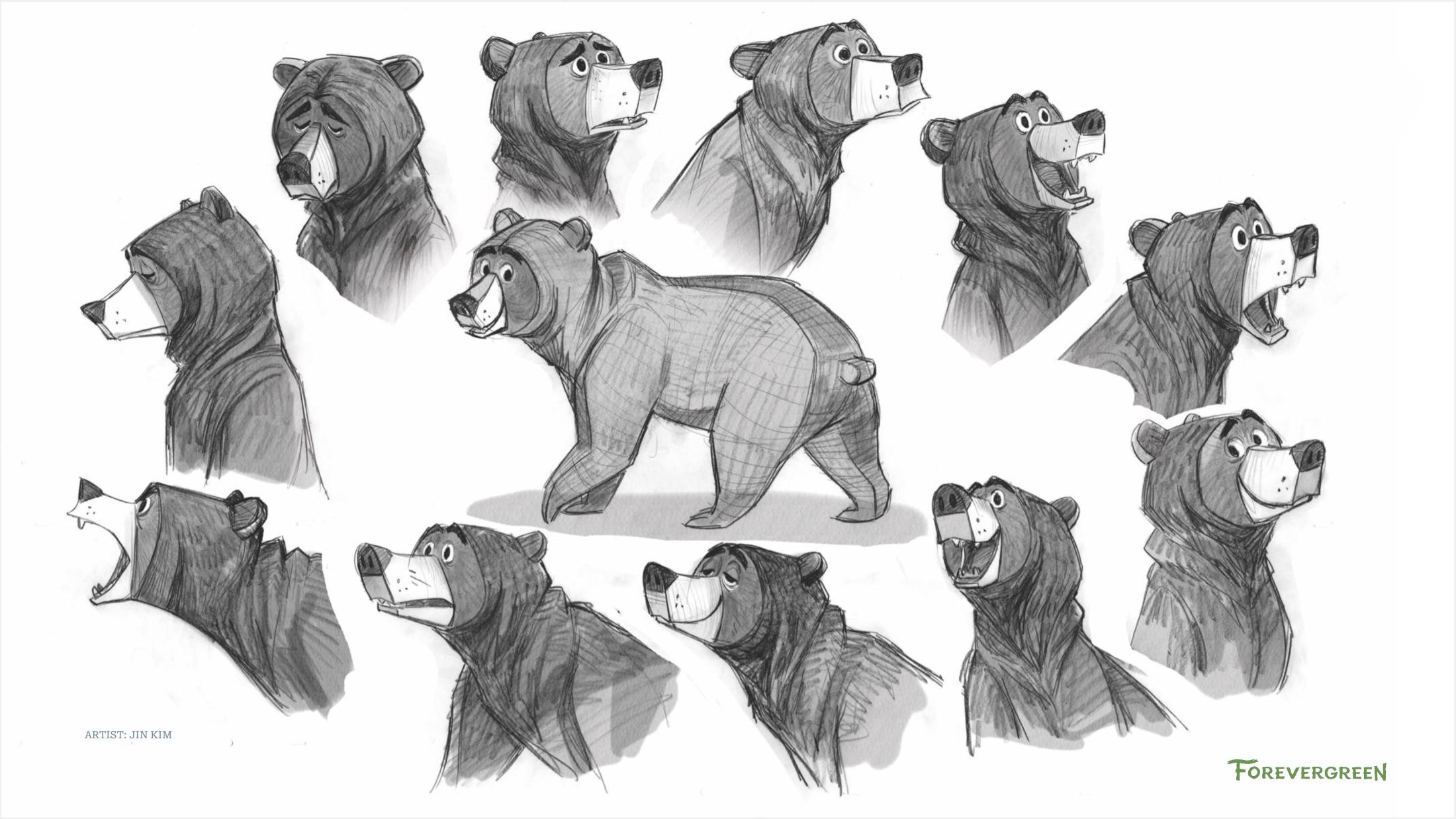


The Forevergreen team contrasted the natural, wood-carved world of the bear and the tree with manmade materials that felt intentionally artificial. “The antithetical material of the vacuum-formed plastic food containers in the campsite and the manmade materials and stuff like that was very intentional,” says Engelhardt. “So the hope was that you would see the bear and the tree together in this wooden handcrafted world, and you would go, yes, that makes sense. These characters should be together. And then when he interacts with the plastics, we should subliminally feel like he’s not where he should be.”
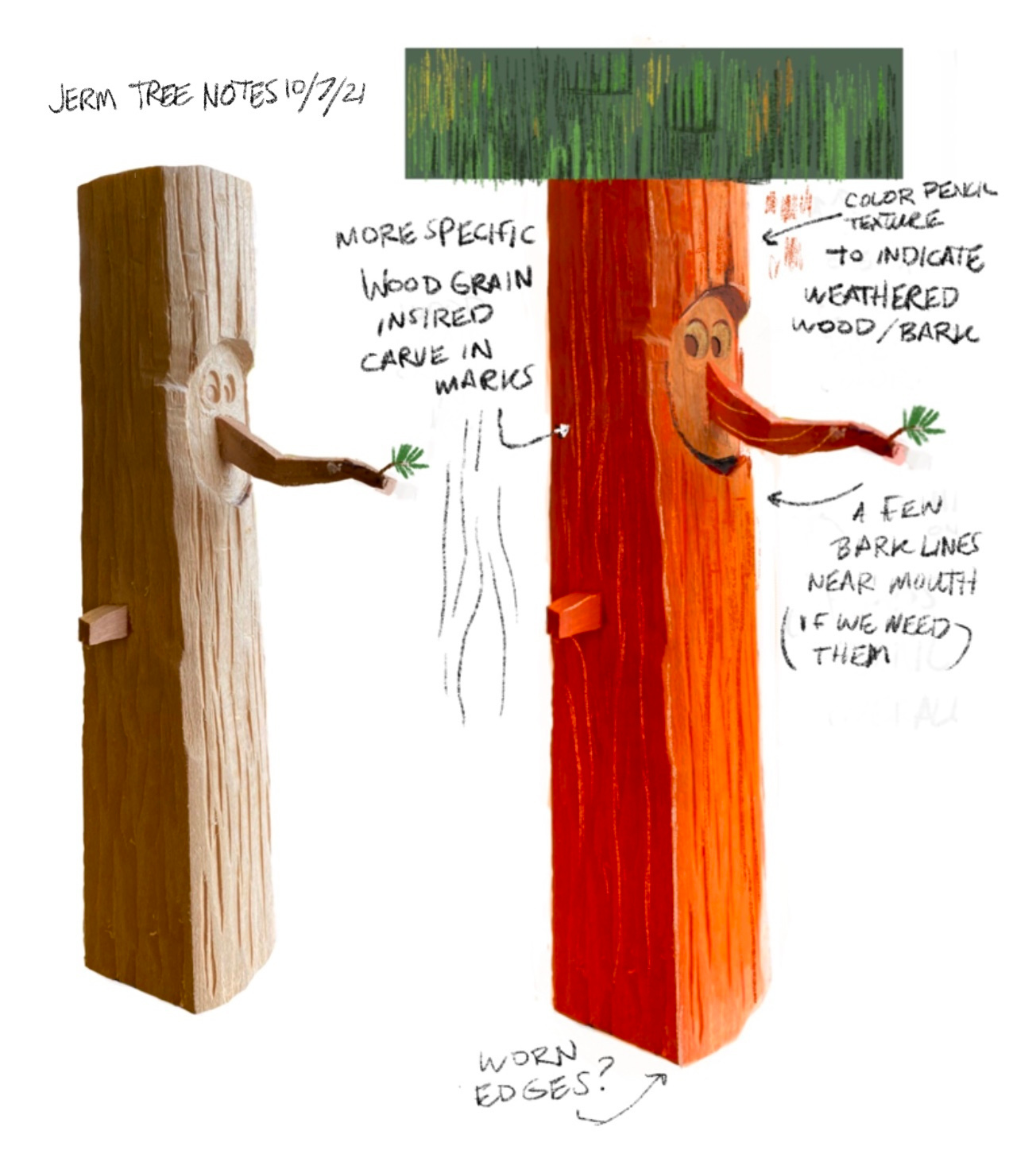
That visual storytelling similarly extended to the short’s impressive lighting, guided by a crew of industry veterans who donated their time.
“We had an amazing, talented lighting crew on this film, led by Mr. Greg Culp and Stephen Null,” says Spears. “Greg would go in and actually paint into each frame of the film. He not only does the lighting, but he’ll go in and sweeten things up as he’s making it.”


Engelhardt adds that the team took inspiration from “mid-century national parks posters” and even Rudolph the Red-Nosed Reindeer. “They actually made sort of the variable frame rate lighting so it has kind of like an old school nostalgic feeling… dirty it up a little bit so it’s not so CG clean.”
The production was made outside of work hours through Disney’s co-op program. “We both have four kids. We’d get our kids to bed and kiss our wives goodnight, and we would go to work,” Spears laughs.
Engelhardt sums it up: “We coined this term, which was we move at the speed of people’s generosity. That is why it took five years.”
For Spears, the heart of Forevergreen is its relatability. “Anyone can watch and go, my goodness, I am that bear character. Like, really, that’s the core of it. We all know what that chip bag means to us. And it’s so great watching it with audiences because we hear the chuckles, we hear the laughter when they see it. Because they know what that is.”
Forevergreen may have been born in the margins of its creators’ schedules, but the film itself is no footnote. It is proof of what can happen when artistry, passion, and community carve out space for something new, frame by handcrafted frame.