.png)
‘I’m Laughing And Enjoying The Shapes’: Lizzy Hobbs On Animating ‘Daughters Of The Late Colonel’
Stay informed with free updates
Sign up to get our news digest — delivered directly to your inbox twice a week.
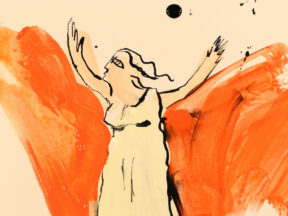
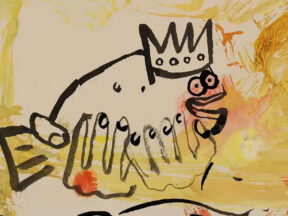
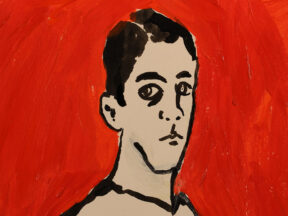
British filmmaker Elizabeth Hobbs has spent years developing a distinctive animation style built from loose mark-making, layered textures, and imagery often created directly beneath the lens of a rostrum camera.
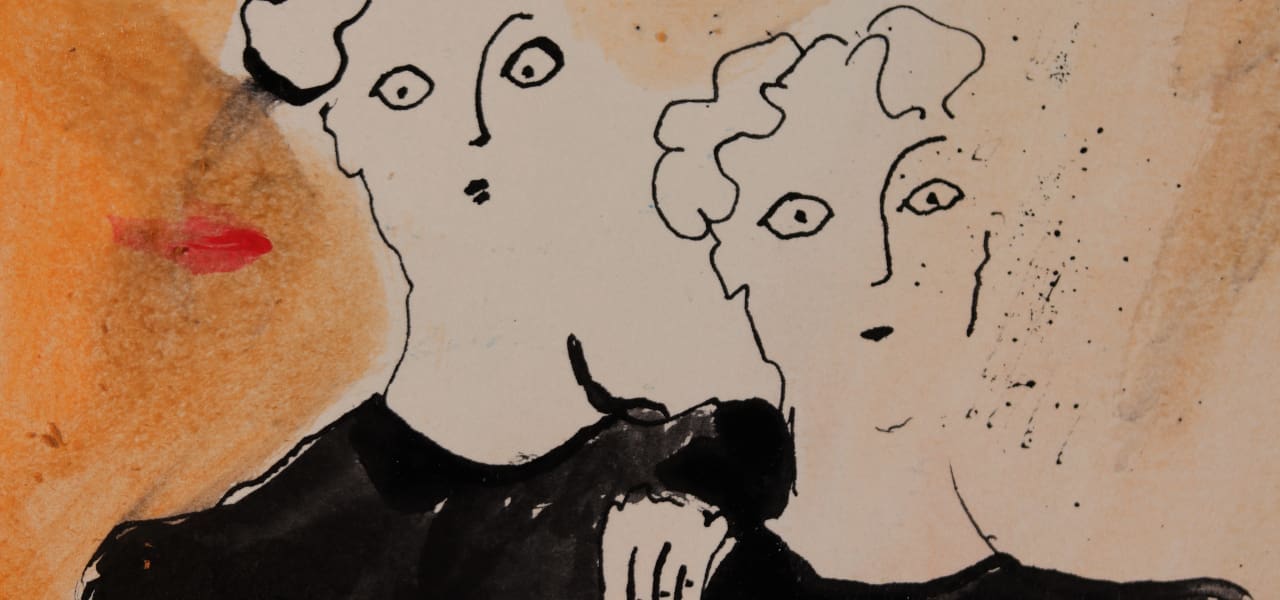
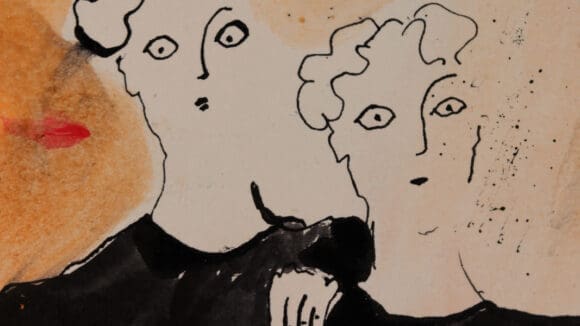
In her latest short, The Daughters of the Late Colonel, premiering tomorrow in Cannes’s Directors’ Fortnight section before screening in competition at Annecy next month, the filmmaker adapts Katherine Mansfield’s 1921 story into a sharp, funny, and quietly devastating portrait of two sisters emerging from under the shadow of an overbearing father.
Produced by Animate Projects Productions, Fabian&Fred and Phil Davies Films, the nine-minute film continues Hobbs’ fascination with literary adaptation and the strange elasticity of memory, performance, and social ritual. Yet the film also marks a new stage in her unending visual evolution. The imagery is sparser than in earlier works; it features more delicate linework. Hobbs trusts silhouettes, twitching digits, or a single eye taking up a small part of an otherwise empty screen to carry emotional weight.
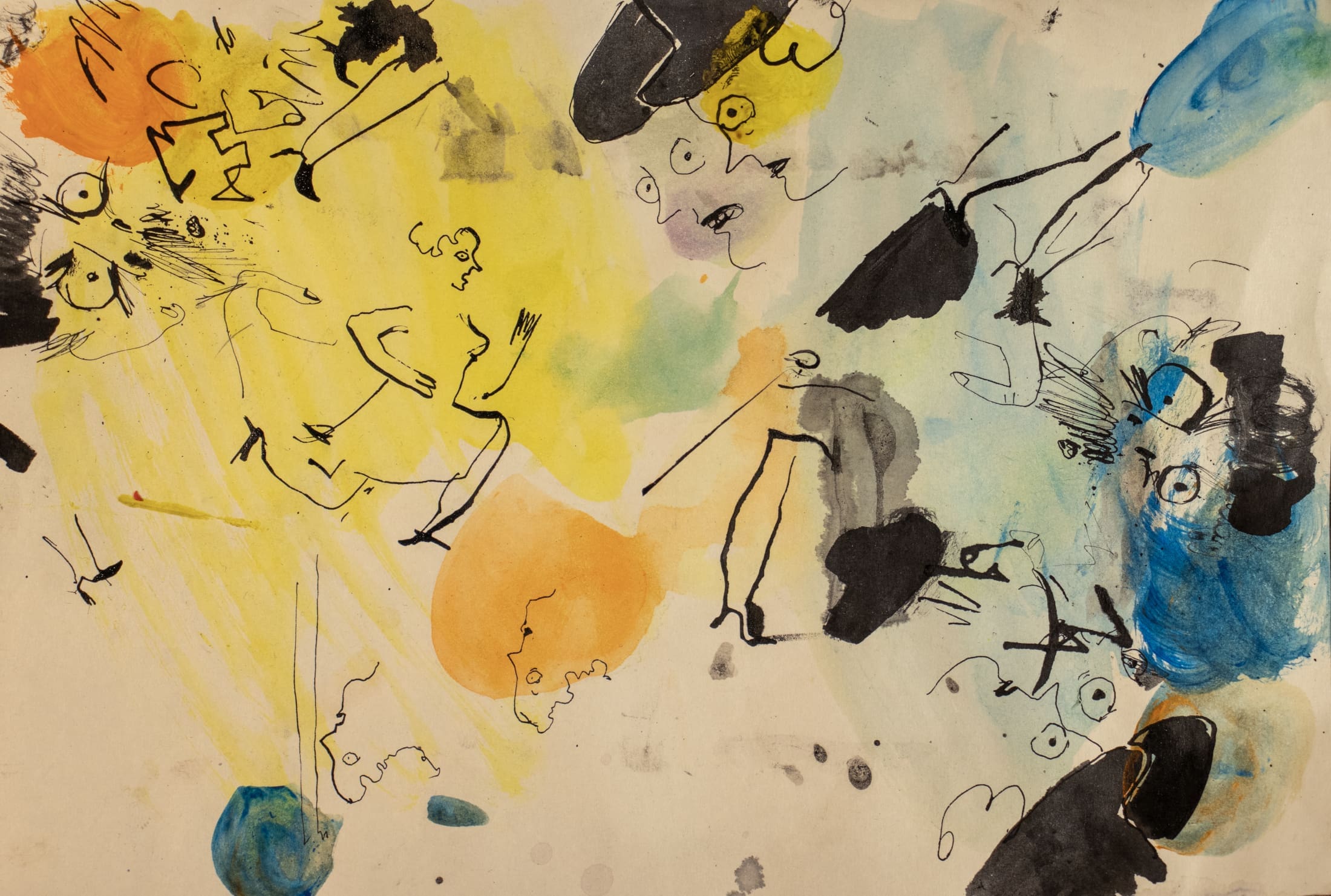
“I think I’m trying to get to a point in which I’m not doing anything ‘too much,’” Hobbs told us ahead of the film’s premiere. “So it’s about reducing the image and reducing the materials. In a way, trying to make something without too many processes getting in the way of what your hands and your brain are trying to do.”
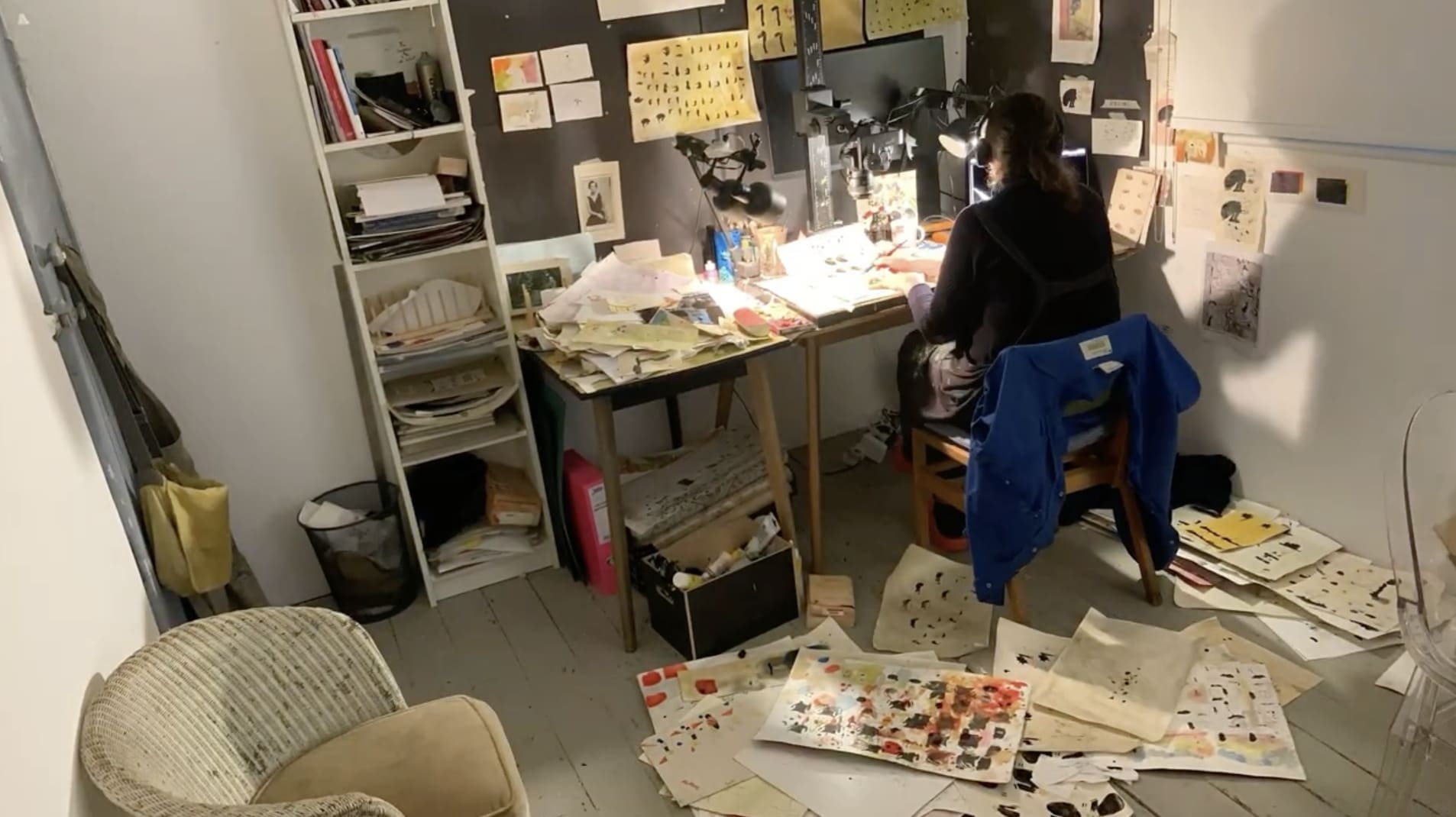
That near stream-of-conscious process came from an enormous amount of experimentation. Hobbs explained that the production involved an ongoing cycle of improvisation and revision inside the studio, where different techniques constantly fed into one another.
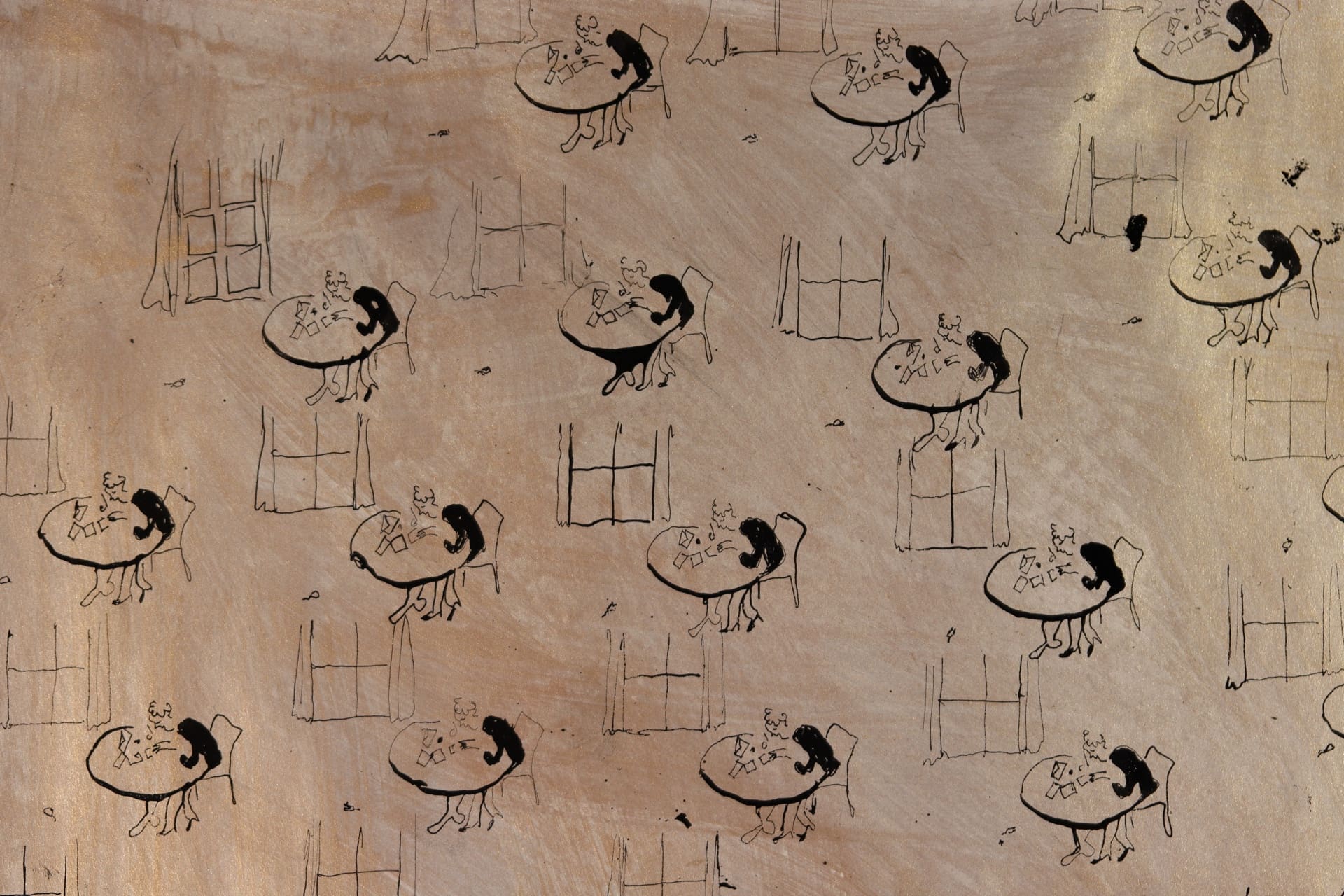
“The whole studio practice is a daily one, and it involves kind of making and making and reviewing and then iterations of the same thing,” she explained of her experimental work. “So, on this film, I think there’s about 45 minutes of footage.” Again, the finished short clocks in at just nine minutes.
Those experiments included cel painting, collage, pixilation, and even puppetry before the final form emerged. Working beneath the camera, Hobbs generated large quantities of material, then pared it back with the help of editor Mark Jenkins.
Mansfield’s original story gave Hobbs fertile ground to work from. She describes the text as “full of humor and visual imagery” with “immaculate” dialogue that offered “a head start.” Still, the adaptation required significant reshaping. Hobbs eliminated several characters from the original story, narrowing the focus onto the relationship between the sisters, their dead father, and a manipulative priest.
“I just thought I’m going to keep it in this one relationship between the father and daughters and see where I can go with that,” she explained.
In Mansfield’s version, the sisters remain trapped by circumstance and convention. Hobbs found her animated characters resisting that fate.
“In this process of kind of making and drawing these characters, they didn’t really want to do what happens at the end of the written story where they’re doomed,” she chuckled. “They didn’t want that. So I allowed them to act it out in a different way.”
That tension between repression and liberation runs throughout Hobbs’ body of work, which frequently draws from historical settings and older literary traditions. For the filmmaker, distance from the present can help create clarity.
“I think it’s about having some perspective, and also, the differences between men and women or those relationships being more stark or less nuanced,” she said of her inclination to use often century-old sources. “In commenting on them, you’re not sort of butting up with current events that are unfolding. It’s much clearer.”
Even with its themes of patriarchal control and emotional dependency, The Daughters of the Late Colonel remains deeply funny, as anyone familiar with Hobbs’ work will no doubt suspect. Her films have long occupied a space where experimental animation and deadpan comedy comfortably exist side-by-side. She credits that sensibility to her upbringing and a father figure very unlike the colonel in her latest short.
“My dad’s very funny, tells lovely stories, and so it’s part of our family culture to entertain and to deliver,” she said.
Humor also becomes part of the filmmaking process itself. Hobbs described laughing to herself as she animated small gestures and character details, especially the priest’s twitching legs as he nervously sits in a chair, making rather un-priestly suggestions.
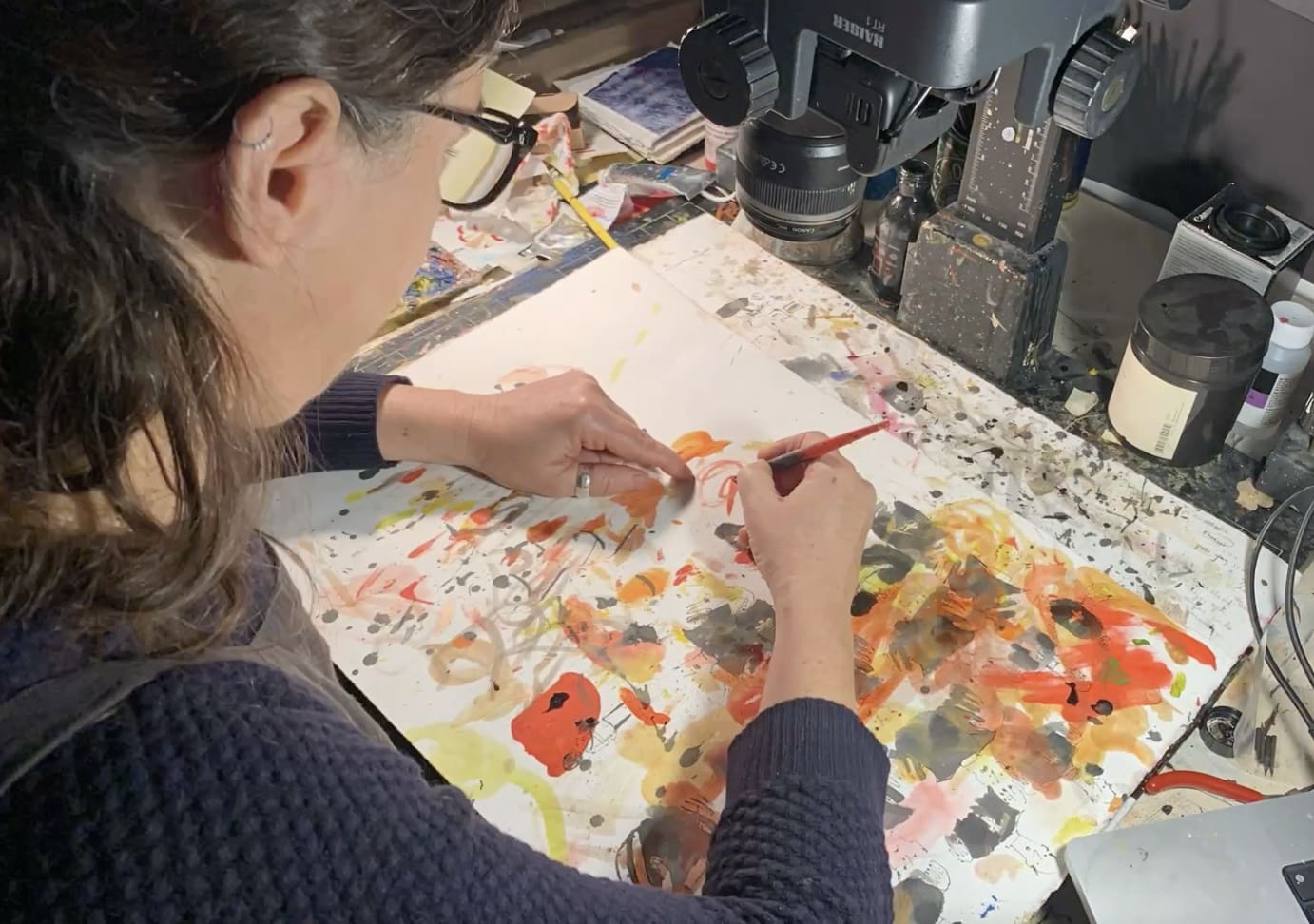
“When you’re animating, those are the things that bring joy in the moment,” she said. “The whole thing is organic and developing in time, and I’m laughing and enjoying the colors, and I’m enjoying the shapes.”
That spirit of playfulness helps make Hobbs’ work unusually approachable within the world of auteur-driven animation. Her films embrace abstraction and formal experimentation without ever feeling emotionally sealed off.
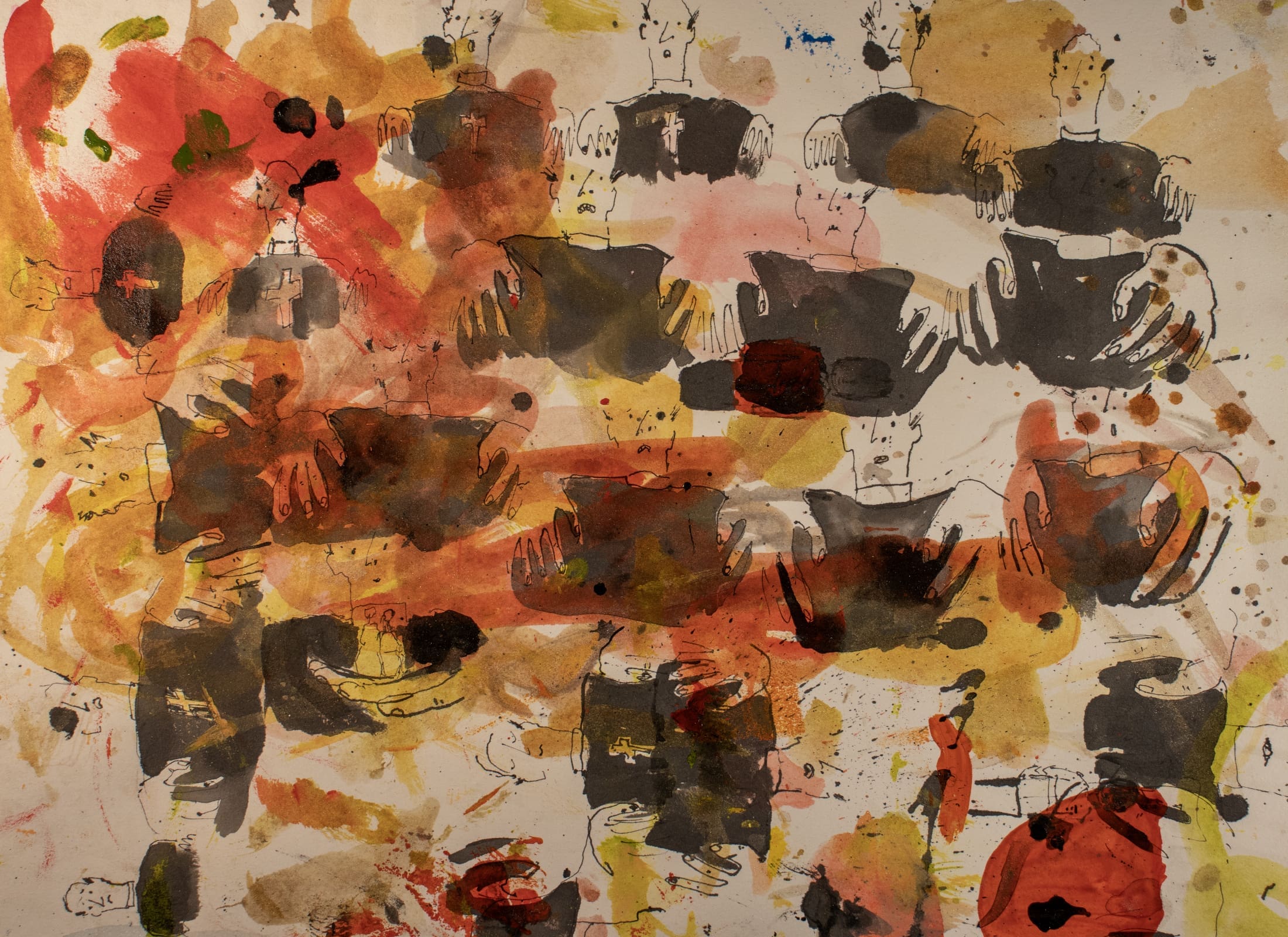
“Often with animation, people would talk about how this broad international audience is going to relate to a piece of work,” Hobbs said. “As an animator, you really shouldn’t worry about that.”
Instead, she pushes deeper into her own sensibility, including highly specific English rhythms and dialogue patterns. According to her, audiences adore specificity in the films they watch.
“I think just sort of diving in more deeply into your own experience, it resonates more broadly,” she added.
Despite the international attention surrounding the film, Hobbs already sounds eager to return to the studio.
“The turnaround takes about four years to make a new short, and it starts straight away. I quite like not to interrupt the practice,” she laughed, while admitting that a few exceptions do exist, like visits to Cannes or Annecy, where audiences are eager to discover animation that exists outside the mainstream.