.png)
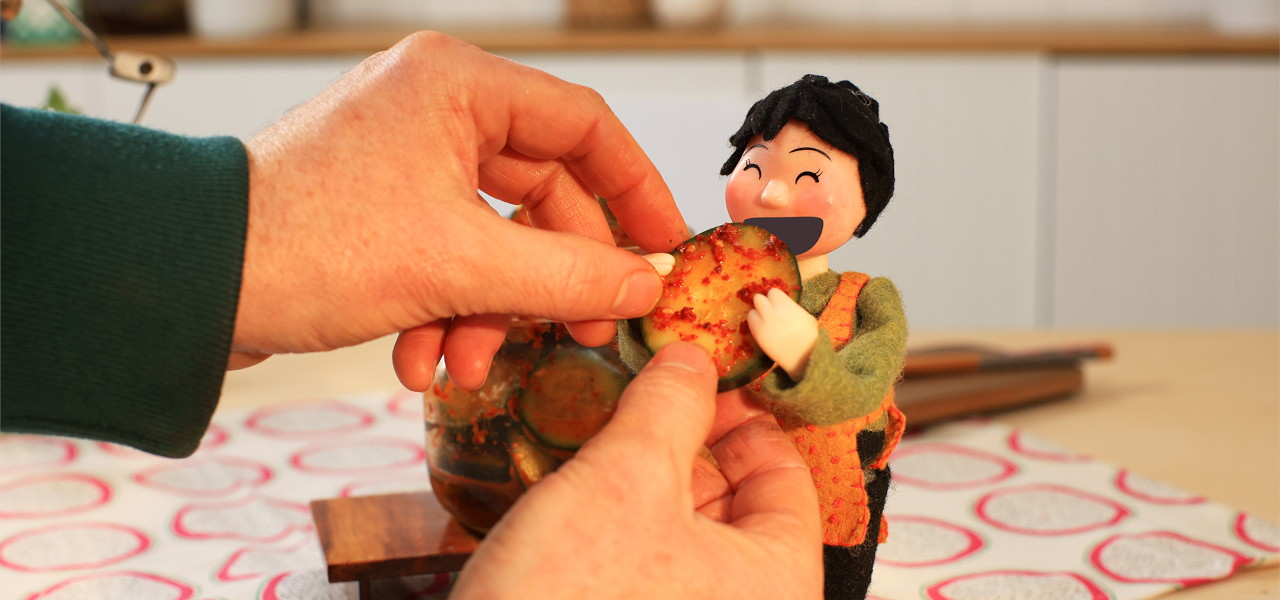
YouTube Wrongly Flagged ‘Tiny Grandma’ As AI And Created A Viral Stop-Motion Phenomenon (EXCLUSIVE)
Stay informed with free updates
Sign up to get our news digest — delivered directly to your inbox twice a week.
When YouTube’s algorithm flagged Marie Hart and Peter Heacock’s stop-motion shorts as AI-generated and stripped their channel of monetization, the Philadelphia-based couple thought they were watching six months of careful planning go up in smoke. Instead, the takedown may have been the best thing that ever happened to them in their careers.
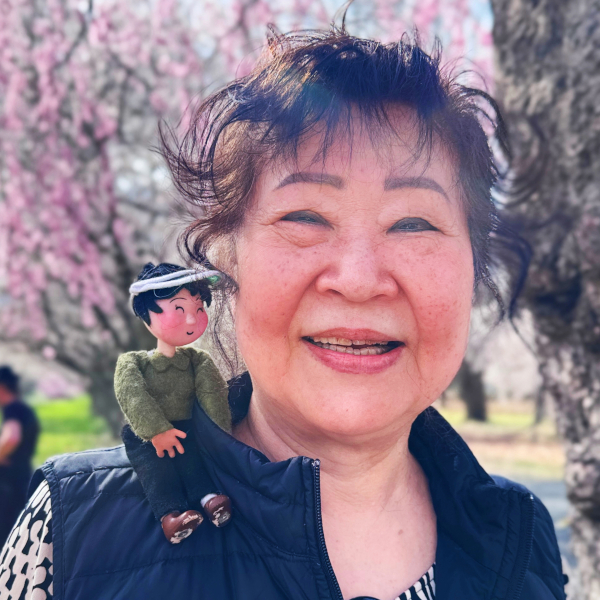
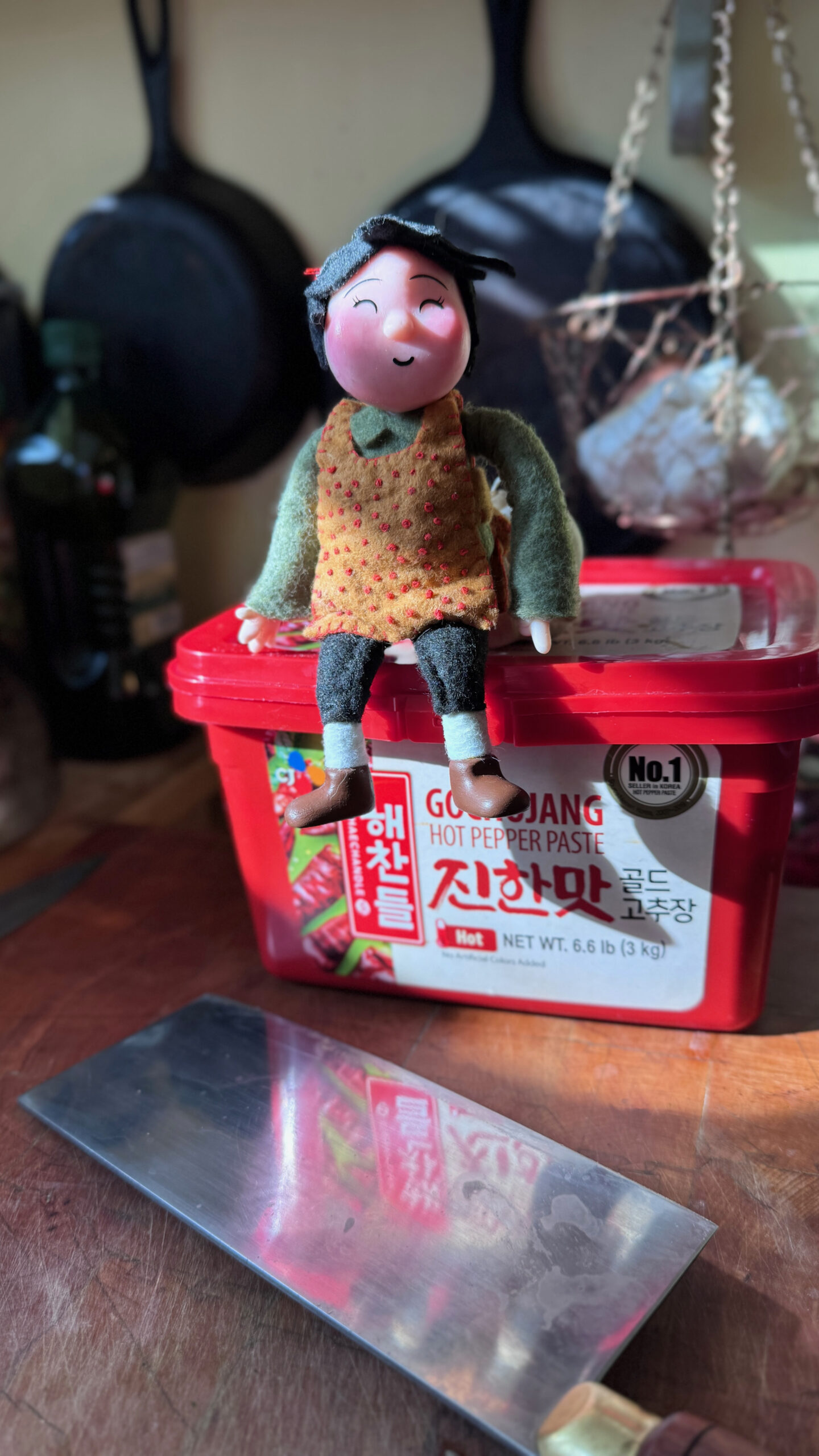
Their tiny puppet character, a Korean grandmother modeled on Hart’s real-life “crazy” mother, has gone from a niche fandom with a decent viewership on TikTok, YouTube, and Instagram to a full-blown phenomenon, pulling in millions of likes and views across the trio of platforms overnight. And the couple, who run their own studio out of the Mount Airy neighborhood of Philly, are still figuring out what to do with it.
Planned Pivot, Unplanned Consequences
Before Tiny Grandma, Hart and Heacock spent fifteen years running Unpop Animation, a studio doing white-label work and brand collaborations. After a good year doing social spots for large partners, they paid down their debt and decided to take a gamble on themselves and on an original IP idea.
“We had a really good year. We did like a bunch of social [spots] for Walmart, which, you know, pays the bills,” Hart tells us. “After we did that, we said, okay, well, we have money set aside now. For the first time, we have a little bit of savings because two people going to art school, film school, you’re not making a lot of money.”
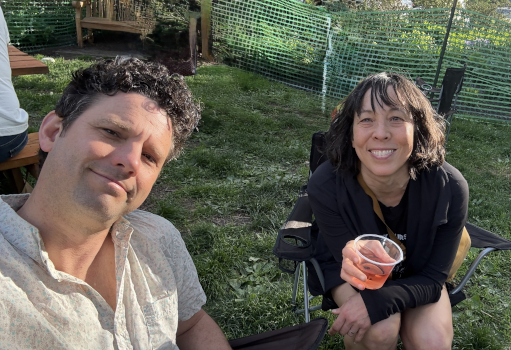
Heacock says the decision came from reading the writing on the wall. “We could kind of sense there would be like an inflection point coming up with AI. And we had like a good year, and we’re like, ‘All right, let’s take the first six months of this year and really just pivot.'” Hart finished his sentence, the way the two did frequently throughout our conversation: “Build our own IP.”
The original concept, inspired by a hugely viral Halloween short the two released in 2022 (27 million views on YouTube alone), was food prep animation, with Heacock pushing for a ninja puppet so they could play with oversized knives and food gags. Hart shut that down fast. “I was totally against the ninja,” she recalls. “I’m like, it’s too bro-y, it’s not relatable. Why don’t we just make my mom?”
Hart’s mother, who runs a roadhouse in Schnecksville, Pennsylvania, is the kind of person who anchors a thousand stories. “You may think your mom is crazy, but I promise, my mom is crazier than your mom,” Hart assures with a laugh and the confidence of someone who has been challenged on that point often enough to know that she’s probably right.
Her family came to the Lehigh Valley in the 1970s, the first Asian family in the area, and were once even profiled in a local newspaper for their first Thanksgiving in America.
Heacock, who is not Korean, learned to make kimchi to impress Hart’s aunts when he started showing up to Thanksgiving. The gesture immediately ingratiated him with the family, but not quite enough for them to use his real name. “They referred to him as Orange Socks in Korean,” Hart says, “because you would take off your shoes,” she recalls as he finishes the thought, “And I always had orange Thanksgiving socks.” The nickname stuck. Years later, the aunts still call him Orange Socks.
That context, the immigrant kitchen, the in-laws, the orange socks, is exactly what Tiny Grandma is built from.
Demonetization
The early Tiny Grandma posts performed well on Instagram, where a cucumber kimchi recipe broke through and gave the couple their first real signal that the format had legs. Cooking videos kept racking up reliable, if modest, engagement, enough to convince Hart and Heacock to start plotting a longer eight-to-ten-minute compilation episode for YouTube, where ad revenue could eventually mean something.
“YouTube was what we were building towards,” Heacock says, before recalling the shock and horror of having their Tiny Grandma short flagged as inauthentic. He says the couple felt like all their hard work had, perhaps, been for nothing if they couldn’t get the shorts onto a paying platform. YouTube’s automated systems, increasingly aggressive about filtering AI-generated content, decided the channel had to be artificial. Heacock recalls being so stressed about the strike that he couldn’t sleep that night.
“The next morning, I turned to Marie and was like, ‘We have to just post something this morning. We have to get on camera.'” Hart, who had no ambition to appear on camera in anything other than a behind-the-scenes capacity at the time, agreed reluctantly. Now, the couple would become part of the Tiny Grandma universe.
The response was immediate and overwhelming.
“All of a sudden, they were rooting for us and also against AI,” Heacock says. “All these platforms are like, hyper outrage machines. So it was like this perfect post that we never expected to go as far.”
Hart put it more bluntly. “It’s proof of life. Like, people want to know that there are actual humans doing it. They want it to be more low-tech. They want to see the mistakes and the stupid stuff.”
YouTube reached out within two days, assigned them a contact person, and resolved the demonetization without even requiring the usual proof-of-process video that creators are supposed to submit.
By that point, another organic change had occurred. Commenters had evolved from one-time visitors chiming in on behalf of the artists to full-time Tiny Grandma fans who just wanted to see more. “All the comments now are just stories about their grandmas,” Heacock says with an obvious pride that their autobiographical IP has touched so many people.
On Camera
The YouTube demonetization may have forced the couple in front of the camera, but the audience response is what really pushed Hart and Heacock to reevaluate what the show should be. Tiny Grandma was no longer a puppet alone in a kitchen. She was now a character with a family who comes to life in the human world, the way Thumbelina or the Indian in the Cupboard did for previous generations.
“That tapped into this classic structure,” Heacock says. “And then all of a sudden we’re like, ‘All right, let’s see if it works.’ And the engagement has been absolutely wild.”
Where Tiny Grandma posts used to pull tens of thousands of views, recent videos have crossed two million views on Instagram alone. The follower count, likes, and comment volume all jumped exponentially in just a couple of weeks. The couple’s Dandelion Kimchi story and accompanying recipe video are setting new benchmarks for the show.
Low Tech By Design
The puppet itself is a hybrid of digital fabrication and old-school craft. Hart, who studied crafts as an undergrad and then landscape architecture for grad school, learned 3D modeling in Rhino, software more commonly used for jewelry design than character work. The grandmother’s heads and body parts are modeled in Rhino and printed on a resin printer. Her arms began as a friend’s design and have since evolved into ball-and-socket joints. A clockmaker friend in Philadelphia machines small parts, while her clothing is hand-sewn from felt.
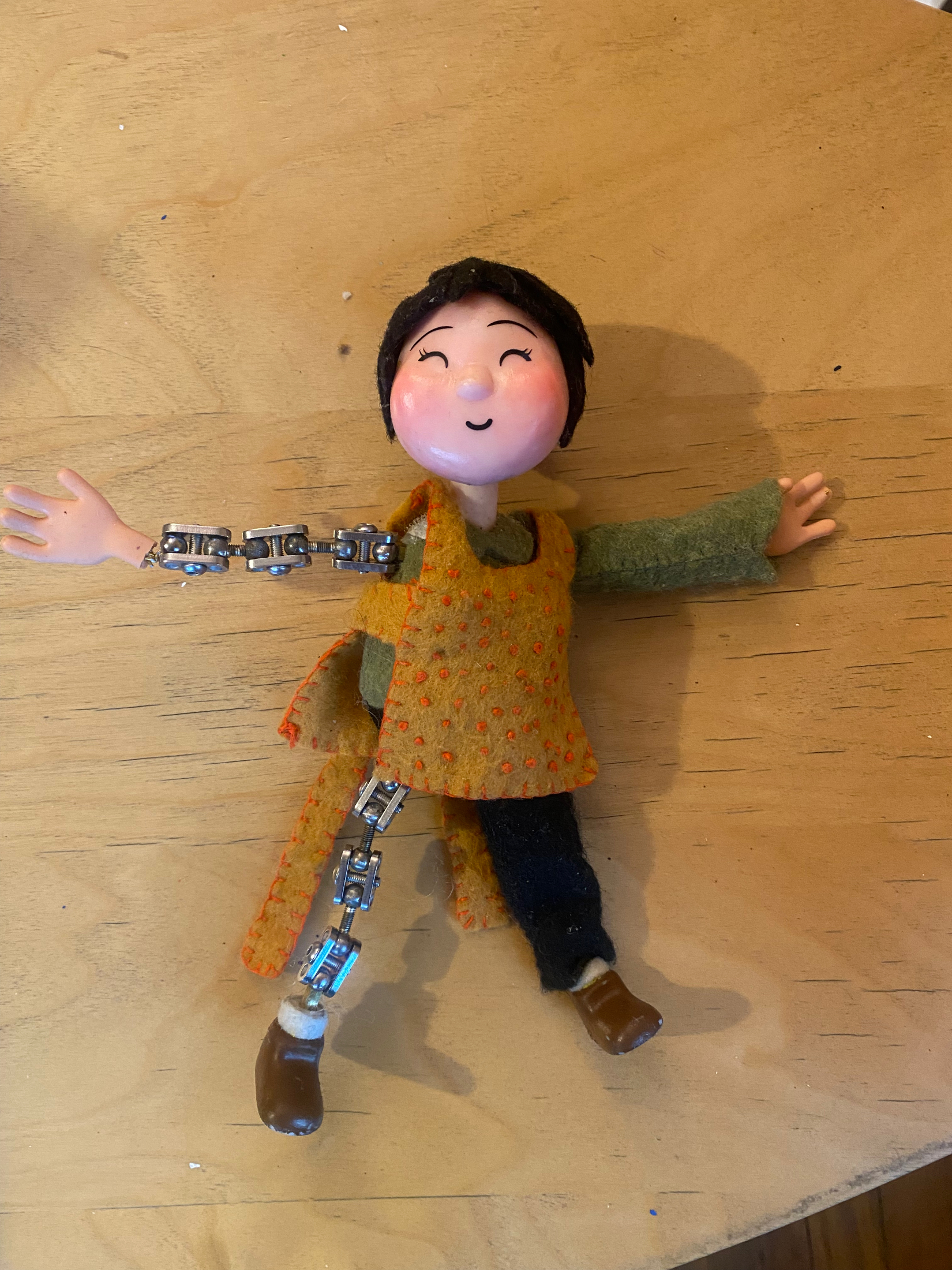
“The rule with her was like, don’t make it too difficult,” Hart explains. “We’re going to keep it really low tech so we can replace stuff, so we can do things really quickly.”
Working outdoors, which “A Dandelion Kimchi Story” required, introduced its own chaos. “The first time we started shooting, it started hailing,” Heacock says, and Hart remembers actual snow falling in April, just a few days before our conversation, forcing them to restart the shoot six times in a single day. The weather is only half of it, though. Heacock has since been spotted in the middle of his Mount Airy street, pushing the puppet across a crosswalk while a car idles at the light. The couple laughs, explaining that in their neck of the woods, nobody bats an eye at such behavior.
The human-made ethos extends to mistakes left in the frame. “There’s one scene in the stuff we’ve just posted where Peter forgot to take the rigs out,” Hart laughs. “It’s obvious there’s a stick glued to her hand.”
“It’s my hand, and I’m flicking it in,” Heacock says. “Nobody cared, or nobody noticed.”
Hart connects those audience connections to a larger movement in handmade culture. “People are talking about the second rise of the arts and crafts movement. The arts and crafts movement came as a rise against industrialization. People want to think that things are handmade. They want everything not to look the same. Humans love that.”
What’s Next
The couple is running the playbook they used during a previous viral hit, a nine-minute Christmas film they made for the Eagles’ Philly Special holiday album, which is to say they are playing it by ear and reacting to whatever comes their way.
They want to keep producing short-form narrative videos, expand the universe with grandmas from other backgrounds, and eventually pull several of those threads together into a longer and more complete narrative short, rather than the individual anecdotes they’ve worked with until now. Heacock hinted that Hart has a book in her, too, somewhere down the line.
The immediate plan is more proof-of-concept videos followed by a longer YouTube piece, with the social shorts driving traffic to the long-form content where actual ad revenue lives. “We have to be able to make money and eat,” Hart says.
One thing they are not willing to do is accept the deal that potential partners, streamers, and broadcasters keep floating their way, which asks them to fully fund a pilot out of pocket and then hand the finished product over for someone else to shop around and take a cut of.
“We’ve had that conversation,” Hart says. “‘Give us a fully-finished pilot, and we’ll shop it around for you and take a cut.’ That’s a really rough deal for us. It’s not like we’re killing it over here monetarily and can just produce something ready for TV on our own.”
For now, the way forward is independence, finding the right collaborator or producer to level up, and resisting the urge to over-produce.
The demonetization did more than boost their numbers. It put Hart and Heacock on camera alongside Tiny Grandma, and viewers responded to seeing the people behind the puppet. Comments sections filled up, and the audience stuck around, hungry for more.
“Thank you, YouTube,” Heacock chuckles, now able to sleep more comfortably at night. “Thank you to the AI bot that said we weren’t human and brought us out from behind the curtain.”